


Published Feb 20, 2026, 1:00 PM EST
Sign in to your Collider account
Summary
- Collider's Perri Nemiroff moderates an exclusive Q&A with the directors of Netflix's KPop Demon Hunters.
- In this conversation, Maggie Kang and Chris Appelhans discuss how their globally beloved feature evolved from the script to screen, and its non-stop success since.
- The directors break down character designs, discuss seeing HUNTR/X come to life on stage, taking bold risks, embracing Korean culture, and their plans for the sequel.
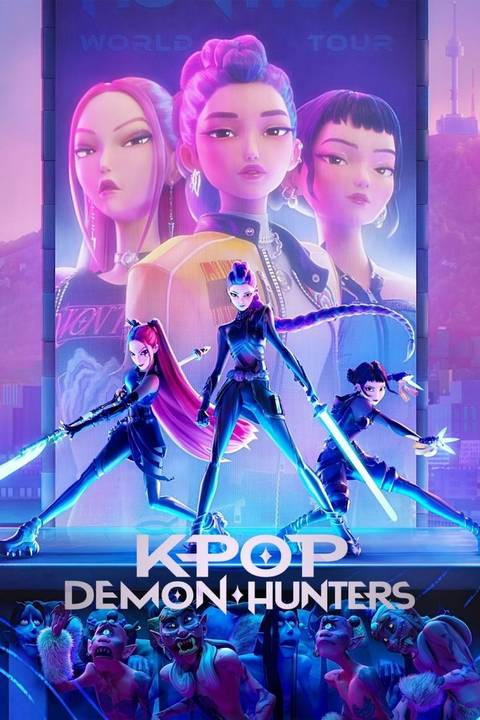
KPop Demon Hunters debuted on Netflix in the summer of 2025 and hasn’t stopped slaying since. Directors Maggie Kang and Chris Appelhans’s animated leap of faith soared to the top of the streamer’s Top 10 chart, where it dominated week after week, becoming Netflix’s most-watched feature of all time. And it’s not just the brilliant visuals and original storytelling that’s captured hearts globally — the K-pop-inspired soundtrack, which went platinum and earned the movie a Grammy Award win, as well as Golden Globe and Critics Choice Awards attention, hasn’t left our heads since the first watch. Now, KPop Demon Hunters has been recognized by the Academy Awards, with nominations for Best Animated Feature and Best Original Song (“Golden”), and while these nods mean a great deal within the industry, this is also a major "epic" achievement for Korean filmmaking.
Following Collider’s FYC screening, Kang and Appelhans hit the stage for a Q&A conversation with Perri Nemiroff, where they took a moment to reflect on the film’s monumental successes in what’s been a whirlwind of only eight months. Kang, who wrote the story of the demon-hunting K-pop trio — Rumi (voiced by Arden Cho and singer-songwriter EJAE), Mira (May Hong/Audrey Nuna), and Zoey (Ji-young Yoo/Rei Ami) — shares the personal reasons why KPop Demon Hunters’ Academy recognition is so meaningful to her, on top of proving to Hollywood that taking bold risks pays off tenfold.
Don’t miss the video above, or the transcript below, for the full rundown on how KPop Demon Hunters evolved from Kang’s desire to create a beloved story for “12-year-old Maggie” to a global sensation, inspiring and delighting kids and adults alike across the world. Kang and Appelhans also discuss seeing HUNTR/X come to life on stage, their favorite fan edits, writing dimensional and lovable “weird” girls (with “cavernous nostrils” and an insatiable appetite for Ramen!), the inspiration behind Gwi-ma (Lee Byung-hun) and the demons, and what fans can expect from the confirmed sequel.
‘KPop Demon Hunters’ Oscar Nomination Is an “Epic” Moment for Korean Film
 Image via Netflix
 PERRI NEMIROFF: I feel compelled to start with the end of the process, because the first thing I want to do is highlight the meaning of getting an Oscar nomination. For each of you, I'm sure you're still soaking it in to a degree, but what does it mean to get that kind of recognition with this story and these characters?
MAGGIE KANG: Oh, wow, starting hard! I like it. Well, I grew up watching the Oscars every year because my dad is a huge cinephile. He loves film, and that's where I get my love of filmmaking from. He also celebrates his birthday on the lunar calendar, so every year it's different, but it always lands on Oscar weekend — well, not this year because they've kind of changed that in the last few years — and so it'd be like his birthday we're celebrating, but then also watching the Oscars. So, being a part of that is just incredible.
Years ago, when I saw Parasite win Best Picture, as a Korean filmmaker, that was just such a monumental moment for our culture, that Korean film was being recognized on the global stage. So, the fact that we can take this Korean film, a culturally Korean film, to the Oscars in the animation category is pretty epic.
CHRIS APPELHANS: Yeah, same thing. A real, incredible gratitude and also just pride for our team. Animation is like the craziest collaboration. It's like a symphony orchestra that is also writing the music while they play. So, I guess the biggest feeling that I had was when we were making this, we were trying to do something new, and that's always a little scary. We wanted to do this type of female character that was more interesting, and this mix of pop music and story that we didn't know how to do, and really push Koreanness into every corner of the film. And so you do all that, and then you're proud of it, but to have it get nominated, it feels a little bit like you get your name in the history books a little bit, and I just feel really happy that such a weird, fun film gets to be in there.

Related
There is one other “ending” question that I wanted to ask you because I spoke to Ejae, Audrey [Nuna], and Rei [Ami] about this as they were gearing up to start performing live, and I'm just so curious to hear about that from your perspective. What was it like seeing your fictional, animated K-pop band kind of become the real deal?
KANG: So wild. When we first started on this journey, even before Chris had joined, it was just an idea of idols who are secretly demon hunters. I sat down with Kristine Belson and Spring Aspers — Kristine Belson is the president of Sony Animation, and Spring Aspers is the president of Sony Music — and we were just talking through the possibilities of this. We talked about, like, Gorillaz, do we cast known K-pop idols and make a supergroup? So, there were all these different options, and there are a lot of paths we went down with casting, and this is where we ended up.
So, to see our music, it just transcended the movie. It's wild. It's the kind of hope that we had of creating a brand-new K-pop group, and we thought that was going to be so difficult and that it would take a long time for our fans to really see them as a group. But as soon as the movie came out, people were like, “I'm a Rumi! I'm a Zoey! I'm a Mira!” And so we kind of won the hearts of fans pretty early on, we feel. So, to have the vocalists perform on a live stage was just another level of, like, “Wow, we actually did this. We were able to pull this off.”
APPELHANS: None of them had met each other. They literally recorded their parts separately, and then they all met, and then they started meeting their voice speaking counterparts, and it's like the Spider-Man meme, like, “Wait, but you're me.” But we worked so hard writing these girls for five years, and we were trying to make them so many different things — badass, glamorous, goofy, loved pajama pants, all these things — and we got pushback, and we pushed them. So, by the time we were casting everybody, it was so cool to see those young women see themselves in these fictional characters and start to connect. As Audrey said, she's like, “I was just really proud that I could represent this type of character that little Audrey would have loved to have when I was 10 years old.” So, I love that for little kids growing up, these are their aspirations as young women.
The ‘KPop Demon Hunters’ Directors Love Your Fan Cuts
“You guys saw all our intention, and you filled it in, and you brought your own thing to it.”
 Image via Netflix
There's one other thing that I wanted your perspective on. This movie went through a really interesting release process, going to Netflix, it got theatrical, then it got sing-along screenings. What was it like for the two of you waiting to see how it was going to get out into the world, and then also seeing that evolve as more people discovered it, and it demanded more kinds of theatrical experiences?
KANG: It's really interesting. When we got the green light, it was during COVID, so already, things were very uncertain. Even before COVID, the theaters, all that situation was a little rocky, and we were still trying to figure things out, and in an era where the younger generation is consuming content totally differently than we old people did. So, for me, being a first-time director trying to get a movie that's original IP off the ground, I was just like, “Thank you for making this movie and just releasing it anywhere!” That was already such a huge thing that I feel like I was able to do.
But I don't know, it's hard to think about any other situation and scenario of how this rollout could have been. A platform like Netflix, you're able to just go global — I think something like 98 countries and 45 different languages, or something, that it was dubbed in. So, we had the opportunity to be global immediately, and I don't think any other platform can do that. And the fans grabbed ahold of it, and they promoted it. They told people. They were all over social media. As the first screening of it was happening, like at midnight, I was seeing content being created online, and I was like, “How is this happening? How are they doing this?”
APPELHANS: And they're, like, some supercuts on TikTok of some throughline, and I'm like, “Why am I crying? This is my movie! How did you guys make some mash-up of Rumi/Jinu moments that are more emotional?” [Laughs] There was that effortless and passionate word of mouth that's the meritocracy of streaming. I think it is nice that the barrier to entry is easy, and then somebody tells you, a friend, a neighbor, a dad, a sister, “It was good. I was moved. You should start it.” And then all you have to do is start, and if we do our job, then you're in. And I think that's kind of a neat era, to be able to travel the world with your story and just let it win people over on its merits.
I do want to further highlight one thing that you said, Chris, because I also think this is a really special thing that you accomplished with your movie. It's incredible when you make something that inspires other people to create.
APPELHANS: I definitely DM'd a few people on TikTok to be like, “Your fan cuts are amazing.” I hope that wasn't weird, but I was a fan. The neat thing about what I saw on social media was, because of the kind of crowdsourcing of it, I remember there's a clip of Rumi and Celine in that Dark Night of the Soul moment, where she's like, “I think I should die.” There's this real journey, that's a real breakthrough moment of Rumi realizing that this way of living, this person will never truly unconditionally love her, so she has to find her own religion, or find her own way to live. And this is exactly what we talked about, writing the scenes, and then the top comment on the TikTok is literally like the notes from our Google doc. We’re like, “Were you in the writing room with us?” So, they distilled it so beautifully, and then everyone who had watched the movie was like, “That is how I felt!” Boop, upvote. So, there was this sort of crowd wisdom that emerged, and that was so moving to be like, “Damn, you guys saw all our intention, and you filled it in, and you brought your own thing to it.” If you're a storyteller, that's as good as it gets.
KANG: Because we worried a lot that we were being maybe just too subtle or, like, suggesting information and not being literal about it, but they caught it all. It's incredible.
I bet you people have found details in your own movie that you didn’t even realize were there.
KANG: Oh, yes. My favorite ones are just making connections, because the same model was used.
APPELHANS: We just ran out of money.
KANG: We ran out of money, and we couldn't make another asset. But those are fun.
Making the Movie Took the Directors on a Similar Journey As HUNTR/X
“It’s scary, and that’s a risk.”
 Image via Netflix / Courtesy Everett Collection
Now I'm going to go back to the making of the movie. I'll start by giving you each the opportunity to give the other some flowers. Can each of you tell me something about the other that made them the perfect creative partner on this movie for you, perhaps even something they did that helped you exceed your own expectations for your work on the movie?
APPELHANS: So many times every week for six and a half years, which is what a good collaboration is. I guess what I slowly grew more and more admiring of is that the way that the girls present themselves in the movie is new, especially the animation. They're goofy, they're really funny, they're weird, and that's scary to do that. It’s scary to try, and that's a risk, and Maggie had to be courageous at every step to propose that aspect, to work on the scenes that way, at some point, to act it out in front of a roomful of 100 animators. She's like, “This double chin right here, like this, will be funny when she's falling.”
There was a moment right before the movie came out where Maggie was like, “Oh my god, what if it's not funny? What if no one thinks my funny things are funny?” And I realized, wow, this is a real act of courage to put it out there. That's literally what the movie's about, too. So I think when I watch the movie, I see that in all the girls. Then, when I see women come up after screenings and be like, “That was me. I see myself in there,” I really admire that, you know?
KANG: Aw, thank you.
APPELHANS: This is the only way we can compliment each other, too, is in Q&As. Alone together, we don't even talk about it.
KANG: I know. It's extremely hard to come into a film where it originated from me, it's a personal thing for me, but Chris came in and really supported my vision from the very beginning, and he really appreciated it, and knew the things that were very important to me, and all the cultural specificity, all of the little details of needing cavernous nostrils on these girls, because that is what would make the expression, and really fighting for all these little tiny details. He totally supported all of that. And even in times when it was hard for me to express that to our studio heads, he was always there to remind me that I need to stand up for what's important to me.
 Image via Netflix
Through that, too, Chris comes from a music education, which I don't have. I'm a fan of music. I just like music and like the way it sounds, but he has a very deep emotional connection to it and also knows how to craft music, which was something I couldn't have. So, there was a lot of musical specificity to the crafting of the scenes, or song structure, that he excelled at. So, that part of the movie I didn't really think about too deeply until he came on board.
The best thing is that we were both so hungry. I think we just really wanted to push ourselves, and I was able to push myself more because he pushed when I was feeling tired. That was not something that we had ever talked about, but we just did. We were just consumed by this film. For the last three years, we didn't have weekends with our families or weeknights. We made a lot of sacrifices because we wanted to really push ourselves and create something different that we wanted to see. Like Chris was saying, anything new that you're creating and putting out in the world is really hard, and we had nothing to compare anything to. So, it was scary and hard, but we were there together with all those late nights and all those weekends, and so I'm just grateful that somebody was out there who believed in this as much as I did, and we did it together.
APPELHANS: Aw, thank you.
How Gwi-ma Evolved Into the “Toxic” Villain He Is
Kang and Appelhans also reveal they did “like 80” versions of this particular scene!
 Image via Netflix
I've heard the two of you talk about what a smooth process this was, but also that there were certain times when you really had to fight for something that you wanted. Could you give us a couple of examples of that happening? Things that you knew were important to you, perhaps someone else was like, "Maybe let that go,” but you knew it was important to hold tight to and make sure it got into the finished film?
KANG: We always think that it's so smooth, and then looking back, you’re like, “Oh…”
APPELHANS: Then you’re thinking, “Wait. Oh…”
KANG: You try to bury a lot of that. [Laughs] These things are always hard. I mean, for us, it’s six or seven years of crafting this thing. What were some of our biggest battles?
APPELHANS: I think one of your early epiphanies that really helped was that this is not an origin story, and that's really hard because this movie is original mythology, original characters, a bunch of weird ideas that you're trying to explain in the first 15 minutes, and somehow have to reverse engineer who these girls are. And man, I mean, you could speak to how many versions we tried, front-loading and giving all that, and the movie was just like, “Eh,” and just kept rejecting it. But I think that part of the propulsive quality to it is that you skip that stuff, and yet you do feel, hopefully within those first 20 minutes, like you kind of know who these girls are and what they're up against personally. So, that was really hard. We did, like, 80 versions of the first five minutes.
KANG: It was more backstory of the girls and how they met and all this stuff, but yeah, the movie just kept rejecting it. It didn't want to be that. So, we had to just kind of trust the movie and let it be what it wanted to be, which is always challenging, because a lot of people feel like they need that information. There are a lot of things that we have to figure out in order to give you just a little bit of it in the movie so that you understand enough so that you can understand the rest of the story.
I'll ask you to get specific about that. Can you give us an example of a particular plot detail that you knew the audience needed to get fully on board quickly, but then also maybe something you considered and came to the conclusion that the audience didn't need that and they'll be along for the ride without it?
APPELHANS: Oh, yeah. We had a lot of versions of the girls in training with Celine, which just always fell by the wayside. But there was one point late in the game, we were working on “Golden,” which is the last song, it came very late, and we realized that one of the things that would make you root for these girls was this feeling that they didn't have anywhere else to turn but each other. And so in that little bit of “Golden” storytelling, we were like, “We need people to understand that they all had families of different kinds, but for whatever reason, that is not really the home for them.” Rumi’s parents are gone, Zoey just didn't belong where she was, Mira had her own problems, and it's just a taste, but it basically puts them in this position of, you feel, all or nothing. They can't go back to some safe, happy place. They have to make it through this thing together. And that really changed people's buy into it, even though it's 20 seconds of screen time. So, yeah, really delicate.
 Image via Netflix
Looking at your characters now, in an effort to highlight one, can you name a specific character that evolved more than you ever could have imagined and became either more powerful or instrumental to the overall storyline than you thought they would be at the very start of developing this idea?
APPELHANS: I think Gwi-ma.
KANG: Gwi-ma, yeah.
APPELHANS: Yeah, I think so.
KANG: With Gwi-ma, there was one point where we were like, “We want Gwi-ma to be a little comical,” and the studio was like, “No, because you need your villain to be very threatening.” Even from a design standpoint, we tried all these different designs, like hundreds of them, where it was a man or a monster, and it was just this being, and it kind of just always minimized him as a threat. When we started to really dig into the idea of inner demons and that voice in your head that tells you that you're worthless or all the bad things about yourself, it became clear to us that Gwi-ma is really a voice. It's a voice in our head, and everybody has this voice.
So, once we thought of that, we just decided that it should just be a mouth. We made it more of this flaming mouth because we had all this art with really good flames, and it just made him feel more supernatural. So, yeah, it became a voice, and when it came down to casting, we went to Lee Byung-hun, who has the most charismatic, sexy voice, and he just felt so perfect for this role, and he is.
APPELHANS: And because we were trying to tell a story about connection and vulnerability being a positive thing, you needed a counterpoint to that, and it felt like Gwi-ma needed to have a worldview that was like the vulnerable and maybe less-than-desirable parts of yourself, a reason to hate yourself and condemn yourself. But what makes him interesting, I think, as a villain is that he doesn't have that much control, he's just toxically wearing you down. It is your choices. It's still within the character's hands to choose how they handle that part of themselves.
So, with Jinu and Rumi and everybody, eventually, you're watching them overcome that toxic voice, and I think that makes it more interesting than just, like, “We physically beat the big demon guy!” That's part of it, but what makes me emotional is watching those characters say, “Screw it, I will bear these marks. I will be vulnerable.” I think we're all living through the world trying to make our own choices about that.

Related
Maggie Kang Breaks Down Her Korean-Inspired Underworld
Black cat demons and the Saja boys? We never had a chance.
 Image via Netflix
Sticking with character design, I also did want to ask about the design of the other demons, because I'll never forget watching your movie for the first time, and as much as I was into the story, the first time I saw a whole bunch of demons in the background, I'm like, “I need to pause this frame and examine every single one of them.” Can you tell us a little bit about figuring out what the general look should be?
KANG: So, we featured, I think, three or four different types of Korean demons, and when you go through all the Korean mythology, there's not really a design set for a lot of them. But the first demon that I knew I wanted to feature was the black cat guys, which the Saja Boys are, and that's the Grim Reaper in Korean culture. So, the idea of this horrible demon boy band was there from the very beginning, like from the initial pitch. We always knew that we wanted these cute little demon boys to become the Grim Reapers who really summon the souls to Gwi-ma at the end of the movie.
Then we have the plain demons, who are kind of like goblins. They're shapeshifters. There's a lot of mythology we've kind of tried out in early versions of the reel, but ultimately, we just kind of leaned into more of a design aesthetic. The challenge with the demons was we didn't want them to be too scary, but they needed to be threatening, and so we had an amazing character designer, Jeannie Lee, who kind of struck that balance really well for us. With the first guys, we just really leaned into the “puppety” feel of them, and we were inspired a lot by wooden masks that people would wear for traditional ceremonies and theatrical performances, and a lot of their coloring, which is very bright and vibrant, was taken from temples that are very colorful in Korean culture.
And water demons, who are kind of like The Ring demon, which exists in most Asian cultures, so it was kind of our take on that. Then we worked with animation, and we talked a lot about the way that different creatures would move. So, with the water demons, we leaned more into something that's more like a salamander, a kind of slithering-type of thing. So, we started with the designs, and then we worked with animation to kind of plus that design and make them a little bit different from each other.
And I love that Jeannie Lee, who designed all those demons, also just designed the three ajummas, the grandmothers, which is the movie I want to see, is just those ladies fighting demons.
Sticking with design a little more, let's focus on designing one of your song set pieces. Was there any particular one where it was the toughest to match the song with the right visual language, style, maybe the right location for the characters to be in, you name it?
APPELHANS: Maybe the finale.
KANG: Yeah, the finale was a monster.
APPELHANS: That was so scary because you need it to be a good climax, it's the closing scene, and a climax should be unresolved and not feel inevitable, which it also was supposed to be this anthemic song, which needed to feel like it was anthemic and inevitable, and you're like, “Oh no.” [Laughs]
KANG: It's eight minutes of storytelling through [song].
APPELHANS: The scene is many things. It's Rumi stating her closing philosophy in the movie, it's a reconciliation with the girls, it's the response of Gwi-ma, it's Jinu sacrificing himself, it's the final build into this sort of triumphant moment, so we had to design a song structure and a breakdown, and a rebuild that could support those plot points. Then we had to write that song, and then we had to figure out, like you would a Super Bowl halftime show, the choreography of, like, here comes Rumi with the spotlight, and then Mira and Zoey appear, and they descend, and they meet up, and now they power up.
So, it was really fun, but it was a little scary, like, is this going to work? And then as we got individual layers built up, we got the track, we got the animation, it started to be more and more thrilling. But I think it took all of our screenwriting chops and then all of our songwriting chops, and they had to be mixed together in a way that I was like, “Oh, I've never gotten to use these two things before,” which is great.
You said it, so I'll just repeat it because I like manifesting things: a HUNTR/X Super Bowl halftime show would make me incredibly happy.
The ‘Kpop Demon Hunters’ Sequel Will Be Even More Boundary Pushing – and Sexy Clavicles!
“Let's just go for it. Let's just be scared.”

I have to start winding down with the two of you. Probably no surprise, but I have to ask you about the announced sequel. I will keep it nice and broad for you. One of my favorite things about continuing film series is that each new installment gives you the opportunity to level up. And you just made an Academy Award-nominated film so the bar is already really, really high! Can each of you tease a way that you hope to level up with the second film, whether it's story-wise and thematically, or perhaps with how you've honed the animation in the first movie?
APPELHANS: Oh, wow. Well, we did a lot of sexy abs. I think what we didn't do enough is sexy clavicles. Like, some of the K-pop boys, their clavicles are amazing. So a whole sequence about that.
The answer I never knew I needed. I’ll take it.
KANG: I've never heard this before either. This is news to me. Yeah, anything that we do after this, I think, will be exactly like how we approached the first movie, which is, it’s everything that we wanted to see and we wanted to challenge ourselves with. So, anything from us after this one will be exactly that, and it'll be what we want to see. Well, we'll, of course, look at what other people want to see, as well, but as directors and writers, you have to be true to yourself, and be your harshest critic, and that's what we were with the first film, and we have very high standards, and we will still stick to those standards in every single inch of whatever we make next. So, yeah, it'll be hard. I mean, it will be just as hard as this, and probably harder, but we’re up for the challenge.
 Image via Netflix
What you just said really does tee up my last question quite nicely. I wrote this down from our last chat. Maggie, you mentioned that you both really wanted to challenge yourself as storytellers with this film, and then you went on to say, “For me, it was really a challenge to see how far my talents could go and what kind of film that I could make.” So now that you are at the finish line with this movie, I'm really curious for each of you, is there a particular challenge you're really proud to have overcome, maybe something that happened that gives you more confidence in your own craft as an animated storyteller?
KANG: For me, there was a point where I just had to be like, “Let's just go for it. Let's just be scared,” because being scared means you're doing something right and different, and people haven't seen, and that's what we wanted. So, we were scared a lot, but it made us push things further, and luckily, we had really great partners at both studios who really believed in pushing the boundaries and being different. Then we had crew members who would come on and be like, “This is great! This is so different. I've never seen anything like this before,” and we, of course, took that as a compliment and pushed forward. So, yeah, I think being scared is good, and I think that tells you that you're doing something that people haven't seen. So, keeping up the surprise, I guess.
APPELHANS: Yeah. I was gonna say the same thing, basically. The animation is made of pretty incredible people, across all departments and all skill levels and experience levels, and they're so passionate. They are all doing this because they love their job. Directing is a form of leadership, creative leadership, so we showed up, and we asked for the impossible sometimes. We gave everything we could, and then there were days when those guys carried us and elevated an idea beyond what we had shown up with, and that was such a wonderful feeling, and the passion that they built. I think it's one of the things we're most excited to do is get through this crunch and then go and have, like, a wrap party with our different teams and truly celebrate together because we haven't gotten to do that and just say thank you for coming on this crazy ride with us.
That’ll be the biggest party ever!
APPELHANS: Oh, man, we're going to drink.
[Laughs] I think you’ve earned it!
KPop Demon Hunters is available to stream on Netflix.
Release Date June 20, 2025
Runtime 96 minutes
Director Chris Appelhans, Maggie Kang
Writers Hannah McMechan, Chris Appelhans, Maggie Kang, Danya Jimenez
Producers Michelle Wong



![20 Years Later, One of the Best Sitcoms of the 21st Century Returns With Hilarious First Look [Exclusive]](https://static0.colliderimages.com/wordpress/wp-content/uploads/2026/02/malcolm-in-the-middle-life-s-still-unfair-feature.jpg?w=1600&h=900&fit=crop)
 English (US) ·