
 Image via Marion Curtis/Starpix for AppleTV+/INSTARimages

Published Apr 6, 2026, 5:06 PM EDT
Shawn Van Horn is a Senior Author for Collider. He's watched way too many slasher movies over the decades, which makes him an aficionado on all things Halloween and Friday the 13th. Don't ask him to choose between Michael Myers and Jason Voorhees because he can't do it. He grew up in the 90s, when Seinfeld, Everybody Loves Raymond, and TGIF were his life, and still watches them religiously to this day. Larry David is his spirit animal. His love for entertainment spreads to the written word as well. He has written two novels and is neck deep in the querying trenches. He is also a short story maker upper and poet with a dozen publishing credits to his name. He lives in small town Ohio, where he likes to watch professional wrestling and movies.
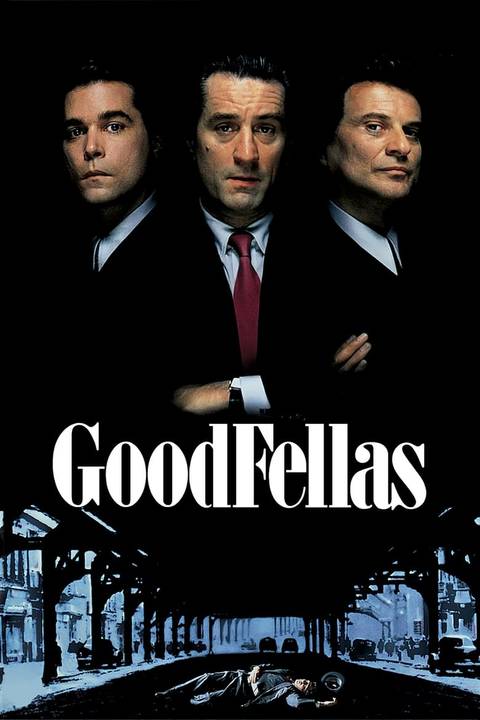
Joe Pesci had quite the year in 1990. At the end of the year, he was getting his butt kicked by a kid in Home Alone. A few months earlier, he was also in Goodfellas as the terrifying mobster Tommy DeVito. Even if you've never seen one of Martin Scorsese's best movies, most people are familiar with one of its most famous scenes, where the short-fused DeVito snaps at Henry Hill (Ray Liotta) for calling him funny. This leads to the iconic "Funny how?" speech, which is arguably the best-known moment of Pesci's career. And it almost didn't happen.
Joe Pesci Nearly Turned Down 'Goodfellas'
Somehow, the only time Martin Scorsese has ever won an Oscar for Best Director is for The Departed. While that was well-deserved, it's an honor that should have come much sooner. Scorsese has crafted a plethora of masterpieces over the decades, and although we all have our favorite, the one you'll find at the top of the list most often is Goodfellas. Collider considers it his best. Adapted from the book Wiseguy by Nicholas Pileggi, Goodfellas is about the real-life mob informant Henry Hill, played by Liotta. The film is packed with stars like Robert De Niro and Lorraine Bracco. Still, as great as they all are, it's Joe Pesci as Tommy DeVito, loosely based on real-life mobster Thomas DeSimone, who steals every scene he's in.
You'd have to imagine any actor begging for a part in a Scorsese movie. That wasn't the case with Pesci. Although he'd worked with the director before in Raging Bull (which got him an Oscar nomination), he wasn't interested in being in Goodfellas. As Scorsese recalled in the Apple TV+ docuseries about his career, Mr. Scorsese, "I asked Joe Pesci to be in the movie, and he didn’t want to be in it. But eventually he said, 'I'll be in it if you do this one scene with me.' And he acted out the scene. I said, 'That’s terrific,' because it actually happened to him. I said, 'I know exactly where to put it.' So it's not in the script, but I knew where to put it."

Related
Pesci, who is of Italian descent and grew up in New Jersey, had some real-life encounters with the mob in his young years. At some point, he'd had a similar situation happen to him as compared to the "Funny how?" scene, except with Pesci on the receiving end. Scorsese explained, "One of the reasons Joe doesn't do these interviews and things is that nobody would understand his background and how he grew up. He was marked much more than me in that world, hanging around with the Mafia guys."
Joe Pesci Doesn't Think the Scene Is Funny
The scene works perfectly on two levels. There's the obvious character angle, which shows how terrifying Tommy DeVito is. In one moment, he's a gregarious, friendly guy, the life of the party everyone listens to and wants to be around. DeVito can control the room and get anyone to pay attention to him. When he's in a good mood, that's great. However, by placing the scene early in the film, the audience is disarmed. We're watching this actor we enjoy go from being a fun character to a horrific man who might just kill anyone at any moment without blinking. Anything could set him off for no reason.
There's also the subtlety of how Scorsese shot the scene. In Mr. Scorsese, he explained his methods. "On set. I decided [that scene] there would be no close-ups. Because as the tone of the piece changes, you need to see the people around them — their body language change, and their eyes become more alarmed. We did, like, two or three takes and that was it."
Imagine the scene as a close-up only of Pesci and Ray Liotta's faces. Sure, you could see how wild DeVito's eyes are and how scared Henry Hill is, but we already know that. It doesn't have to be zoomed in on. To properly sell the fear of the scene, Scorsese had the genius idea to show the reaction of everyone else. DeVito is surrounded by the worst of the worst, yet even they are uncomfortable. Even those who have seen and done it all are scared about what he is capable of. If they're worried, the audience should be as well.
In an interview with Bob Costas, Pesci gave his thoughts about the Goodfellas scene. Costas tried to play with the actor by calling him and the character funny. Pesci wasn't having it. "Ask Ray Liotta, when he was sitting in that chair, if that guy was amusing. And you know why people laughed? It was nervous laughter. That was not amusing." Perhaps the character wasn't amusing, but the performance certainly was. It earned Joe Pesci his one and only Academy Award win.
Goodfellas
Release Date September 19, 1990
Runtime 145 minutes

 English (US) ·