
Government agencies are warning that Iranian state-linked hackers are using a Windows malware strain named CHOSEN BRICK to target dissidents, activists, and journalists worldwide.
The malware features data theft and espionage capabilities that collect email, Telegram, and WhatsApp communications, take screenshots, and record audio.
The threat actor primarily targeted individuals in the U.S., U.K., and the Netherlands, whose cybersecurity agencies published a joint advisory with the FBI.
A typical attack begins with social engineering messages impersonating trusted contacts or technical support agents, sent to targets via WhatsApp or Telegram.
The threat actor tricks victims into opening malicious files disguised as legitimate applications (e.g., Pictory, RunwayML, Norton Antivirus, Telegram, Adobe Flash Player, KeePass), often suggesting they launch them on personal devices to bypass corporate security blocks.
Depending on the pretext used, the hackers sometimes used even medical-related lures, the agencies found.
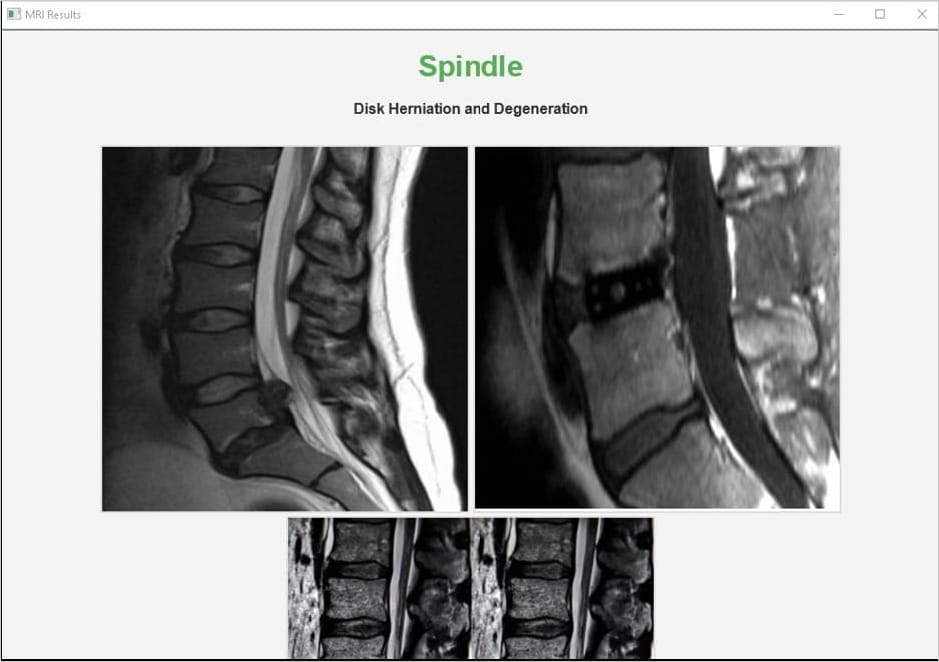 MRI scan document used as lure
Source: NCSC
The apps display a convincing interface that matches the lure, while silently installing CHOSEN BRICK in the background and securing persistence through Windows Registry Run keys.
The malware adds Microsoft Defender exclusions to evade detection and connects to a unique Telegram bot that matches the victim’s ID and provides command-and-control (C2).
Once launched, CHOSEN BRICK can perform the following actions:
- Collect system information
- Enumerate running processes
- Capture screenshots
- Record audio through the microphone
- Steal email content
- Steal Telegram or WhatsApp browser data
- Download additional payloads to “C:\Windows \SysWOW64”
- Delete files
- Wipe the entire host system
The stolen data is exfiltrated through Telegram or cloud services like VultrObjects and StorjShare, while newer CHOSEN BRICK variants route traffic through SOCKS5 proxies to conceal the activity.
The advisory notes that the stolen data sometimes ends up on pro-Iranian leak sites, serving as a form of harassment and increasing the physical risk for dissidents abroad.
“Iran almost certainly uses cyber activity to support the repression of individuals who are seen as a threat to the regime, such as dissidents, activists and journalists,” the government agencies say.
“In some cases, the Iranian intelligence services have plotted to kidnap or conduct lethal operations against individuals internationally, who they perceive as enemies of the regime.”
Potential victims and organizations should inspect Registry Run entries for suspicious entries, search logs for indicators of compromise (IoCs) shared in the advisory.
Unexpected connections to Telegram’s API, Backblaze B2, VultrObjects, StorjShare, IPRoyal, and LightningProxies should be investigated as suspicious.

Build your security blueprint for AI-powered attacks
Join Mikko Hyppönen and security leaders from the NFL, CHANEL, and Atlassian for a two-hour digital summit on what AI-speed attacks change, what defenders should stop doing, and how to validate, decide, fix, and re-validate at machine speed.






 English (US) ·