
 3 weeks ago
58
3 weeks ago
58
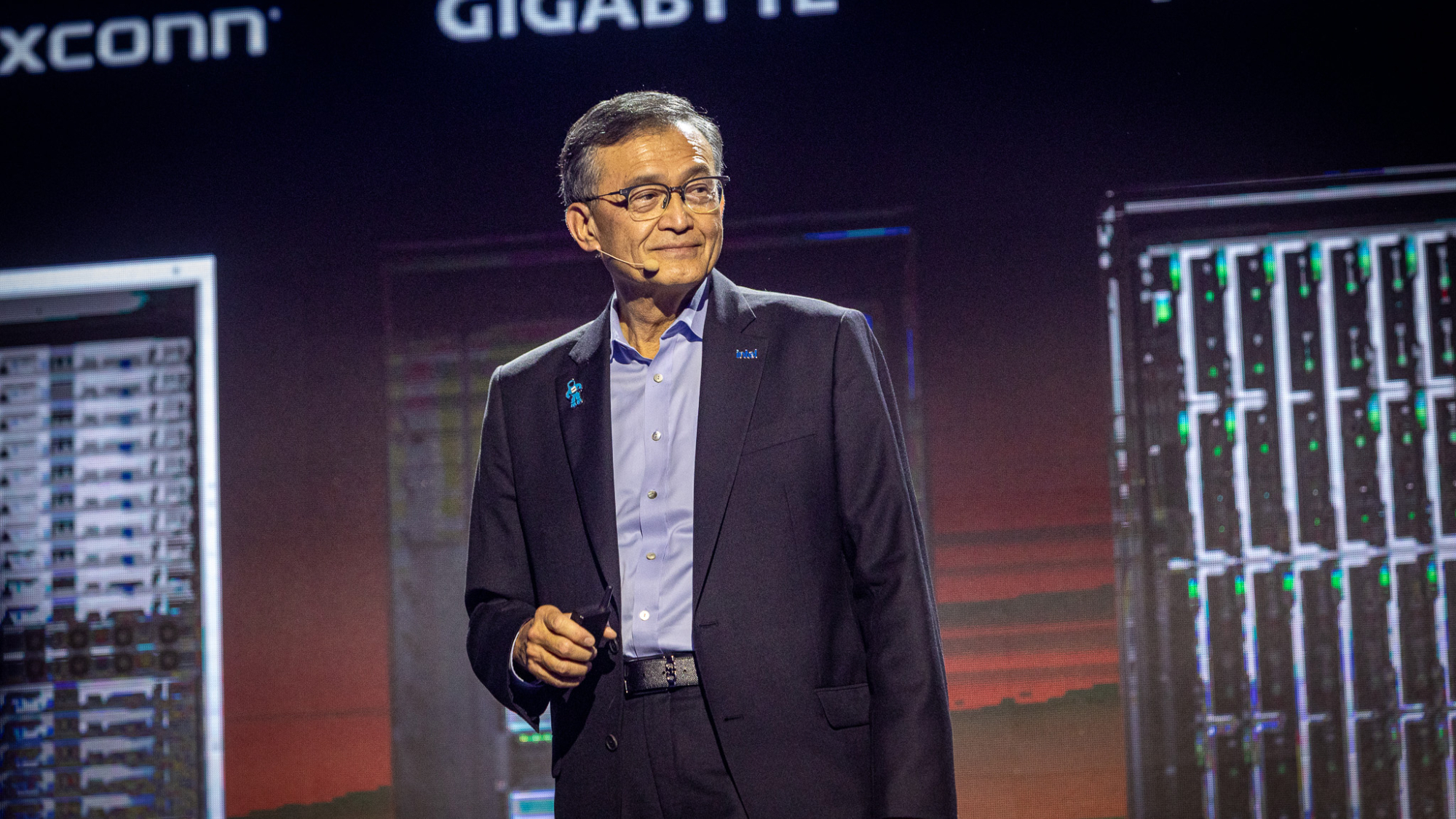
Intel CEO Lip-Bu Tan has revealed that new memory architectures — once thought a commodity business — are now strategically interesting and one of his pet projects, while speaking about the comeback of the American chip industry. He further noted that the memory industry is ripe for innovation, and also hinted at exploring ways to stack memory on top of a CPU.
Go deeper with TH Premium: Memory
After years of being a commodity, memory became a strategic asset in recent quarters and will likely remain one for a while, so suddenly, leading makers of 3D NAND and DRAM became highly profitable companies, something the Intel CEO is keenly aware of: "I used to be, 'do not invest in memory because it is a kind of commodity business,' but now it has become different," Tan said. […] "There is a lot of new technology coming out. So, we are kind of looking at one of my pet projects, some of the new memory architecture. I think you just saw the news: I hired my good friend, Seok-Hee Lee, who used to run SK Hynix. So, you kind of know something that I am thinking about. We are not ready to unfold it."
Tan did not reveal anything about the pet project and did not even specify whether the project is one of his personally favored strategic initiatives at Intel, or an initiative in one of the companies that he has invested in. He did mention that stacking memory on top of a CPU could make a lot of sense, though did not elaborate. Tan's remarks also follow the revelation of an Intel XBM patent that does away with the silicon interposer of HBM.
" I think CPU and memory, I think there are a lot of ways we can really do stacking together," Tan said. "And also try to find some new architecture for memory. I think in some way the memory, a lot of innovation are not there. So, there is some really good area."
Not everyone in the industry remembers, but Intel started as a memory company in 1968 and was quite a successful memory maker until the eighties, when Japanese companies took the lead, and Intel had to exit the market completely after suffering severe losses. Since then, the company has attempted either to return to the memory market with NAND and Optane, or at least to capitalize on a new type of memory with RDRAM. In all three cases, the company abandoned its memory initiatives without incurring significant losses.
Given the current profitability of 3D NAND and DRAM makers, producing memory is certainly a good business again and will remain profitable for some time. However, to re-enter it, companies like Intel would need capital to build at least one fab, R&D to develop competitive process technologies, and time. While licensing a technology — assuming that a company has capital — is an option, we strongly doubt that at this point Intel may be inclined to invest capital in memory and not in its core products and foundry businesses. Furthermore, it is unclear how investors react to such investments given the fact that the company struggles to become a strong competitor in the foundry market and has exited 3D NAND and 3DXPoint/Optane businesses after failing to achieve strategic targets.

Follow Tom's Hardware on Google News, or add us as a preferred source, to get our latest news, analysis, & reviews in your feeds.



 English (US) ·