
 1 week ago
15
1 week ago
15
Inland remains a reliable partner in this volatile SSD environment, offering decent drives with good warranties at competitive prices. The QN450, a drive by its designation, which should be relegated to secondary storage, surprises. Going by its specifications, it looks like yet another cheap SSD to lure in budget shoppers, but, in fact, under this misleading varnish is an excellent drive that would otherwise escape notice. This is one to keep on your buy lists.
The surprises are quick and meaningful. Performance across the board, even with sustained writes, is very good. The drive also delivers very high power efficiency, which is crucial for a drive that will end up in laptops or the PS5. It’s also affordable, which makes sense given its market positioning – it is meant to be a Kingston NV3 killer, the drive you reach for when you just need something to complete your build – but it frankly performs closer to the high side of the stack. For the price, that’s hard to beat.
The downsides? Given the specifications and positioning, we would have to expect variable hardware builds over the life of the product, which means the underlying components can change. You might get what we did, or you might get something worse. We highly recommend checking your drive when you get it. This unfortunately requires some research on your part, but that’s standard for the industry at this point. More directly, the QN450 has a relatively low write endurance rating (TBW) for its class. This could suggest that it is meant to use QLC flash even though our sample had high-performance TLC. Some caution is therefore warranted, although we would say that, given the pricing at the time of review, this drive would compete favorably against QLC-based drives in its segment.
Inland QN450 Specifications
Swipe to scroll horizontally
Pricing | $449.99 | |||
Form Factor | M.2 2280 (Single-sided) | M.2 2280 (Single-sided) | M.2 2280 (Single-sided) | M.2 2280 (Single-sided) |
Interface / Protocol | PCIe 4.0 x4 | PCIe 4.0 x4 | PCIe 4.0 x4 | PCIe 4.0 x4 |
Controller | N/A | Silicon Motion SM2268XT2 | Realtek RTS5772DL (listed) | Phison E21T (listed) |
DRAM | N/A (HMB) | N/A (HMB) | N/A (HMB) | N/A (HMB) |
Flash Memory | N/A | Micron 232-Layer TLC (B58R) | Micron 232-Layer QLC (N58R) | Micron 232-Layer QLC (N58R) |
Sequential Read | N/A | 5,000 MB/s | 5,000 MB/s | 5,000 MB/s |
Sequential Write | N/A | 4,000 MB/s | 4,000 MB/s | 4,200 MB/s |
Random Read | N/A | 300K IOPS | 300K IOPS | 600K IOPS |
Random Write | N/A | 450K IOPS | 450K IOPS | 800K IOPS |
Active Power (Avg) | N/A | 5.3W | 5.3W | 4W |
Endurance | N/A | 300TBW | 600TBW | 900TBW |
Part Number | 618996784523 | 618996774760 | 618996774777 | 618996757039 |
Warranty | 6-Year | 6-Year | 6-Year | 6-Year |
The Inland QN450 is available in four capacities: 500GB, 1TB, 2TB, and 4TB. With modern drives, you usually want a larger drive for the best performance, but it doesn’t seem too critical here. 1TB and up is good enough. The drive is priced at $94.99, $169.99, $289.99, and $449.99. Are these prices good? Hmm, they’re okay. The Biwin Black Opal NV7400 is often the better deal, and the Biwin NV7200 can also be a good choice. At least at 1TB and 2TB. At 4TB, the QN450 is more compelling with the current price, as it basically beats everything.
The drive’s not fast, though. At least not on paper. It reaches a maximum of 5,000 / 4,200 MB/s for sequential reads and writes and 600K / 800K random read and write IOPS. Only at 4TB, though. The performance specifications at lower capacities are worse. Then again, we’re not sure how seriously you can take those numbers. Inland reports the drive as having the Realtek RTS5772 – which isn’t great – and the Phison E21T for controller options. However, our sample has the Silicon Motion SM2268XT2. This controller is extremely capable, and the flash drive it uses is also pretty good. This makes the performance specs seem kind of conservative, to say the least.
Inland stands out with a six-year warranty, one year more than the usual, but only 300TB of writes per TB capacity. This is plenty for a budget, QLC-based SSD, but our sample has TLC flash. This makes us wonder if this is an “NV3 effect” where we can’t be 100% sure what hardware the drive will deliver. Either way, this level of write endurance is very weak for TLC flash. However, our analysis of the hardware indicates that the quality is not of a lower grade at all. We have to believe the TBW is this low to accommodate the potential use of QLC flash, which is completely what we expected from a “QN” drive in the first place.
Inland QN450 Software and Accessories
One big downside of Inland SSDs is the total lack of software support. We recommend MultiDrive if you’re looking for a modern data backup system, but Clonezilla is more widely supported and is bootable. We recommend CrystalDiskInfo for general drive health checking.
Inland QN450: A Closer Look
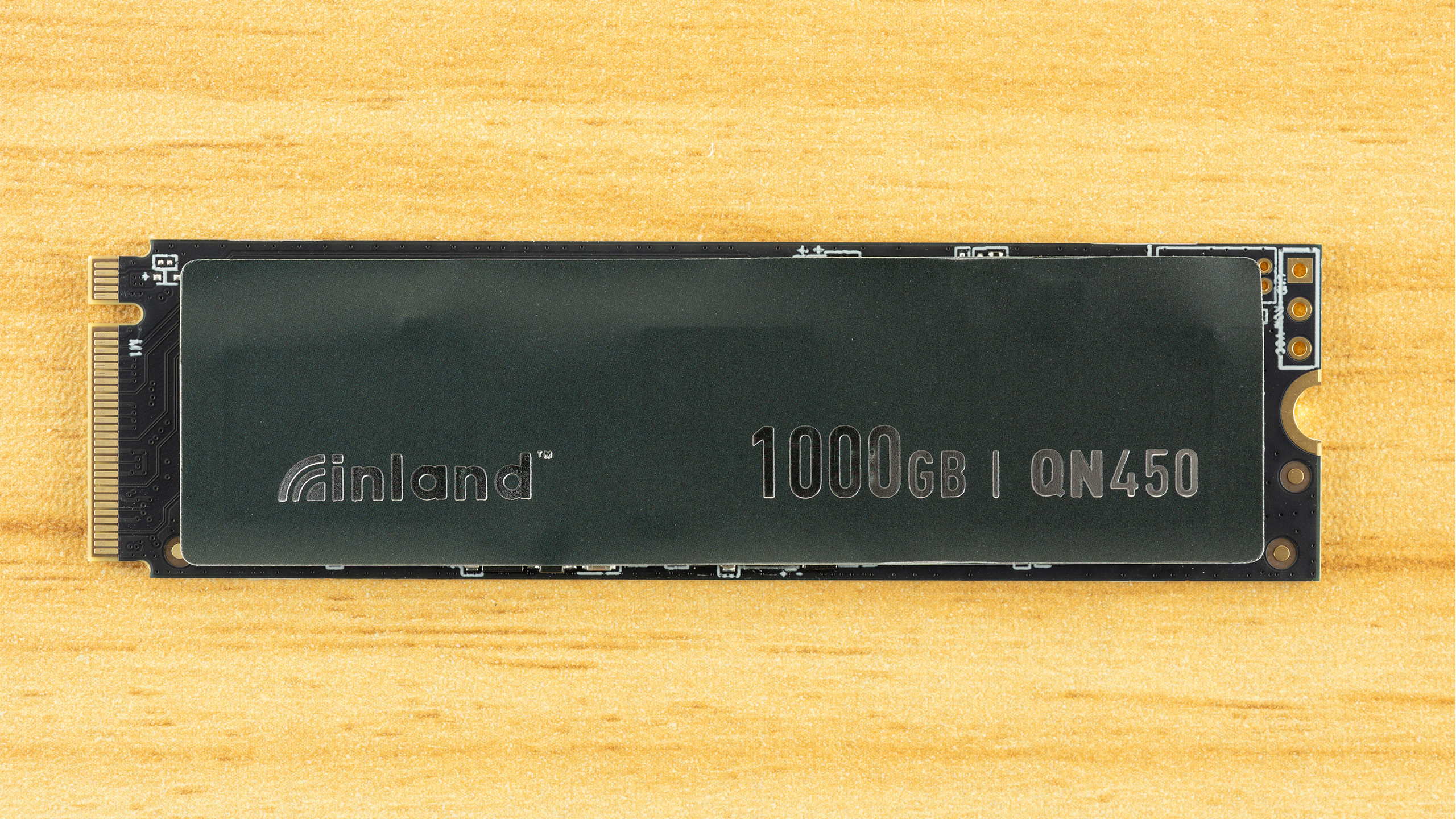
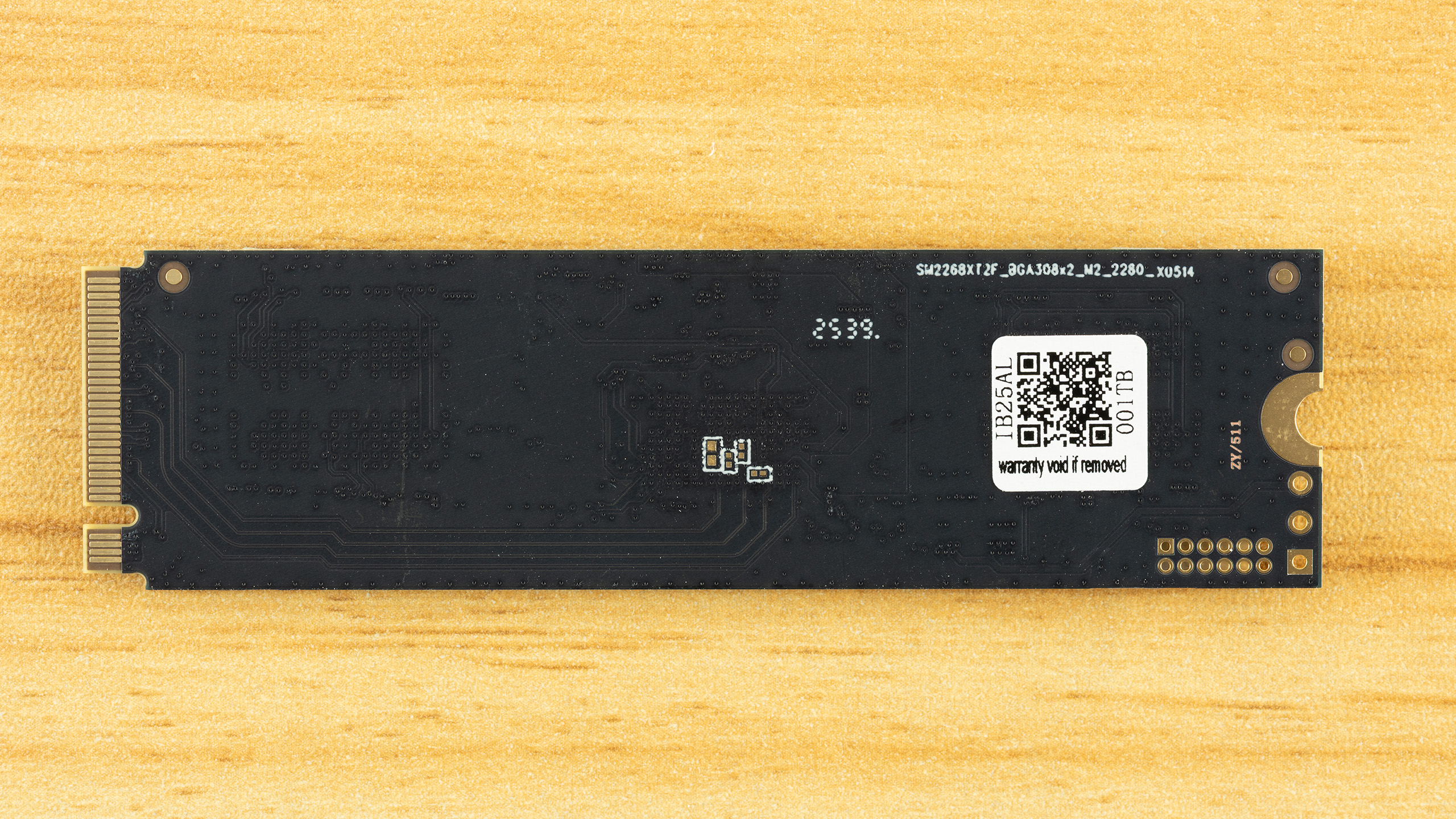
A simple, understated, single-sided drive. The lettering on the PCB indicates this is using the Silicon Motion SM2268XT2 controller with BGA308 form factor flash – times two – in the M.2 2280 form factor. No frills, which we actually like.
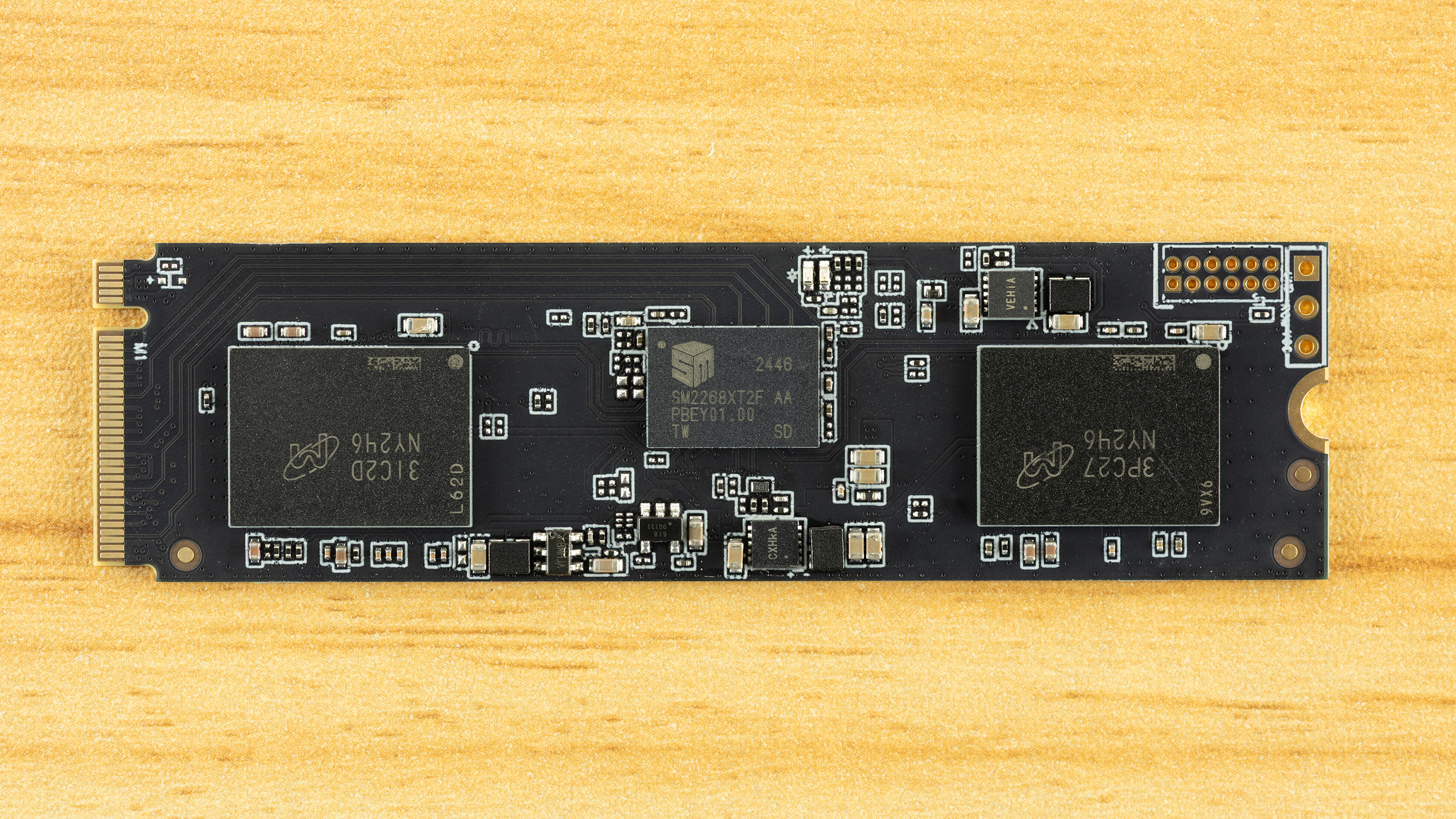
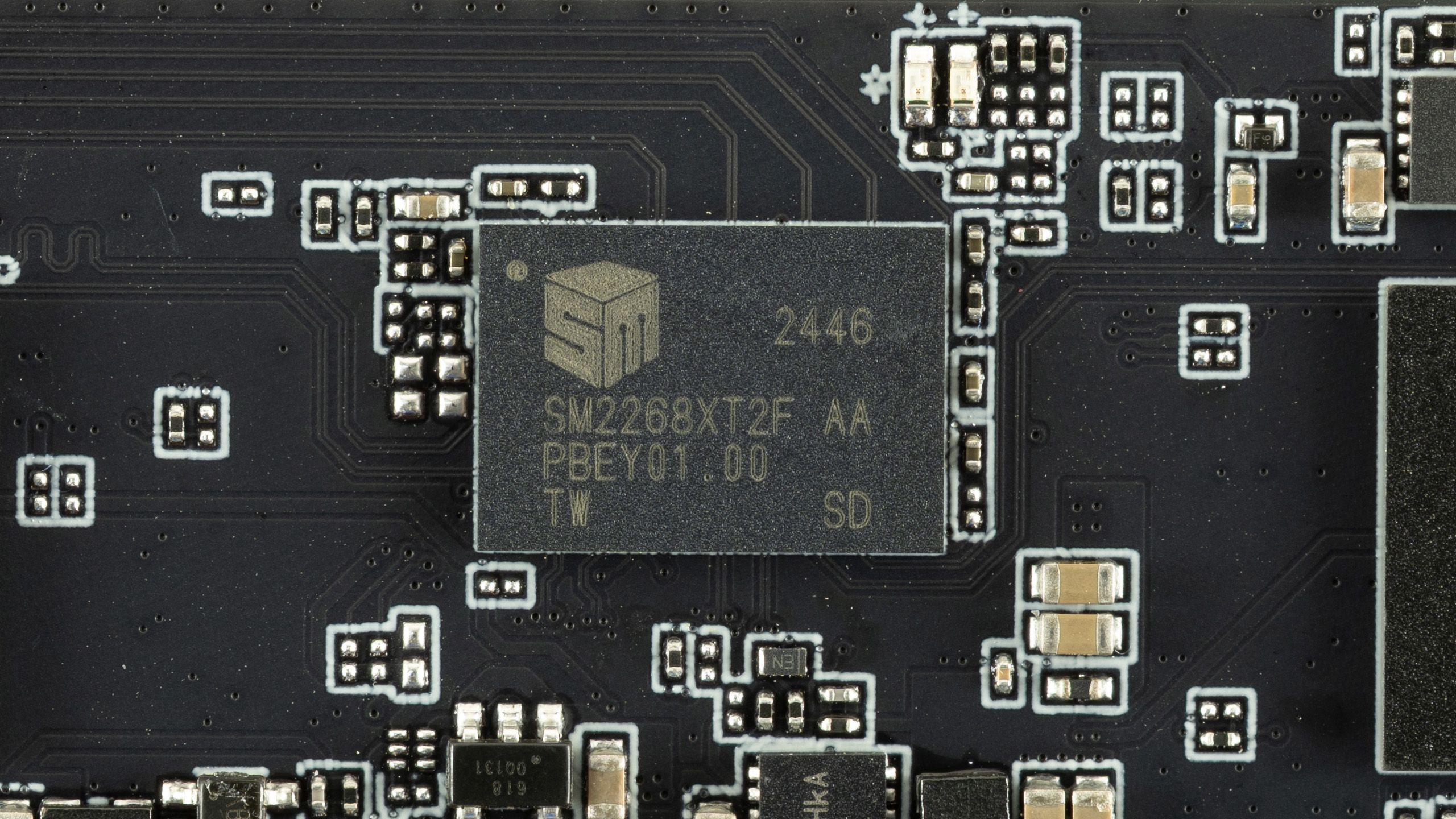
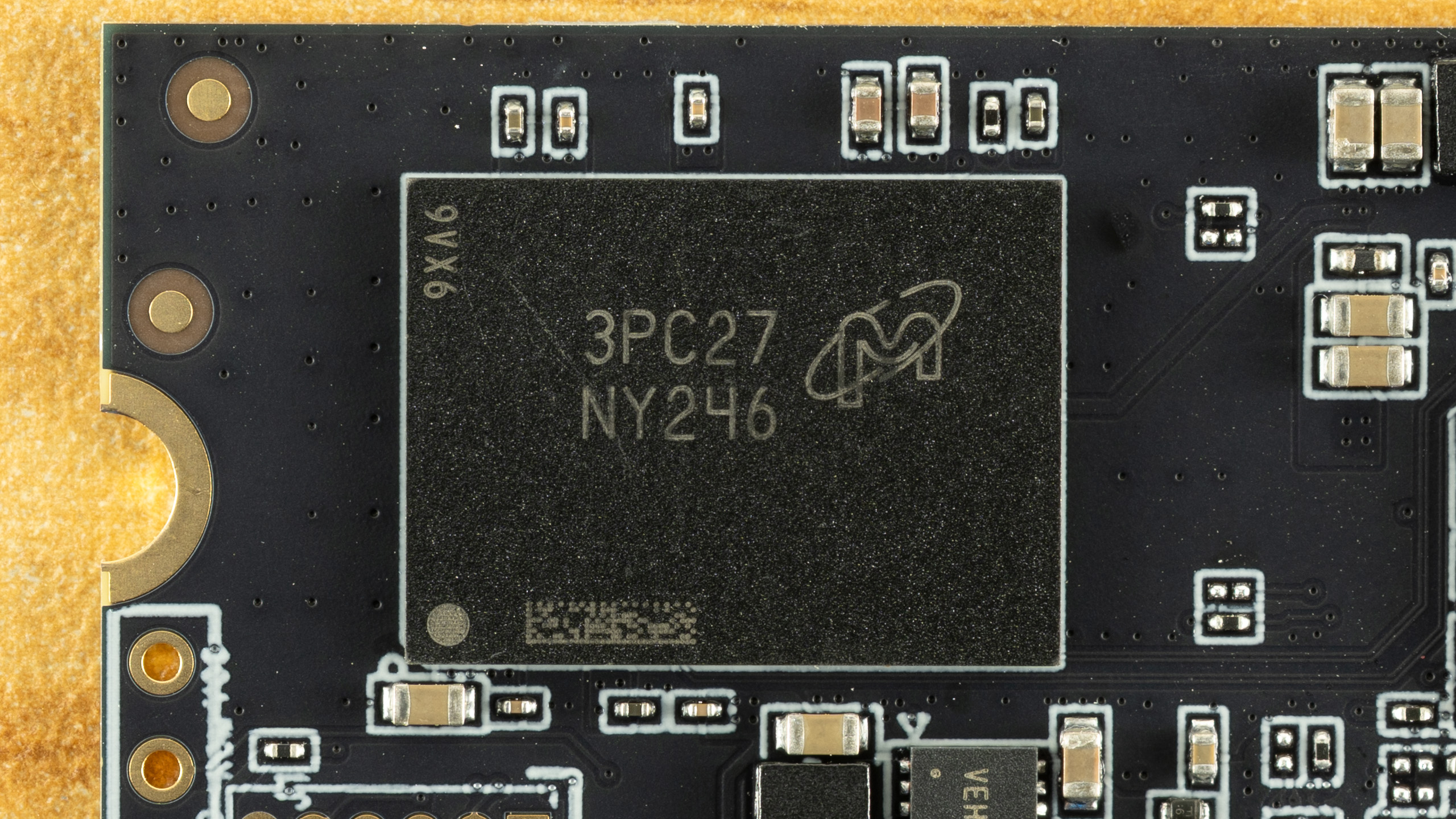
Controller confirmed, two NAND flash packages confirmed. SMI’s SM2268XT2 is a four-channel, DRAM-less SSD controller that can compete with the likes of Phison’s E27T and Maxio’s MAP1602. Those two are excellent controllers that can get hit over 7 GB/s with the right flash. The SM2268XT2 is no different, but it’s often seen leaning more budget than its peers. The Biwin M350 is a good example, as is the Kingston NV3. We found in our M350 review that the hardware, as specified, is selling itself short – it can bring some decent performance numbers.
We expect the QN450 to be no different, as 5 GB/s with this controller and flash is simply significantly below what the hardware can do. Often, hardware will be undersold like this so that you can have hardware swaps down the line – that is, different controllers and flash that can meet a basic spec. That might very well be the case here, as Inland lists the drive as using the Realtek RTS5772DL – a passable but not very good controller – and the Phison E21T, which is good but older. In fact, the main reason to use the SM2268XT2 would be to pair it with faster flash like the 232-Layer Micron TLC that we have here. So, yes, hardware swapping remains open given what Inland lists, but a manufacturer could also run the drive slower with better hardware for other reasons, such as extending the lifespan of weaker flash. However, we discovered nothing to suggest that is the case here; in fact, the configuration of this flash is quite performant with good endurance.
MORE: Best SSDs
MORE: Best External SSDs




 English (US) ·