

Published Jan 26, 2026, 1:00 PM EST
Cade Onder is a video game, movie, and chicken tender enthusiast. He has been writing about games since he was 14 and is always trying to learn more about the gaming industry. You can follow him on Twitter @Cade_Onder for bad jokes, bad takes, and pictures of chicken tenders.
Highguard is going to be one of the biggest surprises of 2026 for many gamers. At The Game Awards in December, many tuned in for reveals of blockbuster titles like two new Tomb Raider games and a brand new Star Wars RPG, but many were curious about what may be in store for the final reveal.
This slot is historically reserved for a bombshell, like Naughty Dog debuting the first look at Intergalactic: The Heretic Prophet. Many hoped for something like Half-Life 3 this time around, but they were treated to something else: Highguard. A brand-new shooter from some of the minds behind games like Apex Legends, Titanfall, and Call of Duty: Modern Warfare. People were not impressed. There are already so many free-to-play shooters that look like this, and it didn’t look particularly unique.
Highguard Is A Fresh Shooter That Invents a Whole New Genre
I believe the hype

After playing about six hours of Highguard, I can safely say this is one of the freshest and most fun shooters from one of the most passionate teams I’ve ever met. These are some of the people who have made not just one, but several of the best shooters of the last 15 years. They know what they’re doing, and they want to shake things up, and they have.
Highguard is a “raid shooter”, a new genre pioneered by developer Wildlight. Two teams of three will go head-to-head not to get the most kills or the best loot, but to destroy the enemy base. Each team starts the match by fortifying their own base, similar to Rainbow Six Siege before setting outside to go loot. Eventually, this leads to both teams clashing somewhere on the map over a giant sword, known as the Shieldbreaker, which allows whoever wields it to breach the bubble that protects bases. Once you breach, you have to plant bombs around the base and defend them. Each successful blow to the base takes away from the defender’s health bar, but if they are able to successfully repel an attack, the attacker will lose health from their base.
Highguard succeeds at having a very simple objective of taking the enemy base down, but layers it with so much depth.
All of this is fueled and driven by Apex Legends-esque gameplay with colored loot, armor, punchy gunplay, and momentum-based movement. Creative director Jason McCord told Screen Rant in the goal was to make people feel comfortable on the sticks with familiar gameplay, but challenge their brain with a whole new objective.
“It’s close to Apex, but you put a lot of the same people in the same room and tell them to make something they like, it’s going to taste similar,” he said, “You should be able to feel very comfortable on the sticks, but your brain is engaged in something new because the game is asking you to do different things.”
Highguard succeeds at having a very simple objective of taking the enemy base down, but layers it with so much depth. You have mounts that allow you to quickly get around the map, the ability to earn currency to upgrade your loot, and a bunch of tools that create a sandbox-style of combat.
During one of my matches, my squad was searching for the sword and was ambushed out in the open. We were pinned down by snipers and suppressing fire, but I had picked up a zipline launcher earlier in the match. This was a rare zipline launcher which gave it a modifier that allowed anyone riding it to turn invisible. So, I shot the zipline behind the enemies and then rode across it while cloaked, giving me the ability to flank them entirely unseen. It’s moments like these that make Highguard so exciting, one well-thought out moment and a handy piece of loot can even the odds in a fight.
You Can Always Turn The Tide

Highguard always gives the underdog the chance to come back as well. There are many different systems in place to allow people on the backfoot the opportunity to turn things around. Defenders have the chance to score by successfully countering an attack, and then they can try and go on offense to deal a killing blow to the enemy base, for instance. It’s a very well-balanced game that manages to retain tension at all times. Victory isn’t assured until the game is over, which means you can never let your guard down.
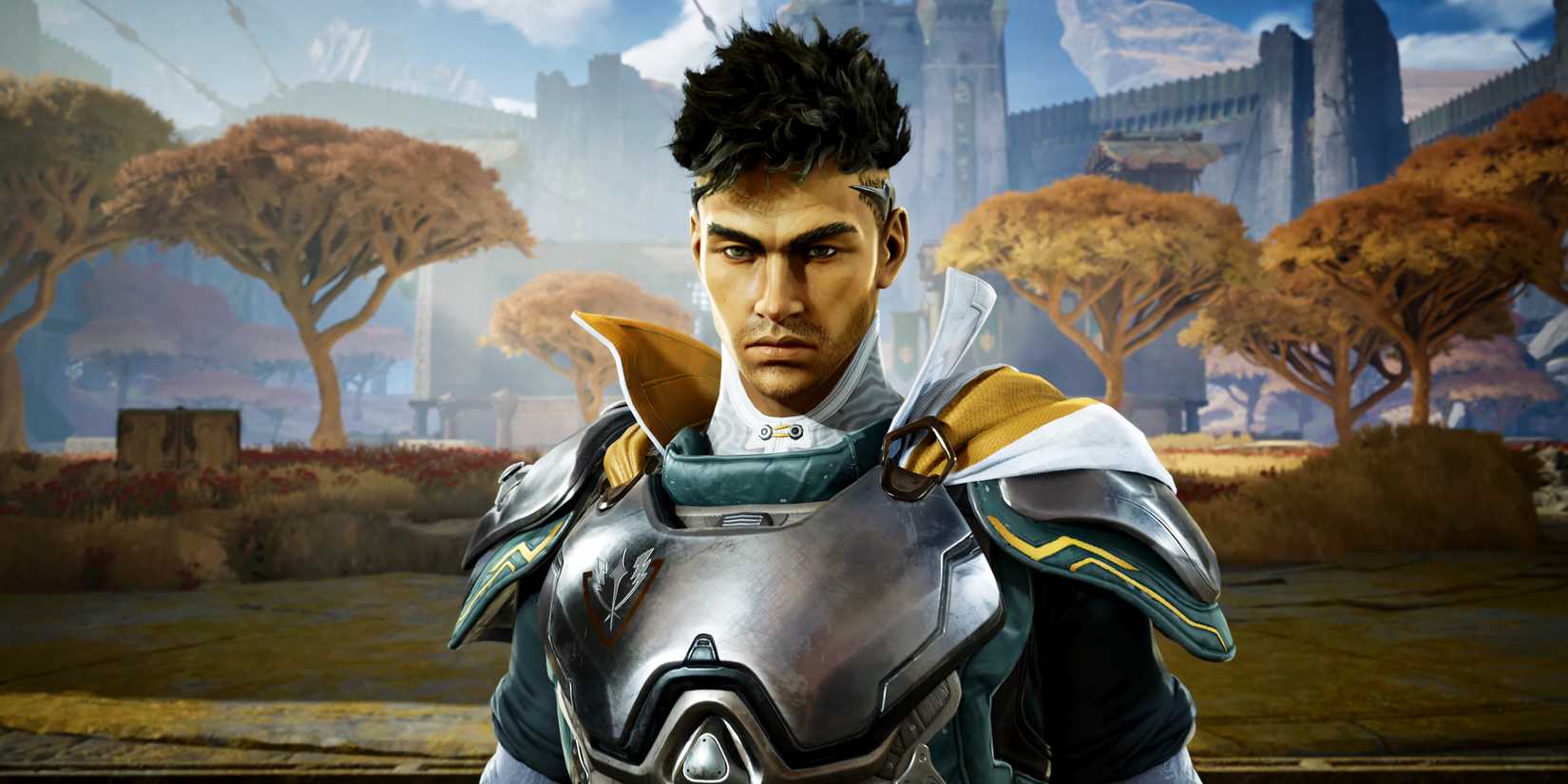
As for the game’s characters, known as Wardens, the actual powers you possess in Highguard largely aren’t terribly unique. It’s the kind of stuff you’d find in a game like Valorant, with heroes putting up walls of ice as cover or to block off flanking routes, but the abilities make players feel very powerful. My main character during my playtime was Atticus, a lightning-wielding hero who can throw electric rods at enemies to passively deal small damage to anyone near it. His ultimate allows him to fly into the air and shoot lightning down at foes like Zeus, making you feel exceptionally powerful.
These characters are proof of Wildlight’s desire to let anyone turn the game around at any time. These characters can turn the tide of battle with ease thanks to a well-timed ultimate. If the enemy is steamrolling your team inside your base, activate your ult and push them back so you can regroup and potentially fend off the entire attack to have another fighting chance.
After playing the game for a bit, I brought some feedback to the developers. I suggested a mechanic that would allow you to sort of eject off the mount to gain some momentum and propel yourself toward or over enemies. I also asked if it was feasible to add in a third team with their own base. It turns out, they’ve thought of all of this and much more. Highguard is the final product of four years of iteration. McCord and designer Carlos Pienda told me that the game is nothing like what they set out to make initially, beyond the core idea of raiding bases.
Initially, it was eight teams fighting against each other, but the matches went on for hours and no one was making any real progress. They kept whittling it all down and discovered that two teams was the optimal structure, as even a third team would either have nothing to do or annoy other players too much by interrupting raids. The team trusted the process, had confidence that they had something unique in an oversaturated market, and focused on making it the most easy to understand and accessible, yet fun game they could make.
Why Respawn Employees Left Their Jobs to Make Highguard
A big change
The story of how this game came to be is just as interesting as the game itself. A bunch of talented people who worked at Respawn Entertainment and other AAA studios left their jobs to make a new studio. They weren’t fired, there was no big dramatic exile, it was simply a desire to do something new.
Creative director Jason McCord has done this twice now. He worked on the original Modern Warfare series at Infinity Ward, but left just after the release of Modern Warfare 2. He and around a few dozen other developers left with Vince Zampella and Jason West to found Respawn Entertainment, eventually creating games like Titanfall and Apex Legends. Now, he’s doing it again with Wildlight as felt “trapped” in working on creatively safe projects at the EA-owned studio.
“You can almost get trapped in the games you’re working on,” said McCord. “In both of those scenarios, we had very successful games. I love Apex, I could’ve stayed and had a very comfortable job. But there was this itch of wanting to [do something new]. But that won’t work on Apex and we can’t go try that somewhere else, because Apex is successful and we have to keep working on it.”
For others, like Lead Designer Mohammad Alavi who was also part of the Infinity Ward team that moved on to Respawn, it was different. He loved the people he was working with and wanted to follow them to wherever they went next.
“Pretty early on in my career, I thought it was more important to work on a specific kind of game and a specific kind of company,” said Alavi. “Really quickly, I was like ‘f**k that noise.’ I want to work with people. I want to work with this team and wherever they go, I go. This core group of people is the one I was the closest with.”

Unlike Respawn, Wildlight is an independent developer and will be self-publishing Highguard. They call the shots and aren’t beholden to shareholder interests. That means that in addition to handling the creative side of the game, they also get to control the marketing as well, which also means they have to take accountability if the marketing doesn’t go according to plan. Originally, Highguard was meant to shadowdrop, just like Apex Legends did. There would be no pre-release marketing, it was just going to release in January 2026.
However, the team was given an opportunity to prepare something for The Game Awards after Geoff Keighley played the game last summer and had high praise for it. However, they are very aware that the reveal did not do a good job of communicating what Highguard was and have used the last seven weeks to develop new marketing materials based on that feedback. The team was cracking jokes about the online chatter and backlash all day long, but their confidence in their game allowed them to make light of the situation instead of being nervous.
They are very aware that the reveal did not do a good job of communicating what Highguard was and have used the last seven weeks to develop new marketing materials based on that feedback.
As for their live-service plans, this is a team that launched one of the most notable titles in the genre. They learned a lot of lessons and have developed a pipeline to not only be able to distribute content to players quickly and efficiently, but also react based on what the fans are saying. If something isn’t working, they’ve designed it so certain things can literally be turned off with ease. There is an entire year of content mapped out with new characters, maps, weapons, and more, and they are aware of what it takes to make all of that come to life.
While there will undoubtedly be skepticism around Highguard until people have played it, I can earnestly say I believe in this game. This is a game built by people who left their comfortable jobs at major developers like Respawn Entertainment in favor of a brand-new company. Many of the developers I spoke to said they were content at Respawn, but they wanted to work with the specific people that were going off to found Wildlight. They followed them out the door based solely on loyalty, even when there was no office, no game, and no guarantee this would all pan out.
There is no publisher or shareholders to please. This is raw passion and talent, built by gamers for gamers, not suits. For that alone, Highguard has my support, but it’s backed up further by pulse-pounding gameplay that has you cheering in a genre that I’ve never really seen before. Once people have played the game, it’s hard to imagine there being any reason to doubt what Wildlight has accomplished and it’s hard to imagine it not becoming one of the major ongoing live-service games.
Travel and lodging was provided by the publisher for the purposes of this preview.

Systems

Released January 26, 2026
Developer(s) Wildlight Entertainment
Publisher(s) Wildlight Entertainment
Multiplayer Online Multiplayer
Cross-Platform Play Full
Number of Players Single-player
Steam Deck Compatibility Unknown





 English (US) ·