
As one of TechRadar’s resident electronic music nerds and a producer and DJ in my spare time, I’ve always loved showing people the ropes of DJing. The fundamentals of track selection and mixing are really quite simple, which ostensibly makes it one of the more accessible ways to enhance your music experience in a way even the best speakers and best headphones can't offer on their own.
The problem is that DJ equipment – especially the pro-grade stuff we see in nightclub booths and on festival stages – costs a lot of money. We’re talking about five figure sums in either dollars or pounds for a set of industry-standard players and an accompanying DJ mixer, which is a touch beyond the scope of our audio buying guides.
Take a look at any DJ booth and you’re more than likely to spot the logo of Pioneer DJ, now known as AlphaTheta. But while AlphaTheta is best known for its professional kit, it also makes one of the best cheap DJ devices I’ve ever used, which has now earned a place on my list of Christmas gift recommendations.

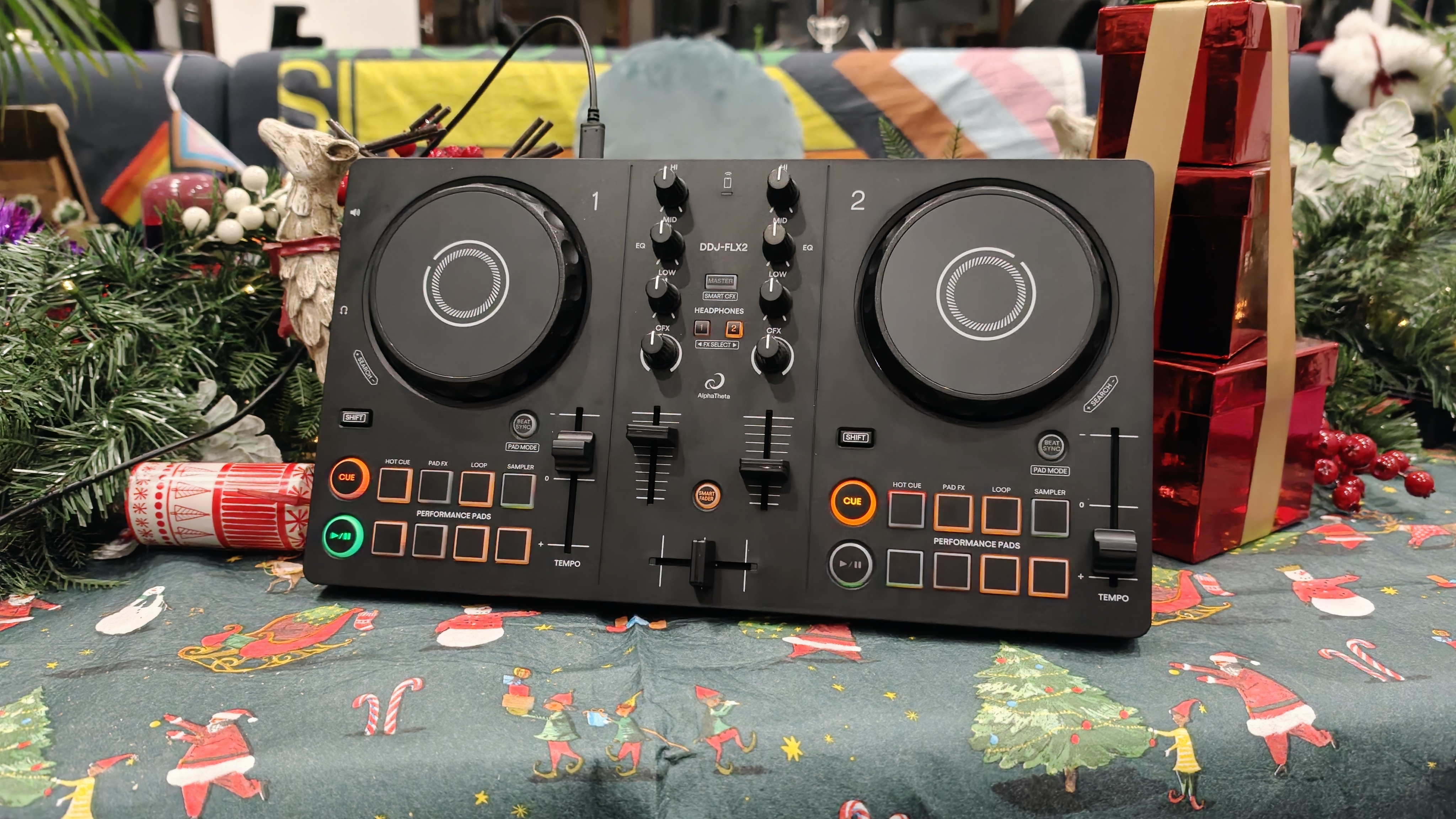
Enter the DDJ-FLX2, the cheapest, smallest, and simplest DJ controller from AlphaTheta. Inspired by the layout of the company’s CDJ media players and DJM DJ mixers, the DDJ-FLX2 takes a handful of essential dials and faders, as well as some neat assistive features for newcomers and wild effects controls, and puts it all on a faceplate not much bigger than a sheet of paper.
To get specific, the DDJ-FLX2 is composed of two identical player sections, each with a jogwheel, tempo fader, cue and play buttons, and a performance pad array for loops and effects. The central mixer section has two channel faders, a three-band equalizer with filter, and headphone cue controls. A far cry from AlphaTheta’s pro kit, the DDJ-FLX2 comes in cheap at just $189 / £159 / AU$279.
In my four years DJing I’ve mixed on a variety of systems made by Pioneer DJ and other top brands, and my current home setup relies on Pioneer DJ digital media players. Within the DDJ lineup of controllers, I previously owned the DDJ-FLX4 and DDJ-FLX6, and used each for hundreds of hours with AlphaTheta’s own Rekordbox software.
This is all to say that I know Pioneer DJ / AlphaTheta kit very well, and have built up certain expectations for build quality, functionality, and features – it’s a brand known for high prices, but also for unshakeable reliability. Before using the DDJ-FLX2, I wasn’t sure that such a cheap and simple controller would be able to live up to these past experiences.
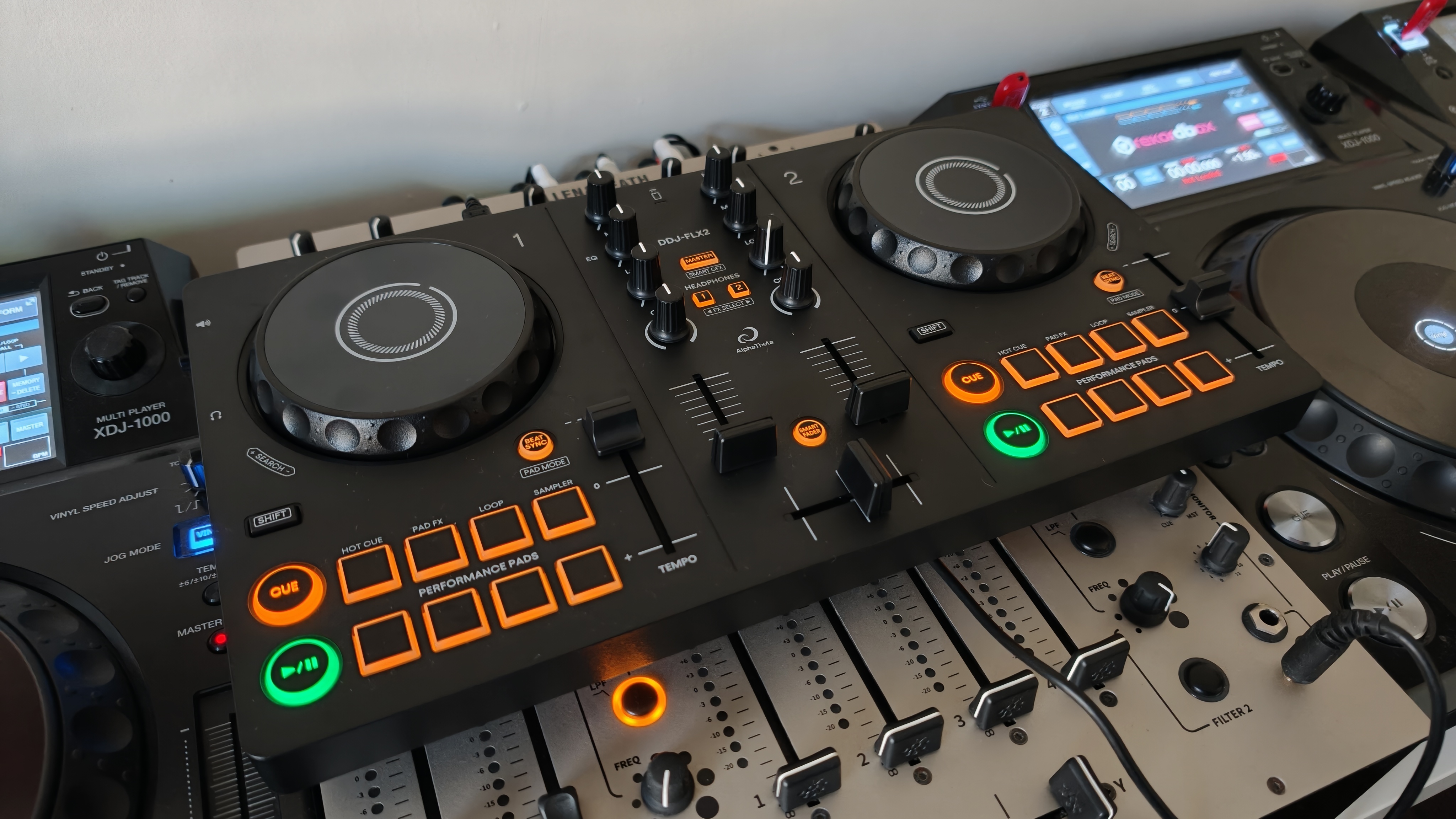
However, I’m happy to report that all of that melted away when I loaded up Rekordbox, plugged in the DDJ-FLX2, and was hit with a similar feeling of flow and rhythm to the one I get with my pro setup – the faders are smooth, the jogwheels responsive, and effects as fun as ever. I was also really impressed with the sound quality coming from both the headphone jack and main output – it’s a clean and transparent signal that made the three-band EQ sound great on my 3.5-inch speakers.
Speaking of the EQ, I think there are just enough features here to make the DDJ-FLX2 welcoming to new DJs while making mastery of the unit a satisfying challenge. The jogwheels, while small, track motion well – for club-style mixing they’re solid, and they even hold up to a bit of vinyl-style scratching. I’m also glad to see that Smart Color FX have made it over from the DDJ-FLX4: these are great-sounding and inventive effects that are just a blast to use, from robotic pitch shifters to cavernous reverbs.
An easy setup process makes the DDJ-FLX2 even better for beginners. The unit connects to your phone, tablet, or laptop via an included USB-C cable. The unit also supports Bluetooth, which worked great on my iPhone 15 but wouldn’t connect to my Oppo Find X9 Pro Android phone. It’s bus-powered with a built-in audio interface, which alongside its compact design makes it a great choice for DJing on the go.
As for sourcing your tunes, Rekordbox supports Apple Music, Spotify, Tidal, and Soundcloud integration on both desktop and mobile, so you can stream from your library as well as playing back files from your hard drive.
And there’s more joy for newcomers thanks to the Beat Sync and Smart Fader buttons – the former locks each player in time with the other, while the latter adds a tempo-shifting ability to the crossfader, making it possible to blend two totally different tracks by simply shifting the fader from side to side.
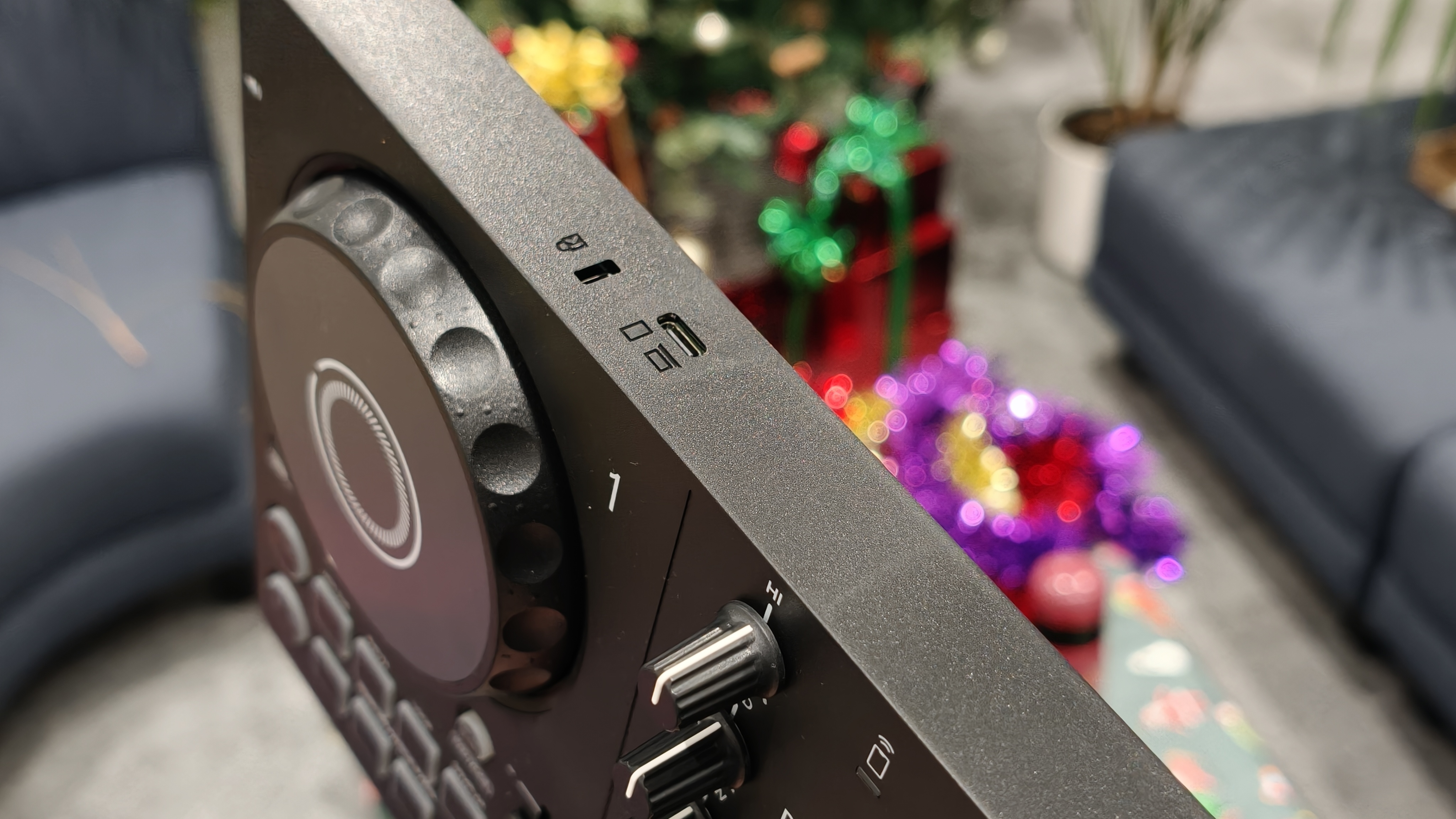
That’s not to say there aren’t some caveats. The big one that could annoy even total newbies the lack of dedicated controls for selecting and loading in tracks. That means you need to use your device’s touchscreen or mouse to load up the next song, which can slow you down and take some momentum out of the mix. This isn’t a huge problem for new DJs learning the ropes, but in faster genres like DnB or techno I can see it becoming an annoyance pretty quickly.
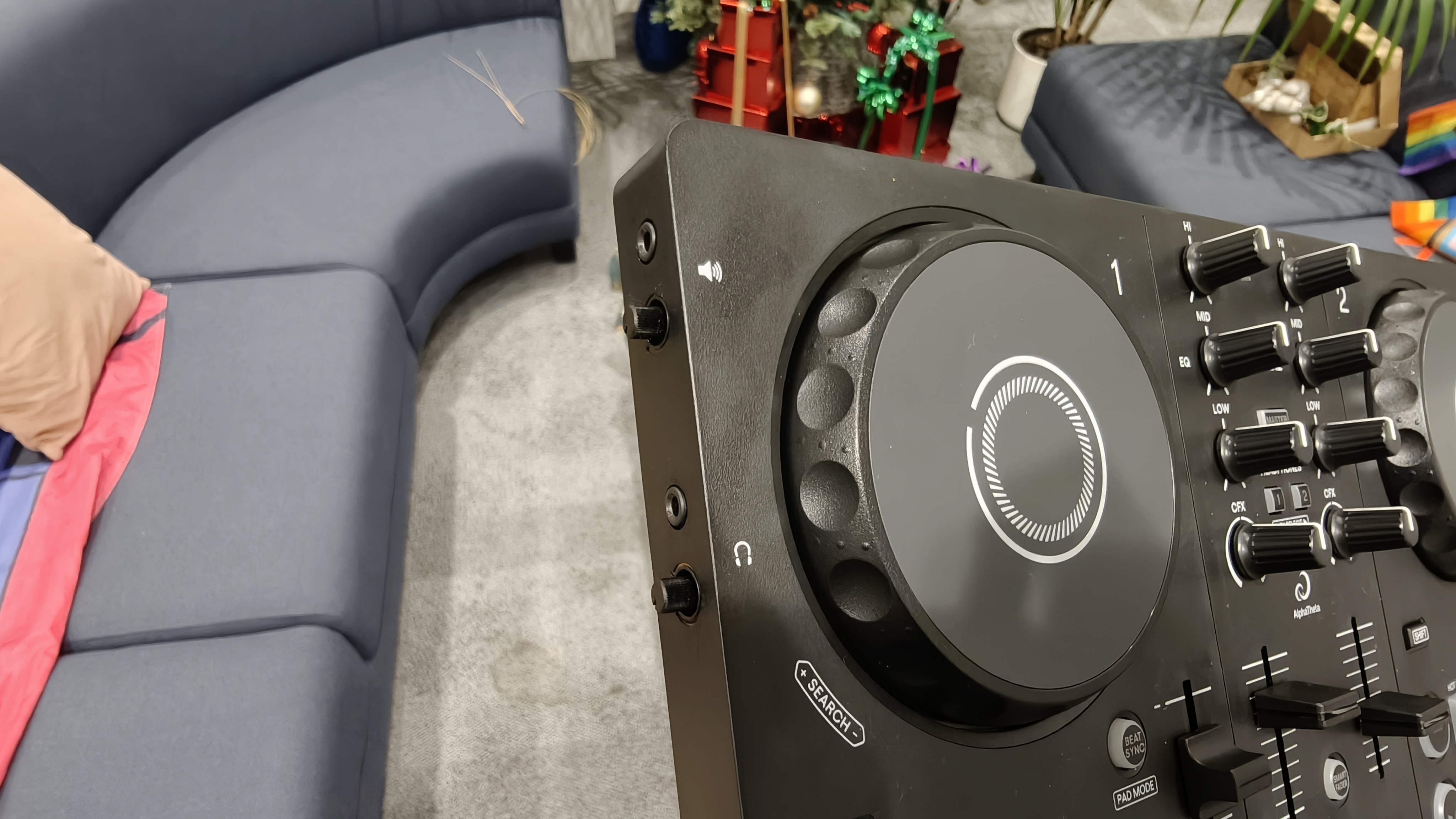
Also, the build quality is a mixed bag. I appreciate that all of the faders are metal with plastic caps and all have a smooth action, but the plastic faceplate looks pretty cheap and the tiny volume dials for the two jacks are placed annoyingly on the left side, right next to where the cables stick out (also, the left channel fader on my unit arrived a bit askew and remains so after trying to realign it – I’ve reached out to AlphaTheta for comment on that).
The DDJ-FLX2 is, otherwise, a fantastic Christmas gift for music lovers, especially those that are on the fence about getting on the decks for the first time – the bevy of beginner-friendly tools, mobile support, and simplified layout make it really easy to get going. If you can live with its limitations, the DDJ-FLX2 is a welcoming and affordable option for new DJs.
I’d still recommend the DDJ-FLX4 ($329 / £279 / AU$499) to DJs with even a little experience or a slightly bigger budget because of its spacious interface, dedicated track selection and gain controls, and more advanced effects section. But at the end of the day, DJing is about loving music, and when it comes to getting the dance started with two tracks playing the DDJ-FLX2 does an impressively good job at an impressively low price.
Follow TechRadar on Google News and add us as a preferred source to get our expert news, reviews, and opinion in your feeds. Make sure to click the Follow button!
And of course you can also follow TechRadar on TikTok for news, reviews, unboxings in video form, and get regular updates from us on WhatsApp too.

 English (US) ·