
Philips Baristina Milk Frother: Two-minute review
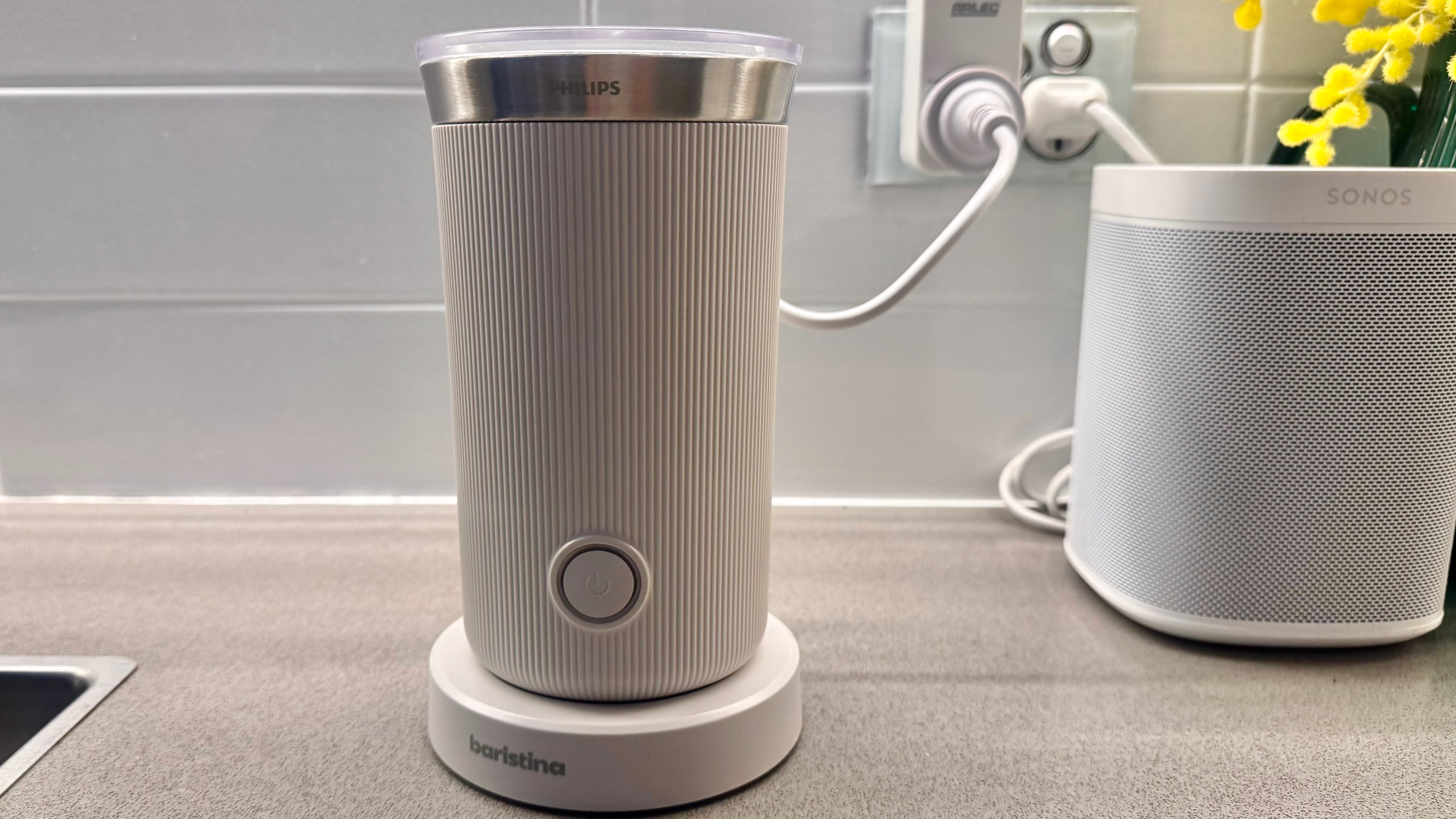
The Philips Baristina milk frother is designed to be partnered with the company’s Baristina bean-to-cup espresso machine, and it works an absolute treat. As it’s available as an optional extra for the Baristina machine, I’ve been using it for a couple of weeks alongside my Philips LatteGo 4400 Series espresso machine, and have found it to deliver much more pleasing results compared to my machine where milk foam is concerned.
It has three modes: hot milk foam, hot milk and cold milk foam. It’s incredibly easy to control, with just a single button that you press for no more than one second for hot milk foam, or you can hold it for three seconds to activate the cold milk foam mode. If you want hot milk, you need to remove the coil from the whisk before starting up the machine. Once the button is pressed, the Philips Baristina Milk Frother will spring into action to deliver you a foamy result. There’s no audible beep to let you know it’s finished, but the light on the button will go out.
In use, I found the Philips Baristina Milk Frother to be extremely quiet, measuring around 40dB using the decibelX app on my iPhone, and standing right next to it while it was working. It’s much quieter than using a steam wand on a coffee machine, or the automatic LatteGo system on my Philips machine.
The good thing about the Philips Baristina Milk Frother is that it’s been designed to work with any type of milk, including non-dairy varieties. This can’t be said of all milk frothers, including the Smeg Mini Milk Frother, which is intended to be used only with chilled full-fat dairy milk, and is a feature I find particularly appealing, being an oat milk drinker.
In tests, hot milk foam was very thick, making it well-suited for topping a cappuccino or even an espresso macchiato. Realistically though — and if you’re particularly specific about milk in your coffee — it’s just too thick to make a caffe latte or flat white. For me, personally, whose regular order is an oat milk flat white, I didn’t mind the thickness of the foam, especially as some other milk-foaming systems I’ve used aren’t as effective.
The exact results you achieve will depend on the specific milk you put in. I tried a couple of different oat milk brands and achieved similar results each time — this being a high level of foam, but without much gloss.
With that being said, if you want to be able to adjust the foam texture when frothing milk using a device such as this, the Dreo Baristamaker or Smeg Multi Milk Frother give you the option. It’s a similar story with cold milk foam too, with the Philips Baristina Milk Frother returning a thick, stable foam that is ideal for iced cappuccinos.
The carafe itself has a non-stick coating that helps your milk pour out easily, and it makes washing up as easy as possible. All it took during my use was a rinse under the tap to remove any leftovers. The whisk is removable to help ensure nothing is caught in it, and this, along with the lid, are both dishwasher safe.
While I was consistently pleased with results, given the fact you can’t specify the level of foam you’d prefer, and you can find more affordable options that do have such function, I have to dock some points from the Philips Baristina Milk Frother.
Philips Baristina Milk Frother review: Price & Availability
- List price: $99.99 / AU$149 (£79.99)
- ‘Coming soon’ in the UK as a standalone unit
The Philips Baristina Milk Frother has a list price of $99.99 in the US and AU$149 in Australia. In the UK, it’s currently only available when bundled with the matching Baristina bean-to-cup coffee machine.
At the time of writing, the Black set including the milk frother can be had for the same £299.99 as the Baristina coffee machine on its own. The White set is currently selling for £359.99. Given the fact the Baristina coffee machine doesn’t have a built-in milk frother, adding the matching one makes total sense. There is a listing on the Philips UK website for the milk frother as a solo unit, but it currently says “out of stock”.
Its list price places the Philips milk frother in mid-range territory. The Nespresso Aeroccino 3, which has previously been the milk frother I’ve used at home and which offers the same limited range of features, retails for $99 / £79 / AU$109, making it cheaper only in Australia.
If you want a milk frother that offers more features, Smeg Multi Milk Frother, which has six functions and is also suitable for making drinks like hot chocolate, costs $249.95 / £179.95 / AU$299 and is available globally.
Philips Baristina Milk Frother review: Specs
Swipe to scroll horizontally
Dimensions (H x W x D) | 195 x 112 x 112mm |
Maximum capacity | 4 fl oz / 120ml |
Modes | 3 |
Noise | 50dB |
Philips Baristina Milk Frother review: Design & performance
- Attractive matte finish in two colors
- Non-stick lining for simple cleaning
- Thick milk foam from all milk types
The Philips Baristina Milk Frother has been designed to perfectly match its recently released Baristina bean-to-cup espresso machine. My colleague, Cat, has already reviewed that machine, where she awarded it a full five stars, claiming it to be the best budget espresso machine currently available.
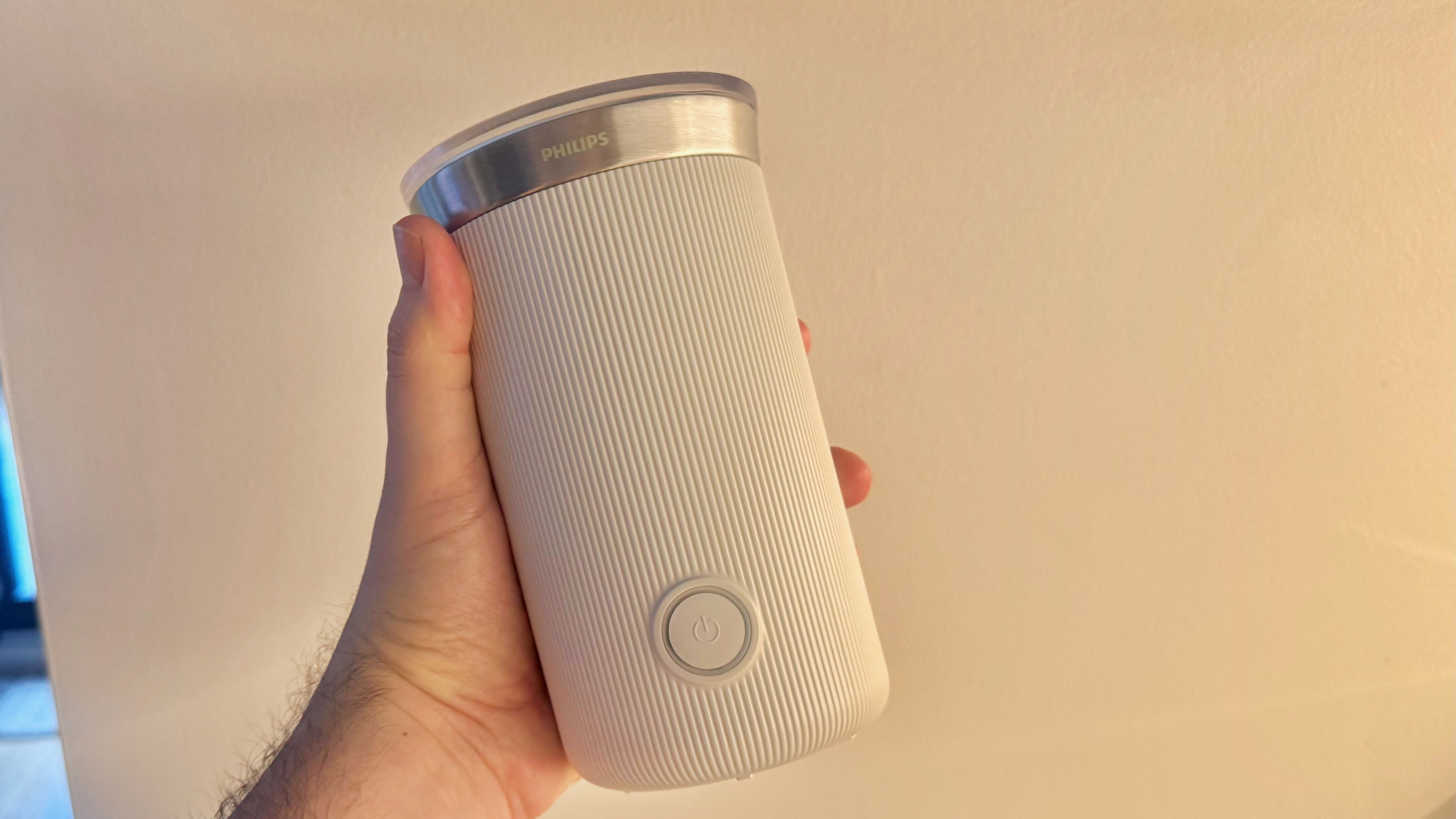
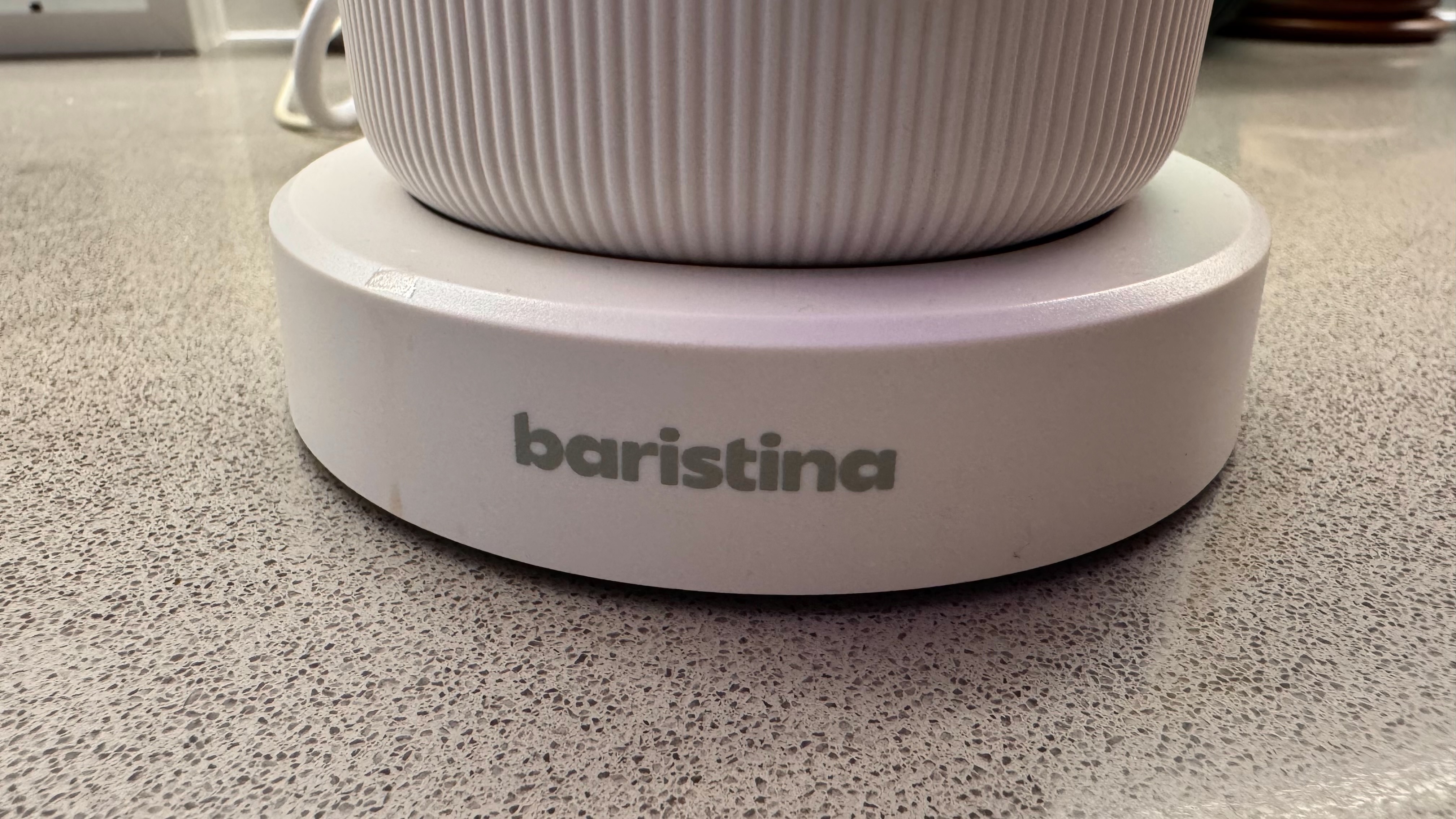
One of the only negatives she could find was that there was no built-in steam wand for frothing milk, making this standalone milk frother a necessity for milk-based coffee drinkers. It comes in the same two color choices of white or black, and adopts the same ribbed aesthetic as the main body of the matching machine.
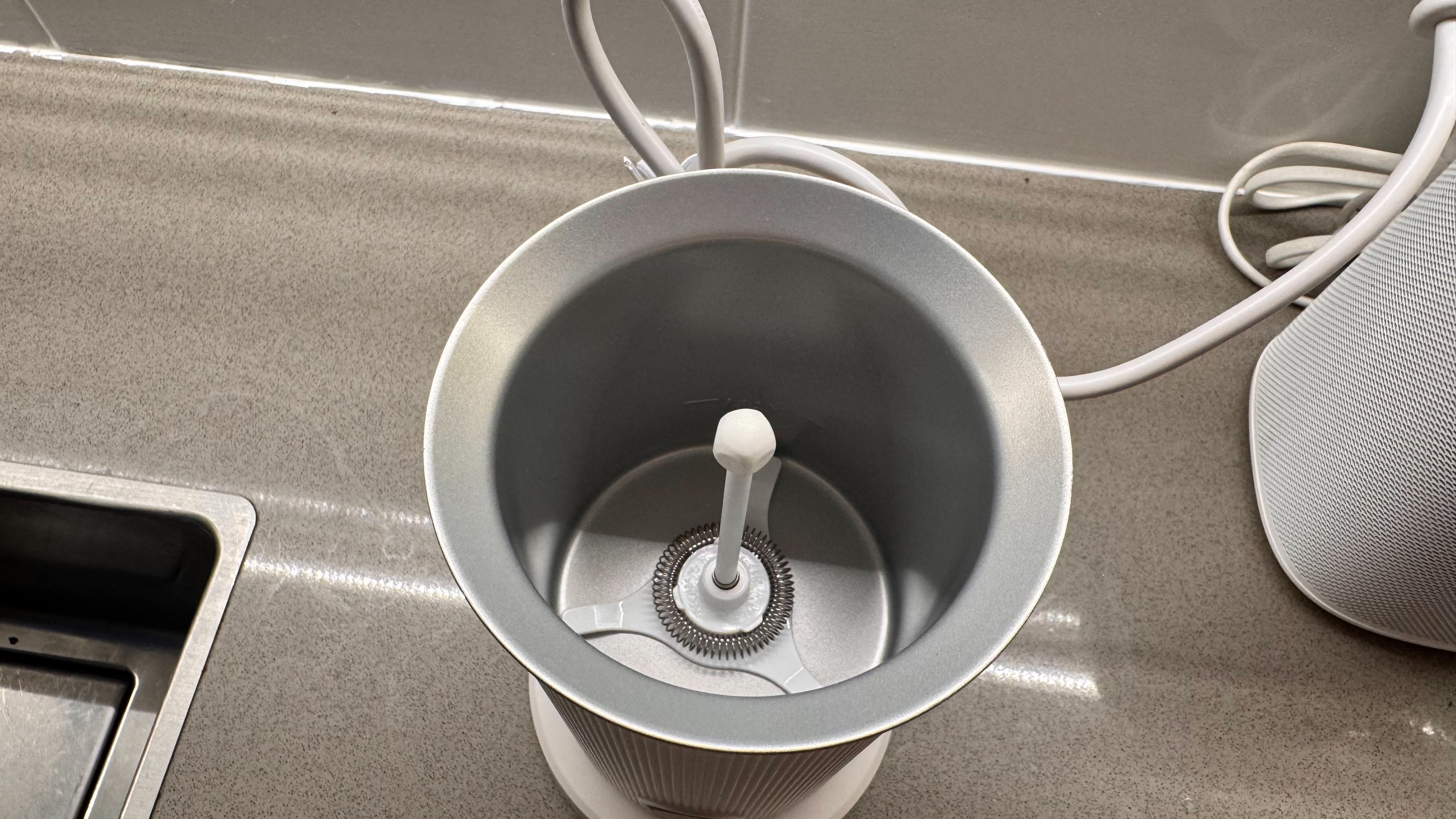
It comprises a cylindrical carafe, a translucent plastic lid, a removable whisk that’s held in place magnetically and a base that powers the frother. The carafe has a non-stick lining, with raised markings indicating the maximum fill level. There’s no minimum fill level marking, and Philips doesn’t list one on its website — it just mentions a capacity of 4 fl oz / 120ml — but I rarely filled up to the maximum fill line, and was still able to return a large amount of milk foam.
To activate the milk frother, you just need to press the button once to activate hot milk foam, or hold it for roughly three seconds for cold milk foam. You’ll know you’ve activated cold milk foam mode correctly because the ring light around the power button will turn blue. If you just want hot milk with no foam, you can unclip the coil from the whisk handle.
There’s no dedicated pouring spout on the Baristina Milk Frother, you’re free to pour out wherever you want. However, do note that the lack of spout, combined with the sheer thickness of milk foam produced does mean you can forget about creating latte art.
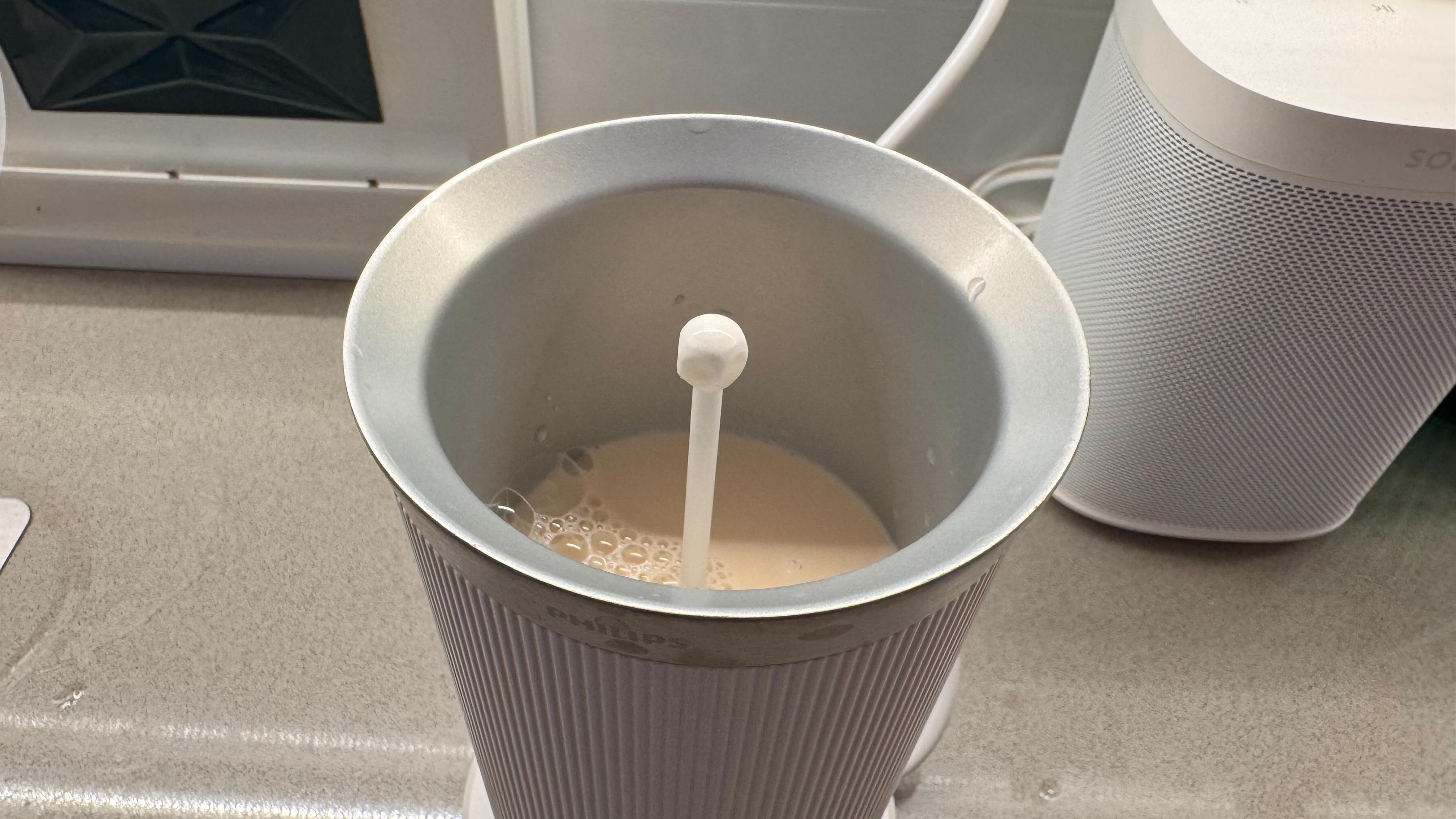
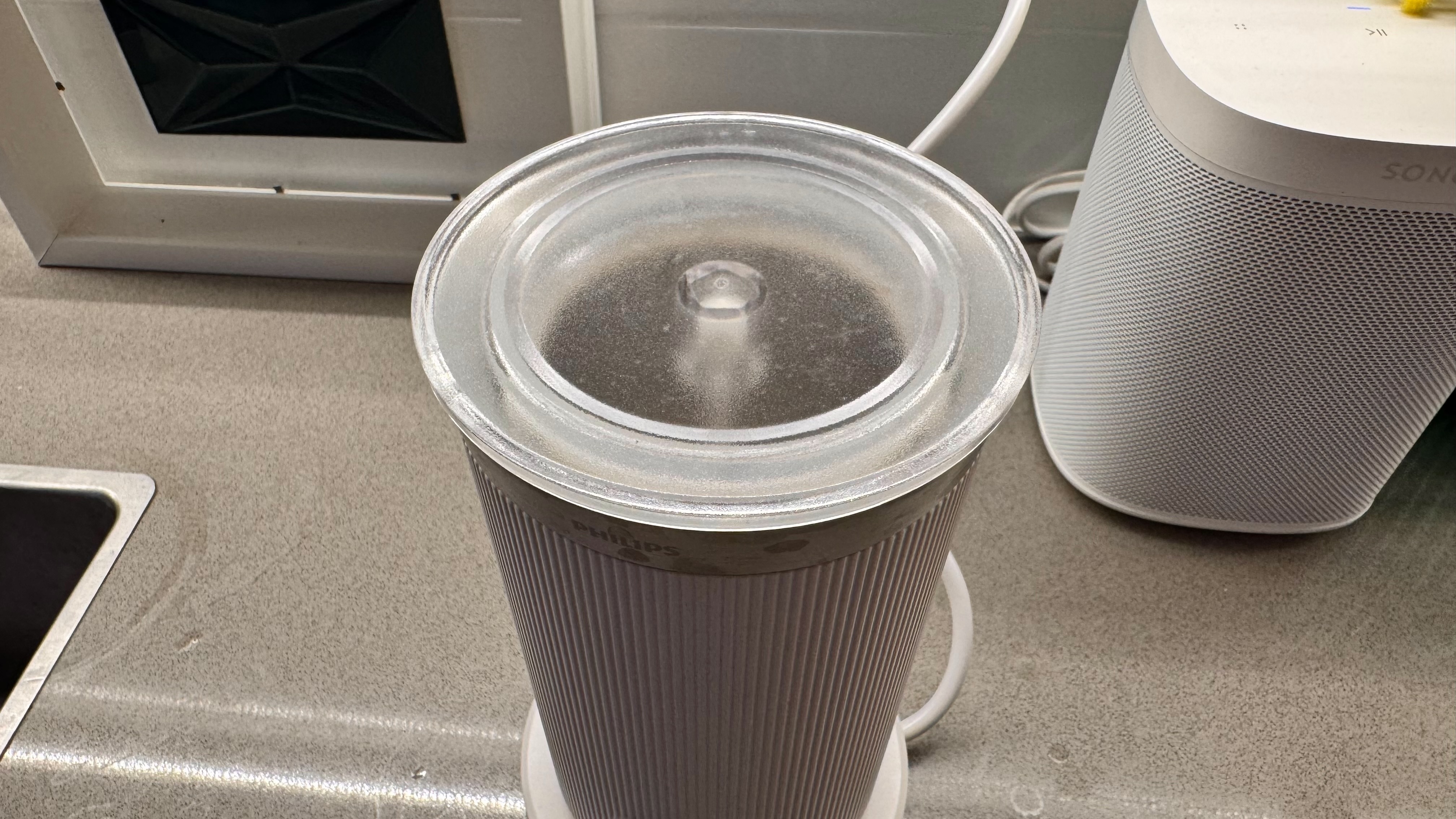
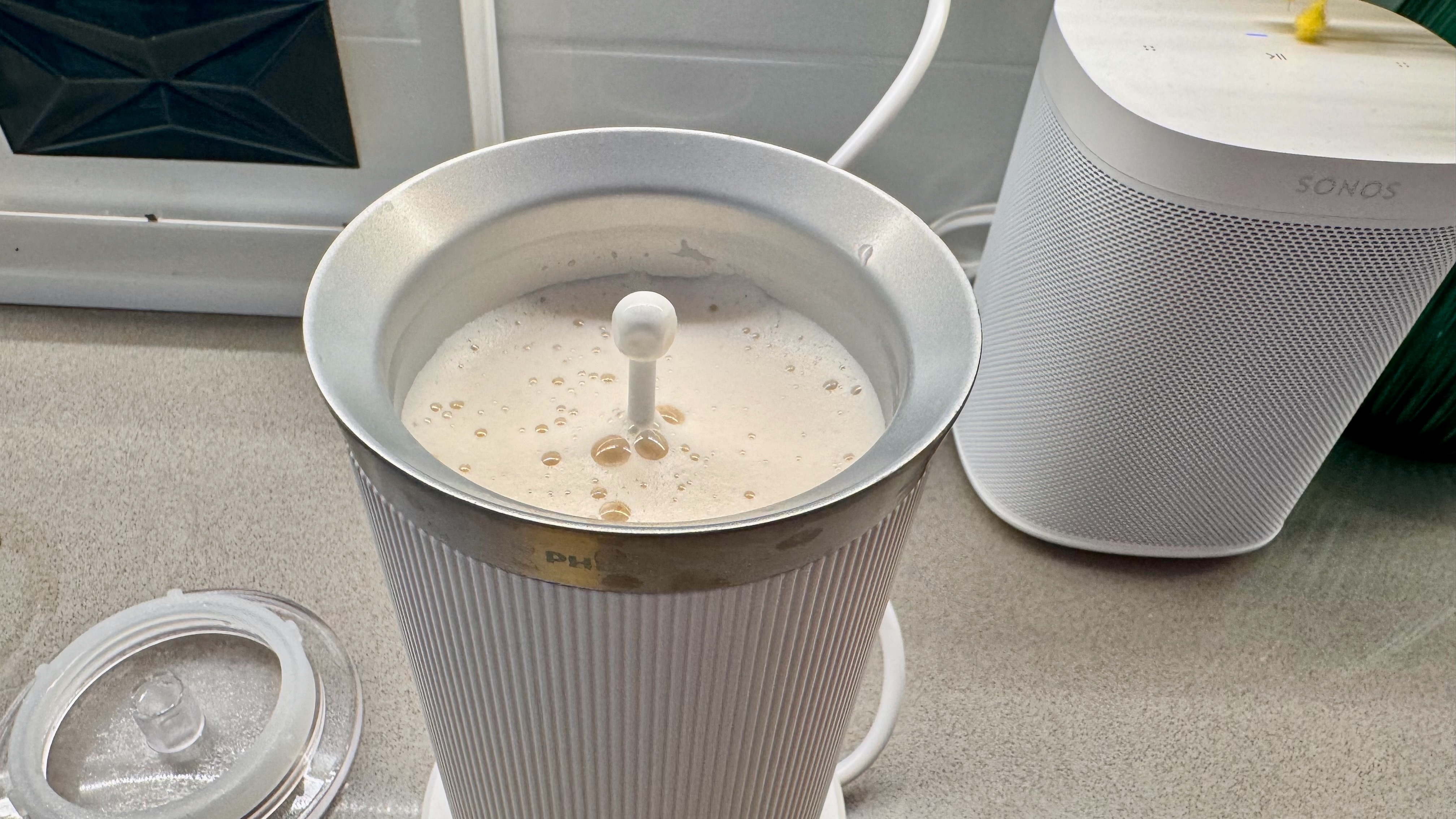
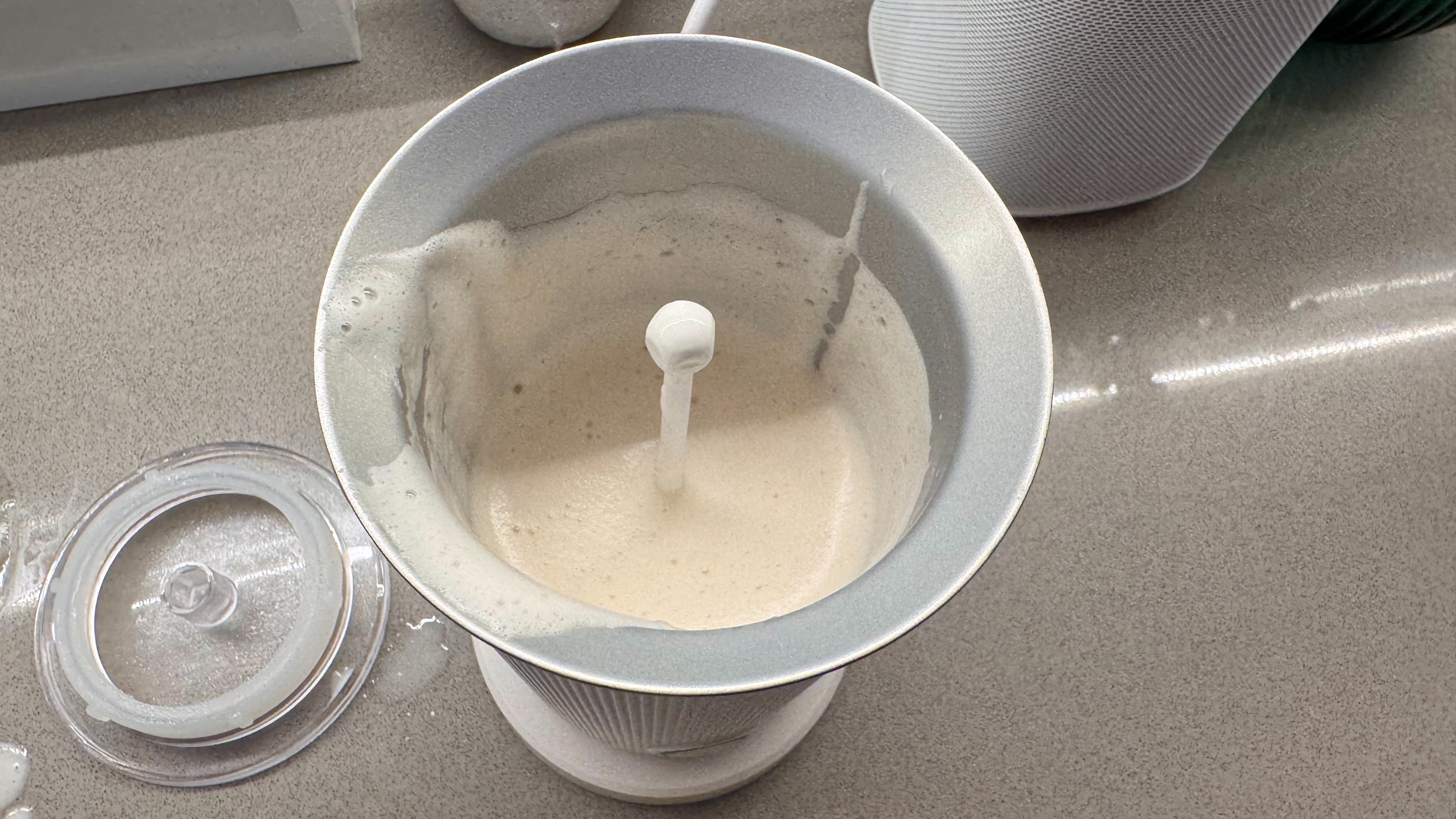
I found the Philips Baristina to be relatively quick to finish foaming milk, taking around 90 seconds with oat milk filled to the maximum fill line. The Nespresso Aeroccino 3 that I’ve previously used takes closer to two minutes to heat at full capacity, and the level of foam isn’t always as consistent.
While I primarily used oat milk during my testing, I did also use full-fat dairy milk and, as expected, the results were similarly impressive. Full-fat dairy milk is higher in protein, which is essential when frothing milk to achieve the desired results. Non-dairy milks don’t always have similar levels, so for the Baristina Milk Frother to deliver the level of foam it did with oat milk, is mightily impressive.
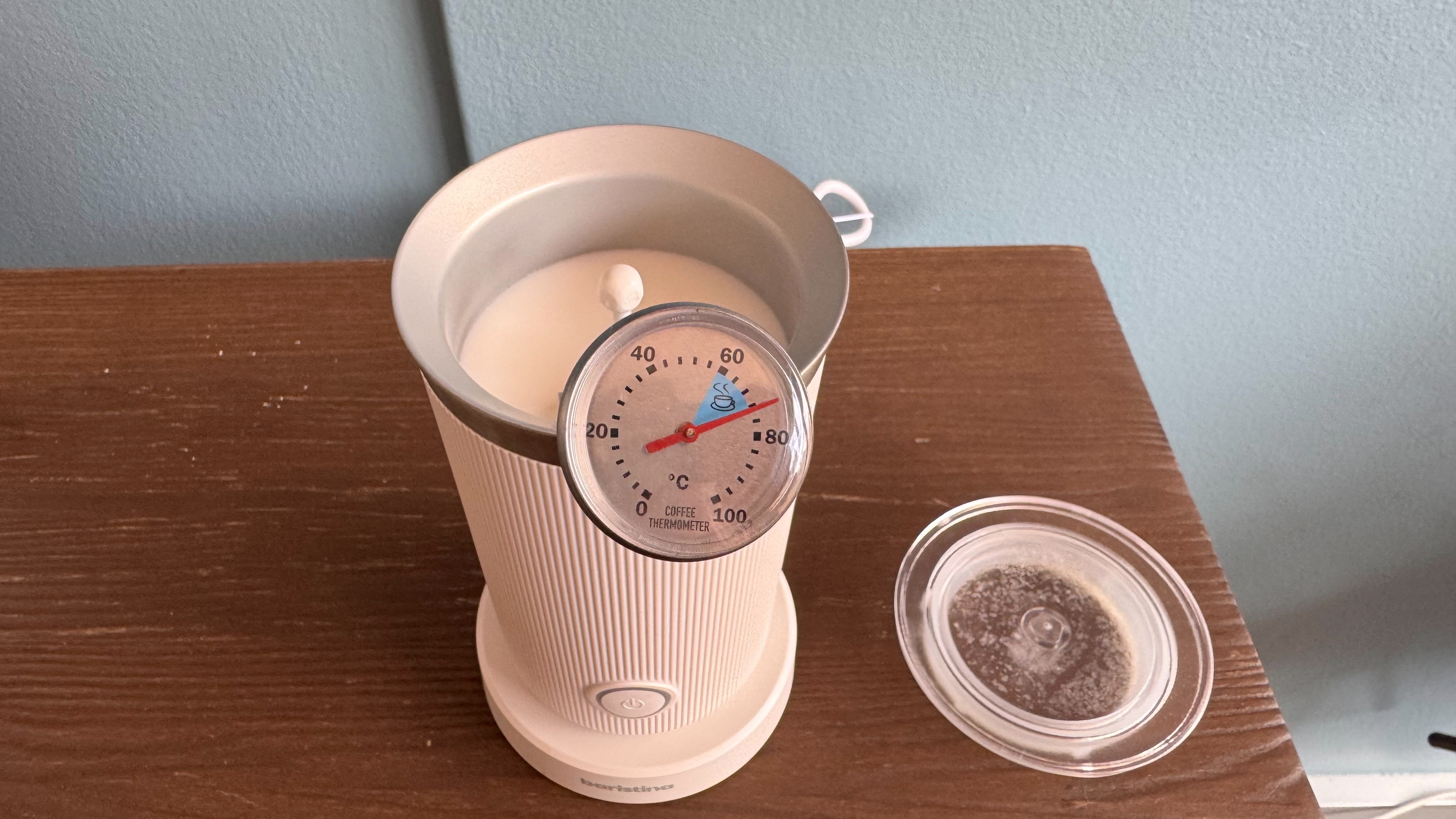
I was also impressed by the machine's ability to consistently heat milk up to around 140ºF / 60ºC, which is ideal for most milk varieties.
Cleaning up is an absolute walk in the park, as the non-stick lining means you only need to rinse the milk frother under the tap to remove any leftovers.
Philips Baristina Milk Frother review: Should you buy it?
Buy it if…
You don’t have a steam wand
If you’re a milk-based coffee drinker but your machine doesn’t have a steam wand, then the Philips Baristina Milk Frother will help you prepare milk in minutes.
You drink non-dairy milk
The Phillips Baristina Milk Frother doesn’t discriminate against non-dairy milk varieties, and is capable of producing consistently good foam no matter what you pour in.
Don't buy it if...
You want to create latte art
While the foam results are consistent, they’re very thick, making it unsuitable for latte art — or lattes and flat whites for that matter.
Philips Baristina Milk Frother review: Also consider
Smeg Mini Milk Frother
This stylish Smeg milk frother is just as simple to use and produces consistently good results. Similarly to the Philips Baristina, it’s not great if you want to create latte art, and it’s more expensive. Read our full Smeg Mini Milk Frother review for more details.
Dreo Baristamaker
Unlike the Philips Baristina Milk Frother, the Dreo Baristamaker can create milk foam of differing consistencies, including an option suitable for latte art. A steam wand is ultimately still better at such tasks, but the Dreo machine is a viable alternative. Read our full Dreo Baristamaker review for more information.
Philips Baristina Milk Frother review: How I tested
I tested each of the Philips Baristina Milk Frother’s modes using chilled oat milk and fresh full-fat milk, in accordance with Philips’ instructions.
As part of my testing, I used an oat milk that I’ve previously had trouble generating froth with when using a Nespresso milk frother. The Philips machine fared much better.
I cleaned the non-stick carafe under a tap and used a cloth to wipe away any stains, as per the instructions in the user manual.
First reviewed April 2026
For more details, see how we test, review, and rate products on TechRadar.






 English (US) ·