
 Warrick Page/HBO Max

Published Feb 14, 2026, 4:00 PM EST
Grant Hermanns is a TV News Editor, Interview Host and Reviewer for ScreenRant, having joined the team in early 2021. He got his start in the industry with Moviepilot, followed by working at ComingSoon.net. When not indulging in his love of film/TV, Grant is making his way through his gaming backlog and exploring the world of Dungeons & Dragons with friends.
Sign in to your ScreenRant account
Warning: Mild SPOILERS lie ahead for The Pitt season 2!The Pitt season 2 has returned in emotionally gripping fashion, while also bringing with it a few subtle changes.
The next chapter of the HBO Max medical drama has picked up 10 months after its predecessor, taking place on the 4th of July as Noah Wyle's Dr. Robby enters his final shift before going on a three-month sabbatical, encountering some pushback from the new attending physician filling his absence, Sepideh Moafi's Dr. Baran Al-Hashimi.
All the while, The Pitt season 2 has seen its returning medical students with changes in their own lives, as Isa Briones' Dr. Santos is now dating Alexandra Metz's Dr. Garcia, Taylor Dearden's Dr. King in the midst of a legal deposition regarding a prior case, and Supriya Ganesh's Dr. Mohan contemplating her next career steps, among others. To make matters more complicated is Patrick Ball's Dr. Langdon returning for his first shift after his benzo addiction was discovered and sent to an inpatient rehab facility, creating mounting tension with Robby and Santos.
Hitting HBO Max less than a year after its predecessor's finale, The Pitt season 2 has scored even higher acclaim than its 13-time Emmy-nominated first season, currently holding a near-perfect 99% approval rating from critics on Rotten Tomatoes. It also kicked off with higher ratings in its premiere than season 1 and is still seeing series-high numbers six episodes into its 15-episode run, establishing a sense of confidence going into its already-greenlit third season.
As it continues its run, ScreenRant's Grant Hermanns interviewed Johanna Coelho to discuss The Pitt season 2. When asked about finding the particular balance in depicting the show's ultra-realistic prosthetics for its various medical cases with the doctors' efforts to treat their patients, the French director of photography — who was the sole DP and cinematographer on the entirety of season 1 and season 2 — began by explaining the medical nature of the show "is really here to support the story of the characters," with the cases themselves even being chosen specifically "to develop the characters":
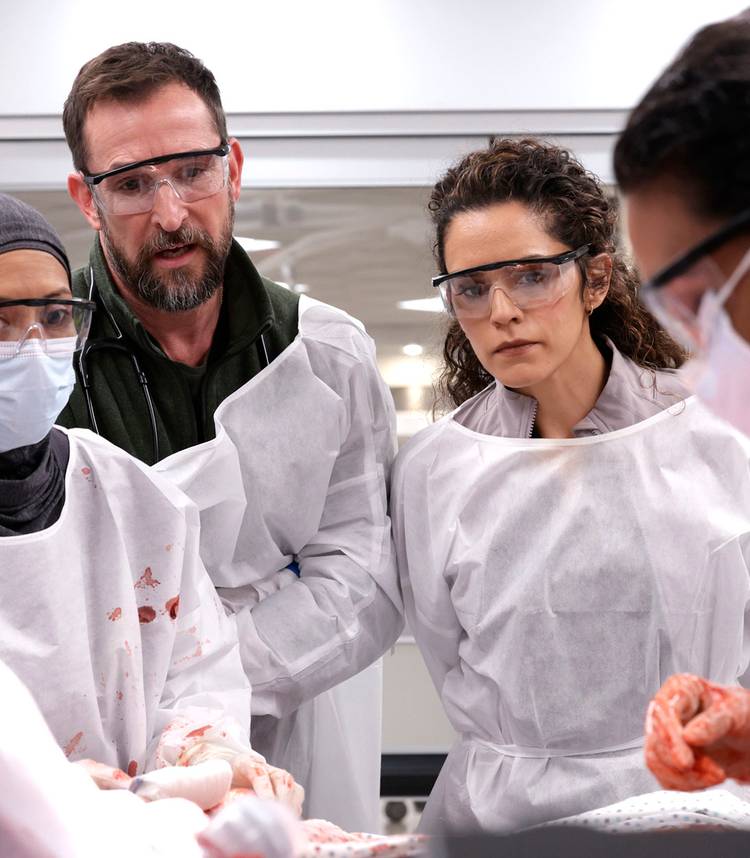
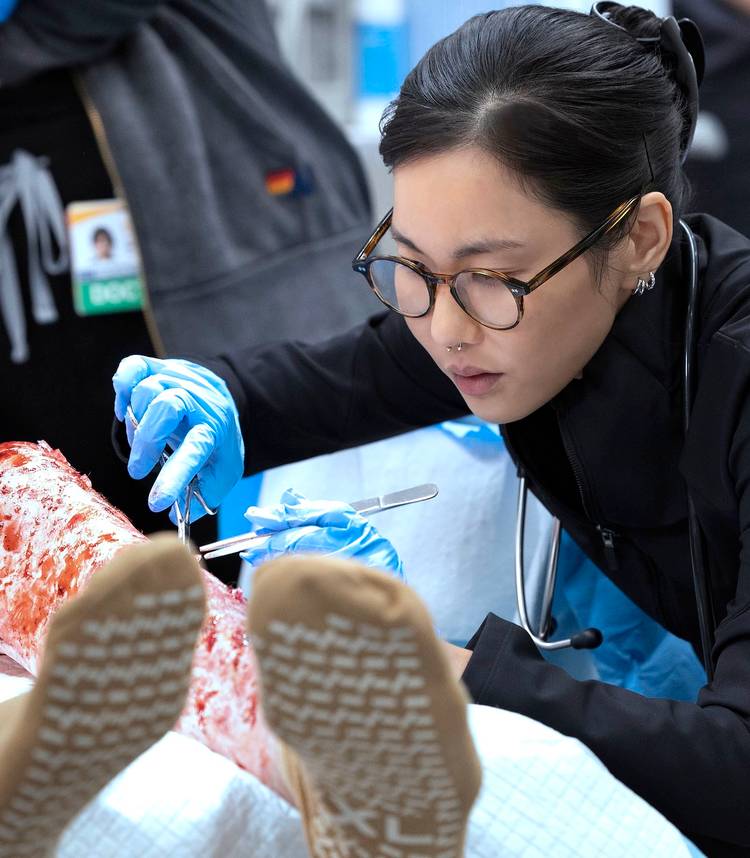
Johanna Coelho: It's really like you're saying, this balance between how much we feature the medical aspect of it, and how much we show what is actually going on with the characters in the scene, and the interactions they have with each other regarding the work of the actual medical part. The prosthetic work is absolutely incredible, and what you see on screen is honestly what we see on set. A lot of it is fully practical. There are very few additions of VFX, just some little things here and there. They have to add a bit of blood or other things, but it's mostly done on set.
Praising the effects as being "such a visual intensity" for her and the rest of The Pitt's cast and crew, Coelho also revealed that the production team "talked a lot beforehand with the doctors" offering creative input on the episodes and "what is important in [a] procedure." From there, the focus then shifts to talking with the makeup and effects teams to determine "what are the limitations of the prosthetic" and whether they need to start filming a scene with it or if it can be used across an entire shoot:
 Warrick Page/HBO Max
Johanna Coelho: Now visually, for the scene itself, it's that balance of, "Okay, we need to see that moment, because they're doing something medical that's going to create that tension between them." So we would tag that procedure. We are very lucky with this procedure that we can keep going from it to the actual scene, and it doesn't have to be inserts all the time, which is really great. So, we would go from that, and then, knowing there's a moment between two characters who are exchanging a line about what they're doing right now, we can catch that at the same time. It's that balance of what they're doing medically influencing the evolution of character in the scene.
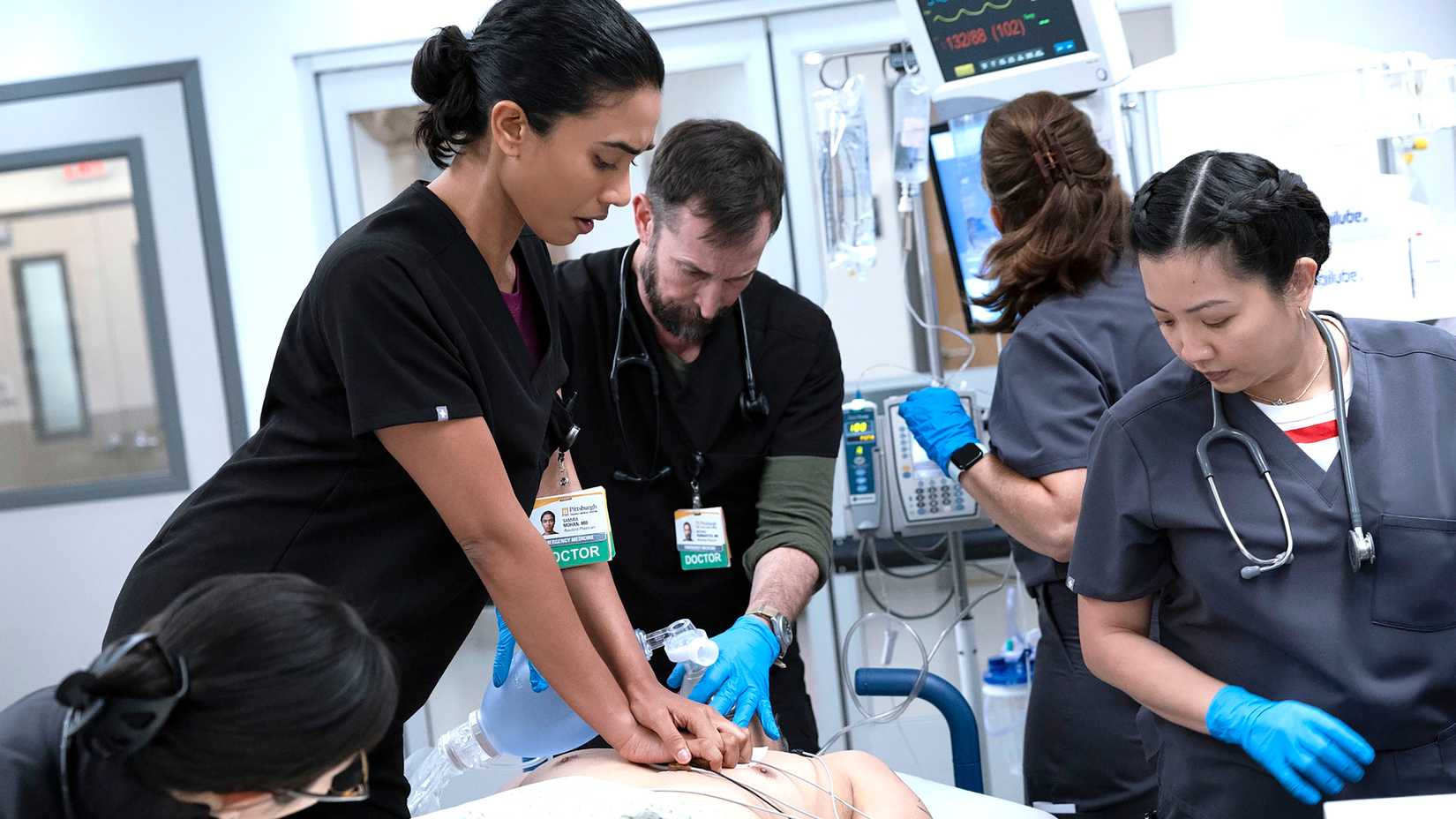
Coming into The Pitt season 2's production, one thing that Coelho says has changed in the show's visual structure is "we got better at really creating this immersion and being more invisible," including the way they shoot the realistic prosthetics. Acknowledging that the camera is "moving nonstop" at any given moment in the show, she says her and her team "worked harder" to be "coordinated fully with the actors so we don't exist behind them," but rather right alongside them on the "busy" 4th of July weekend setting:
Johanna Coelho: Yeah, lots of new stories coming in, which is exciting. It's obviously very busy on the 4th of July. We have new prosthetic work in cases. But we want to feel like the audience doesn't notice us, which I think they don't. We have some new people coming in as doctors, as well, and always a lot of tension, I would say. But that never goes as well as they wanted to. I'm really impressed. And we feel it on set too, because it's all continuous. So the way we experience the story is in the shift with them, and we just keep going, as well. So it's a beautiful journey to be on.
Coelho Prepared Much Of The Pitt Season 2's Cinematography With Little Prep
ScreenRant: What has it been like seeing the reception to this show so far? Because obviously, medical dramas are a very popular thing, but I feel like The Pitt has exploded in a way that not many others in this genre have of late.
Johanna Coelho: Yeah, on season 1, when we were making it, we honestly had no idea how it was going to be received. Certainly, we didn't imagine it was going to be that well received by a much larger audience. We thought maybe people from ER would return, and some serious medical drama searchers. But we were really making it as it's something in our own little bubble. I think maybe the immersion is what hit the world so well. So we were really excited, and it seems to be hitting again on season 2, so that's really good.
ScreenRant: So, turning back to capturing the prosthetics, in season 1, you dealt with everything from gunshot wounds to degloved legs, all these horrific things. Was there anyone seeing that proved particularly challenging in either season, whether it was because of the prosthetics that you mentioned or just because of utilizing as big of the scene as possible?
Johanna Coelho: Season 1 — it's funny, we've seen so many of them now, I'm mixing them. [Chuckles] Funny enough, in season one, you mentioned the GSWs. There were so many of them and depending on where they were placed, it was hard to keep going and make sure we featured them as we went. When you are in the main area, and you keep passing people that are hurt, I think the challenge was knowing that they were exposed enough, we could see them and keep moving with the characters. That was kind of an interesting challenge, because they're not always super visible, depending on where they were placed. Bigger ones, I remember we had one that was an open heart surgery, and you could see the heart beating, and all that. What is hard in general is that you have all the hands of the doctors getting in there, so you have a lot of people around [the heart], and you have to fit two cameras. So, we were fighting for space a little bit, as we wanted to make sure we captured it. [Laughs] And in a way, it's really working with the actors that if on one side of the camera is in a specific spot that they arm it out, so we can still see the hands in there, but we have a little hole for the camera to get in, or that we are in a position that we don't see the other person hands. Then, we can just clear them, but someone else hands the tool or anything like that. So, it really is communication and coordination with the actors, so we can be sure to get in there. I think that's when it gets challenging, too, is to make sure we have space, but they can still do their procedure at the same time. On season 2, we have another very big open surgery, which is the clamshell, where they cut the war thing in the middle to open the full thing. I think it's getting all the beats here, and making sure they are captured on screen. But at the same time, you also see the characters interacting with it. There was a little bit of special effects involved on set with that, as well, so it was coordinating all these elements and making sure we were at the right place at the right time visually. So, I would say that's the challenge in general with prosthetic work like this is that all the pieces work at the same time that we can see again with everyone around the table for it, but we can also keep telling the story at the same time. The resets, sometimes, are challenging too. We do shoot a lot per day, and so sometimes post reset takes a long time. We are also trying to always discuss, "Do we need a reset here? Should we just do a pass above, or you just see a little bit, so you don't have to do a full reset on the prosthetic?"
ScreenRant: I read that sometimes, especially in season 2, you were planning all of this shooting out on the day, because you don't get the scripts too far in advance. I feel like, in a way, it's perfect for this show to go in and have to run and gun with filming, but given that there are so many intricate layers to the shooting between, again, finding that balance between the prosthetics and the doctors, and even just capturing the doctors in the main area, what is that like for you finding what the rhythm is going to be on any given day when you are planning that out on the day?
 Warrick Page/HBO Max
Johanna Coelho: So, the directors get the prep — because we have different directors coming in — they've talked about the prosthetic work, they've probably made a plan about how they want to approach everything. But on my side, it's true on the day. I know the scenes, I get the script about a week before, and I read them, but there's a lot of improvisation on my side. The planning happens on the moment basically. So, the shots are designed truly from the blocking. So, in the prepping stage, the director will do the blocking, we discuss it and then there's a big question that we ask, "Okay, whose scene is this? Who is leading that scene?" Because the show is all about immersion and perspective. So this scene is about Dr. Robby, and it's really important that you understand his conflict with Dr. Langdon. So, we talk about, "Take the medical out, what is the scene about?" We know who we follow, who we see the scene from, and how we capture the moment we need. That's really how the shot gets made on the spot. So, we would start with that one main shot that keeps going from the beginning to the end of the scene, often following our main character or leading them. It depends what we prefer to start with, and really getting all the scene that way. Then, we do the opposite way, so you can make sure to intercut them together, but we are really shooting it as from the beginning to the end of the scene, that's how we design our shots. "We really need more detail on this prosthetic. We couldn't access that during our long shot, so let's get this bit here. We need to really understand what's going on the monitors at this moment right over our shoulders. Let's do that now." So then, it's really a more cleanup or tighter shot. "We need to get more in the face for the emotion at this moment," or anything like that. But we often design our shots from, "Let's get the scene almost as a oner, and then we'll do the opposite way, and then we do a cleanup."
ScreenRant: I do love the long takes that you have because it really does, like you say, work great for the immersion of this series, and of these characters as they're going from one room to the next and talking about three different patients at once.
Johanna Coelho: We tried to design the shots in the way that we want to give the opportunity in the edit to not always cut. So, when we design the shot, and we talk about them, it's like if you keep going with the camera, or you come around, then you can keep the scene going without having to have a cut in there, so it gives that feeling of continuity and never stopping in the shift.
 Warrick Page/HBO Max
ScreenRant: One thing I was curious about as well is that I know that the hospital is across multiple sound stages, and I'm curious how much involvement you have with the production design of finding the perfect layouts in order to craft those long takes.
Johanna Coelho: So, on season 1, when I got involved in the show, the set was already designed by the production designer, Nina Ruscio, before they even started writing on the show. The first step was the design of the hospital, and they needed that design to write the show, because it's continuous. They needed to know where they're going to put the patient, where they are going to move from, which room to which, et cetera. So, the set design was the first thing. Now, when I got involved, it was the stage before the lighting was integrated, before the color of the walls were chosen. I knew it was going to be white, but what kind of white, what kind of shine — all of these elements — what color are the counters, are we putting lights above the beds? So, I came in around that stage where filling in the design was really important for that immersive aspect of it. We really worked hand-in-hand with Nina to create a set that is fully immersive and that, lighting wise, there's nothing on the ground. It's a full-life theater for actors to move around. So, it's designed in a way that we talk about placement of light, what kind of lights we control, every single light we have our own in strips in them, but also the place that visually makes sense. So, it's a collaboration of design and lighting, the type of white walls we got. We did so many tests, so much testing with the production designer, because we knew we had a diversity of skin tones in the cast, so we wanted to make sure we picked white so that when you see everyone, it reflects, and it works on every skin tone. It reflects them in a really realistic way, and that there's not one skin tone that looks better than the others, because of the type of white. And then, we have some onboard lights on the camera that really help to create the feeling of moving. And then we also have a light on the pole, so anything we add is moving with the camera. There's nothing that's set or blocking the way in any way.
New episodes of The Pitt season 2 stream on HBO Max Thursdays at 9 p.m. EST!
-
Release Date January 9, 2025
Network Max
Showrunner R. Scott Gemmill
Directors Amanda Marsalis
Writers Joe Sachs, Cynthia Adarkwa
-

Noah Wyle
Dr. Michael 'Robby' Robinavitch
-

Tracy Ifeachor
Dr. Heather Collins
-






 English (US) ·