


Published Jan 29, 2026, 1:05 PM EST
As a graduate of Columbia University in New York City, Tatiana studied theater and comparative literature. She has been passionate about all manner of storytelling from Jane Austen adaptations to anime. Aside from writing for Screen Rant, she co-hosts podcasts: The Flash Podcast and Ladies With Gumption.
Sign in to your ScreenRant account
Pixar is giving beavers their time in the sun with its next animated movie, Hoppers, which tackles themes of community and environmentalism amidst a madcap body-swapping adventure. The film's daredevil protagonist is Mabel, a college student desperate to prevent a local animal habitat from being destroyed in the name of progress. Her journey kicks into high gear when she uses advanced technology to transfer her mind into an artificial beaver in order to convince the animals to join her cause.
ScreenRant attended a special press day for Hoppers at Pixar Animation Studios to learn more about the ins and outs of the movie, Mabel's backstory, and the unsung heroism of beavers. While there, director Daniel Chong and producer Nicole Grindle explained how both the story of the animals and the character of Mabel evolved from the early stages. Margaret Spencer (Lead Story Artist) and John Cody Kim (Head of Story), meanwhile, shared insight into the adorable animation style and unexpected changes to several characters.
Hoppers is co-written by Chong and Jesse Andrews, and it will make its grand theatrical entrance on March 6. The animated adventure tale also boasts a strong cast that includes Piper Curda, Bobby Moynihan, Jon Hamm, Dave Franco, and Meryl Streep. Read on below to learn more about the Pixar magic that went into Hoppers' creation.
Pixar Creatives Helped Guide The Heroine Of Hoppers Enter Her Rebellious Phase
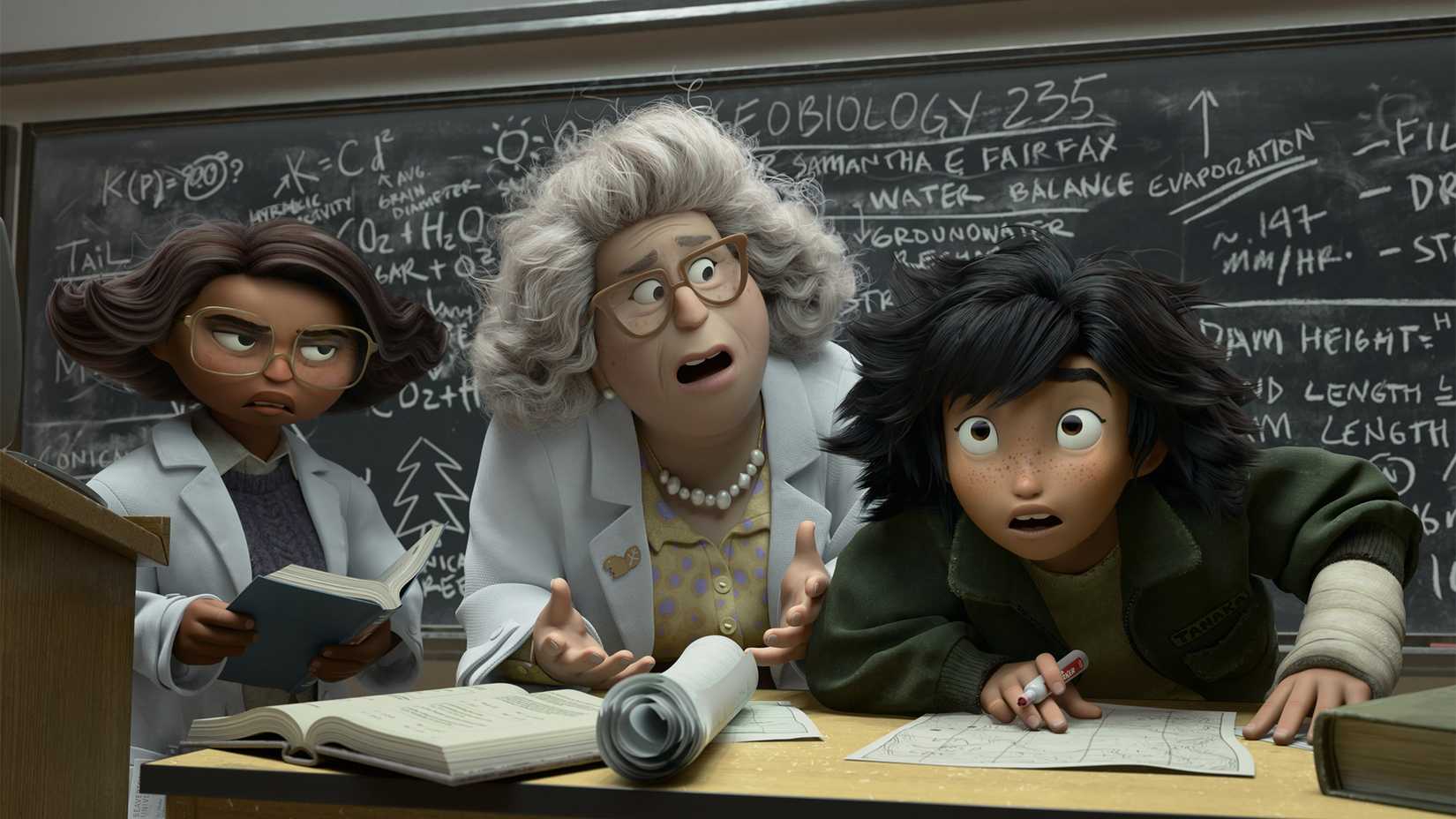
Chong always knew he wanted his main character to be "full of wild, chaotic energy", but he had to balance her "scrappy, impulsive, fun-to-watch" side with a strong emotional center that explained her connection to the glen and to the beavers she would eventually befriend. ScreenRant asked the director to dive a little deeper into the process of making Mabel into the best little daredevil she could be, while also endearing her to the audience through her family backstory.
Daniel Chong: Just from a writing standpoint, one of the fun things we wanted to happen with Mabel is that you just couldn't tell what she was going to do next. We wanted an unpredictable character who was just a little bit chaotic, a little bit unhinged, and who was in an action kind of spy movie.
We love characters who just are willing to jump into the fire, and we don't know what crazy thing they're going to do. But the consequence is that you have a character whom people can't quite relate to, or you don't quite know enough about them, or they just feel inhuman. So, the challenge after that was grounding her, giving her a purpose, and giving her a context for where she came from.
Mabel is voiced by Piper Curda, and her performance was highly praised by Chong, who exclaimed, "She did such an amazing job, and she really just brings to life all those nuances that make you love her." Many of the nuances Curda conveyed were instilled in Mabel by sweet Grandma Tanaka (voiced by Karen Huie), who teaches her how to calm her inner rage by connecting with nature. Those flashbacks at the start of Hoppers are crucial for understanding her character and buying into her journey, which Grindle elaborated on further.
Nicole Grindle: I think there was some concern about her being so angry and strident, because that would be alienating to people, and we wanted to make her sympathetic. There's nothing like seeing somebody as a small child; to see those vulnerabilities and how her intention was just to take care of animals. She had the best intentions, and she learned the value of being in nature and centering herself from her grandma, who was like her when she was little.
Ultimately, she was able to develop that sense of kindness and patience with others. That is what ultimately makes her successful, and it made her more likable. But that was something we had to work on for a long time.
But even as the creative team added soft strokes to her childhood, they were also painting her rebelliousness with bold strokes. As Grindle explained, "You wanted a character who was going rogue. That was the fun of the story." One way they were able to amp up her action credentials was to change the circumstances of how she came into possession of the mind-swapping equipment, from being part of the Hoppers science team to acting of her own accord against their wishes.
Daniel Chong: There was a crossroads we pivoted away from very quickly, but that was always there in the early versions, which was that we always thought Mabel got recruited to join Hoppers and that she was on a mission with the other scientists to do this thing.
We actually boarded the first half of that version and put it up. We cut it, and I remember we showed it to Pete Docter and our EP at that time, and they said, "No, wrong, that doesn't work." And they were totally right. That is the brutal but helpful thing about the studio: they're not afraid to give those tough notes that will decimate months of work because you just ultimately need to get the best story out there.
We realized that doesn't work because we couldn't understand why anyone would recruit her - she's just not worthy to be recruited, unfortunately. Not yet. Once we realized we wanted to go the other way, where she kind of borrows the technology, then we were like, "Okay, we've got a story."
Mabel Is Not The Only Major Change Hoppers Went Through
Grindle came on board the Hoppers crew very early on, so she remembers back when Chong was hoping to make a movie about penguins. "The first thing I wanted to do was find another animal," she joked. Of course, Chong's version of the story (which he shared during a press conference) was a little more involved:
"I just couldn't stop drawing penguins during the pandemic for some reason," the director admitted when recalling the early stages of development for his film. "I pitched it to Pete Docter, who shot it down immediately. Didn't think the world needed another penguin movie." His search for a replacement animal then led him to a book about Yellowstone National Park, in which he read about how the ecosystem was rebuilt after a collapse. Wolves were the first animal reintroduced, but beavers were a huge part of that return too.
When beavers build their dams and ponds, they create a full ecosystem. Not just for themselves, but all kinds of plants and animals too. All the animals return, and they thrive around beavers. They're a keystone species, and often they're called ecosystem engineers, because of how they reshape land. After reading that, I realized, "Oh, these guys are the perfect stars for this movie."
Grindle added that another element of finding the film's final form was making sure that Chong's signature humor was laced with "depth, emotional gravitas, and weight. The thing that Pixar films always promise is that they'll make you cry." Mabel certainly brings that emotional depth, but changes in supporting characters also helped flesh out the world of Hoppers in a three-dimensional way.
Lead Story Artist Margaret Spencer found that one way to add extra nuance was to flesh out the villainous mayor, Jerry (Jon Hamm), and give him more shades of gray.
Margaret Spencer: Jerry started out as an antagonist from the beginning, but he did not come along for the ride as much as he does in the final film. And that was not only just funny to me, but it felt pretty important because if he's the first person you see Mabel having a problem with, you're going to be thinking about that problem for the rest of the film. And so, you're just curious about how that relationship's going to evolve.
If he had to be in the movie more, we had to come up with these scenes that would show you more about him and how he also cares about his constituents. Really, everyone is trying to do the right thing in this film. It really helped us reflect on that theme of listening to each other.
John Cody Kim, who is Head of Story, pointed out a small moment in the film that actually highlights Jerry's inner depth. "Him making pancakes for his mom actually does a lot of legwork. The audience is starting to relate to Jerry at the right moment."
Leave It To (Bobby Moynihan Playing A) Beaver

Bobby Moynihan, who plays the kind-hearted King George, previously worked with Chong on the beloved animated series We Bare Bears. As a first-time feature film director, Chong was grateful for that pillar of support. "First and foremost, comfortability is something I just can't take for granted," he explained. "This is such a big movie, and I have worked with some of the people on my crew before, but everything is pretty much new to me. And it's a new dynamic. It's a movie, and the stakes are so high."
When Bobby came in after we finally cast him, it just felt like old times, and I felt so comfortable. And we've been there before, and we just picked up where we left off. I think having that comfort with a main character, especially because we're going to work with him a lot, made everything just a little calmer for me in my head.
Bobby is just the sweetest guy, and that sweetness comes across in the character. I love writing sweet and earnest characters who mean the best and are trying their hardest. That's Bobby, and he brought that in spades.
The Story team was similarly enthusiastic about King George, acknowledging how his character came to life beyond what was initially scripted during their many storyboarding sessions.
John Cody Kim: We really understood him in many different scenarios. He's a very easy character to just throw into situations, and immediately, he'll do something. It's like, "Of course, George would do this," but they're always interesting or unique or weird.
One such moment is when he's in the car, greeting Mayor Jerry by rubbing oil on him: "It's like, 'Here, I'm going to calm you down by putting my oil on your hair because you are a king. I'm a king, and I'm welcoming you,'" Kim laughed. "All of that came very naturally, even though it was an improv."
King George is one of the many characters who benefitted from a shifting of perspective that Hoppers included, in which animals look one way to each other, and another to humans. Though the shift feels major onscreen, the trick to making it happen was actually quite tiny. "We literally go from just cartoony eyes to little dots!" Kim revealed. "But also, animation has done amazing work. Whenever they're realistic animals, they really capture those animal behaviors."
John Cody Kim: Earlier on, we actually modeled a realistic-looking beaver, and we were like, "Maybe anytime the perspective changes, it goes from the cartoony beaver to an actual lifelike beaver." But then, we quickly realized that we can't do this. It's too expensive. We can't make double models for every animal! The compromise, it turns out, was to just do dot eyes. And it still worked.
Spencer added, "The animation and the emotion behind the scenes does a lot of that work for you." Anytime Mabel is trying to talk to George as a human while he's a beaver, "You just feel the disconnect."
Hoppers arrives in theaters on March 6, and tickets are on sale now.

Release Date March 6, 2026
Director Daniel Chong
Writers Daniel Chong, Jesse Andrews
-

Piper Curda
Mabel (voice)
-

-






 English (US) ·