
 16 hours ago
3
16 hours ago
3
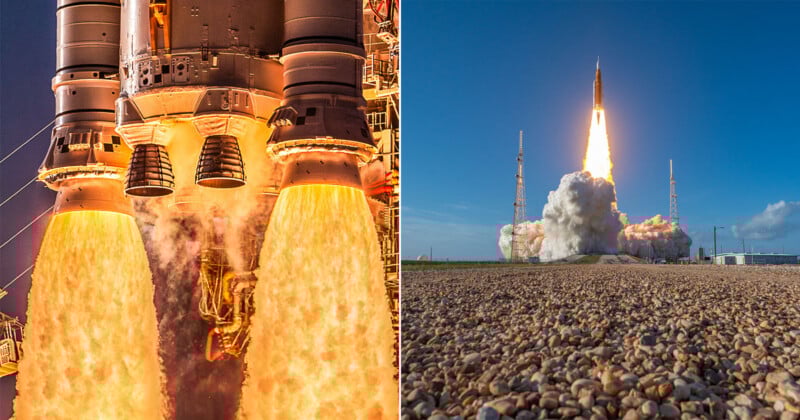
Photographer Steven Madow has been photographing rocket launches for over a decade, but arguably no rocket launch he has photographed has been as big of a deal as the Artemis II launch on Wednesday, April 1. Madow set up 14 different Panasonic Lumix cameras to cover the monumental event, including seven remote cameras at the launch site. His outstanding photos are the result of years of practice and planning.
Preparation, Logistics, and Credentials: The Challenges of Photographing the Artemis II Launch
There are so many challenges surrounding a rocket launch, ranging from practical, like how to set up remote cameras and nail the shot, to logistical ones, like credentials. For a major NASA rocket launch like Artemis II, there were even more hoops to jump through than usual.
“NASA credentialing is really tough,” Madow tells PetaPixel. “I started my journey as a rocket launch photographer over 10 years ago and gradually have been trying to figure out the path through credentialing and getting access. All of that fun stuff. During Artemis I, I had gained credentials for SpaceX, the Space Force, lots of these other companies, but not yet NASA.”
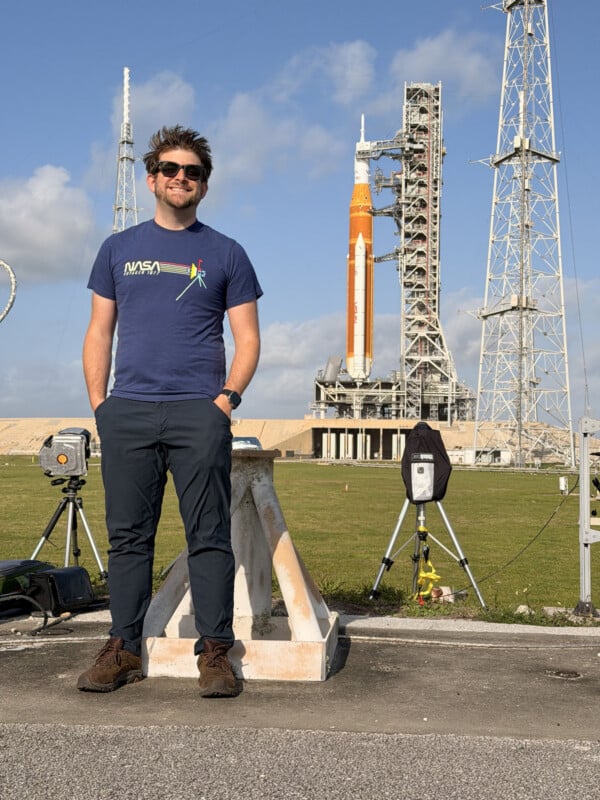 Photographer Steven Madow
For Artemis II, Madow partnered with Space Explored, a website dedicated to sharing all the inspiring stories surrounding spaceflight and exploration.
“Through Space Explored, I was able to get credentialed,” Madow says.
“This has been years and years and years of trying to pull this together and be able to get to the Artemis II launch,” the photographer explains.
“I’ve kind of viewed every launch that I photographed leading into this, all of the remote cameras, all of that, as helping me sharpen my skills and almost practice to be able to pull off this launch.”
In the past few months, as preparations really ramped up, Madow has been doing extensive research and planning to dial in the precise camera setup he could use. He needed to settle on specific camera and lens combinations, of course, but also figure out what his options may be depending on where NASA approved photographers like him to set up.
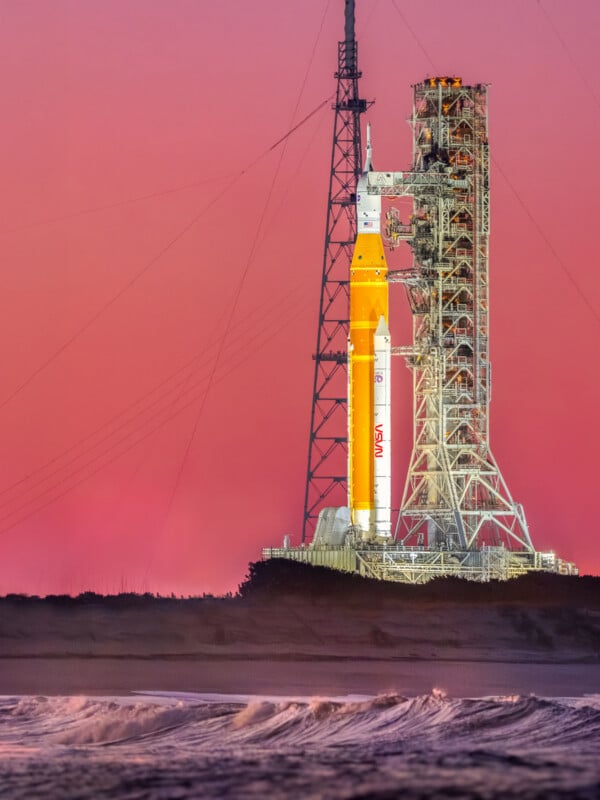 Madow captured this photo a couple of months ago of the SLS rocket that launched the launch Artemis II astronauts into space on April 1.
Fortunately, with years of experience under his belt, Madow is very familiar with how to overcome many of the typical pitfalls surrounding photographing rocket launches. He has perfected his exposure settings, how to frame shots in advance, and his remote camera setup, including keeping it powered.
Rocket launches are inherently unpredictable, though. Artemis II was delayed multiple times during mission prep, and the actual launch time wasn’t determined until Wednesday afternoon, hours before liftoff. Then there are the security concerns. Madow and other credentialed photographers were bused out to the launch site last Sunday to set up their cameras. Fortunately, Madow says that he had plenty of time to dial everything in there, but some launches give photographers just 10-15 minutes to set up all their gear.
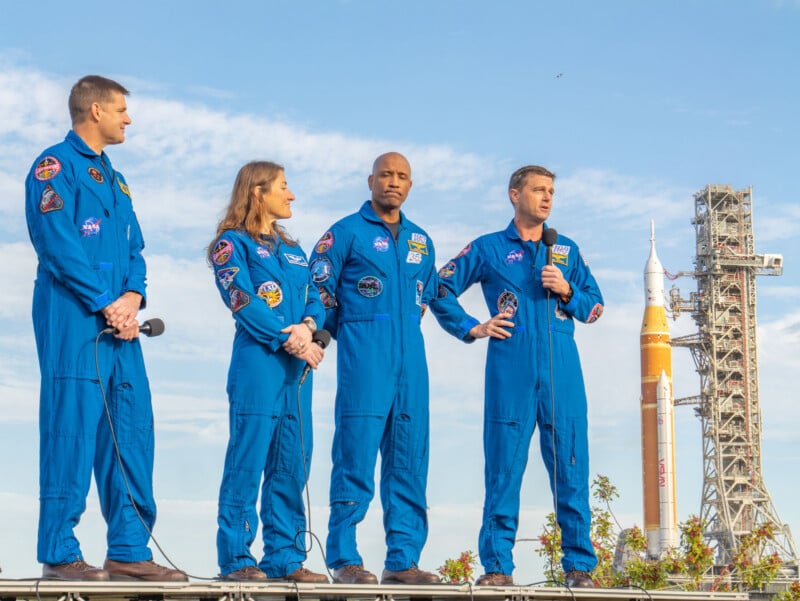 Artemis II astronauts Jeremy Hansen, Christina Koch, Victor Glover, and commander Reid Wiseman are currently in space en route to the Moon.
Setting Up Seven Remote Launchpad Cameras
“I had seven different launchpad cameras,” Madow says. “NASA gave a small group of photographers, a few dozen photographers, access to setup remote cameras.”
Since this launch was such a notable event, all of Madow’s cameras even had to be sniffed by security dogs. “Lots of security,” Madow says.
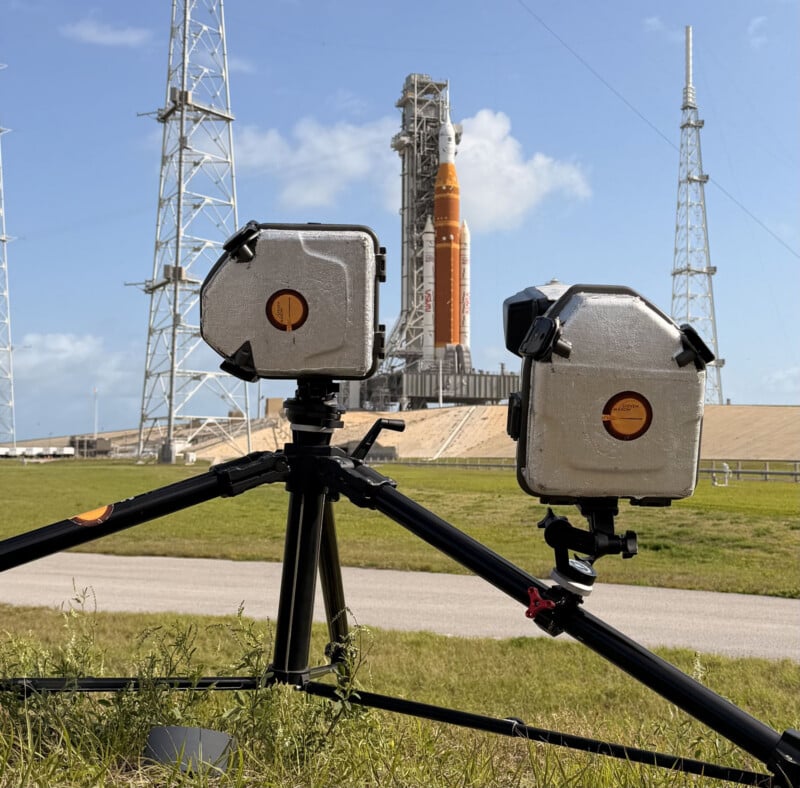
Each location only allows photographers one tripod, so Madow had multiple cameras on individual tripods. These cameras are all inside special remote camera cases made by Camptraptions and are triggered by sound.
“I have this special trigger on top, made by MIOPS. What it does is just sit there, patiently and listens and listens and listens,” the photographer explains. “When there is a loud sound, rockets are really great loud sounds, it wakes up the camera and starts firing away like crazy.”
As an aside, the first thing Madow did when he was given access to his remote cameras following Artemis II’s successful launch was run over them and make a loud noise to listen for the sound of his cameras firing back up and snapping some frames. It was a massive relief for Madow to hear his cameras firing off in response to his loud noise.
“I’m like, ‘Yes, my camera is still working!”
The Orion spacecraft was already on the launchpad on Sunday when Madow and the other photographers were setting up, so he could precisely plan his compositions.
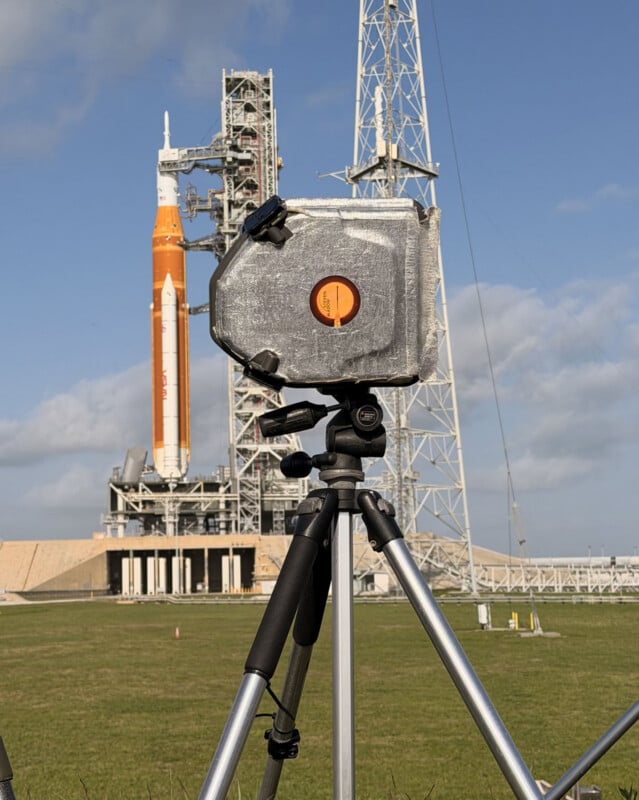
However, some aspects of the launch remained mysterious even days before takeoff, including the day and time of launch. It could have been mid-day, afternoon, evening, or even nighttime. Of course, these all have dramatically different exposure requirements, but Madow had to be ready for them all.
“And I didn’t know this launch could have moved to Thursday to Friday. It could have been later in the evening. So I also had automated dew heaters just in case, which fortunately I didn’t need. But with these cameras, so far, I’ve actually only collected, I think, four of the seven cameras. Some of them were collected by some friends, so I’ve got to grab them in a day or two, but all of them performed flawlessly, which is not the case with every single launch,” Madow says.
“So they did exactly what I had programmed them to do. None of the batteries died and the cameras, the Lumix cameras, performed perfectly. And from an exposure setting standpoint, the closeup rocket engine shots were maxed out.”
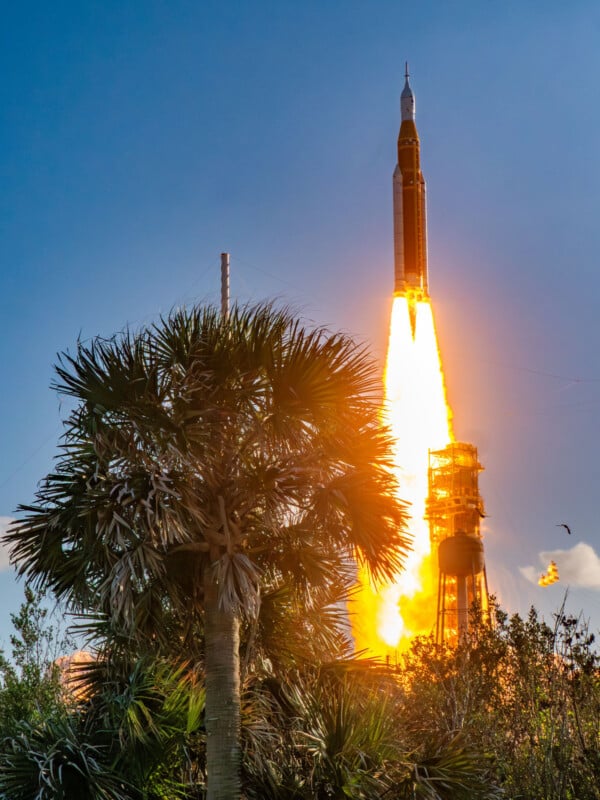
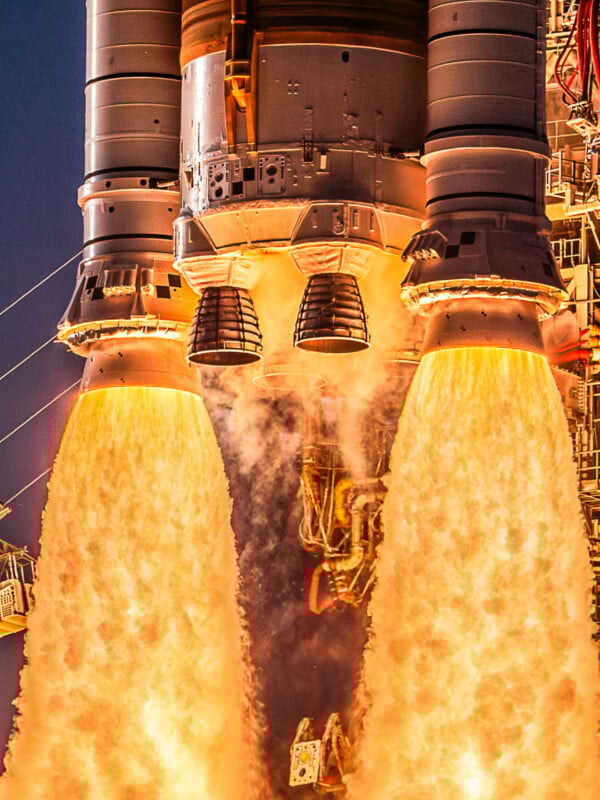 Madow captured this awesome close-up shot, which has since gone viral, using a Panasonic GH5 and a Lumix G Leica 50-200mm f/2.8-4 lens. This photo was captured at 1/8000s, f/16, and ISO 100.
The close-up rocket launch shot Madow quickly published, which has also been his most viral photo ever, was shot at ISO 100, f/16, and with his Panasonic GH5’s fastest mechanical shutter speed, 1/8000 second. Although this particular photo was captured with a GH5 and a Lumix G Leica 50-200mm f/2.8-4 lens, Madow had a wide range of Lumix cameras on hand for the launch, including other Micro Four Thirds models and full-frame Lumix S-series cameras, such as an S9 and S1R II.
“Just a wide range, GH5, G9, G9 II, S1R II, really spanning as wide as 12mm on Micro Four Thirds, so 24mm on full-frame, up to about 150mm, which really is pretty crazy because I’ve got things like this before where I’ve had to use 800mm, so we were pretty close [for the Artemis II launch].”
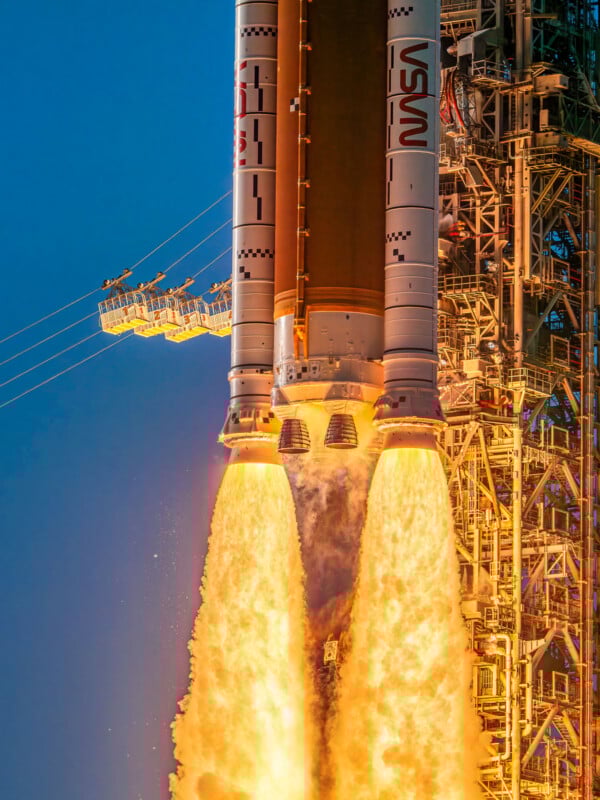
Although the close-up rocket launch photo is somewhat predictable — it’s always extremely bright — other shots were less predictable given the various possible launch times.
“What I’ve been experimenting with over years and years is being able to use exposure bracketing on these remote cameras. So effectively, I do a five shot bracket set at negative one EV as the center point and I’ve had to figure out, and the only way to figure this out is from actually shooting other launches,” Madow says.
“I’ve had to figure out how can I get the sound trigger to effectively work and trigger the exposure bracket. The first time that I put a camera out there trying this technique, I got one set of brackets. So you have five shots, they weren’t very good, and now I’ve been able to really develop this technique where it’s just taking bracket after bracket after bracket.”
A Decade of Experience Led to This Moment
Not only has Madow learned a lot about overcoming technical and logistical challenges over his many years of photographing rocket launches, but he has also gained a vital sense of calm that served him very well this week for Artemis II.
“Some of it’s the technical side, and some of it’s the mental side. A lot of it just making sure I’ve prepped these cameras, tested these cameras, and know exactly what’s going to happen,” Madow says. For Artemis II, he was able to slow down, take his time, and not rush. Part of that is that NASA provided credentialed photographers generous access and time to set up on Sunday, but another part is all the lessons Madow has learned over the years. Some of them, he admits, were hard-learned. Behind many successful shots are failed ones, no matter what type of photography someone is doing.
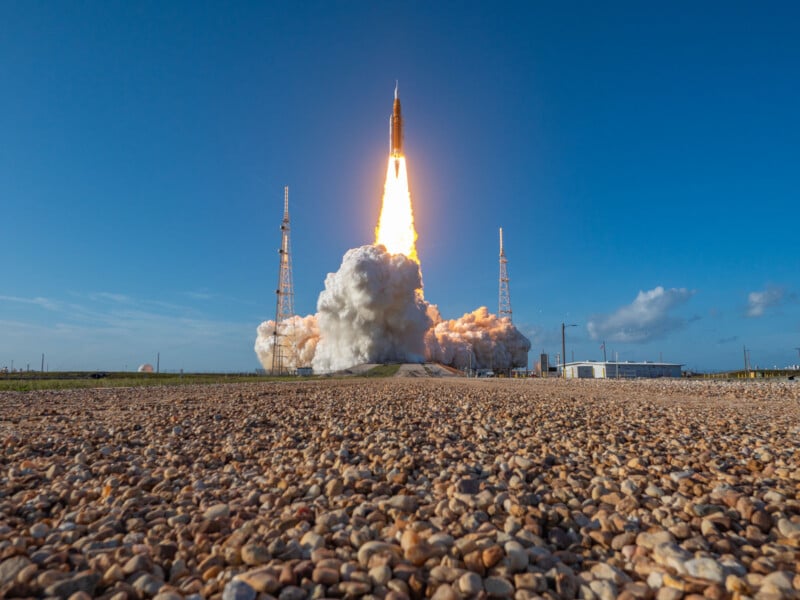
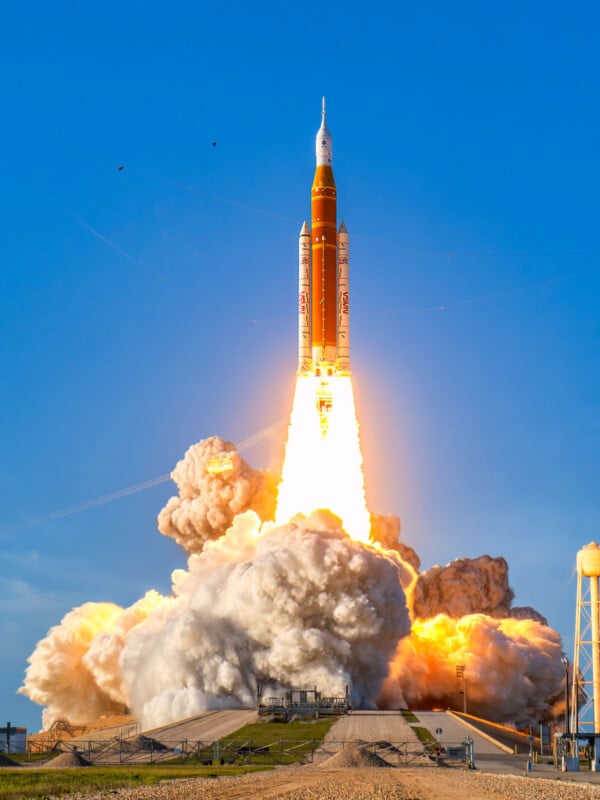
“I think, to me, the most challenging but also the most exciting thing about this sport or art, whatever we want to call it, of setting up these remote cameras is when I’m composing,” Madow says. “I’m out there, maybe in broad daylight or whatever, and I’ve got to be thinking, ‘What’s the Sun angle going to be at the time of launch? Where’s the rocket going to be? Where’s the plume from the rocket going to be within the frame so I can make sure I’m not cutting it off?'”
“You’re trying to imagine and think through this future scenario because you don’t have access to the camera once it’s setup, of course. It’s a fun game play, and when played correctly, the results are really cool.”
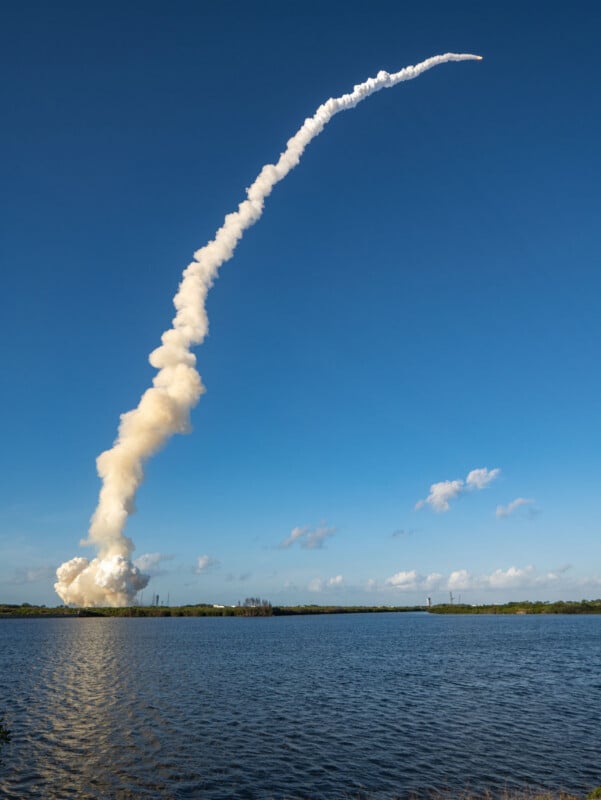
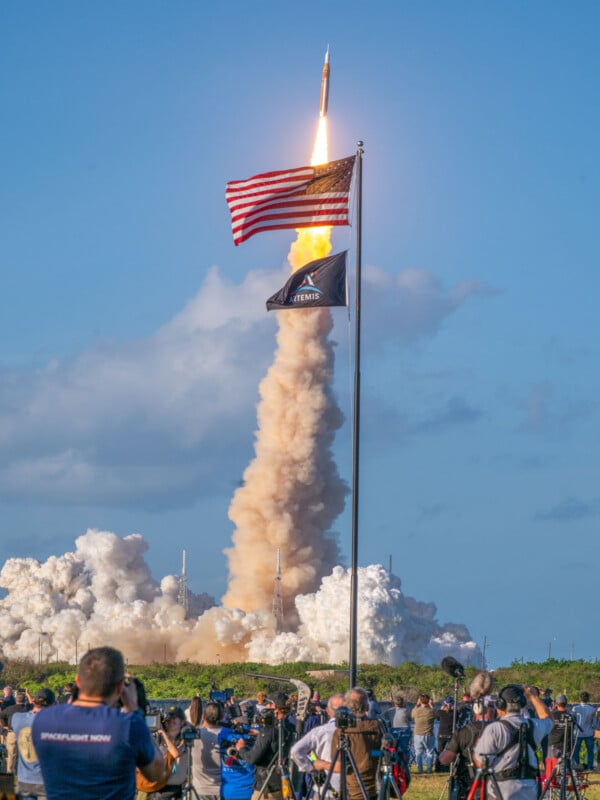 Madow captured this photo using a camera he set up with an intervalometer. The timing worked out very well.
It’d have been understandable for Madow to be super nervous about the launch, but he says he’s an optimist, which made him more excited than anxious.
However, by Wednesday morning, there was a very real chance the launch would be scrubbed and delayed a day or two. In many cases, that’s not a big deal, but for Madow, who had prior work commitments for his primary job, a delay would have meant missing the launch. His remote cameras would still have been there, of course, but he would have been unable to witness the launch in person and take photos from the press site.
“I was thinking, ‘Oh man, I really want this to go,'” Madow recalls.
And go it did.
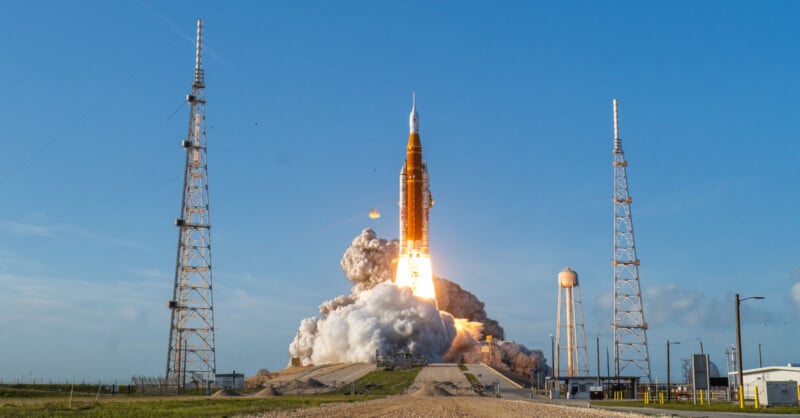
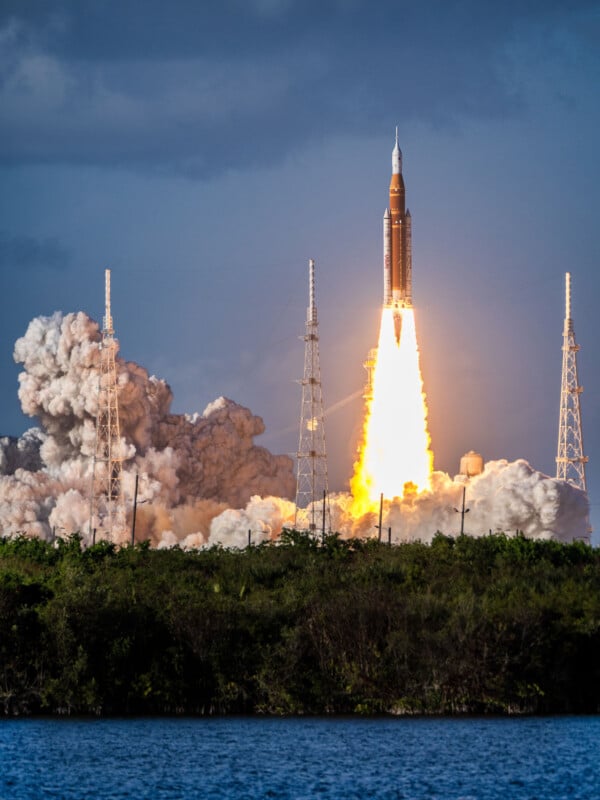
“There are these troughs and valleys of excitement, some worry, some concern, and then just elation and maybe even relief,” Madow says of the actual Artemis II launch itself.
The launch itself, the culmination of years of hard work by thousands of people, is over so fast. A few minutes after liftoff, Madow says he was just there, reflecting on what happened.
“There’s pure joy, and then after a few minutes, reflection and relief that it went and that I was there at the press site to experience this in person,” Madow says.
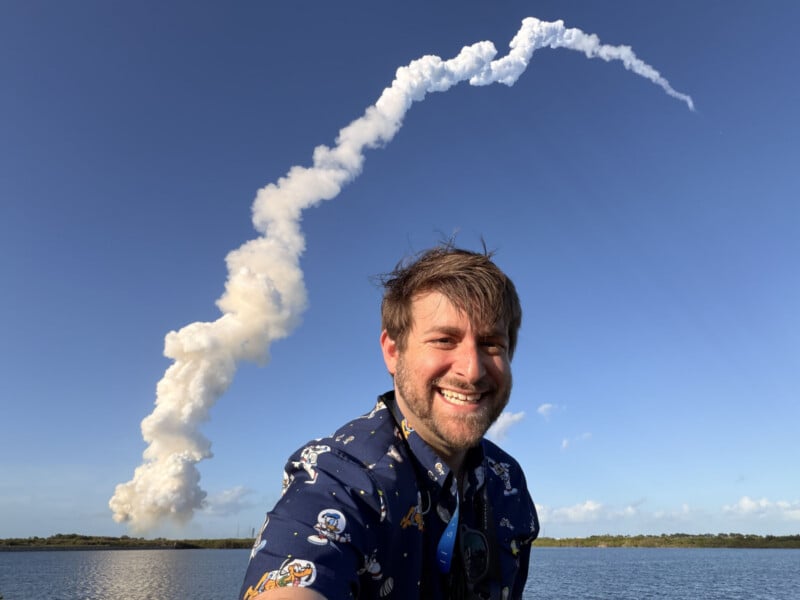
“There’s a bit of pressure, like, ‘Oh man, I’ve got to really deliver for myself.’ And I also love just being able to share this [experience] with the world,” the photographer says. “So definitely tons of joy, times of relief, and excitement for what this launch represents as well. That is absolutely not lost on me.
“Humans are curious. Humans are explorers. I think it’s one of the best things in humanity to be able to do things that are interesting for discovery’s sake, for interest’s sake. And I think that what is more inspiring than a lunar mission and then NASA. So it gives me lots of inspiration and certainly I hope that folks find inspiration in the photos that I produced.”
Image credits: Photos by Steven Madow (website, Instagram, prints)





 English (US) ·