

Published Sep 2, 2026, 3:00 PM EDT
Brandon Zachary is a Lead Writer for Screen Rant's New Movie Team. He also writes or has written for Comicbook.com, CBR, That Hashtag Show, Just Watch, and TVBrittanyF. Brandon is an Emerging Screenwriters Semi-Finalist, co-writer of a Screencraft Quarter-Finalist, a seasoned on-screen interviewer, and a MASSIVE nerd. You can reach him at [email protected]
Hellraiser is one of those franchises that has never let go of the audience's attention. Debuting as a novel before breaking big through a memorably depraved and purposefully grotesque film adaptation, the franchise is getting an exciting new chapter in the form of Clive Barker's Hellraiser: Revival, a game that takes cues from all the ways horror-action gameplay has developed in recent years.
The game places players in the role of Aiden, whose attempts to reunite with his girlfriend after she makes a bargain with the Cenobites set him on a quest through sex dungeons, haunted mindscapes, and the horrifying depths of the Labyrinth. The demo highlighted the pitch-perfect take on body horror and depraved impulse that has always defined the series, while also teasingclever puzzle gameplay through the use of the iconic puzzle box.
It all comes together for a creepy story that Clive Barker embraced during development while leaving room for the team to build their own take on a horrifying paradise. During an interview with Screen Rant at Gamescom 2026, Clive Barker's Hellraiser: Revival Narrative Director Antony De Fault broke down the game's additions to the franchise lore, the biggest influences on the gameplay, and their hopes for further exploring the franchise.
A Gun And A Puzzlebox Are All You Need
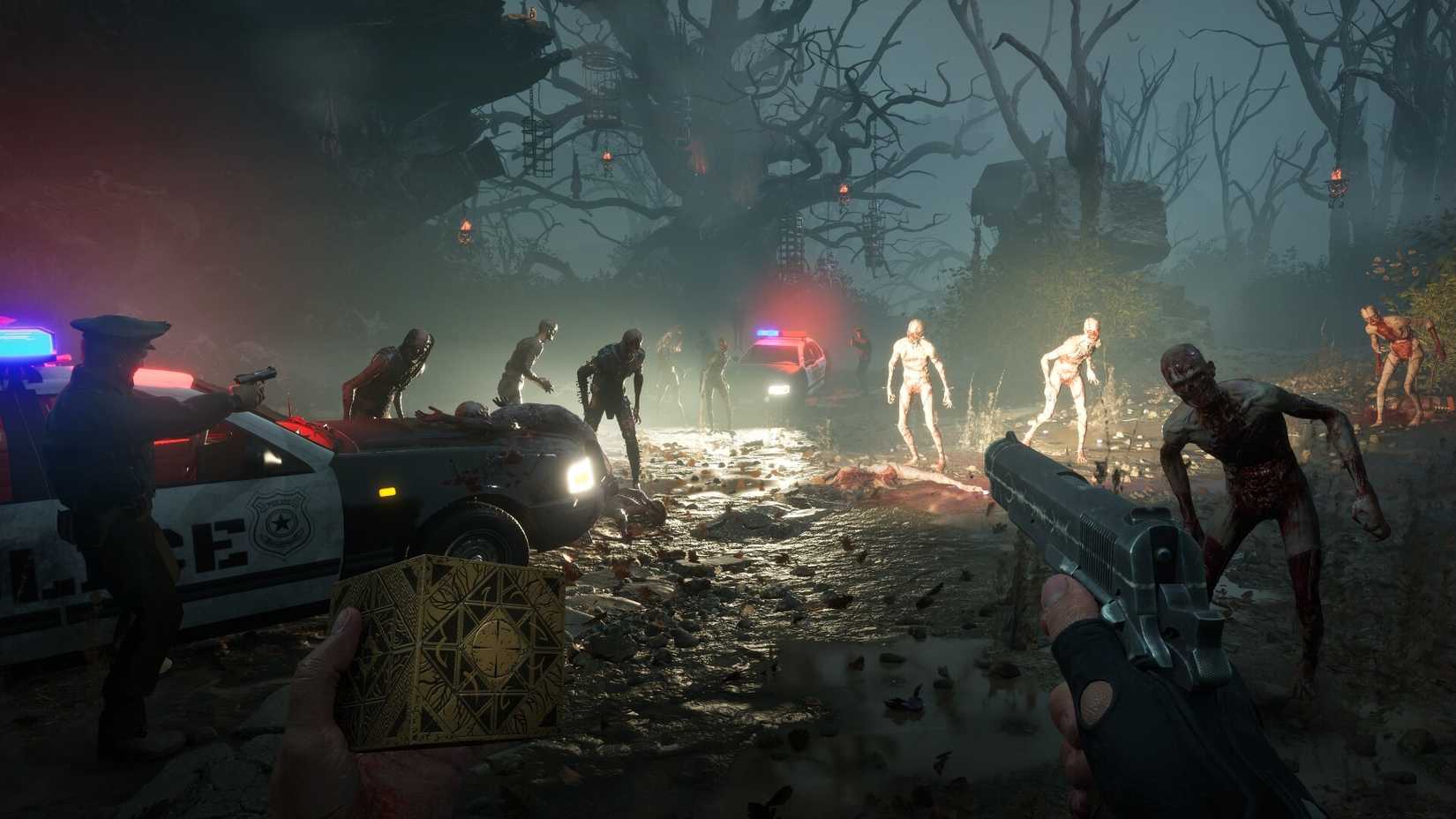
Hellraiser has always been a more visceral and mental kind of horror than the game's action-heavy elements. So when did the action elements come into play? De Fault explains:
"[The game] was always conceived as a modern action-type horror game. We wanted you to be able to do violence, particularly the kind of violence that we have being done to you. It seemed thematically important. A big question that we asked ourselves when initially developing the idea of the game was how to take Hellraiser and give it the right kind of gameplay. We knew we didn't want to make something where you were only sneaking around the entire time. We wanted you to be in those juicy kind of situations that only really direct confrontation can resolve."
Curious about the cult-like characters in the lore, I figured it made perfect sense given that you really can't fight Cenobites. De Fault elaborates on that aspect:
Yeah, so there's actually like two categories of enemies in the game, other than Cenobites. The Cenobites aren't really enemies. Maybe the Chatterer; he does try to rip your arms off. But you were right to say you can't fight Cenobites; they're too powerful, too godly. We have the cult who are dedicated to Cenobites, the Scarlet Church. They're trying to make their own kind of heaven on earth.
They're trying to create their own Cenobite to serve them. We did a lot of research into why young people actually join cults. What kind of vulnerabilities and dissatisfactions with life drive people to join those cults? That informed the way we designed them. The way that they think about sexuality, the way they think about violence, the way they disregard the value of their own lives. They're not just berserk and mad. To us, each one of them is like an actual human. They're not deranged. Well, from a normal point of view, they are deranged.
But there's a reason why they say the things that they say and do the things they do, and have the ideas that they have. Then there's a second category of enemies called the Unworthy. They're not featured in this demo, but they're the tortured souls that have been trapped in the labyrinth for a very long time. They opened configurations like the Lament or the Genesis, but they were found wanting by the Cenobites and imprisoned in the labyrinth to be experimented on in search of the heights of sensation for eternity.
The events of the game open a way out for them, and they are drawn to the Genesis configuration like moths to a flame. They're going to swarm you and try and get to you. They're not just mindless monsters or zombies. Each one of them is still a former human soul that will show some semblance of the depravity of the person who opened the configuration and became unworthy.
They're all very cool additions to the lore, and I wanted to dig further into how collaborative the experience was with Clive Baker. Thankfully, De Fault obliged:
We had loads of freedom. It was a wonderful experience. Clive helped us ideate the story of the game in the first place. We spent a lot of time, very early on in the process, making sure that we understood exactly what Hellraiser is and what the original soul of Hellraiser was that Clive channeled back in the 80s. As soon as we understood that original truth of Hellraiser that resonated with people back then. The job was to recreate it through our own life experiences and our own lenses, so that we could refresh that and renew it for a new generation and a new medium. Once we understood that, Clive basically just let us rip.
He just wanted to make sure that everything was channeling that same soul. I also think he's such a creative to know that he couldn't dictate to us from afar. He needed to support us and let us channel that spirit ourselves in the same way he had back in the day. It gave us this opportunity that I don't think we would have had if it wasn't for the nature of Hellraiser to channel some really dark and emotional shit. It forced us to reveal parts of ourselves that we maybe wouldn't often show to people. We got to make something that I don't think we would have gotten permission to make if it wasn't for the ability to point at Hellraiser and say, "But that's our justification! It's what Hellraiser is!" We can't make a Hellraiser game without doing this deep stuff.
The Future Of Hellraiser Beyond Revival

You see a lot of gaming influences in the game design: a bit of P.T., some Resident Evil, and touches of Portal. But where does the biggest inspiration lie?
"The writing of Thomas Ligotti, especially for the cult and their cult leader. That probably wouldn't really surprise people. I think the one that people have responded to the most is influences from games like Bioshock or Prey, where you have this right hand/left hand thing going on, where you have weapons in the right hand and in the left hand you have powers that are vaguely like a gravity gun, vaguely like plasmids from Bioshock. I think that's the thing that surprised people the most: how the action gameplay and puzzle gameplay really come together. You have those tools in the left hand that are kind of drawing on those other games."
As for a sequel, well, as usual, it depends on several factors: "It's been so much fun making this game that we would love to do that, but it remains to be seen. The game has two endings, and I would say that Aiden's story would be hard to follow directly, because the player gets to choose his new status quo at the end of the game. Both endings feel like pretty definitive places for Aiden to go. I'm not sure whether we would do a direct sequel."
De Fault continues: "I think if we were to make a sequel to it, we would make something that happens a few years later with some of the characters from Revival, maybe a different protagonist. Probably a different protagonist. Maybe like how Resident Evil sequels change characters around. The story of the world, and in our case, the story of the Cenobite and the Labyrinth and what Pinhead's agenda is. That would probably be the bit that would continue into a sequel if we made one."
It was one of those things where, as soon as it was suggested that we do this, we knew we should have done this the whole time.
As for the biggest surprise in development, we'll let De Fault explain:"I think the biggest shift over the course of development was probably the realization that we had the resources to do more mindfuckery in the labyrinth. In early versions of the game, we had the action gameplay in the real world, and the labyrinth was more of just a puzzle space. There was a certain turning point where we realized we needed to use the labyrinth as a storytelling space. It was this psychoactive, unsettling kind of space. Most of what you've played in the demo, there were some sections where you had to rotate that big room or run around a bladed trap or something."
"That's kind of the stuff that was always in the game. But things like the part where you go through the looping rooms and have to find objects symbolic of Aiden and Sonny's relationship tell you the story of their depravity before the events of the game; that was probably the biggest swerve. The addition of several long sections devoted to that throughout the game. It was fairly late into development. I wouldn't necessarily say it was surprising. It was one of those things where, as soon as it was suggested that we do this, we knew we should have done this the whole time. It didn't feel surprising. It just felt natural."
Clive Barker's Hellraiser: Revival is due out on PC, PS5, Xbox Series X/S, and Nintendo Switch 2 on October 8, 2026.
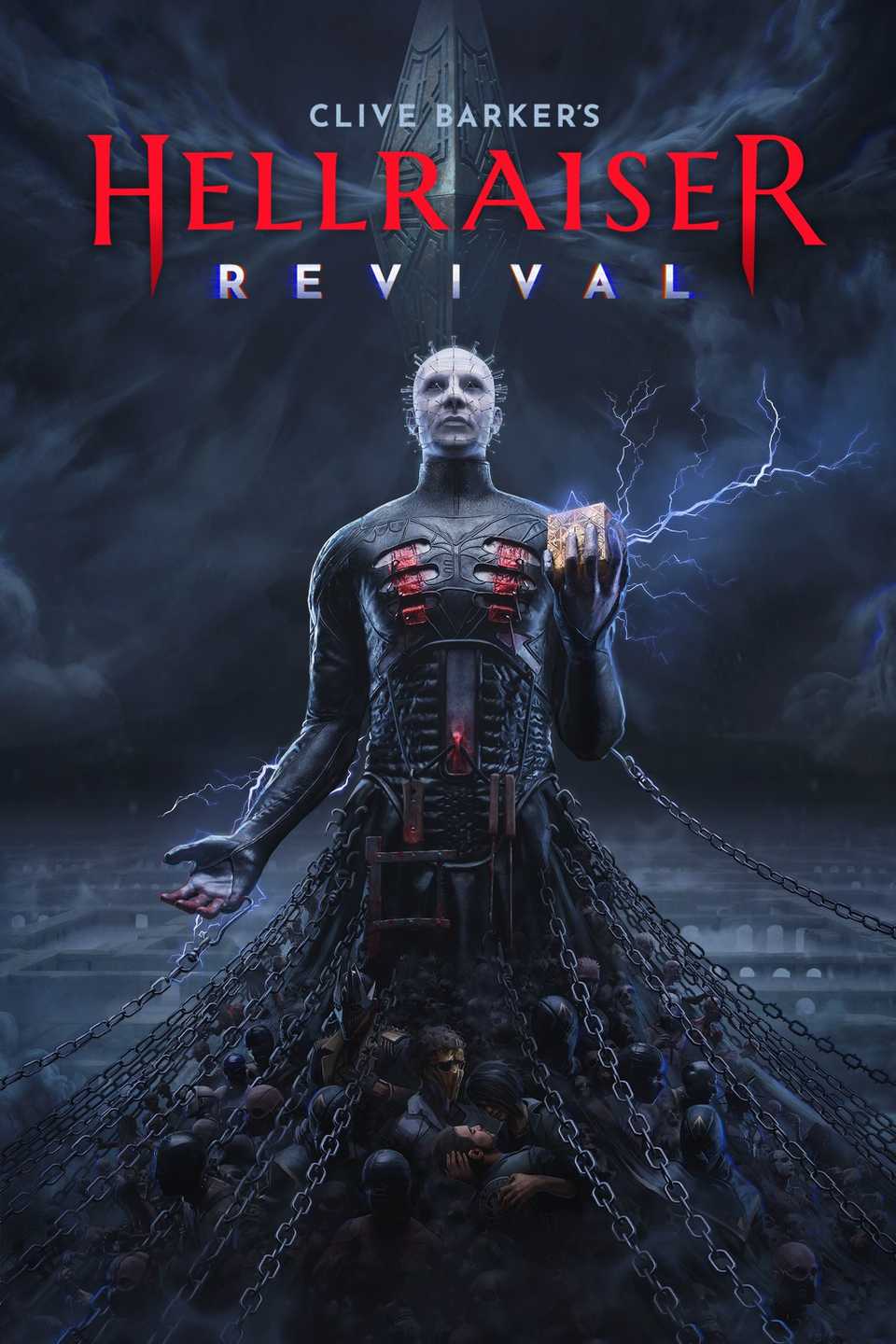
Clive Barker's Hellraiser: Revival
Systems

Developer(s) Saber Interactive
Publisher(s) Saber Interactive








 English (US) ·