
 3 hours ago
20
3 hours ago
20
Late in the afternoon on 29 October 1971, one of the world’s greatest guitarists, Duane Allman, was riding his motorcycle when he swerved to avoid colliding with a flatbed truck that suddenly stopped short in an intersection. He wound up slamming into the back of the truck with such force, it threw him under his bike which skidded and dragged him for 50 ruinous feet. Suffering a collapsed chest, a ruptured coronary artery and a damaged liver, Allman was pronounced dead three hours later. He was 24.
Four decades after that tragic event, when journalist Alan Light was hanging out with Gregg Allman to ghostwrite the musician’s memoir, titled My Cross to Bear, he couldn’t help but notice how present Duane remained in his life. “In Gregg’s house, he was surrounded by photos of Duane, notes from Duane and music from Duane,” Light said. “It was obvious that he was still very much a part of Gregg’s day-to-day existence. The sadness and loss never left him.”
In fact, it only exacerbated the sense of tragedy that had been with both Allman brothers nearly from birth. When Duane was three years old and Gregg two, their father was shot to death by a hitchhiker he’d picked up. “Gregg experienced a full life of trauma,” said James Keach, who has directed a comprehensive new documentary about the star titled Gregg Allman: The Music of My Soul. “That level of trauma, suffered young, informs everything you do, especially if you’re an artist.”
But if trauma underlay Allman’s music, the way he used it as a singer, songwriter and musician couldn’t have been more rousing, creative or cathartic, something the performances in the film make abundantly clear. While much of the documentary covers his decades with the Allman Brothers – which suffered another tragedy with the death of their bassist Berry Oakley one year after Duane’s demise – its greater value comes in differentiating Gregg from the rest of the band. To do so, it emphasizes his unique role within their ranks, as well as his separate solo identity, delineated over a wealth of solo albums released before his death from liver cancer in 2017 at 69. “If Duane had never formed the Allman Brothers, Gregg would have become a solo artist with an affinity for Jackson Browne and Tim Buckley,” said Alan Paul, author of the definitive book on the group, One Way Out. “He wouldn’t have been out of place in the Laurel Canyon singer-songwriter scene.”
That’s apparent not only from the craft and melodic range of his writing, which pushed far beyond the blues idiom he’s often associated with, but also the husky timbre of his voice and the weight of emotion in his singing. Heavy with sadness and hurt, Allman’s voice was the perfect expression of the burdened life he led, though as Paul pointed out, “Gregg would have been a great singer even if he lived a very different life.”
Early in that life music represented redemption. After the murder of the boys’ father, their mother never remarried, forcing her to raise the kids herself. Though she was enormously devoted to them, the job she took to support the family required her to live apart from them for some years, during which she sent them to military school. In those years, Gregg felt abandoned by both parents. Though Duane became a kind of parental substitute, he could be an intimidating one to the more inward Allman. “People have this image of Gregg as this hard-living rock’n’roll pirate,” Keach said. “But I always saw him as a shy and sensitive guy.”
Interestingly, Gregg took up guitar first, but Duane became intrigued and quickly surpassed him in skill. The younger brother reacted by developing his voice, modeled on the southern Black blues singers whose phrasing, gravitas and swagger entranced him. Though the boys were raised in the segregated south, they were drawn to Black culture. An early band the brothers formed, initially named Allman Joys and later dubbed Hourglass, earned a recording contract but the restrictive sound their record company required frustrated Duane, who quit to become a session guitarist at Muscle Shoals studio where he played on classic recordings by artists such as Wilson Pickett and Aretha Franklin. By 1969, Duane had an idea for his own band fired by an unusual lineup, with two harmonically attuned lead guitarists and two powerhouse drummers, the latter modeled on similar lineups in James Brown’s and Otis Redding’s bands. The sound Duane conceived wound up defining the Southern Rock movement, heard in bands from Lynyrd Skynyrd to the Marshall Tucker Band. Duane’s first hire for the Allmans was Jaimoe (John Lee Johnson), a Black R&B and jazz drummer, making them one of the few major integrated bands in the Jim Crow south.
Gregg found his way into the group by tackling an intimidating instrument: the Hammond B3 organ. “Gregg was never a flashy organ player,” said Chuck Leavell, the master keyboardist who joined the Allmans in 1972. “You’re not going to listen to him and say, ‘wow, this guy’s got incredible chops!’ What you do hear is melody and feeling and sensitivity. He was a very tasteful player.”
More, Gregg could write songs like Whipping Post and Midnight Rider, which gave the group a compositional authority few jam bands ever muster. The Allmans’ third album, Live at the Fillmore East, universally hailed as one of the greatest concert recordings ever released, made them national stars but the same week that it went gold Duane lost his life. “I was angry,” Gregg says bitterly in the film. “I was angry at him for dying. I was angry at God for taking him. I was angry at the whole thing.”
The documentary reveals that Gregg, already a heroin user, overdosed the same night Duane died, though he was later revived. Alan Paul’s book adds another shocking fact: bassist Berry Oakley also nearly died that night in a terrible car crash he managed to walk away from. Gregg took to bed for weeks afterwards. By then he was addicted to heroin and alcohol, dependencies that plagued him for decades. “The reality of what he had to deal with was just too much,” Keach said.
Oakley’s death one year later was eerily similar to Duane’s – again from a motorcycle accident, though the bassist was fully conscious in the aftermath. When Oakley was asked if he wanted to go to the hospital, he said no, a decision that may have doomed him. “A lot of people make that mistake,” Keach said. “They think they’re OK but don’t realize their internal organs may have been crushed and they’re bleeding to death inside.”
Given the multiplying deaths, Gregg started to feel cursed. “He had this sense of, ‘why am I the one who made it through all this?’” Light said. “All around me, again and again, this tragedy keeps happening.”
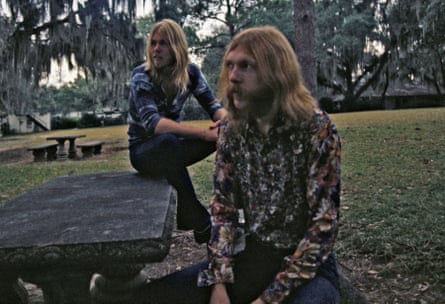
During that period, Paul reveals, the killer of Gregg’s father wrote letters to him to try to apologize. “Gregg threw all of them out,” Paul said.
For a short while, the band thought about stopping but, said Keach, “if they quit, what was going to happen? None of these guys went to college. They were great musicians. So, they did what they knew how to do.”
In fact, they did so to an astounding degree, reinventing themselves in a way that made them more popular, and respected, than ever. Knowing they could never replace the singularity of Duane, they instead added a prominent keyboardist – Chuck Leavell. According to the pianist, “that was a happy accident. They weren’t looking for a piano player. We just started these jam sessions, and everybody said, ‘This is unique.’ And I guess I provided a certain degree of rhythm under (surviving lead guitarist) Dickie Betts, and also offered a foil. The twin guitar harmonies they had before I could cover on piano but with a totally different tonality and texture.”
Leavell’s first album with them, Brothers and Sisters, shot to the top of the charts, fired by the smash single Ramblin’ Man, whose lyrics briefly referenced the murder of the Allmans’ father. Betts wrote and sang that song, along with others on the album, making him the band’s biggest star. At first that was cool with Gregg, who was in no emotional shape then to lead the group. Eventually, though, it led to tensions. “Watching Dickie move into that position obviously rankled Gregg,” Light said. “He talked a lot about that.”
The ever-escalating drug use of both Gregg and Betts made things far worse. (Betts was permanently booted from the band in 2000.) At the height of their fame, Gregg began to feel overwhelmed by the group’s jam-band focus, leading him to inaugurate a parallel solo career with the Laid Back album in 1973. In the film, Gregg says anger inspired the move. After presenting the band with a song he was especially proud of, Queen of Hearts, one member sneered, “Man, that ain’t saying nothin’.” In an interview used in the film, Gregg doesn’t reveal who said that, but Paul believes it was drummer Butch Trucks. Gregg had the last laugh, though. His solo album quickly went gold, buttressing the Allmans’ success which, by then, turned them into America’s biggest band.
Harnessing that influence, they began to hold early fundraisers for a then little-known Jimmy Carter, an extreme dark horse running for president. The idea of a long-haired rock band endorsing a politician was incredibly rare then yet so effective that Carter later gave them credit for helping him win the White House in 1976. More importantly, the ascendence of Carter and the Allmans offered a radically new image of the south, one that was racially inclusive. “Before you had southern politicians like George Wallace and Lester Maddox who were adamant segregationists,” Leavell said. “Now we had guys who grew up in the deep south with Black people as neighbors and childhood friends and a whole new perspective.”
That didn’t go over well with everyone. There’s speculation in the documentary that anti-Carter forces were behind a nearly ruinous drug bust in the Allmans’ camp. To gain immunity from that, Gregg testified against the band’s road manager, Scooter Jennings. “There was a lot of feeling that Gregg had ratted on his friend,” Leavell said. “Some felt his testimony went beyond what was necessary. In reality, Gregg was put in a box.”
Jennings himself forgave Gregg and took the fall but the bad feelings broke up the band for a while. More controversy arrived when the Allman singer married Cher, making them music’s odd couple of the hour. (It was one of seven marriages for Allman.) “People were always going to think, ‘How the hell did that happen?’” Light said. “But they only had good things to say about each other.”
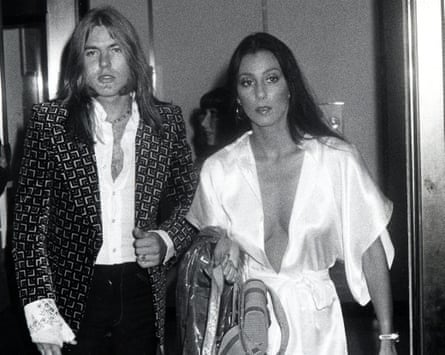
For the shy Allman, Cher’s level of Hollywood fame proved intolerable. The issue for her was his heroin addiction. When I asked Cher about their relationship a few years ago, she expressed abiding love for the man she called “Gregory” (as did all his closest friends). At the same time, she said she couldn’t have him using heroin around her children, which scotched the relationship for her.
Allman didn’t get sober until the late 90s. Leavell believes part of the reason it took so long was because “Gregg could drink a quart of liquor and still perform. So I think he felt he could get away with it. But there came a time when he couldn’t.”
Though he finally got clean and received a liver transplant in 2010, the hepatitis C he contracted previously endured, and in 2017 he died of liver cancer. Knowing he was dying, Allman recorded a final album, Southern Blood, released four months after his death. It stands as one of the greatest self-penned musical epitaphs ever released. While Gregg knew of his impending demise, it was never announced to the public, something Paul considers a shame. “When he died, he was treated as a major musical figure,” Paul said. “It would have been nice if he had been around to see that his cultural relevance went way beyond the Allmans.”
More, the depth of that recognition might have offered a sweet counter to the many traumas he endured in his life, including the suicide of the band’s drummer Butch Trucks just four months before his own death. Given the weight of such events, Light said, “Gregg felt haunted until the very end of his life. Sadly, that will always be a part of his story.”
-
Gregg Allman: The Music of My Soul is in US cinemas for one night on 17 June with release dates elsewhere to be announced






 English (US) ·