


Published Feb 3, 2026, 9:54 AM EST
Tom is a Senior Staff Writer at Screen Rant, with expertise covering all things Classic TV from hilarious sitcoms to jaw-dropping sci-fi.
Initially he was an Updates writer, though before long he found his way to the Classic TV team. He now spends his days keeping Screen Rant readers informed about the TV shows of yesteryear, whether it's recommending hidden gems that may have been missed by genre fans or deep diving into ways your favorite shows have (or haven't) stood the test of time.
Tom is based in the UK and when he's not writing about TV shows, he's watching them. He's also an avid horror fiction writer, gamer, and has a Dungeons and Dragons habit that he tries (and fails) to keep in check.
HBO has never struggled to deliver prestige detective shows. From the 1930s corruption of Perry Mason to the glossy paranoia of Mare of Easttown and the pulpy intrigue of The Night Of, the network practically wrote the modern rulebook for detective television. Yet for all those hits, HBO arguably peaked in the genre over a decade ago with True Detective season 1 in 2014.
The first installment of what became HBO’s defining crime anthology still hasn’t been matched. The lean, gritty eight-episode mystery anchored by Woody Harrelson and Matthew McConaughey was unblemished TV gold. The combination of masterful casting, razor-sharp writing, and an addictively eerie atmosphere set a bar for detective television series that feels unreachable.
Several seasons of True Detective have followed, each experimenting with new casts and cases, but none have captured the same magic. More than ten years later, True Detective season 1 remains the apex of detective television, not just for HBO but for the genre as a whole, and set a benchmark every new crime series inevitably chases.
True Detective Season 1 Is A Masterpiece
A Brooding Eight Episode Crime Saga That Redefined Prestige Television

From its opening moments, True Detective season 1 makes it clear that it's something special. The Louisiana bayous feel oppressive, the skies permanently gray, and the murders hauntingly ritualistic. The case unfolds across decades, giving the mystery weight and history. This isn’t just another whodunit; it’s a slow-burn character study wrapped inside a Southern Gothic nightmare.
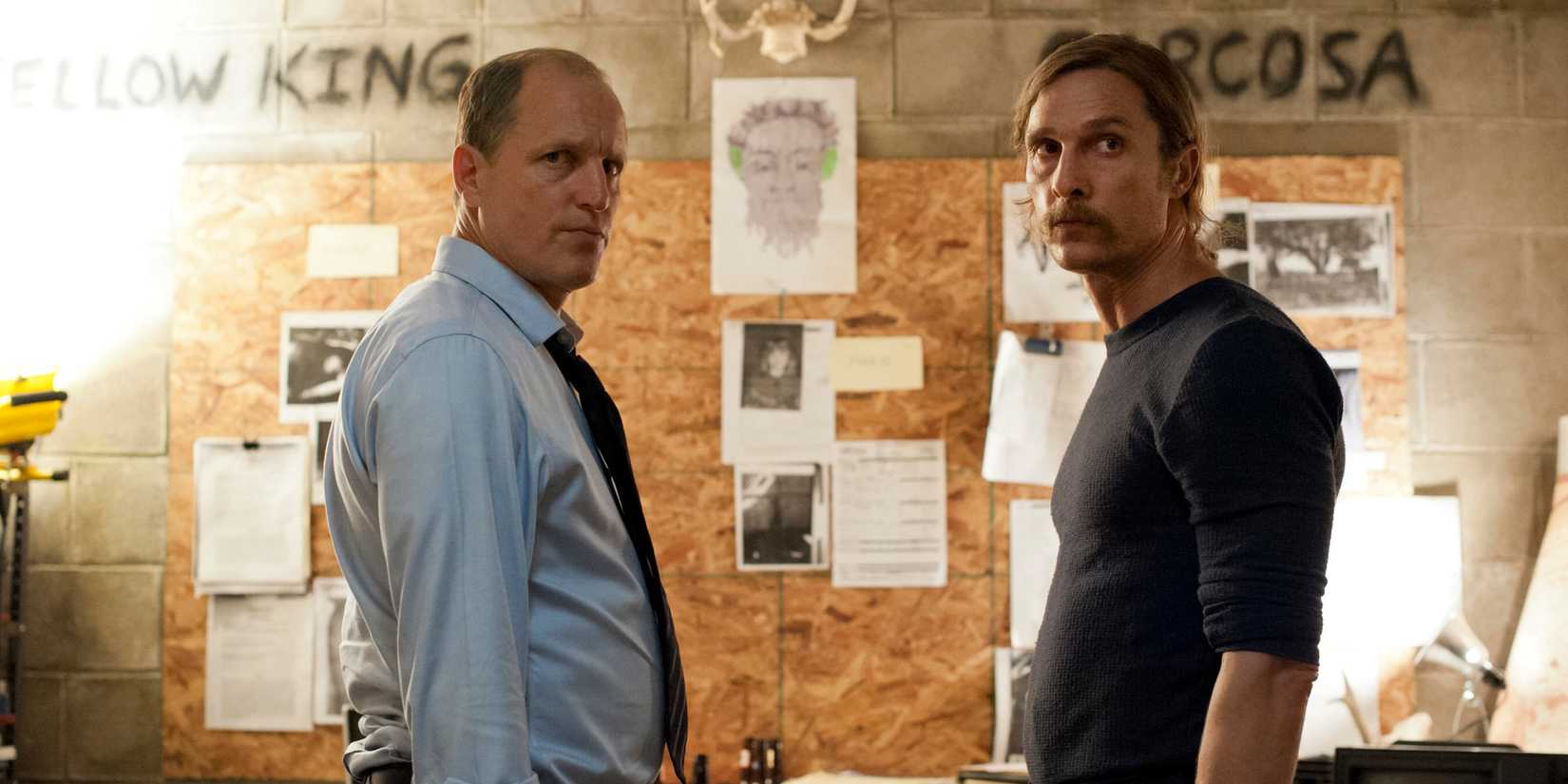
At the center are Matthew McConaughey’s Rust Cohle and Woody Harrelson’s Marty Hart, detectives with a tense partnership thanks to clashing philosophies. Rust’s nihilistic worldview contrasts sharply with Marty’s fragile domestic life. Their interrogations, arguments, and confessions become just as compelling as the hunt for the killer, elevating the show beyond standard procedural storytelling.
Creator Nic Pizzolatto’s writing is dense and literary, packed with existential dread and philosophical monologes, and this gives season 1 of True Detective a distinct edge. What’s more, director Cary Joji Fukunaga brings a level of cinematic finesse rarely seen on TV, highlighted by the legendary six-minute tracking shot in “Who Goes There.” It’s a technical flex that still feels jaw-dropping years later.
Critics responded immediately when True Detective first arrived. Season 1 earned multiple Emmy and Golden Globe nominations, while its 92% Rotten Tomatoes score reflected near-universal acclaim. Awards recognition only confirmed what viewers already knew: True Detective wasn’t simply good TV, it was the absolute peak of prestige detective shows.
What Made True Detective Season 1 So Special
Perfect Casting And Atmosphere Turned A Simple Mystery Into Must Watch TV
 Credit: HBO via MovieStillsDB
Plenty of detective shows feature grim cases and tortured cops, but True Detective season 1 fused those ingredients with rare precision. The eight-episode format kept the story tight, eliminating filler. Every scene pushes the investigation or deepens the characters, creating momentum that never stalls.
The casting was also an essential ingredient. McConaughey’s Rust Cohle arrived during the height of the McConaissance that defined his resurgence in popularity in the 2010s, and his gaunt intensity dominates the screen. At the same time, Woody Harrelson brings warmth and volatility to Marty Hart, making him equally sympathetic and frustrating. Their chemistry feels completely authentic, like the two detectives have truly spent years working together.
The setting and tone also plays a major role in making True Detective season 1 timeless. Louisiana’s swamps, abandoned churches, and decaying towns give the series a haunting identity. The landscape becomes a character itself, amplifying the story’s themes of corruption and rot. Combined with T Bone Burnett’s moody soundtrack, the atmosphere is relentlessly immersive.
Most importantly, the debut season of True Detective felt like an event. Weekly discussions exploded online, and each episode demanded attention. It proved that an anthology detective story could feel cinematic without sacrificing intimacy. That lightning strike of timing, talent, and tone is exactly why nothing since has quite measured up.
Are The Other True Detective Seasons Worth Watching?
The Later Installments Can’t Match Season One But Still Deliver Compelling Crime Stories

Following season 1 was always going to be difficult, but the rest of True Detective is more than deserving of a look in too. Season 2 shifted to California noir and introduced Ray Velcoro (Colin Farrell), Ani Bezzerides (Rachel McAdams), and Frank Semyon (Vince Vaughn). Its tangled conspiracy divided critics, but its ambition and performances remain impressive.
Season 3 arrived in 2017, and brought True Detective back to a more grounded mystery in the Ozarks, led by Mahershala Ali as Wayne Hays. The dual-timeline structure echoed season 1, and Ali’s layered performance anchored the story with quiet heartbreak. It’s a thoughtful, character-driven case that proves the show could still thrive without Harrelson and McConaughey.
Season 4, Night Country, continued the True Detective tradition of star power thanks to Jodie Foster and distinct settings, this time Alaska. It also continued experimenting with tone and structure rather than copying Rust and Marty’s formula. It's this willingness to reinvent that's kept HBO’s hit detective anthology fresh, even when it falls short of season 1’s legacy.
Season 1 may be a once-in-a-lifetime masterpiece, but the rest of True Detective is far from disposable. Each chapter offers strong performances, moody cinematography, and engrossing mysteries. For detective show and crime drama fans, the entire anthology is worth the ride, even if the first season remains untouchable.
Release Date January 12, 2014
Network HBO Max
Showrunner Nic Pizzolatto
Directors Cary Fukunaga
Writers Nic Pizzolatto






 English (US) ·