
 Image via Disney/Anne Marie Fox

Published Apr 16, 2026, 2:57 PM EDT
Mauricio is a Mexican guy who gets attached to cancelled TV shows, likes to read Marvel comics about underdog teams, and has been told one-too-many times he looks like Penn Badgley, specifically in his stalker-y roles. He discovered his passion for pop culture with Power Rangers and the Star Wars Special Edition re-releases. Professionally, he's got a degree in International Finance and has been in the real estate business for almost 10 years now (yikes!). Magically, he's 83% Ravenclaw and 17% Slytherin. Musically, he thinks Jack Antonoff is a multiversal being with the key to create bop after bop.
He specializes in over-analyzing his favorite shows like Glee, Lost, Community, Ugly Betty, and Grey's Anatomy; as well as his favorite actors' performances, like Olivia Colman, Olivia Colman, and Olivia Colman. Just kidding, other faves include Anna Kendrick, Rachel Bloom, Lee Pace, Maggie Smith, Elizabeth Olsen, and Olivia Colman.
Sign in to your Collider account
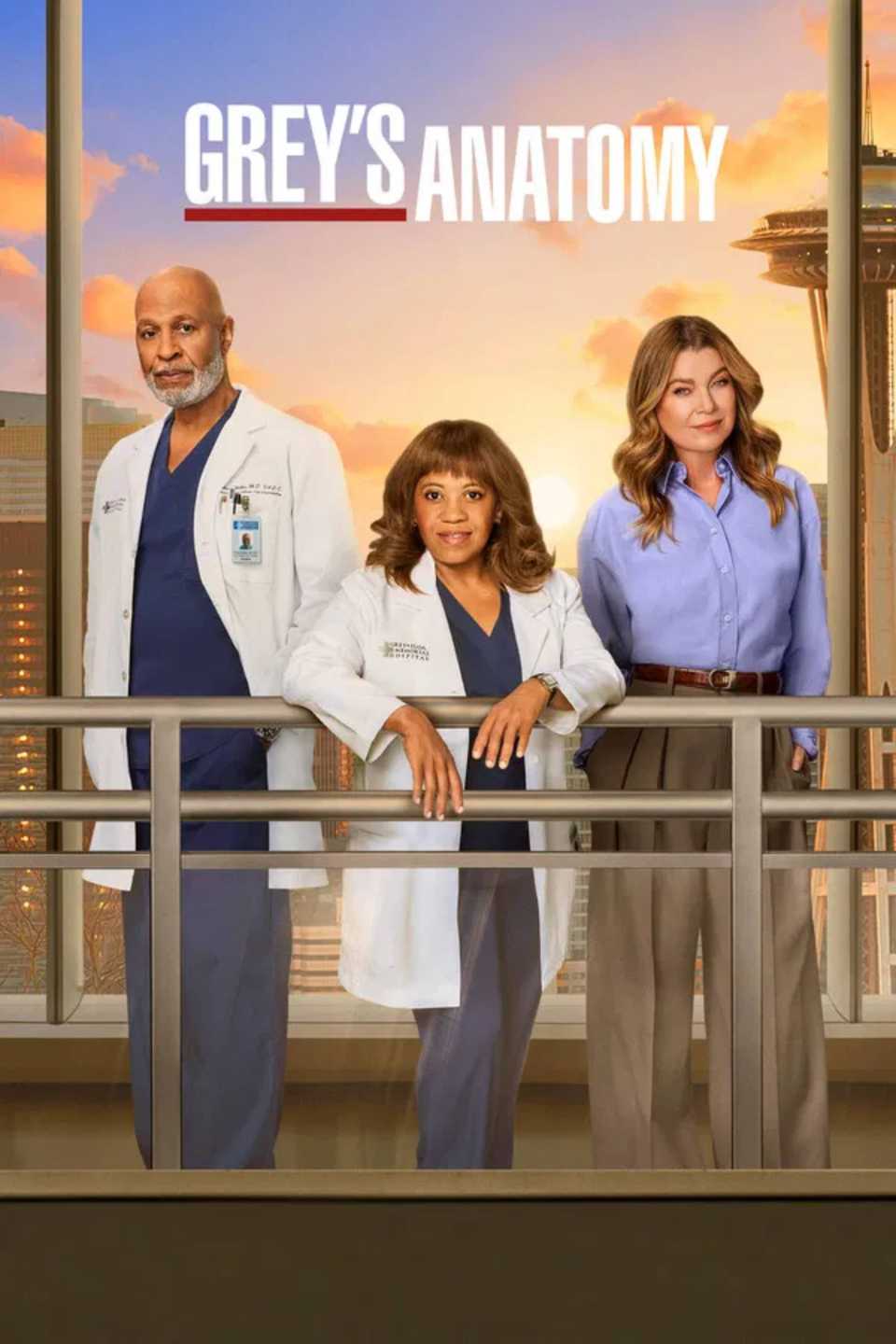
Besides being known as the longest-running American medical drama, Grey’s Anatomy is also characterized by the carousel of characters that have come and gone. It’s not a surprise at all, considering the large ensemble cast and the series has been on the air for more than 20 years now. A common narrative device – courtesy of creator Shonda Rhimes and crew – to manage actors’ behind-the-scenes drama and contract expirations has proven to be controversial but effective: killing them off. One death that still hurts and should’ve been handled differently at the time was that of Chyler Leigh’s Lexie Grey.
Introduced in the Season 3 finale, Lexie was Meredith’s (Ellen Pompeo) half-sister. Yes, family twists are also one of Grey’s Anatomy’s staples, and Lexie was one of the earliest ones. For five seasons, we got to know who she was, with her eventually becoming a fan favorite. When Leigh’s contract expired, she opted out of the show, looking to spend more time with her family. There was no foul play involved, as both she and Rhimes came up with what ultimately became her tragic end. Still, in retrospect, Leigh’s exit should’ve been executed in a way that would’ve allowed her to reprise her role as Lexie in future seasons.
Lexie’s Death in the 'Grey's Anatomy' Season 8 Finale Was Brutal and Tragic
While Season 8 is considered one of the best of Grey’s Anatomy, its finale proves to be a bit more divisive. In “Flight,” half the doctors of Seattle Grace, who were headed to Boise to assist in a surgery, are left stranded in the woods after their plane crashes. A Lost-like sequence reveals how injured everyone is, but the one in the worst shape turns out to be Lexie, whose lower body is crushed by plane debris. Mark (Eric Dane), who by this point is totally devoted to Lexie, stays by her side through every moment. The most heartbreaking goodbye takes place as they visualize the life they could’ve (and should’ve) had together.
Collider Exclusive · TV Medicine Quiz Which Fictional Hospital Would You Work Best In? The Pitt · ER · Grey's Anatomy · House · Scrubs
Five hospitals. Five completely different ways medicine goes sideways on television — brutal, chaotic, romantic, brilliant, and ridiculous. Only one of them is the ward your instincts were built for. Eight questions will figure out exactly where you belong.
🚨The Pitt
🏥ER
💉Grey's
🔬House
🩺Scrubs
FIND YOUR HOSPITAL →
01
A critical patient comes through the door. What's your first instinct? Medicine under pressure reveals who you actually are.
AStay completely present — block everything else out and work through it step by step, right now. BTriage fast and delegate — get the right people on the right problems immediately. CTrust my gut and move — I work best when I stop overthinking and just act. DAsk the question everyone else is ignoring — what's the thing that doesn't fit? ETake a breath, make a joke to cut the tension, and then get to work — panic helps no one.
NEXT QUESTION →
02
Why did you go into medicine in the first place? The honest answer says more about you than the one you'd give in an interview.
ABecause I wanted to be where it matters most — right at the edge, when someone's life is actually on the line. BBecause I wanted to help people — genuinely, one patient at a time, in a system that makes it hard. CBecause I was drawn to the intensity of it — the stakes, the drama, the feeling of being fully alive. DBecause medicine is the most interesting puzzle there is — and I needed a problem worth solving. EBecause I wanted to make a difference — and also, honestly, I didn't know what else to do with my life.
NEXT QUESTION →
03
What do you actually want from the people you work with? Who you want beside you under pressure is who you are.
ACompetence and calm — I need people who don't fall apart when things get bad. BTrust and reliability — I want to know that when I pass something off, it's handled. CConnection — I want colleagues who become family, even if that gets complicated. DIntelligence and the willingness to be challenged — I have no interest in people who just agree with me. EFriendship — people I actually like spending twelve hours a day with, because those hours are going to happen either way.
NEXT QUESTION →
04
You lose a patient you fought hard to save. How do you carry it? Every doctor who's worked a long shift has had to answer this question.
AI carry it. All of it. I don't look for ways to put it down — that weight is part of doing this work honestly. BI process it and move — you have to, or the next patient suffers for the one you just lost. CI feel it deeply and lean on the people around me — I don't think you're supposed to handle that alone. DI go back over every decision — not to punish myself, but because I need to understand what I missed. EI grieve it genuinely, find some way to laugh about something unrelated, and try to be kind to myself — imperfectly.
NEXT QUESTION →
05
How would your colleagues describe the way you work? Your reputation on the floor is usually more accurate than your self-image.
AIntense and completely present — no small talk during a shift, but exactly who you want there. BSteady and dependable — not the flashiest in the room but never the one who drops something. CPassionate and occasionally chaotic — brilliant on the hard cases, prone to drama everywhere else. DBrilliant and difficult — right more often than anyone else, and everyone knows it, including me. EWarm and self-deprecating — not the most intimidating presence, but genuinely good at this and easy to like.
NEXT QUESTION →
06
How do you feel about hospital protocol and procedure? Every institution has rules. What you do with them is a choice.
AProtocol is the floor, not the ceiling — I follow it until the patient needs something it can't provide. BI respect it — the system is broken in places, but the structure is there for a reason and I work within it. CI follow it until my instincts tell me not to — and my instincts are usually right, even when they cause problems. DRules are for people who haven't thought hard enough about when to break them. EI try to follow it and mostly do — with a few memorable exceptions that still come up in meetings.
NEXT QUESTION →
07
What does this job cost you personally? Nobody works in medicine without paying a price. What's yours?
AEverything outside these walls — I've given this job my full attention and the rest of my life has gone around it. BMy idealism, mostly — I came in believing the system could be fixed and I've made a complicated peace with that. CStability — my personal life has been as chaotic as the OR, and that's not entirely a coincidence. DMy relationships — I am not easy to know, and the people who've tried to would probably agree. EMy sense of gravity — I use humour as a coping mechanism, which not everyone appreciates in a hospital.
NEXT QUESTION →
08
At the end of a long shift, what keeps you coming back? The answer to this question is the most honest thing about you.
AThe fact that it's real — that nothing else I could be doing would matter this much, right now, today. BThe patients — individual human beings who needed something and got it because I was there. CThe people I work with — I have walked through impossible things with these people and I'd do it again. DThe next unsolved case — there's always another puzzle, and I'm not done yet. EBecause despite everything — the exhaustion, the loss, the absurdity — I actually love this job.
REVEAL MY HOSPITAL →
Your Assignment Has Been Made You Belong In…
Your answers have pointed to one fictional hospital above all others. This is the ward your instincts, your temperament, and your particular brand of dysfunction were built for.
The Pitt
You are built for the most unsparing version of emergency medicine television has ever shown — one that puts you inside a single fifteen-hour shift and doesn't let you look away.
- You need your work to be real, not romanticised — meaning over drama, honesty over aesthetics.
- You find purpose inside the work itself, not in the chaos surrounding it.
- You've made peace with the fact that this job takes from you constantly, and gives back in ways that are harder to name.
- Pittsburgh Trauma Medical Center demands exactly that kind of person — and you would not want to be anywhere else.
ER
You are the person who keeps the whole floor running — not the most brilliant in the room, but possibly the most essential.
- You show up, do the work, absorb the losses, and come back the next day without needing the job to be anything other than what it is.
- You care about patients as individual human beings, not as cases to solve or dramas to live through.
- You believe in the system even when it fails you — and you understand that emergency medicine is about holding the line just long enough.
- ER is television about endurance. You have it.
Grey's Anatomy
You came to medicine with your whole self — your ambition, your emotions, your relationships, your history — and you have never quite managed to leave any of it at the door.
- You feel things fully and form deep attachments to the people you work with.
- Your personal and professional lives are permanently, chaotically entangled — and that entanglement drives both your greatest disasters and your most remarkable saves.
- You understand that extraordinary medicine often happens at the intersection of clinical skill and profound human connection.
- It's messy at Grey Sloan. You would not have it any other way.
House
You are drawn to the problem above everything else — the symptom that doesn't fit, the diagnosis hiding underneath the obvious one.
- You're not primarily motivated by the patient as a person — though you are capable of caring, even if you'd deny it.
- You work best when the stakes are highest and the standard answer is wrong.
- Princeton-Plainsboro exists to house one extraordinary, impossible mind — and everyone around that mind is there because they're smart enough to keep up.
- The only way forward here is to think harder than everyone else in the room. That is exactly what you do.
Scrubs
You understand that medicine is tragic and absurd in almost equal measure — and that the only sane response is to hold both of those things at the same time.
- You are warm, self-aware, and funnier than most people in your field.
- You use humour to get through terrible moments — and at Sacred Heart, that's not a flaw, it's a survival strategy.
- You lean on the people around you and let them lean back. The laughter and the grief are genuinely inseparable here.
- Scrubs is a show about learning to become someone worthy of the job. You are still very much in the middle of that process — which is exactly right.
↻ RETAKE THE QUIZ
Besides being unexpected, Lexie’s death was brutal. Seeing her as the crash’s first victim turned the episode into a tragic experience. An inconsolable Meredith shows her pain throughout the whole episode, and not even Cristina (Sandra Oh) can soothe it. The devastation is only heightened when Mark succumbs to his internal injuries and dies in the Season 9 premiere. Making matters abysmally worse, Cristina shares gruesome details when going through a PTSD episode: The wolves in the woods didn’t eat her and the other survivors because they were busy eating Lexie instead.
Lexie Grey Deserved More on 'Grey's Anatomy'
While first seeming like a mere roadblock in Meredith’s way to emotional stability, Lexie became so much more important – and still had more to give on Grey's Anatomy. Her healthy upbringing clashed with Meredith’s darker nature, but they eventually made peace and their relationship evolved into a real sisterhood. Lexie’s dazzling essence also affected Mark in such a way that he decided to leave his womanizing era behind and own up to his actions. By Season 8, their on-again-off-again relationship had reached common ground, and they could finally plan a stable future together.
Although she humanized Mark and Meredith, Lexie wasn’t only a plot device. She became her own character by growing personally and professionally. Going through a shooting (in one of the show’s best episodes), the consequential PTSD, and her father’s death, ended up building her up instead of bringing her down. She matured with the blows life dealt her, but remained the most goodhearted and brightest soul the hospital had seen. Her skills, like her photographic memory, proved extremely useful and earned her a promotion as a surgical resident. Those were just the early steps to seeing her grow and thrive as a surgeon. Had Lexie survived, it would’ve been totally understandable to have her leave Seattle Grace following Mark’s death – and the door would still be open for future appearances.
Lexie’s Death Ruined Future Opportunities To Have the Character Return
 Image via ABC
Okay, yes, Lexie returned during Season 17, while Meredith was in her COVID-induced limbo between life and death. Lexie gives her sister one of the strongest pieces of advice when she reminds her that – even with a global pandemic raging on – life is worth celebrating. This is one of the greatest encores we get to see at Meredith’s beach, but it is still only a ghostly apparition fueled by Meredith’s sickly state of mind. Had Lexie been alive, her returning to Seattle to look after Meredith would’ve had a greater impact.
Chyler Leigh’s reasons for exiting the show are understandable, but killing off Lexie removed any opportunity of having her back in the mix. Teddy (Kim Raver), Addison (Kate Walsh), and Jackson (Jesse Williams) are just some of the characters who have left the show but have been intertwined with the story in later seasons, with their returns being earned and heartfelt. Raver’s Teddy even became a series regular again after an absence of six seasons (and has perhaps overstayed her welcome). Lexie deserved an encore of this kind. With Pompeo stepping down from starring in the show for a few years, Zola’s (Aniela Gumbs) education was sped up to fit her in as some type of Doogie Howser who could still carry the Grey name. In a what-if situation, having Lexie return would’ve been the best way to sort out the fact that the show is still named Grey’s Anatomy.
To say that fans were devastated by Lexie Grey's death is an understatement, especially since her death also went hand-in-hand with the death of another fan-favorite doctor, Mark Sloan. While fans respected Leigh's decision to move on to other projects and branch out as an actress, killing her off felt like an especially cruel way for the series to say goodbye to her. Lexie was always pure of heart and kind to everyone, even those who didn't deserve it. Showrunner Shonda Rhimes was faced with a hard choice when it came to writing the character out, and ultimately decided to kill her off. Having her move to a different hospital felt too unrealistic, considering she'd be leaving behind Meredith and Mark, and that felt too out of character. Sure, maybe it would have been hard to adjust to at first, but perhaps Rhimes was a little too hasty in her decision to kill Lexie off, because the show could really use her nowadays.
Lexie Could Have Had a Huge Impact on Later 'Grey's Anatomy' Seasons
 Image via ABC
 Lately, there have been a lot of moments that would have benefited from Lexie's presence. For instance, Meredith really could have used Lexie's shoulder to cry when Derek (Patrick Dempsey) died. Yes, she had Maggie (Kelly McCreary) and Amelia (Caterina Scorsone), but Maggie was still new in Meredith's life, and Amelia and Meredith had a very rocky relationship at the time. Lexie, on the other hand, knew Derek well, loved him, and had a mentor in him. She would have been able to resonate with Meredith's grief, and Meredith would have been far more likely to open up to her. Additionally, the Maggie situation would have gone a heck of a lot smoother had Lexie been around. She was once in Maggie's place, as the sudden half-sister of Meredith Grey, and forced to cut through her steely exterior. She could have helped Meredith open up to Maggie and warm to her sooner.
With Meredith having taken a major step back from the hospital, Lexie could have made a triumphant return to fill her sister's shoes. If Chyler Leigh was game for it, and Lexie was still alive, she could add so much to Meredith's arc in Season 21. Meredith has been tired of Grey Sloan Memorial for a while now, so it would have been nice to see Lexie take the reins from her. Their reunion would also give us back the badass duo of the Grey sisters. Plus, it would be fun to see her go head-to-head with Catherine (Debbie Allen) alongside Meredith. Unfortunately, we'll never get to see these ideas play out.

Related
And while it's understandable that, at the time, killing off Lexie seemed like the most plausible option, the show could have gone with a similar route to Cristina Yang's exit. They let Cristina go to achieve her dreams elsewhere, while still leaving the door open for her return. Killing off Lexie was truly one of Grey's Anatomy's biggest mistakes, and unfortunately, it's not something that can be rectified. (Though seeing ghost Lexie at peace in Season 17 did help soften the near-decade-long blow.)
More than a show, Grey’s Anatomy is a roller coaster of emotions. Each season finale has turned into a whole event that has the burden of delivering something more powerful and emotional than the previous season, while also making creative choices that fit with its actors’ decisions. Since Lexie had already cemented herself as one of Grey’s Anatomy’s essentials by Season 8, her death made sense as a blow that would devastate the fan base, but would also keep the show in everyone’s minds – and it worked. Here we are, 14 years later, talking about the twist! With Grey's Anatomy still going strong today, it’s clear that the killing-off-beloved-characters formula is going nowhere. We’ll just have to wait and see who’s next, hoping our hearts won’t be torn apart once more.
Grey's Anatomy airs Thursday nights on ABC and is available to stream on Hulu in the U.S.
Release Date March 27, 2005
-

-

Chandra Wilson
Dr. Miranda Bailey






 English (US) ·