
 Image via HBO

Published Apr 15, 2026, 6:03 PM EDT
Kareem is a veteran editor and writer with over 15 years of experience covering all forms of entertainment, from music to movies. He serves as a High Trending List Writer for Collider, covering all things TV. His work has been seen in numerous online publications such as FanSided, AXS, Examiner, Narcity, HuffPost, and ScreenRant.
He first began his professional writing career in 2011 writing political columns for HubPages, gradualaly building his portfolio until he was rewarded with his first paid writing position with News Headquarters in 2013. Since then, Kareem has covered everything imaginable, from writing political news columns for Examiner, reviewing the latest albums for AXS.com, and giving a unique take on sports, food, and the entertainment industry for Fansided.com. He had another online stop at Narcity, covering travel and things to do in his native Florida, before finally bringing his uniquely immense writing talent and voice to Valnet in 2020, first as a List Writer for ScreenRant before taking his talents to Collider in 2021.
During his time at Collider, Kareem has showcased his talented writing style on a number of beats, trailer previews (DOTA: Dragon's Blood) to season premiers (Abbott Elementary), to Lists ranking everything from 80s Sitcoms (which holds a special place in his heart), to classic Disney Channel shows.
When he's not working, you can catch him bing-watching classic horror movies (he's a huge fan of Friday the 13th), hitting bike trails, and playing UNO (and losing) during game nights with friends.
He calls Orlando, FL home.
Sign in to your Collider account
For nearly two decades, The Sopranos has sat comfortably at the head of the prestige television table. Created by David Chase, the series re-wrote the rules of what a crime drama could be, and the boundaries it could push. For the five people who may not have seen the show yet, The Sopranos tells the story of Tony Soprano (James Gandolfini), a New Jersey mob boss who begins seeing a psychiatrist to deal with the frequent panic attacks that are born with balancing his crime life with his home life. Before the crime drama premiered on HBO in 1999, mob life was often portrayed in a glamour, violent light; but The Sopranos did things differently, showcasing the gritty reality of mob life that was tied with the existential dread of suburban life, and it worked like a charm. The series boasted the talents of Gandolfini, Edie Falco, Michael Imperioli, Dominic Chianese, and Lorraine Bracco.
Today, The Sopranos is largely recognized as the gold standard of prestige television, and it certainly earned that distinction. However, it was also inevitable that the foundation that the DiMeo crime family laid out would eventually produce its own rivals, and while some (OK, most people) would find it crazy to even mention that there would be other crime shows that are better than The Sopranos, the fact of the matter is that the student sometimes outshines the teacher, and the follow three shows took the formula The Sopranos created and made it better. So, we're going to do the seemingly impossible and give you the shows that are better than Chase's crime drama classic.
'Peaky Blinders' (2013–2022)
 Image via BBC
While The Sopranos is often considered one of the best modern crime dramas ever, some first-time viewers may find that the pace of the series is a bit of a slow-burn. This is where Peaky Blinders, the famed British historical crime drama created by Steven Knight, shines brightest over its American counterpart. The series is set in Birmingham, England in the aftermath of World War I, where a fictional gang known as the "Peaky Blinders" becomes increasingly active in the city. From the outset, the visuals of Peaky Blinders were absolutely stunning, with its moody, cinematic feel that, for modern viewers, is far superior to The Sopranos.
But visuals aside, the faster pace is what makes Peaky Blinders a more interesting watch than The Sopranos. While the latter is basically a slow-burn character study into the mind of a mob boss, the former focuses a lot more on action with higher-stakes. Thus, Peaky Blinders’ slow moments are few and far between, and the constant fast pace keeps viewers engaged longer. Then, there's the crime bosses, as Thomas Shelby (Cillian Murphy) is far more competent as a leader than Tony, who could be prone to impulsive decision-making that, at times, wasn't the best one to make for his crew. All in all, Peaky Blinders is a far more entertaining crime drama than The Sopranos, especially for viewers who don't care too much for delving deep into characters. The series was even treated to a follow-up sequel movie, Peaky Blinders: The Immortal Man, where Murphy reprises his role four years after the finale; the movie also starred Barry Keoghan and Rebecca Ferguson.
'Boardwalk Empire' (2010–2014)
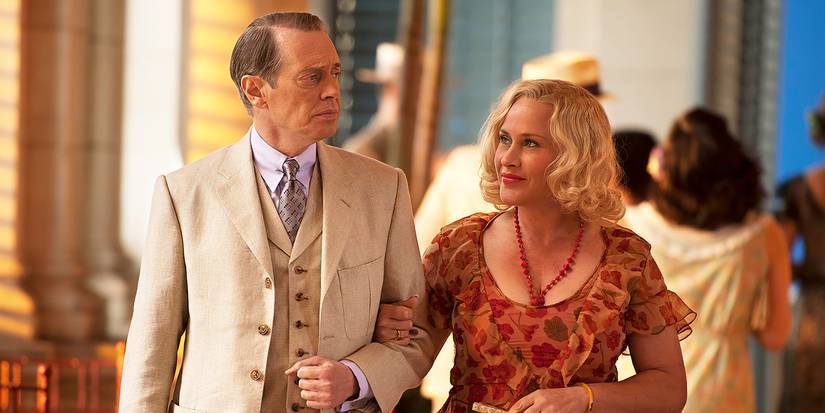 Image via HBO
There is no question that The Sopranos set the template for subsequent crime dramas to follow, but, as aforementioned in the introduction, there were almost certainly going to be shows that took what The Sopranos did and make it better and more suitable for a modern audience, and Boardwalk Empire is definitely one of those shows. Based on Nelson Johnson's novel of the same name, and adapted for TV by Terence Winter, Boardwalk Empire details the corruption of government officials in Atlantic City, New Jersey during the Prohibition era. With a fascinating setting, and the centerpiece of the storyline being how criminals corrupted politicians in an effort to run their illegal booze, this made the stakes much higher compared to The Sopranos. The critically-acclaimed period drama starred Steve Buscemi, Michael Shannon, Kelly Macdonald, Michael Pitt, and a pre-Adolescence Stephen Graham as the notorious Al Capone.
Boardwalk Empire is a standard-bearer when it comes to period pieces. It doesn't just put 1920s costumes on its cast — it went all out to bring the 1920s Atlantic City to life, from its jaw-dropping set pieces to the CGI that made the world in Boardwalk Empire far more expansive than The Sopranos, which was largely restricted to suburban New Jersey and felt grittier and lived in. However, what really sets Boardwalk Empire apart from its more well-known HBO counterpart is its storytelling, which featured mob villains that pushed the plot and made the "mob wars" of the third and fourth seasons truly epic. Granted, the series lacks the character depth that The Sopranos is known for, Winter had a plan with Boardwalk Empire, and, in the end, it executed that plan to perfection.
Collider Exclusive · Taylor Sheridan Universe Quiz
Which Taylor Sheridan
Show Do You Belong In?
Yellowstone · Landman · Tulsa King · Mayor of Kingstown
Four worlds. All of them brutal, complicated, and built on power, loyalty, and the price of survival. Taylor Sheridan doesn't write heroes — he writes people who do what they have to do and live with the cost. Ten questions will reveal which one of his worlds you were made for.
🤠Yellowstone
🛢️Landman
👑Tulsa King
⚖️Mayor of Kingstown
FIND YOUR WORLD →
01
Where does your power come from? In Sheridan's world, everyone has leverage. The question is what kind.
ALand, legacy, and a name that's been feared and respected for generations. BKnowing the deal better than anyone else in the room — and being willing to walk away first. CReputation. I've earned it the hard way, and everyone in the room knows it. DBeing the only person both sides will talk to. That makes me indispensable — and dangerous.
NEXT QUESTION →
02
Who do you put first, no matter what? Loyalty in Sheridan's universe is always absolute — and always costly.
AFamily — blood or chosen. The ranch, the name, the people who carry it with me. BThe company — or whoever's signing the cheques. Loyalty follows the contract. CMy crew. The men who stood with me when it counted — I don't abandon them for anything. DMy community — even when my community is a powder keg and I'm the only thing stopping it from blowing.
NEXT QUESTION →
03
Someone crosses a line. How do you respond? Every Sheridan protagonist has a line. What matters is what happens after it's crossed.
AQuietly, decisively, and in a way that sends a message to everyone watching. BI outmanoeuvre them legally, financially, and politically before they even know I've moved. CDirectly. Old school. You cross me, you hear about it to your face — and then you deal with the consequences. DI absorb it, calculate the fallout, and find the move that keeps the whole system from collapsing.
NEXT QUESTION →
04
Where do you feel most in your element? Sheridan's worlds are as much about place as they are about people.
AWide open land — mountains, sky, silence. Somewhere you can see trouble coming from a mile away. BThe oil fields of West Texas — brutal, lucrative, and indifferent to whoever happens to be standing on top of them. CA mid-size city where the rules haven't quite caught up yet — fertile ground for someone with vision and nerve. DA rust-belt town built around a prison — where everyone's life is shaped by what's inside those walls.
NEXT QUESTION →
05
How do you feel about operating in the grey? Nobody in a Sheridan show has clean hands. The question is how they carry the dirt.
AI do what has to be done to protect what's mine. I'll answer for it eventually — but not today. BGrey is just business. The line moves depending on what's at stake, and I move with it. CI have a code — it's not the law's code, but it's mine, and I don't break it. DI've made peace with it. Keeping the peace requires compromises most people don't have the stomach for.
NEXT QUESTION →
06
What are you actually fighting to hold onto? Every Sheridan character is fighting a war. The real question is what they're defending.
AA way of life that the modern world is doing everything it can to erase. BMy position — and the leverage that comes with being the person everyone needs to close a deal. CRelevance. I've been away, I've been written off — and I'm proving that was a mistake. DWhatever fragile order I've managed to build — because without it, everything burns.
NEXT QUESTION →
07
How do you lead? Authority in Sheridan's world is never given — it's established, maintained, and constantly tested.
ABy example and force of will. People follow me because they believe in what I'm protecting — and because they know what happens if they don't. BThrough negotiation and leverage. I don't need people to like me — I need them to need me. CBy being the smartest, most experienced person in the room and making sure everyone quietly knows it. DBy being the calm centre of a situation that would spiral without me — and accepting that nobody thanks you for it.
NEXT QUESTION →
08
Someone new arrives and tries to change how things work. Your reaction? Every Sheridan show has an outsider disrupting an established order. Sometimes that outsider is you.
AThey'll learn. Or they won't. Either way, the land was here before them and it'll be here after. BI figure out what they want, what they're worth, and whether they're an asset or a problem — fast. CI was the outsider once. I give them a chance — one — to show they understand respect. DNew players destabilise everything I've built. I assess the threat and manage it before it manages me.
NEXT QUESTION →
09
What has your position cost you? Nobody gets to where these characters are without paying for it. The bill is always personal.
AMy family's peace — maybe their innocence. The ranch demands everything, and I've let it take too much. BRelationships, time, any version of a normal life. The job eats everything that isn't nailed down. CYears. Decades in some cases. Time I can't get back — but I'm not done yet. DMy conscience, mostly. And the ability to ever fully trust anyone on either side of the wall.
NEXT QUESTION →
10
When it's over, what do you want people to say? Sheridan's characters all know the ending is coming. The question is what they leave behind.
AThat I held the line. That the land is still ours and everything I did was worth it. BThat I was the best at what I did and that no deal ever got closed without me at the table. CThat I built something real, somewhere nobody expected it, and I did it on my own terms. DThat I kept the peace when nobody else could — and that the town is still standing because of it.
REVEAL MY SHOW →
Sheridan Has Spoken You Belong In…
The show that claimed the most of your answers is the world you were built for. If two tied, both are shown — you're complicated enough to straddle two Sheridan universes.
🤠 Yellowstone
🛢️ Landman
👑 Tulsa King
⚖️ Mayor of Kingstown
You are a Dutton — or you might as well be. You understand that some things are worth protecting at any cost, and that the modern world's indifference to history, to land, to legacy, is not something you're willing to accept quietly. You lead from the front, you carry your family's weight without complaint, and when someone threatens what's yours, you don't escalate — you finish it. You're not cruel. But you are absolute. In Yellowstone's world, that combination of ferocity and loyalty doesn't make you a villain. It makes you the only thing standing between everything that matters and everyone who wants to take it.
You thrive in the chaos of high-stakes negotiation, where the money is enormous, the margins are thin, and the wrong word in the wrong room can cost everyone everything. You're a fixer — the person called when a situation is already on fire and needs someone with the nerve to walk into it. West Texas oil country rewards exactly what you are: sharp, adaptable, unsentimental, and absolutely clear-eyed about what people want and what they'll do to get it. You're not naive enough to think this world is fair. You're smart enough to be the one deciding who it's fair to.
You are a Dwight Manfredi — someone who has served their time, paid their dues, and arrived somewhere unexpected with nothing but their reputation and their wits. You adapt without losing yourself. You build loyalty through respect rather than fear, though you're not above reminding people that the two aren't mutually exclusive. Tulsa King is for people who are still standing when everyone assumed they'd be finished — who find, in an unfamiliar place, that they're more capable than the world gave them credit for. You don't need a throne. You build one, wherever you happen to land.
You carry the weight of a system that is broken by design, and you do it anyway — because someone has to, and because you're the only one positioned to do it without the whole thing collapsing. Mike McLusky's world is for people who are comfortable operating where there are no good options, only less catastrophic ones. You speak every language: law enforcement, criminal, political, human. That fluency makes you invaluable and it makes you a target. You've made your peace with both. Mayor of Kingstown belongs to people who understand that keeping the peace is not the same as being at peace — and who do the job regardless.
↻ RETAKE THE QUIZ
'The Wire' (2002–2008)
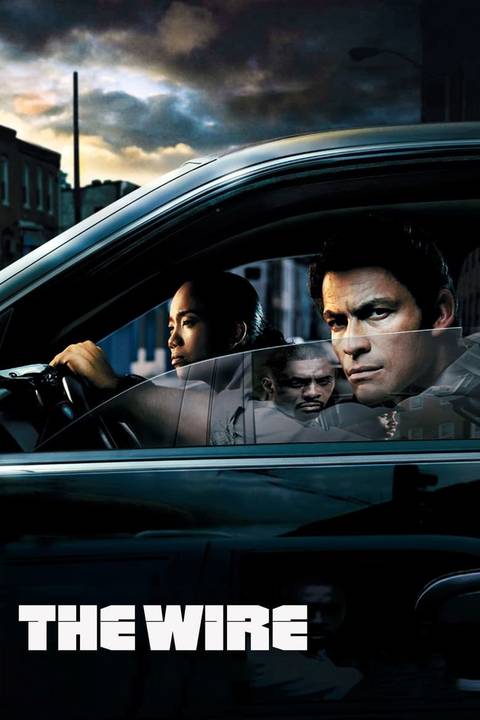
As mentioned earlier, one of the unique aspects of The Sopranos was how it molded the gritty nature of mob life with the dreaded existentialism of suburbia. While in the past, mob bosses were always shown as villains no one, not even their own subordinates, would want to cross, The Sopranos made Tony Soprano a boss that often struggled with the duality of his life, and the toll it took on having to manage both his crime life and his family life. It made Tony feel more human than the mob bosses of old, and gave the show a touch of realism that was missing from the traditional mob storyline. But, The Sopranos wasn't the only prestige television show that dealt with gritty realism; in fact, there was another show that took this to another level entirely, one that explored not just the crime element, but the systematic issues around it that often contributed to its complex and tragic storylines. We're talking, of course, about The Wire, the modern-day gritty crime drama that is often regarded as one of the best written shows in television history.
Created by David Simon, The Wire's central character is not a person, but a place, Baltimore, Maryland, and how its institutions were failing its residents, which fed the crime that besieged the city. While The Sopranos excelled in character psychology, The Wire expanded on this to paint a more accurate portrait of its characters and how the crumbling dynamics of the city were affecting them. Dominic West, Idris Elba, Wendell Pierce, Lance Reddick, and Michael K. Williams are just a handful of the actors that brought the story of Baltimore to life.
There was nothing surreal about The Wire, which took a more journalistic approach to telling its story about how the broken systems of the city affect its characters. From the corner kids that were victims of a chronically underfunded school system, to politicians who were often corrupt, and a police department that was more interested in chasing stats than solving crime, the series kept a consistent quality that tied everything together, unlike The Sopranos, where its storylines, while good, were oftentimes less-focused. So while The Sopranos was great at gritty surrealism, The Wire is the gold standard in gritty and impactful storytelling, something that The Sopranos sometimes failed at.
The Wire
Release Date 2002 - 2008-00-00
Network HBO






 English (US) ·