
GoPro has been stuck playing catch-up in the action camera scene these last few years. Now, the company that first popularized sticking cameras on your body intends to become the only camera you’ll need. GoPro will even let you swap the lens with your own professional setup… eventually.
GoPro’s new Mission 1 series of cameras isn’t just aiming for the same users as the age-old Hero Black line. GoPro imagines there’s a whole swath of videographers tired of lugging around their digital single-lens reflex (DSLR) or professional-grade cameras who want something more compact and hardy. The company implied these cameras are good enough; they may also offer a cheaper way into fixed-lens photography. The Mission 1 and Mission 1 Pro both promise to shoot 50 megapixels in RAW format with all the ISO and shutter speed controls you expect from cameras with manual shooting modes. The larger 1-inch sensor should make it a better camera for low-light environments.
Mission 1 Pro
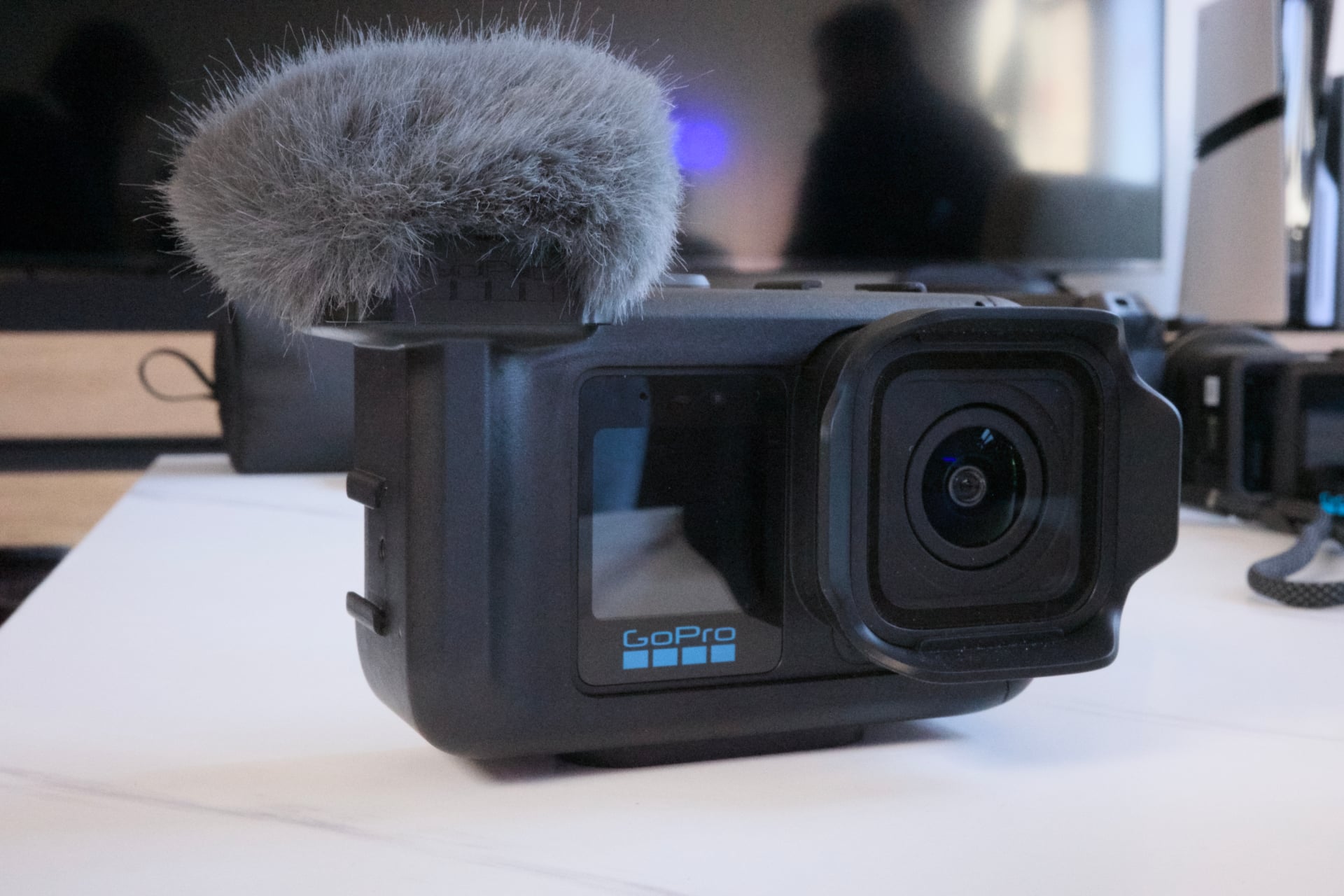
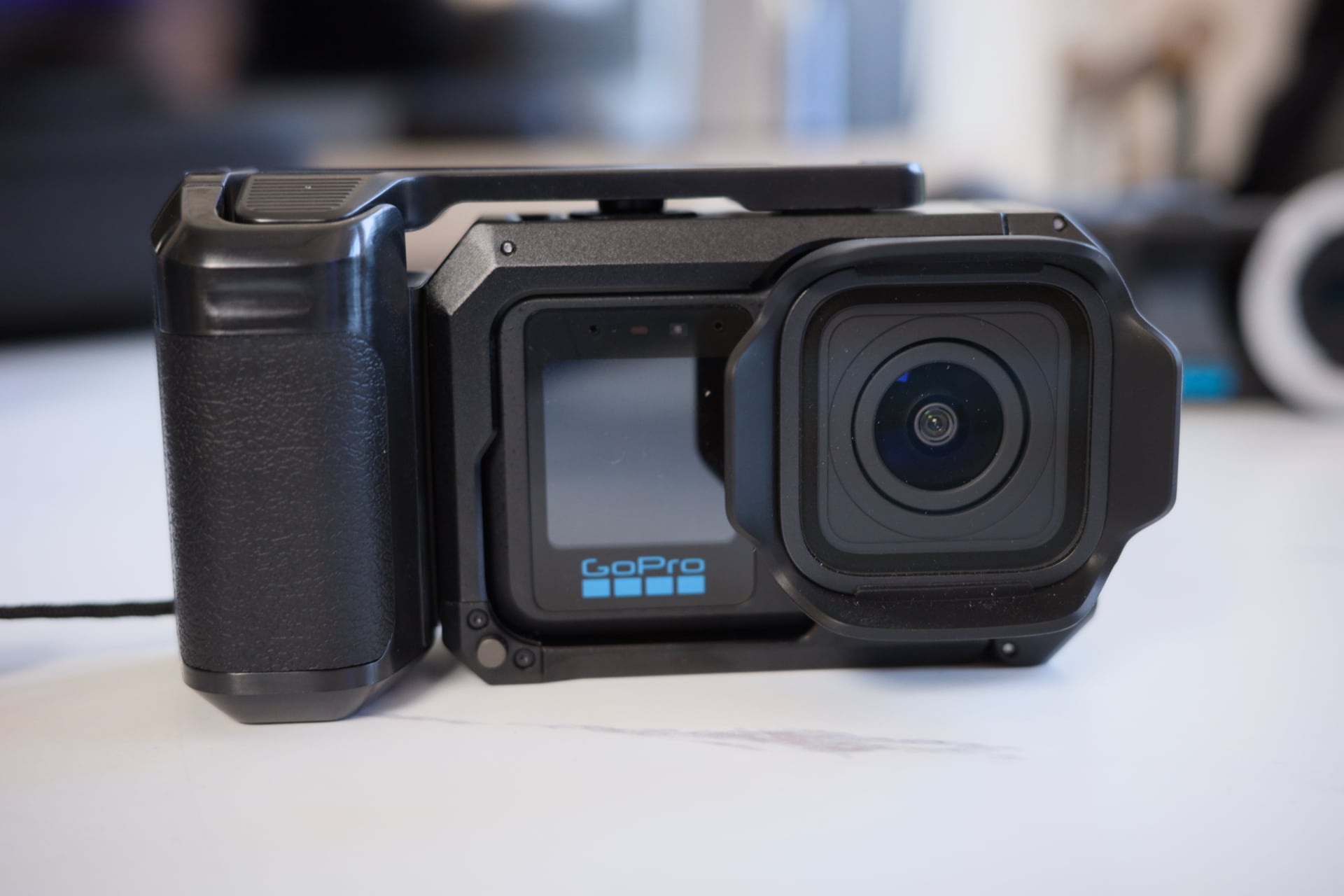
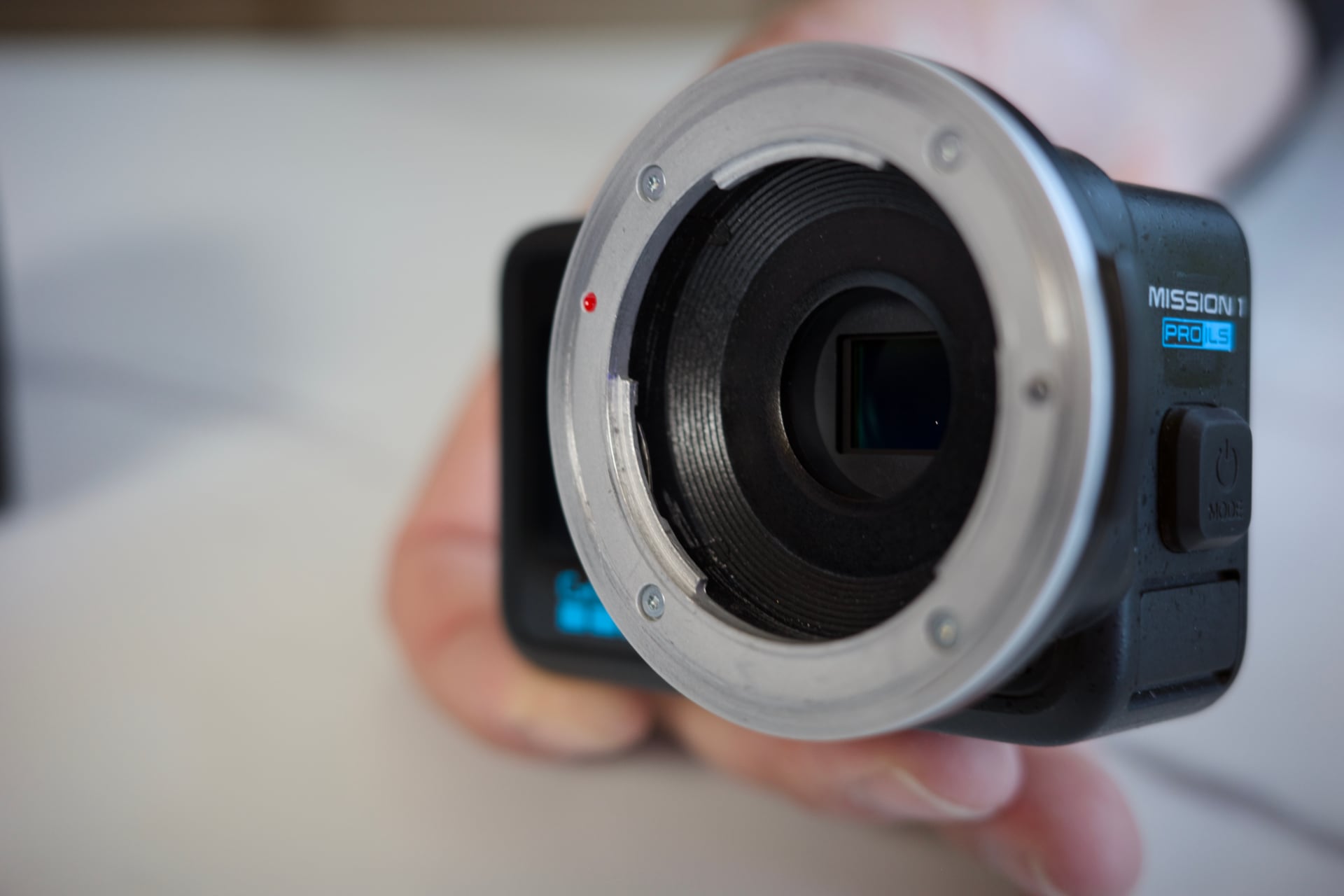
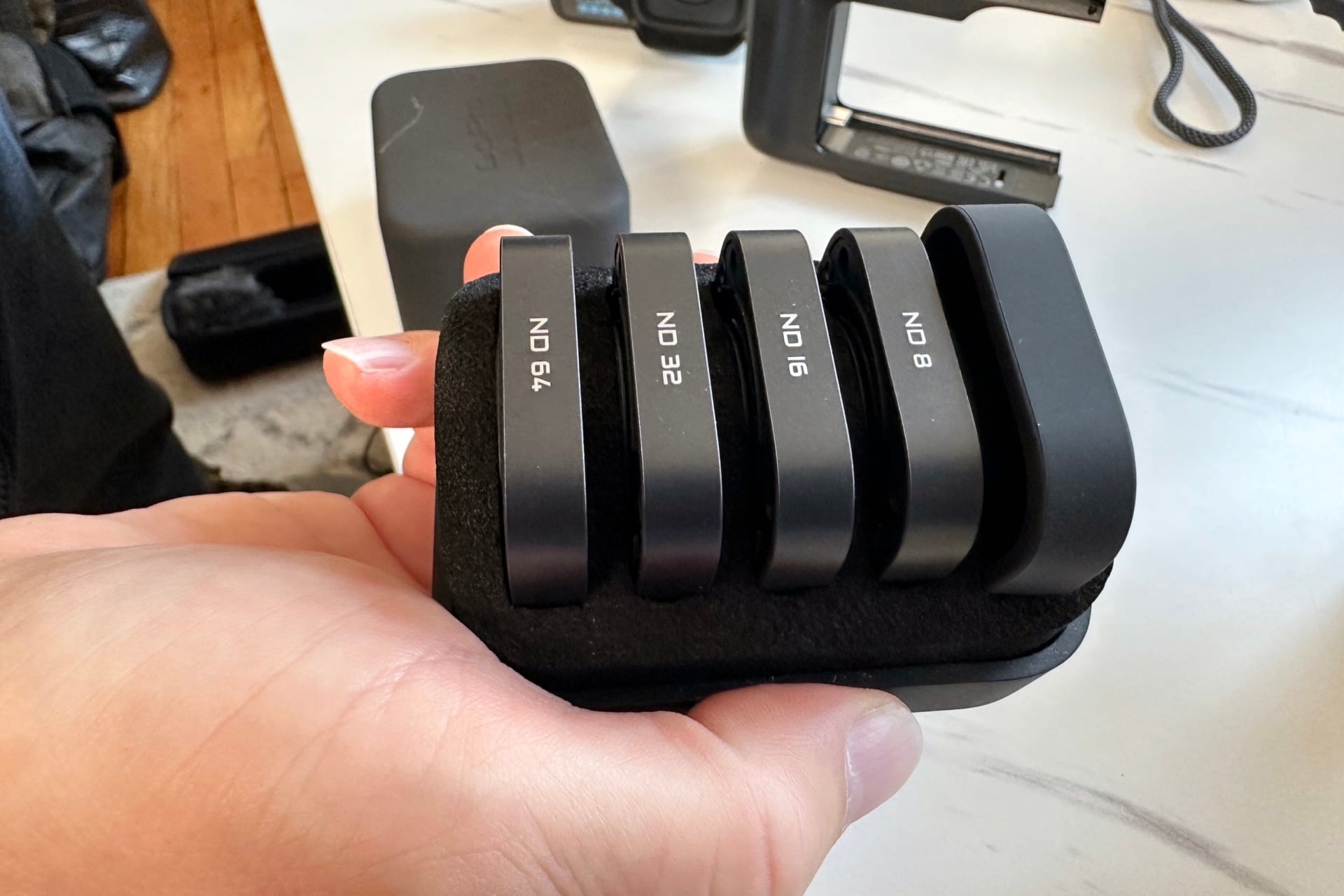
The folks at GoPro came down to Gizmodo’s offices to show me its new cameras in person. It was a look, touch, but don’t shoot kind of situation.
Specs-wise, the Mission 1 Pro cameras are GoPro’s most ambitious action cameras that it’s ever made. The camera can capture 8K footage at 60 fps and record in 4K at a whopping 240 fps. For even slower slow-mo footage, the Mission 1 Pro can freeze scenes at 960 fps, recording at a reduced 1080p resolution, though footage will be limited to around 10 seconds.
The Mission 1 Pro model can also capture 8K and 30 fps in an “open gate,” 4:3 aspect ratio that captures from the full image sensor. Sure, that sounds good on paper and in some teaser footage, but is this really a DSLR killer? To that end, GoPro is finally offering a version of the Mission 1 Pro—the Mission 1 ILS (interchangeable lens system)—with a mount for third-party micro four-thirds lenses. The version the company showed me was an early prototype with a rough-finished lens mount. That Mission 1 Pro ILS won’t be available until Q3 this year.
GoPro now has an answer to DJI’s mics
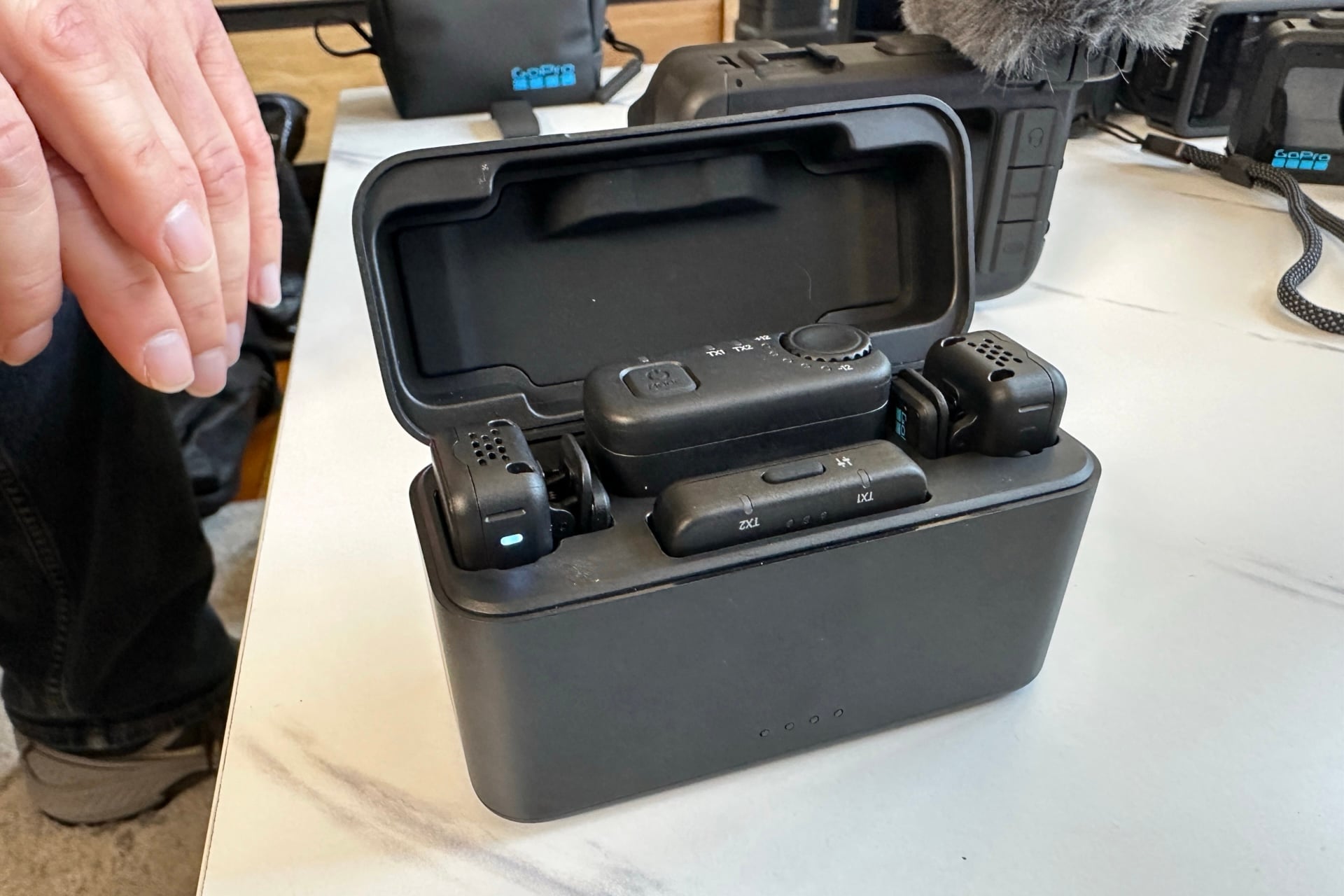 GoPro’s Wireless Mic Complete Kit offers a wireless receiver that is compatible with GoPros, phones, and DSLR cameras. © Kyle Barr / Gizmodo
The non-Pro Mission 1 has fewer shooting options. It maxes out at 8K and 30fps video capture and can only hit 240 fps filming at 1080p. That’s closer to what you can get on the Insta360 Ace Pro 2 and DJI Osmo Action 6 Pro. GoPro still has the 1-inch sensor, which promises a clearer picture than what you can get on similar cameras.
The new GoPros also support the standard HLG HDR and 10-bit color with added support for GP-Log2 LUTs for color grading. If you didn’t understand any of that, just know GoPro is trying to angle these cameras for the kinds of videographers who don’t enjoy having to spend hours in post-production massaging GoPro video into a presentable state.
Still, this is GoPro, and the company will try to upsell you on a mountain of accessories. The most exciting of which is a new Wireless Mic Complete Kit that’s aimed directly at DJI’s popular Mic 3 and Mic Mini.
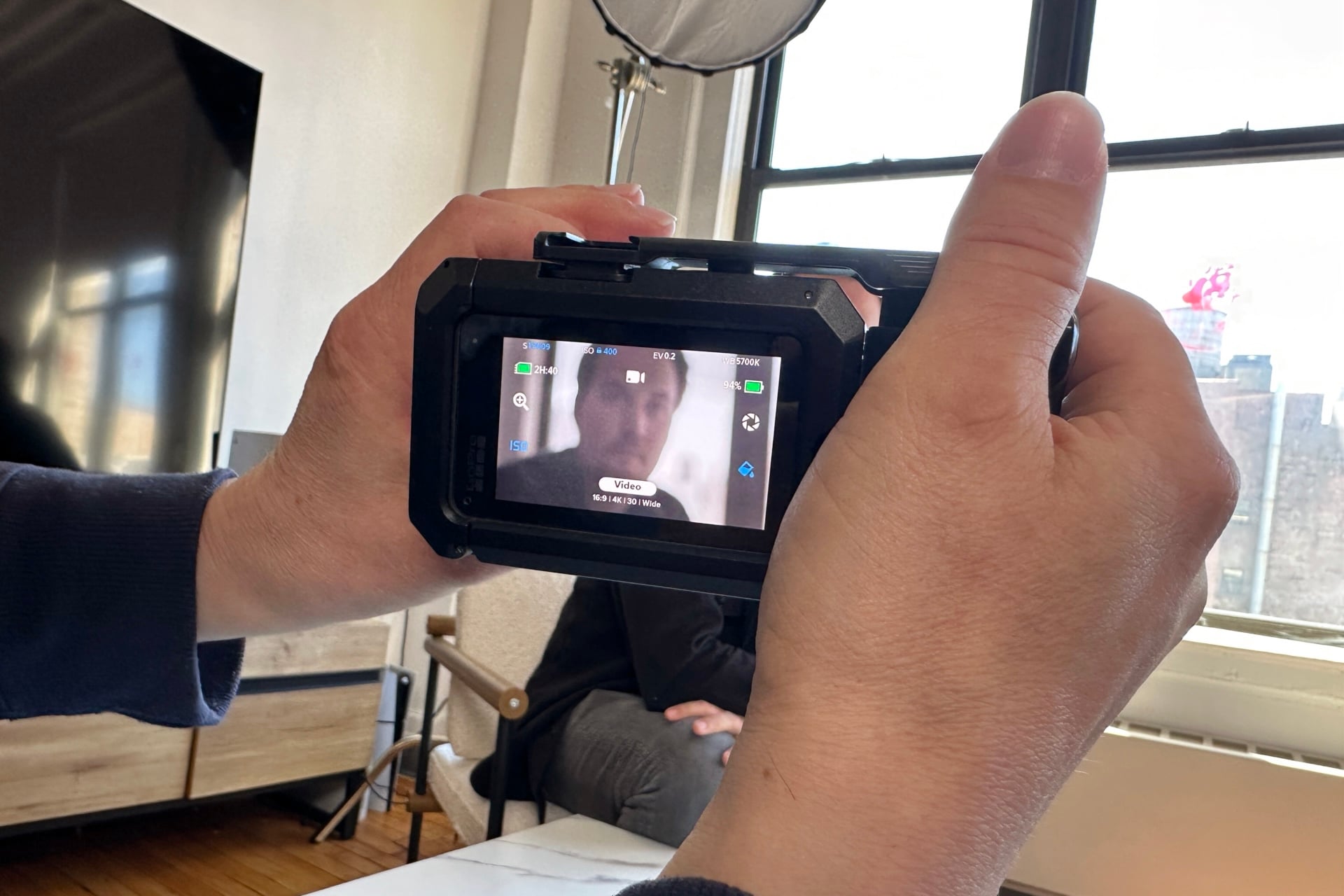 GoPro wants this camera to potentially replace your other fixed-lens camera gear. © Kyle Barr / Gizmodo
GoPro will also try to sell you on a Media Mod with a built-in multi-pattern mic. There’s also a Point-and-Shoot Grip case that will add a physical shutter button. You’ll still need to change any of the camera’s settings using the touchscreen. When I asked GoPro why it didn’t add any physical camera controls like you would find on any mirrorless camera or DSLR, When I asked GoPro why it didn’t add any physical camera controls like you would find on any mirrorless camera or DSLR, GoPro reps cheekily removed a small flat compartment below the shutter button that would have been the perfect place for a few buttons or a dial.
No pricing info yet
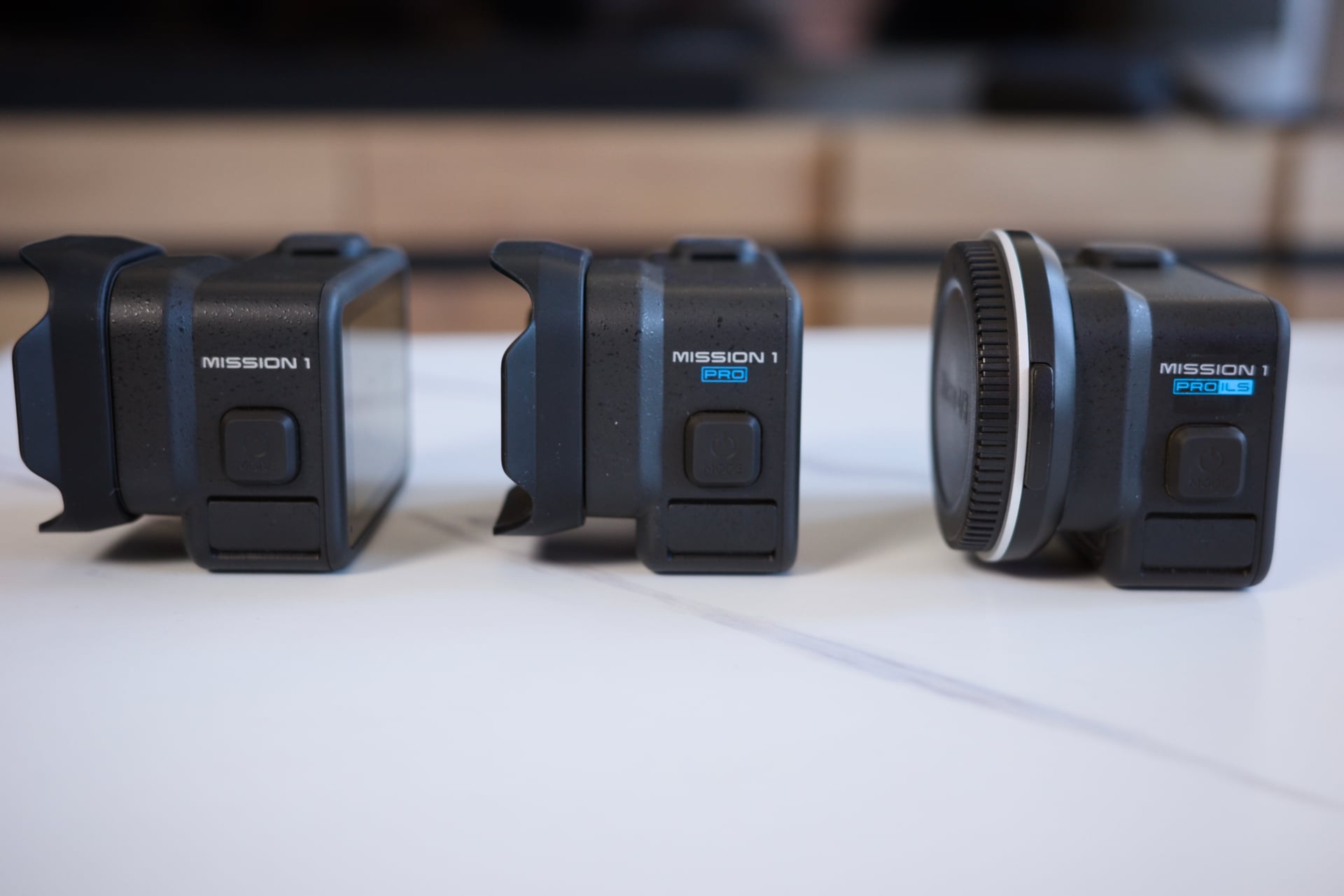 The Mission 1 offers fewer shooting modes than the Mission 1 Pro. © Kyle Barr / Gizmodo
With that grip case, the Mission 1 was not much wider than my pocketable Ricoh GR IIIx point-and-shoot, even if it’s slightly thicker. The Mission 1 isn’t all that much bigger or heavier than a regular GoPro Hero 13 Black. That’s significant considering GoPo promises the Mission 1 gets more than three hours of battery life shooting at 4K/30 and close to 1 hour and 15 minutes at 8K/60 with its larger 2,150mAh battery.
GoPro recently culled 145 employees, around 23% of its global workforce, just before it could launch its new camera. The Mission 1 series may be its most important device for the action camera maker’s future. We won’t know pricing for any of these Mission 1 cameras until the NAB trade show on April 19. The Mission 1, Mission 1 Pro, and Mission 1 Pro Grip Edition (includes the Point-and-Shoot Grip and Mission 1 Pro) will all be available on May 28, with preorders starting May 21. The Creator’s Edition, which includes the Media Mod, mic kit, and the Mission 1 Pro, won’t be available until later this year.





 English (US) ·