
 3 hours ago
7
3 hours ago
7
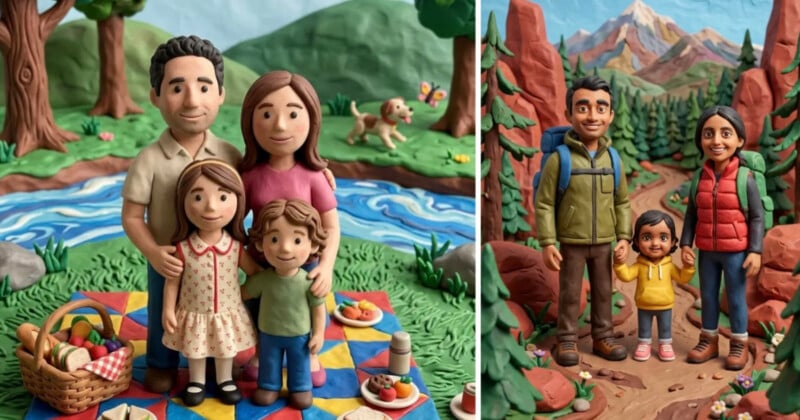 Example images shared by Google
Google has announced “personalized” image generation that allows users to connect their Google Photos library to its Gemini AI image generator and photo editor Nano Banana.
Earlier this year, Google introduced Personal Intelligence, a feature that goes beyond remembering conversations by allowing Gemini to draw on data from across a user’s account, including internet activity. On Thursday, the company says it is expanding this capability to Nano Banana 2, enabling it to use personal context to produce personalized images.
“Today, we’re introducing new ways for Gemini to use your interests and preferences with Nano Banana 2 and Google Photos to make image generation — one of your favorite ways to use Gemini — feel deeply personal,” the company writes in a blog post.
The update allows users who opt in to connect Personal Intelligence with the Gemini chatbot. Once enabled, Nano Banana 2 can generate images using information from a user’s private Google Photos library, removing the need to manually upload images or provide detailed descriptions.
According to TechCrunch, this works because Gemini already has contextual information about a user through connections with Google services such as Gmail and Google Photos. As a result, users can enter simpler prompts. For example, instead of writing “Generate an image of my dream home, my interests are tennis and music,” a user could simply say, “Design my dream home.”
Google says the feature can also use labels within Google Photos to better understand relationships and groups, such as “Family.” For example, rather than uploading a photo and describing it in detail, a user could just ask Gemini to “Make a claymation image of my family.”
To increase transparency, the company says a “sources” button will show how Gemini derived the context used in generating an image. Google also states that while it may use “limited info,” such as prompts and model responses, it does not “directly train” its AI models on users’ private Google Photos libraries.
The feature will roll out “over the next few days” to eligible AI Plus, Pro, and Ultra subscribers in the United States, with availability on Chrome desktops and plans to expand to more users.
Image credits: All photos by Google.





 English (US) ·