
 1 week ago
9
1 week ago
9
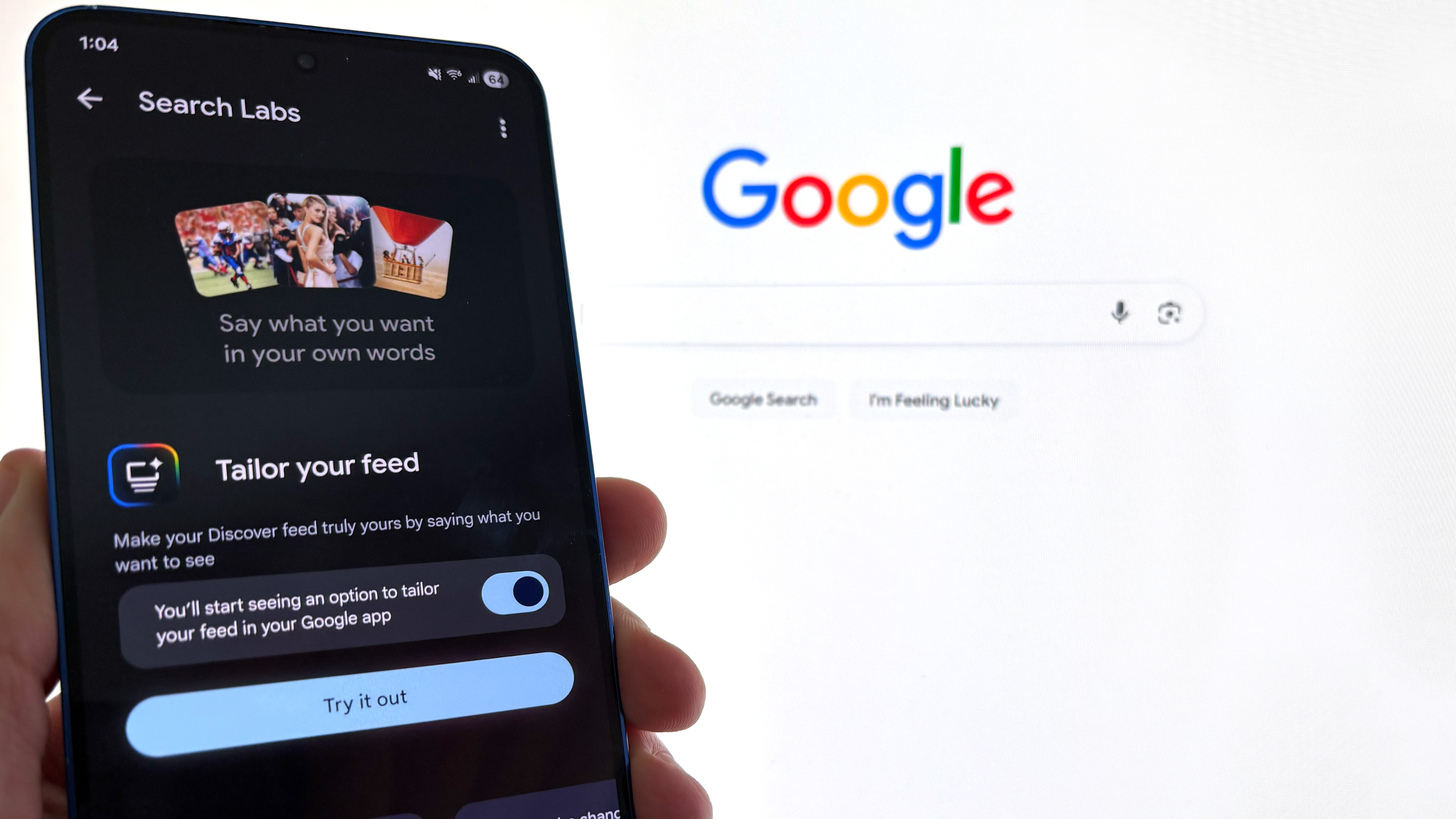
Thanks to the breathtaking power of artificial intelligence, we may now use natural language to beg the computer to perform a function that once came as naturally to its binary brain as breathing does to ours. Google—a company worth 3.5 trillion dollars, uncontested owner of both the almighty internet search algorithm and the web browser, has overengineered its latest Discover feed AI curation tool to such an extent that it cannot simply block a website from appearing as a source.
Google's 'Tailor your feed' feature, introduced a few months ago, adds a familiar chat prompt that encourages you to type something like "Keep me updated on what's happening in college basketball" to curate what shows up in your Discover feed. Discover, if you're not familiar, is what Google calls the list of recommended stories that shows up when you open a new tab in Chrome, and is also built into the Google app and Android.
Article continues below
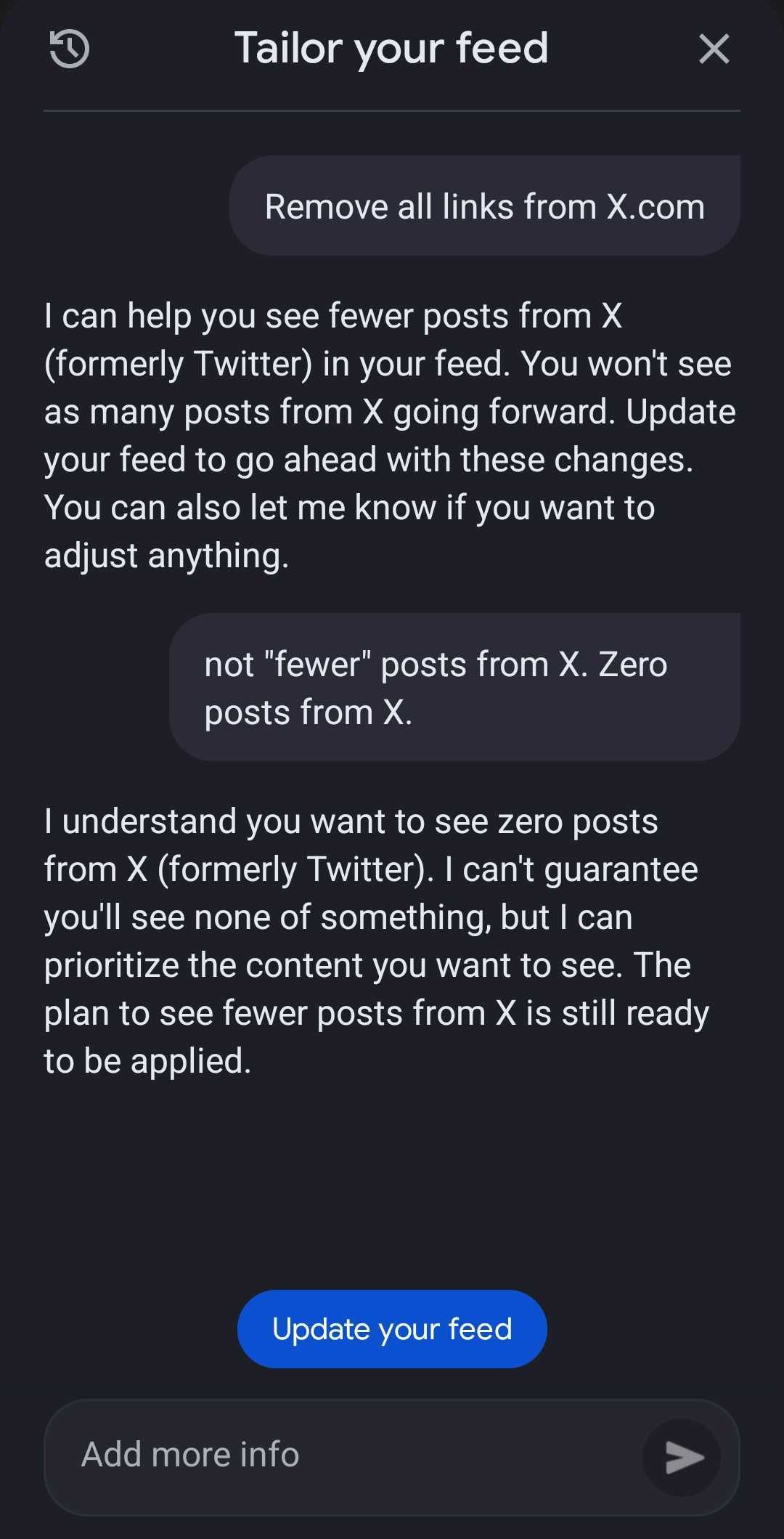
You won't see as many posts from X going forward.
I can't guarantee you'll see none of something.
As I found with a quick search on Reddit, I'm not the only person who's tried this solution since Google started flooding Discover with posts from X in late 2025. (Given that Google could pull quality writing from a billion websites and blogs across the internet, I have to wonder why it instead decided the site that was plagued with AI-generated child sexual assault imagery was an ideal source.) After typing in something similar, one Redditor reported seeing only "one story from X as opposed to the usual dozen."
"It needs constant reminding but better than it was…" the Redditor wrote recently.
So is Google placing its thumb on the scale by refusing to remove a paying partner entirely from its feeds, or has it developed a piece of AI software so staggeringly stupid that it can't even create a blacklist (or 'blocklist' as they're more often called these days)? The entire damn internet is built around blocklists. Google Chrome has built-in blocklists of websites it deems unsafe. Every piece of antivirus software in existence? Blocklists. Internet Explorer had blocklists in 1996!
What are we doing here, man. "I can't guarantee you'll see none of something" should be a vastly more difficult operation for a computer than "zero." Google Labs is out here spending billions of dollars trying to unsolve problems. This new frontier for software is indeed revolutionary, because I've never simultaneously felt embarrassed for the computer and for myself when trying to coax it into the simplest possible action.
It's clearer than ever that big tech's vision for the algorithms choking the life from the internet springs from the idea that they know better than we do what we actually want. It really is time to turn off the recommendations and ditch this stuff once and for all. RSS awaits.








 English (US) ·