


Published Feb 14, 2026, 10:00 AM EST
Ambrose Tardive is an editor on ScreenRant's Comics team. Over the past two years, he has developed into the internet's foremost authority on The Far Side. Outside of his work for ScreenRant, Ambrose works as an Adjunct English Instructor.
Sign in to your ScreenRant account
George Lucas could never get Star Wars made today. The original 1977 Star Wars was pop culture lightning in a bottle. From the start of its production, it was practically destined to be a cult-classic B-movie, and a big budget disaster for Lucas and 20th Century Fox. Instead, it spawned the greatest franchise of the 20th century.
It's a miracle that simply could not happen in the modern film industry. Let's take a closer look at the making of Star Wars to understand why.
To start with, it's a testament to the Hollywood landscape of the '70s that Star Wars was greenlit at all, and that it was given a significant budget for its era.
If George Lucas Were Trying To Make Star Wars Today, He'd Face Way More Roadblocks Than In The 1970s
Getting The Space Opera Greenlit Would Be The First Hurdle
 Custom Image by Ana Nieves
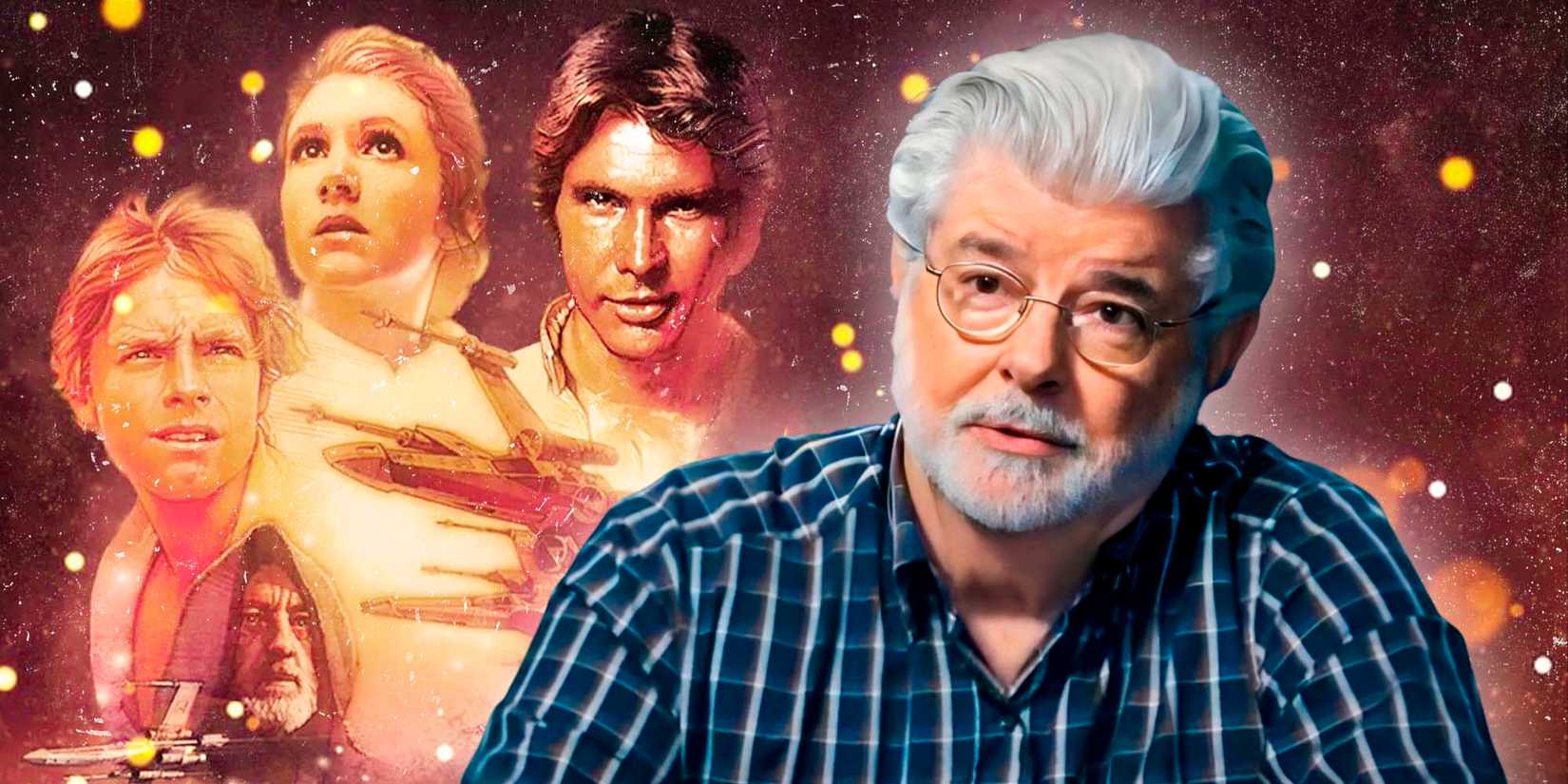
Let's start with some facts and figures. George Lucas film prior to Star Wars, 1973's American Graffiti, made $140 million dollars at the box office, on a budget just north of $750,000. In other words, it set the precedent for Lucas as a Hollywood hit-maker. That is, his next picture, whatever it was, was worth gambling big on for a studio.
The modern equivalent of George Lucas is going to find it next-to-impossible to get their version of Star Wars made.
Fact: in 1975, another young director, and Lucas' friend, Steve Spielberg, delivered a drastically over-budget and behind-schedule shark movie called Jaws, which inaugurated the modern blockbuster era, making nearly $500 million dollars in its theatrical run. This was another factor in driving studios to spend more money and take more risks.
Fifty years later, Hollywood spends a lot more money, but it is much more risk-averse. Studios like to bet big, but bet safe in 2026. Meaning, the modern equivalent of George Lucas is going to find it next-to-impossible to get their version of Star Wars made, because the industry doesn't run on the same risk/reward calculus anymore.
Hollywood Plays It Safe These Days; Star Wars Was The Product Of A Riskier Time In Film History
Would Studios Today Gamble On Star Wars?
Like Jaws, Star Wars was ultimately over-budget, costing $11 million dollars. With inflation, that's roughly equivalent to $58 million dollars today. Or, to put it another way, almost exactly 10% of Star Wars Episode IX: The Rise of Skywalker's $590 million dollar budget. So, Lucas' pioneering film's budget was a drop in the bucket compared to modern blockbusters, and modern Star Wars.
Except think of that Lucas of today, the one pitching a $60 million dollar space opera tied to no existing IP, featuring mostly unknown actors. Even with an American Graffiti-level hit under their belt, that writer/director is going to face a lot of skepticism and roadblocks in trying to get their vision financed.
Studios today would prefer to invest in existing IP. And they want big names in every movie. Those two things alone make Star Wars harder to replicate. Yet the real issue is the budget. Let's say this hypothetical filmmaker asks for $60 million. Studio executives might balk, but not because it's too big a price tag. In fact, it's the opposite.
Consider Rise of Skywalker's budget again. $60 million is low-budget by comparison. And it's way more difficult to pull off a low-budget sci-fi movie in 2026 than it was in 1976-77. $60 mil isn't an unreasonable budget for a contemporary sci-fi/action movie, but it's not feasible for the scope and ambition of Star Wars.
George Lucas Confirmed His Visionary Filmmaker Status With Star Wars, A Harder Feat To Accomplish Today
Boundary-Pushing Blockbusters Aren't The Norm In 2026

So, Star Wars exists in an interesting limbo: too risky to invest $60 million dollars in, but impossible to make for less than 2x that, at least. But let's say, by some miracle, our modern-day Lucas gets their film greenlit. Whether for $60 mil, or $120, or more. There would still be plenty of factors that could kill the film in production.
'70s filmmakers, like George Lucas, weren't entirely immune to studio interference. At least in Lucas' case, though, he had a greater degree of creative control over the final product than most blockbuster filmmakers today. The modern Lucas would have to be enough of an auteur to get final cut in their contract, or it could be disastrous for their Star Wars.
With Star Wars, George Lucas proved himself to be a visionary, and one of the architects of modern filmmaking. This was evident behind-the-scenes, and in post-production, as much as on screen in the movie itself. It's harder to be a visionary blockbuster director today. Some critics would argue that's oxymoronic. It doesn't have to be, but it's a fair point nonetheless.
Star Wars Invented The Modern Blockbuster, But It Wouldn't Be The Same If It Were Made Today
Big Budget Movies Are A Well-Oiled Machine In Modern Hollywood
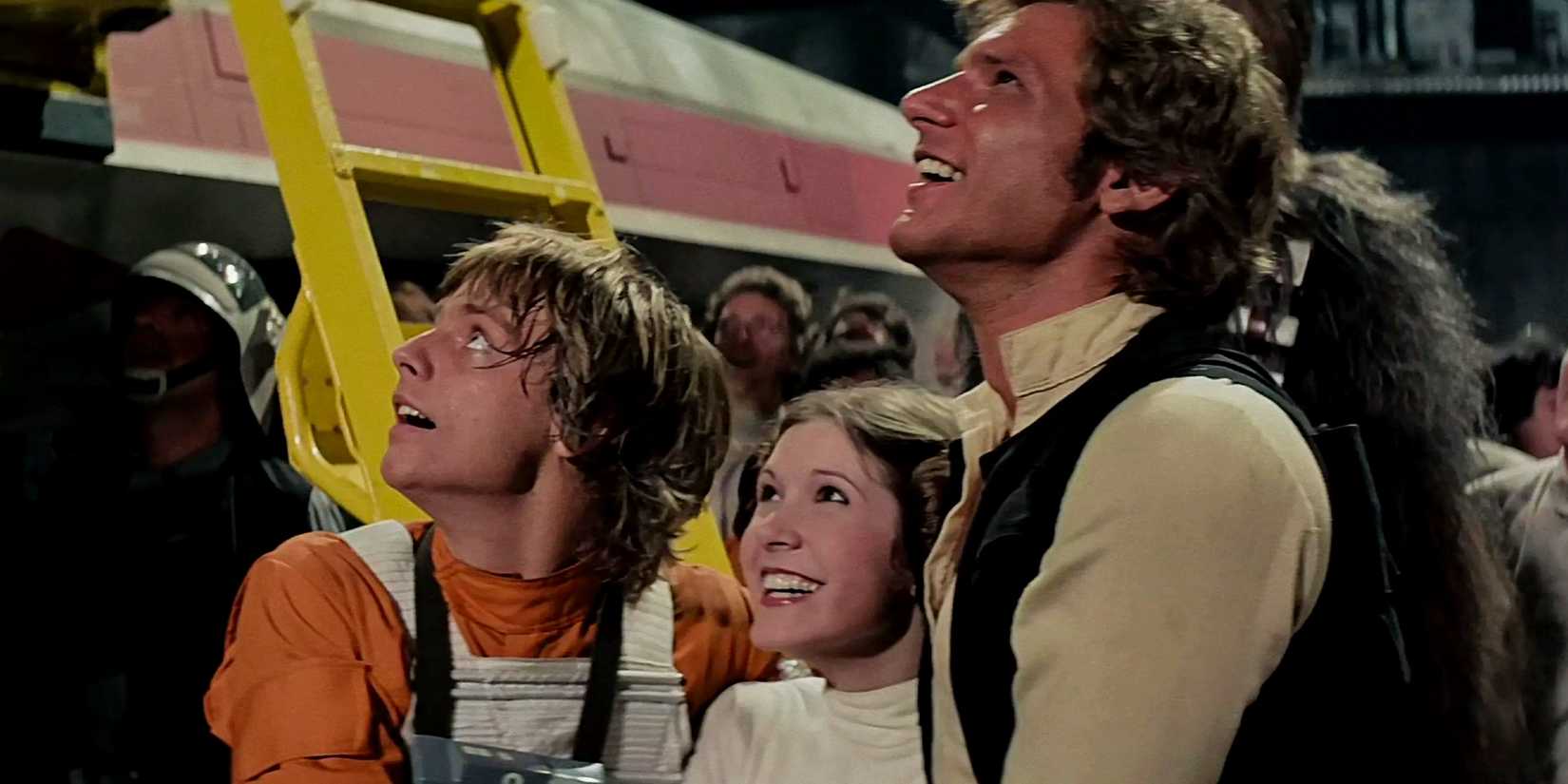
Making Star Wars, George Lucas stretched every dollar of his budget as far as he could, and he did so to push the boundaries of science fiction cinema. The 1970s was a time for that. It was a frontier era in filmmaking. Today, what a blockbuster is tends to overrule what it could potentially strive to be.
Even if a studio got a modern Star Wars on their hands, in all its transformative glory, they wouldn't know what to do with it...
In other words, blockbusters are designed now, rather than developing organically like Star Wars. Ironically, it was Star Wars that popularized the pace and style of blockbusters today, but it did so by going against the conventions of its time. Studios don't fund a lot of "unconventional" $60 million dollar movies these days.
And certainly not unconventional $120 million dollar movies. Or $240 mil. You get the idea. And when they do, they usually put a tight leash on the movie, a Force choke if you will, and often strangle it into a more conventional form through notes, through editing, and through reshoots.
And we haven't even been able to touch on marketing, the final nail in many potentially good, or great, movies' coffins. Even if a studio got a modern Star Wars on their hands, in all its transformative glory, they wouldn't know what to do with it in marketing, further risking the career of our modern George Lucas.
Created by George Lucas
First Film Star Wars: Episode IV - A New Hope
Cast Mark Hamill, James Earl Jones, David Prowse, Carrie Fisher, Harrison Ford, Daisy Ridley, Adam Driver, Ian McDiarmid, Ewan McGregor, Rosario Dawson, Lars Mikkelsen, Rupert Friend, Moses Ingram, Frank Oz, Pedro Pascal
TV Show(s) The Mandalorian, Andor, Obi-Wan Kenobi, The Book of Boba Fett, Ahsoka, The Acolyte, Star Wars: Skeleton Crew, Lando, Star Wars: The Clone Wars, Star Wars Rebels, Star Wars: The Bad Batch, Star Wars: Resistance, Star Wars: Young Jedi Adventures, Star Wars: Visions
Movie(s) Star Wars: Episode I - The Phantom Menace, Star Wars: Episode II - Attack of the Clones, Star Wars: Episode III - Revenge of the Sith, Star Wars: Episode IV - A New Hope, Star Wars: Episode V - The Empire Strikes Back, Star Wars: Episode VI - Return of the Jedi, Star Wars: Episode VII - The Force Awakens, Star Wars: Episode VIII - The Last Jedi, Star Wars: Episode IX- The Rise of Skywalker, Rogue One: A Star Wars Story, Solo: A Star Wars Story, Star Wars: The Clone Wars, Star Wars: Dawn of the Jedi, Star Wars: New Jedi Order
Character(s) Luke Skywalker, Han Solo, Rey Skywalker, Emperor Palpatine / Darth Sidious, Obi-Wan Kenobi, Ahsoka Tano, Grand Admiral Thrawn, Grand Inquisitor, Reva (The Third Sister), The Fifth Brother, The Seventh Sister, The Eighth Brother, Yoda, Din Djarin, Grogu, Anakin Skywalker/Darth Vader, Leia Organa, Ben Solo/Kylo Ren
Star Wars is a multimedia franchise that started in 1977 by creator George Lucas. After the release of Star Wars: Episode IV- A New Hope (originally just titled Star Wars), the franchise quickly exploded, spawning multiple sequels, prequels, TV shows, video games, comics, and much more. After Disney acquired the rights to the franchise, they quickly expanded the universe on Disney+, starting with The Mandalorian.



 English (US) ·