
Average gas prices in the U.S. have dropped to below $4 per gallon for the first time since April, according to the latest data from GasBuddy. The Dow Jones Industrial Average, the S&P 500, and the Nasdaq Composite are all soaring on Monday. It’s all thanks to the latest “Iran Deal” touted by President Donald Trump to bring an end to the war and reopen the Strait of Hormuz.
If it feels like we’ve been here before, that’s because we have. President Trump has previously promised an end to the war, which started Feb. 28, and the reopening of the Strait, two things that simply haven’t happened. While there are no indications that this “deal” will change the material reality in the Middle East, the people who move money around in spreadsheets for a living seem to be buying the hype.
Nationally, gas prices are currently averaging $3.98, according to GasBuddy, down 14 cents from last week’s average and down 53 cents from last month’s average. The average price of gas shortly before Trump started his war in Iran was about $2.90.
The idea of the Tinkerbell economy isn’t new. Financial markets can run on fumes for a very long time, just as long as people believe things are going well. In fact, an article published Monday in The New World makes the case that Elon Musk’s financial success depends on little more than believing in him like Tinkerbell. The broader economy seems to work that way as well during Trump’s second term.
Despite hype from the White House, the “deal” is actually just a memorandum of understanding (MOU) to start talks for a proper deal within 60 days. Trump said Monday at the G7 that the deal with Iran is signed and the Strait is “already partially opened.” He also said the Strait will be “completely open” on Friday, something that’s almost certainly not true. Experts have cautioned that even if some form of a deal has been reached between the U.S. and Iran, there are several complicating factors.
For starters, there are mines in the Strait that need to be cleared. As the UK’s Sky News reports, Iran established a minefield on the southern side of the Strait early in the war. The hazardous, mine-filled area forces ships to travel closer to the shore of Iran, where the country has easier opportunities to launch drones and missiles against ships that may try to pass.
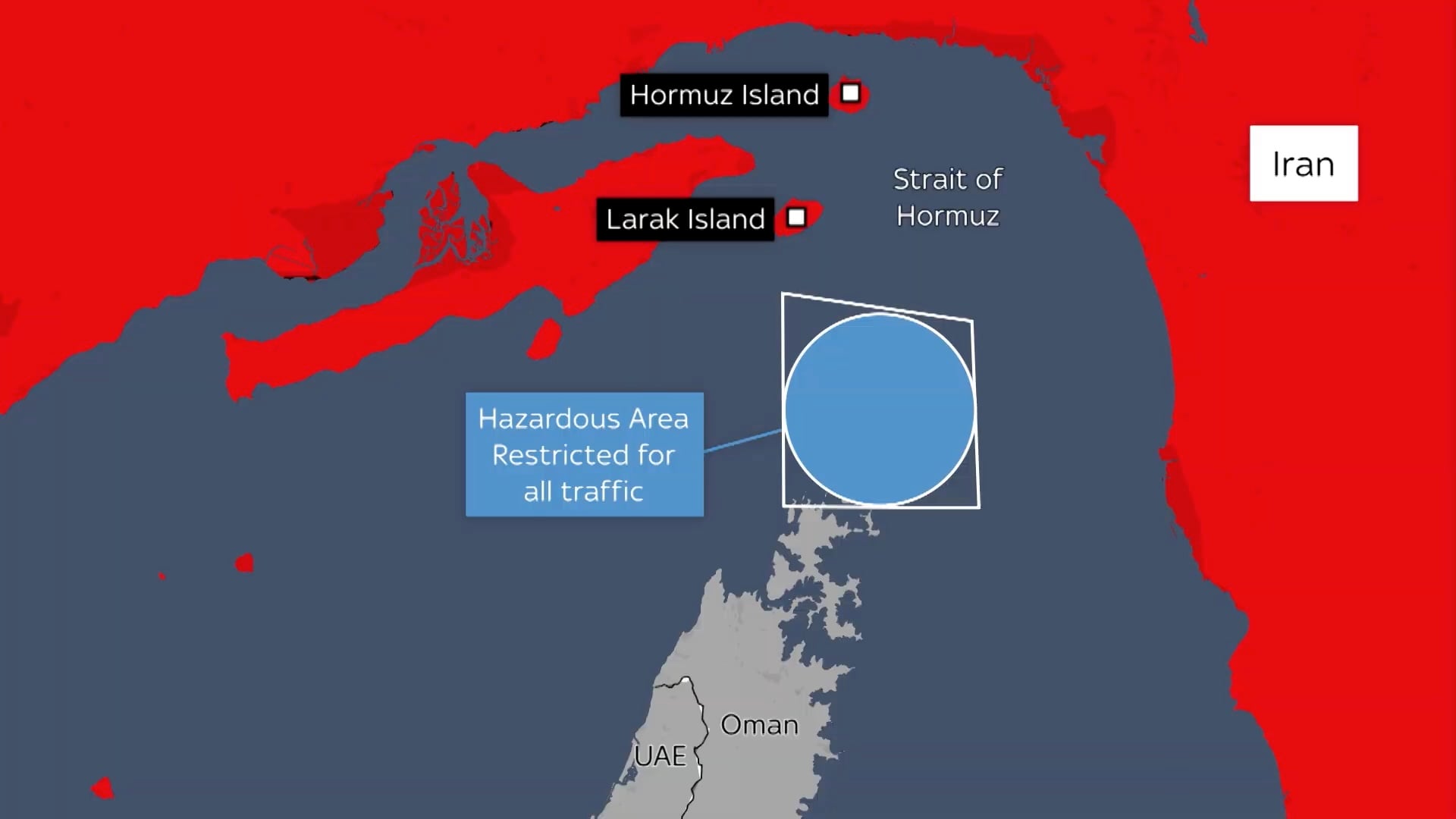 The area where Iran has placed mines in the Strait of Hormuz © Sky News
One unnamed U.S. official told reporters on Monday that the Strait “will return to normal pretty quickly, definitely within 30 days, once they can get rid of all the mines.” It’s unclear how long it will take to clear all the mines, which total “less than 12,” according to Sky News. Iran is believed to have about 5,000 mines at their disposal.
Another factor that must be considered is what Israel will do in the wake of any deal, since the war against Iran was launched in coordination with that country. Israel continues to bomb Lebanon, ostensibly to fight Hezbollah, and Iran has reportedly insisted that Israel be a party to any ceasefire agreement. Israel is not happy with Trump and his attempts to stop the war in Iran, according to the Wall Street Journal.
Israeli Defense Minister Israel Katz has said that the land it has seized in southern Lebanon is a “security zone” and will be held indefinitely. The main concern for Israeli officials is that money will flow to Iran as part of a deal that would allow it to rebuild, according to the Journal.
Iran’s state media has talked about $300 billion in funds that would be released as part of any deal, but the MOU hasn’t been released publicly, so it’s impossible to definitively say whether that’s true or part of some vague promise for the future. Vice President JD Vance told CBS News on Monday morning that such claims were inaccurate.
“When people say that billions of dollars of assets will be released, that’s not true,” Vance said. “What is true is that Iran will have a much better and much more prosperous future if they meet the obligations they make in this agreement.”
Roughly 20% of the world’s oil supply travels through the Strait of Hormuz, and while Trump has tried to brag about some ships getting through in recent months, they’re just a tiny fraction of the number of ships that crossed the Strait before the war began.
Abbas Araghchi, the Iranian foreign minister, has also suggested that Iran will still control the Strait even after an agreement with the U.S. has been signed, and may even charge a toll for all ships that want to pass. That toll is being discussed as a “maritime fee” rather than a toll.
The U.S. Strategic Petroleum Reserve
The financial markets were riding high on Monday, but the rest of the world is struggling much more than the U.S. when it comes to fuel and the closure of the Strait. There are currently protests from Bolivia to Pakistan to Indonesia, all related to discontent about inflation and the soaring costs of food, goods, and gasoline.
President Trump said Monday that the text of the MOU will be released “pretty soon,” claiming that it will likely happen “some time after Friday.” White House officials had previously said the text would be released within 24 to 48 hours, according to the Times of Israel.
As ridiculous as it seems, Trump has been able to sing the same song over and over since the start of his war in February. And it doesn’t much matter what’s actually happening. As long as enough people believe in Trump, the U.S. economy will keep chugging along in a state of perpetual confusion. At least until reality becomes impossible to ignore.
The MOU has reportedly been signed digitally, but the U.S. and Iran negotiating teams are expected to meet on Friday in Switzerland to sign in person. Vice President Vance and Jared Kushner, Trump’s son-in-law, will likely be in attendance to sign on behalf of the U.S., while Trump has suggested he won’t be there.








 English (US) ·