
 3 weeks ago
26
3 weeks ago
26
G.Skill has entered the 128GB (2x64GB) race and brought the Trident Z5 Neo RGB DDR5-6000 C34 to dethrone the best RAM. Finding reasonably priced DDR5 memory kits has become increasingly challenging, let alone procuring 128GB memory kits. First, manufacturing these massive dual-channel memory kits requires 64GB modules that push production costs through the roof. Second, the memory shortage has left most major retailers showing limited stock and manufacturers scrambling to meet even basic demand, so there aren't many premium enthusiast-grade kits being released. Therefore, G.Skill's Trident Z5 Neo RGB DDR5-6000 C34 memory kit is worth paying attention to if you have the cash for such a hefty kit.
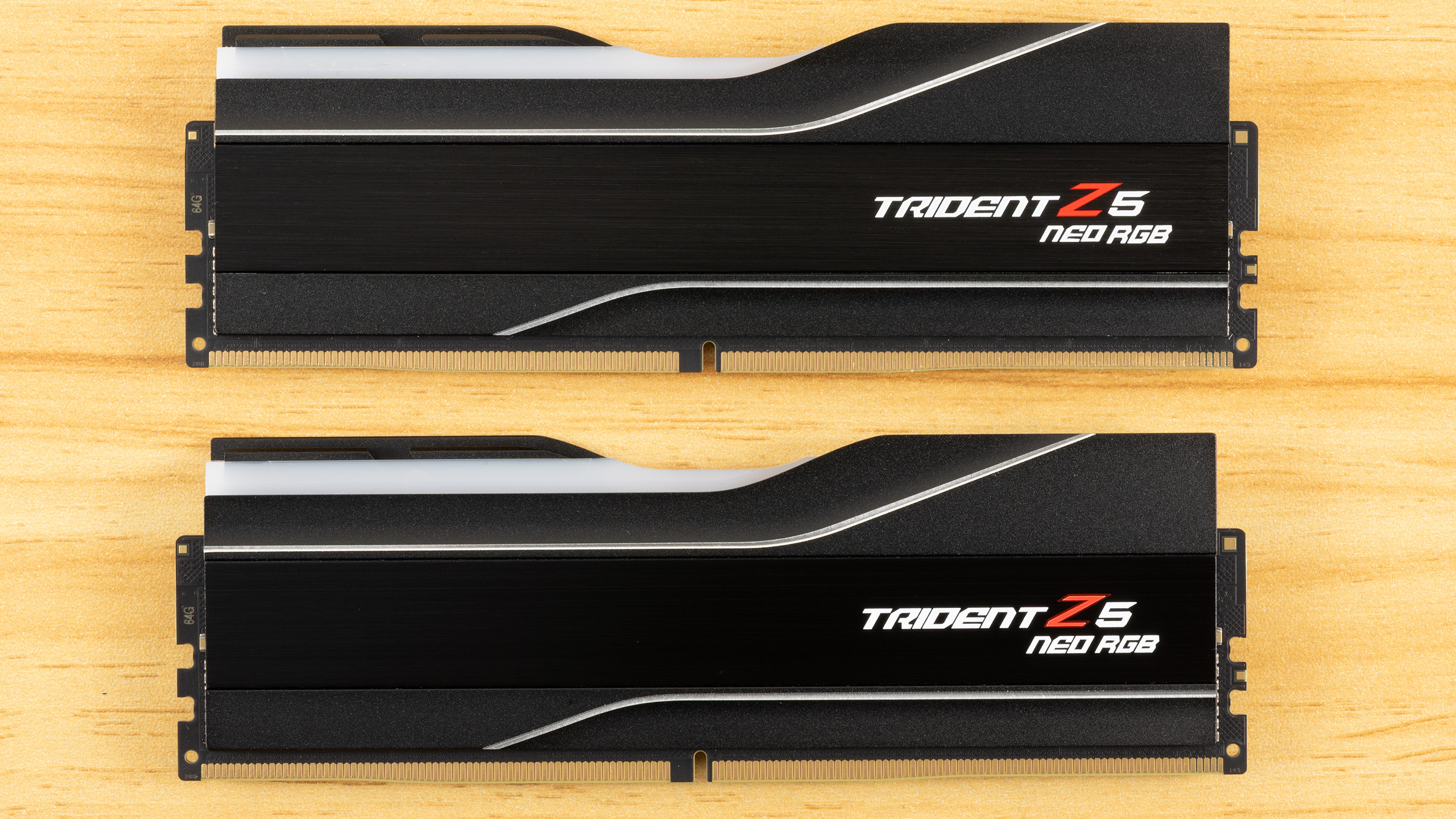
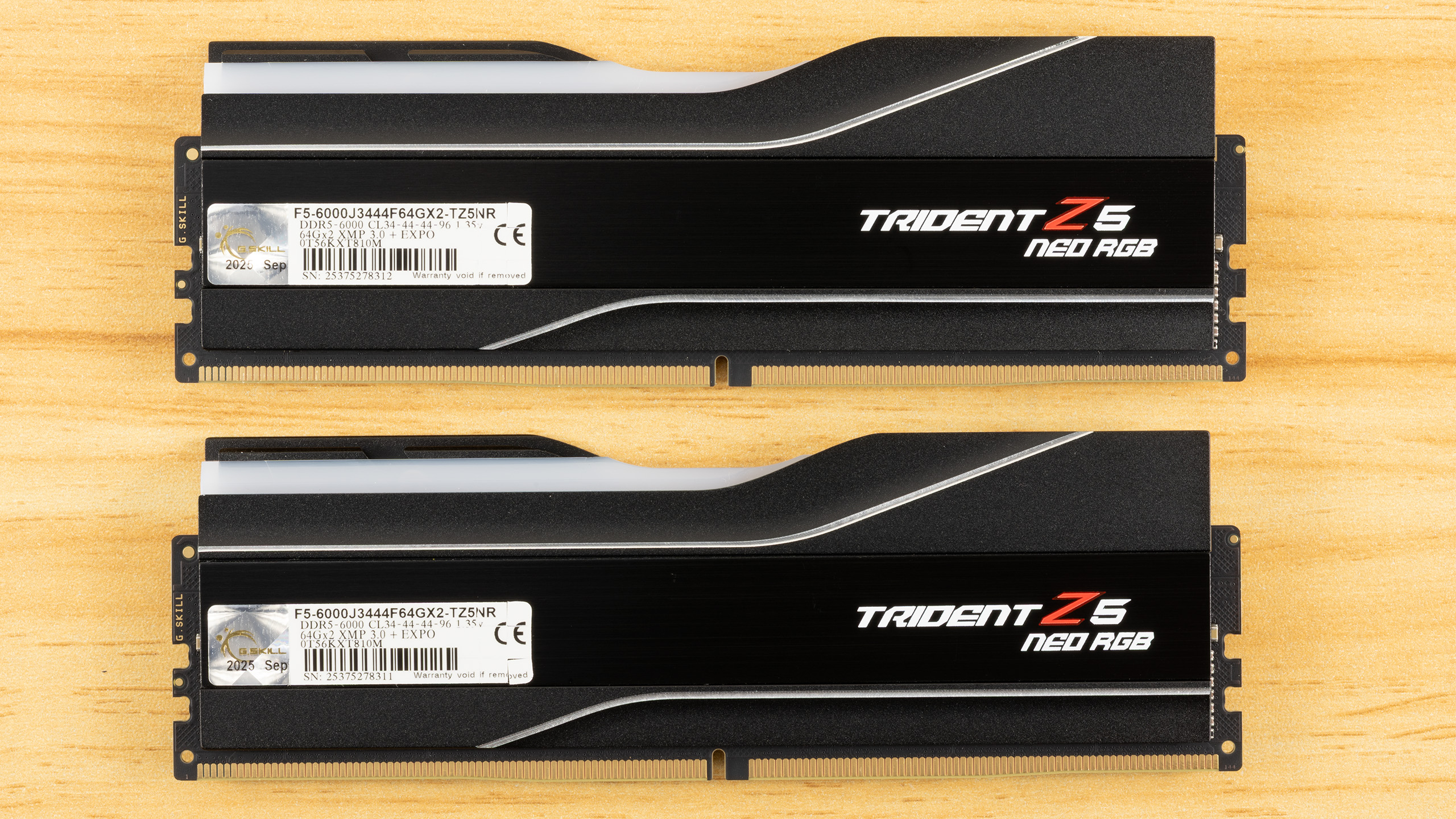
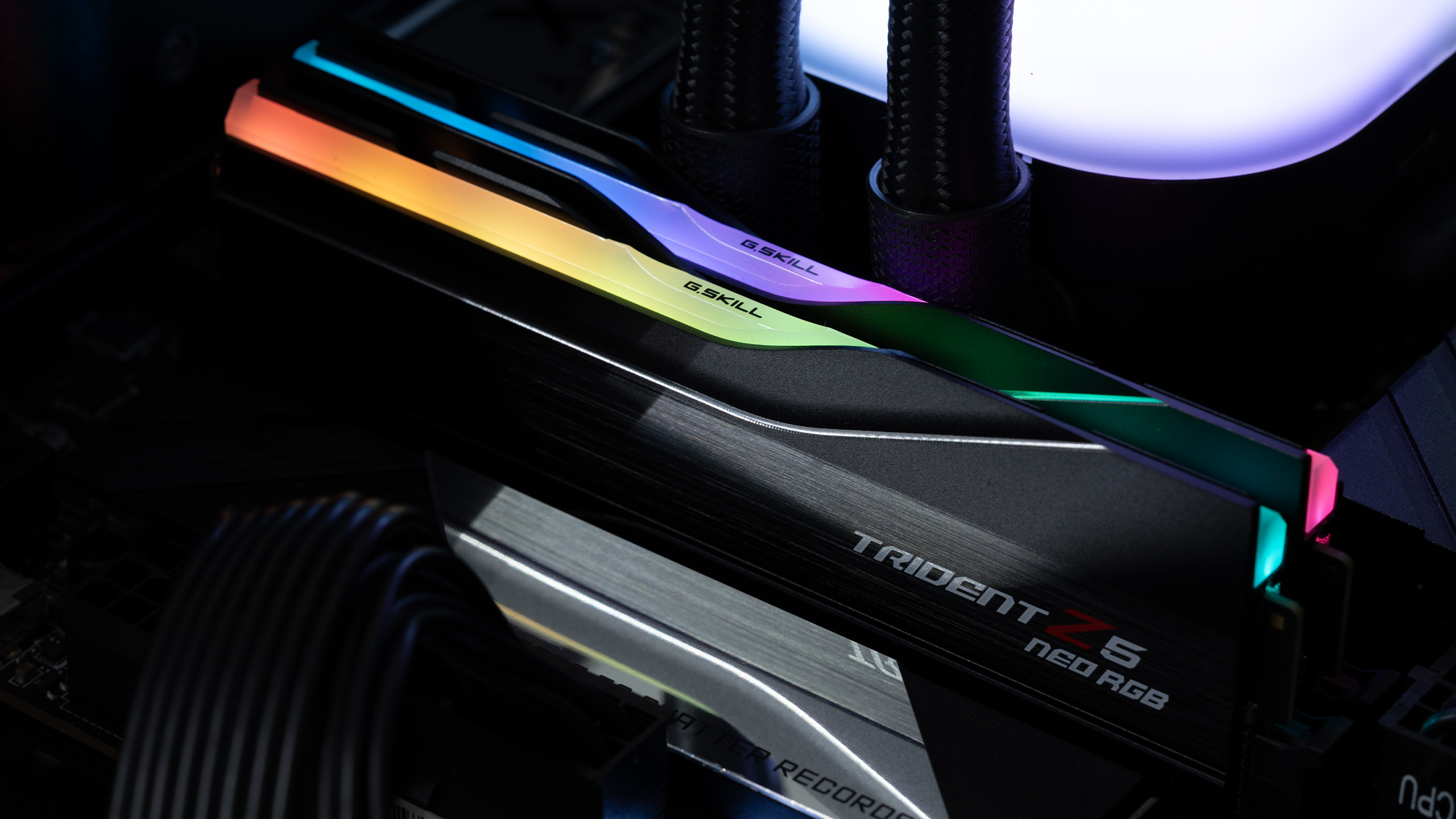
Crowning each memory module is a streamlined RGB light bar with vibrant colors and illumination. G.Skill offers two alternatives for RGB customization and control: its dedicated Trident Z Lighting Control software or seamless integration with your motherboard's native RGB software. Choose the latter route, and you'll find the Trident Z5 Neo RGB fits in nicely with all the major platforms, including Asus Aura Sync, Gigabyte RGB Fusion 2.0, MSI Mystic Light Sync, and ASRock Polychrome Sync.
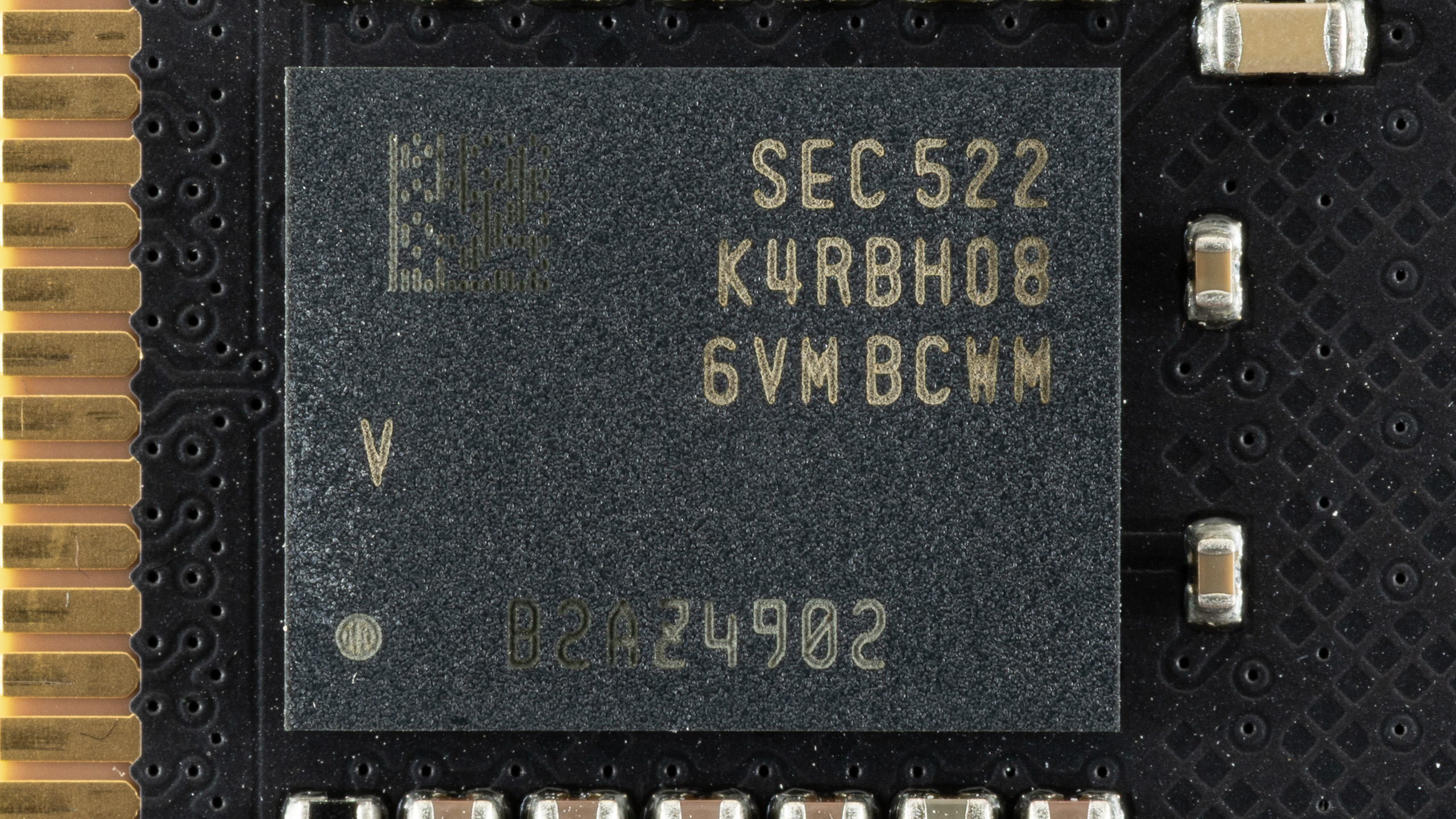
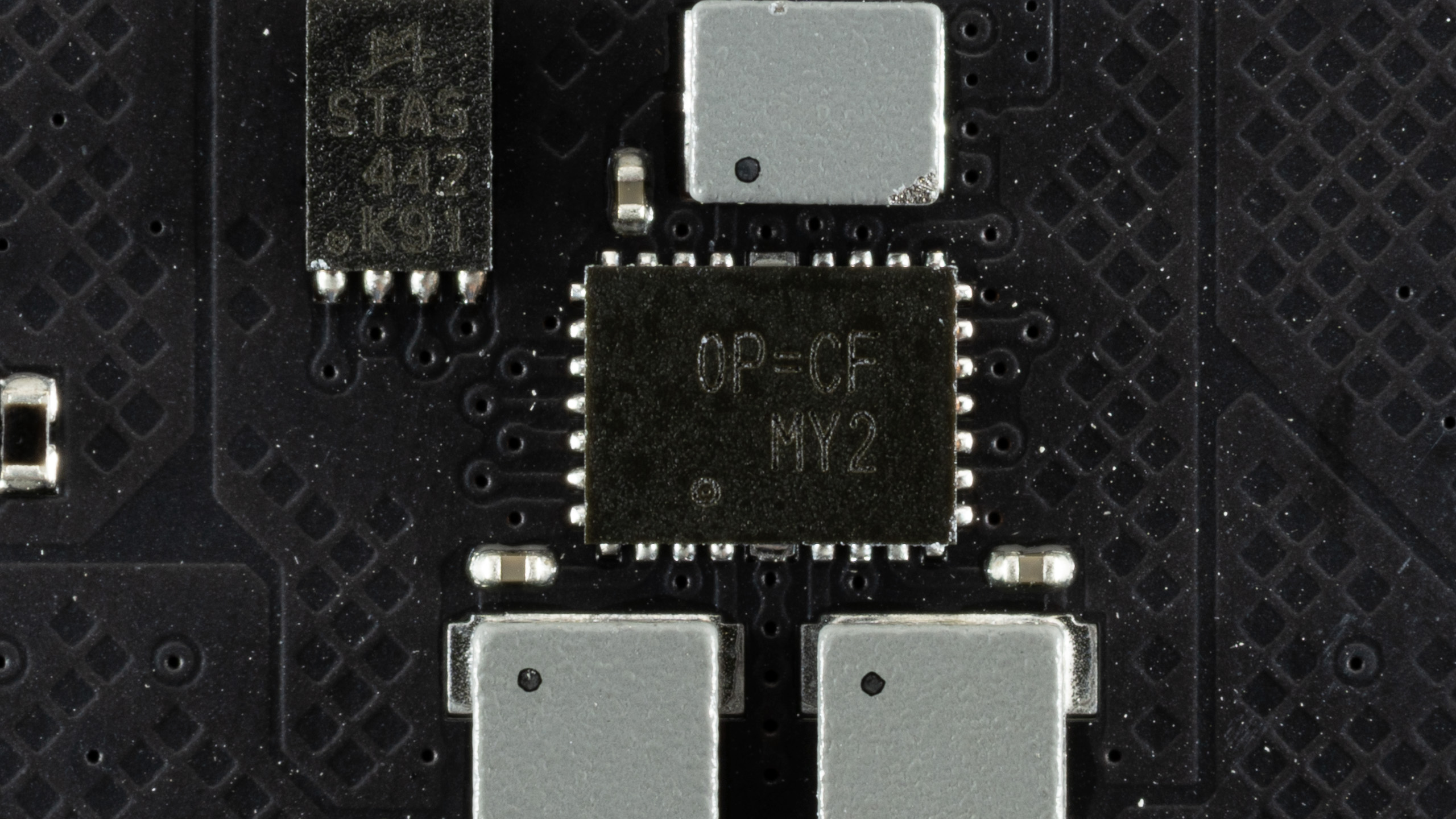
At the heart of this kit are two 64GB DDR5 memory modules, each with a dual-rank design, which is essential for achieving this level of capacity. Each memory module houses 16 individual integrated circuits (ICs), with eight soldered chips on each side of the black PCB. Each of these ICs contributes 4GB of capacity. Surprisingly, G.Skill utilizes Samsung K4RBH086VM-BCWM (M-die) ICs for this particular in lieu of SK hynix's M-die. Meanwhile, the company has entrusted power distribution to Richtek, which supplies power management IC (PMIC) bearing the "0P=CF MY2" marking.
In its default stock configuration, the memory modules operate at DDR5-5600 with relaxed 46-45-45-90 timings to ensure maximum compatibility across a wide range of system configurations. G.Skill includes only a single overclocking profile, conveniently available in both Intel XMP 3.0 and AMD EXPO formats. When you enable the DDR5-6000 profile through your motherboard’s BIOS, the memory kit will automatically reconfigure itself to run at the higher frequency with tightened 34-44-44-96 timings and adjust the DRAM voltage to 1.35V. For additional details on timings and frequency choices, refer to our PC Memory 101 feature and the How to Shop for RAM article.
Comparison Hardware
Swipe to scroll horizontally
V-Color Manta Xfinity RGB | TMXFAL6464832KWK | 2 x 64GB | DDR5-6400 | 32-45-45-96 (2T) | 1.40 | Lifetime |
G.Skill Trident Z5 Neo RGB | F5-6000J3444F64GX2-TZ5NR | 2 x 64GB | DDR5-6000 | 34-44-44-96 (2T) | 1.35 | Lifetime |
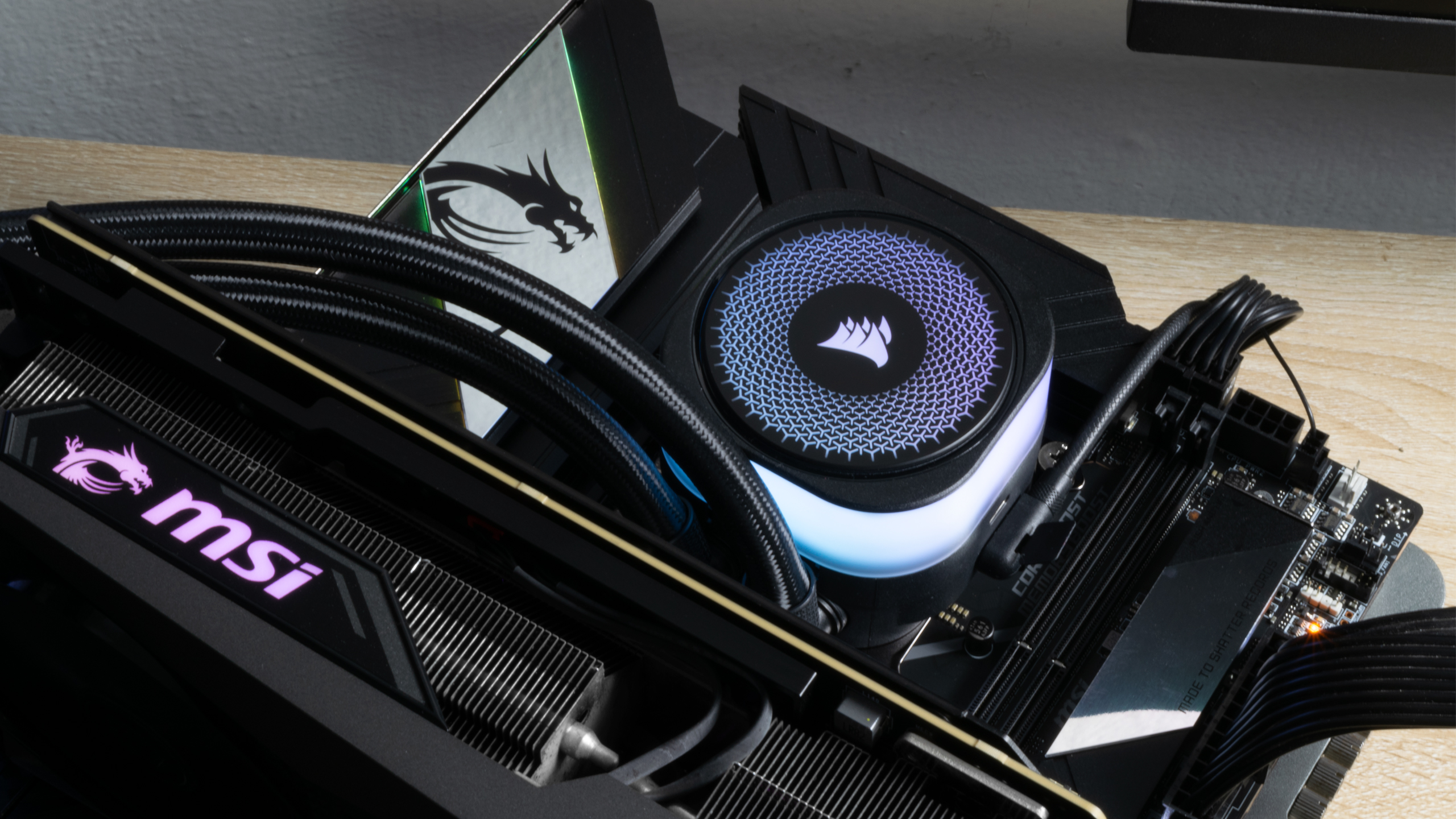
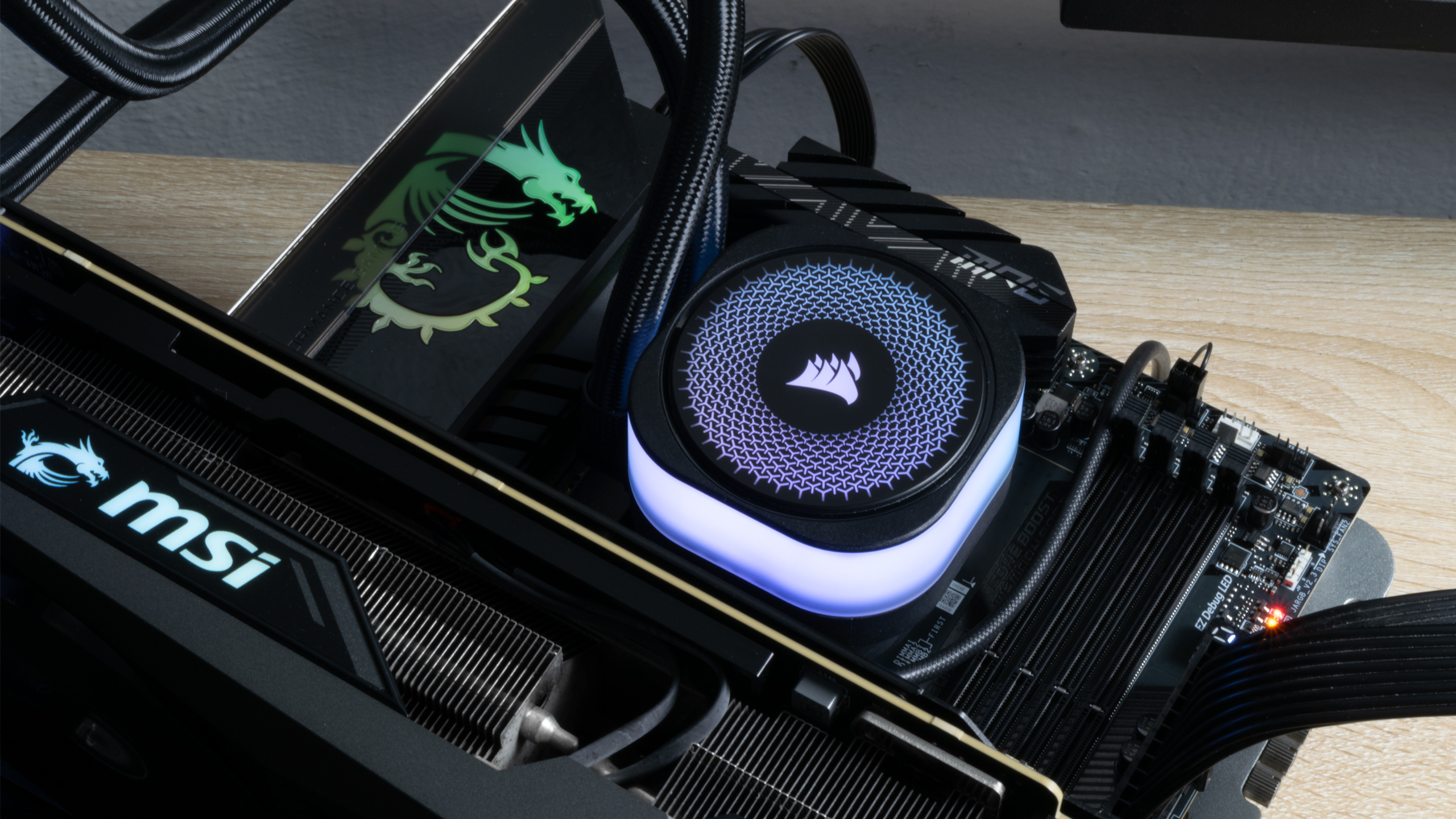
The Intel system features the Core Ultra 9 285K processor and the MSI MEG Z890 Unify-X motherboard with firmware version 7E20v1A60. Conversely, the AMD system utilizes the Ryzen 9 9900X processor and the MSI MPG X870E Carbon WiFi motherboard with firmware version 7E49v1A64. The Corsair iCUE Link Titan 360 RX LCD CPU liquid-cooling solution efficiently maintains optimal temperatures for both the Arrow Lake and Zen 5 processors, ensuring efficient thermal management across platforms.
The MSI GeForce RTX 4080 16GB Gaming X Trio efficiently handles demanding graphics workloads, preventing any bottlenecks during our gaming RAM benchmarks. The TeamGroup A440 Lite PCIe 4.0 SSD balances performance and capacity, delivering 2TB of ultra-fast storage with speeds up to 7,400 MB/s—perfect for Windows 11 24H2 installations, benchmarking software, and gaming applications.
The Corsair RM1000x Shift ATX 3.0 power supply delivers reliable and ample power to our test systems, directly supporting the GeForce RTX 4080 via its native 16-pin (12VHPWR) cable. The Streacom BC1 open-air test bench offers flexible, tool-free accommodation for all hardware components, streamlining assembly and component swaps.
Swipe to scroll horizontally
Processor | Intel Core Ultra 9 285K | AMD Ryzen 9 9900X |
Motherboard | MSI MEG Z890 Unify-X | MSI MPG X870E Carbon WiFi |
Graphics Card | MSI GeForce RTX 4080 16GB Gaming X Trio | MSI GeForce RTX 4080 16GB Gaming X Trio |
Storage | TeamGroup A440 Lite 2TB | TeamGroup A440 Lite 2TB |
Cooling | Corsair iCUE Link Titan 360 RX LCD | Corsair iCUE Link Titan 360 RX LCD |
Power Supply | Corsair RM1000x Shift | Corsair RM1000x Shift |
Case | Streacom BC1 | Streacom BC1 |
Intel Performance
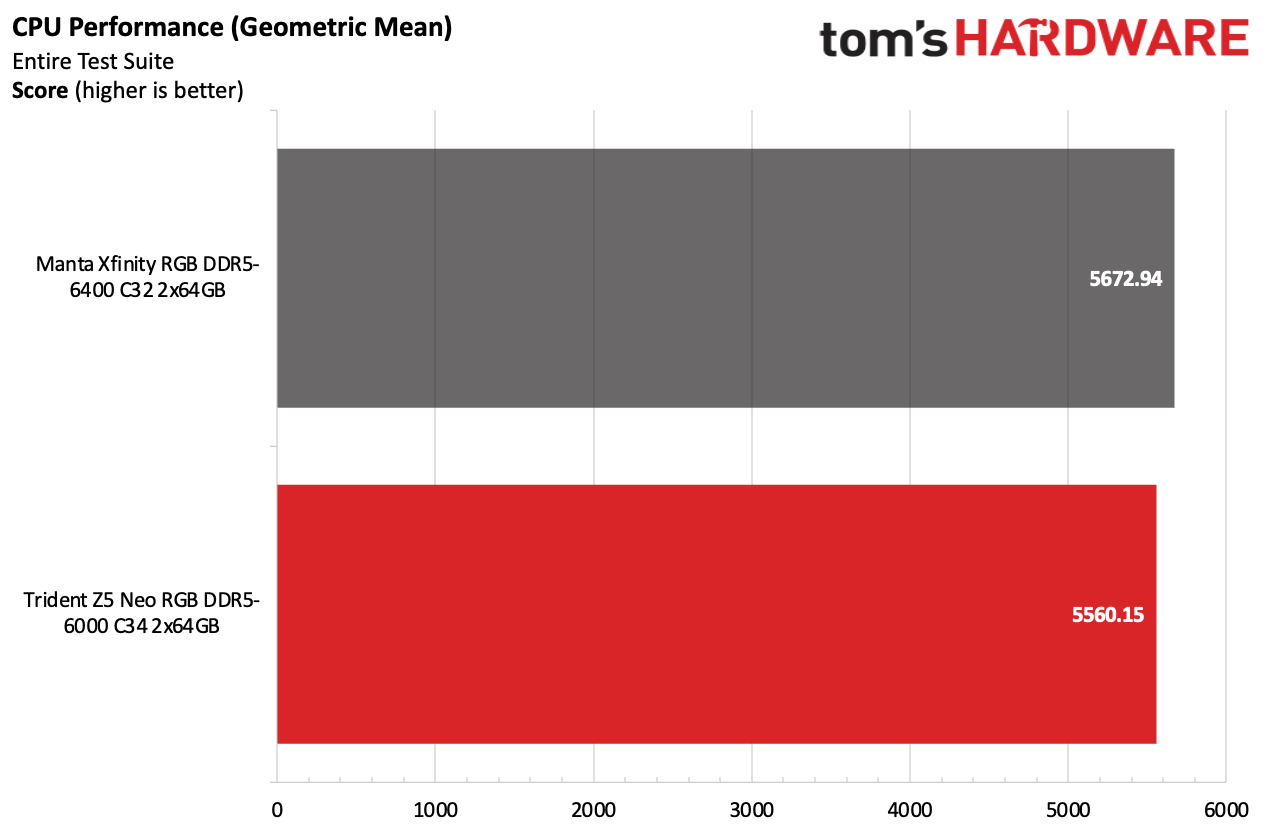
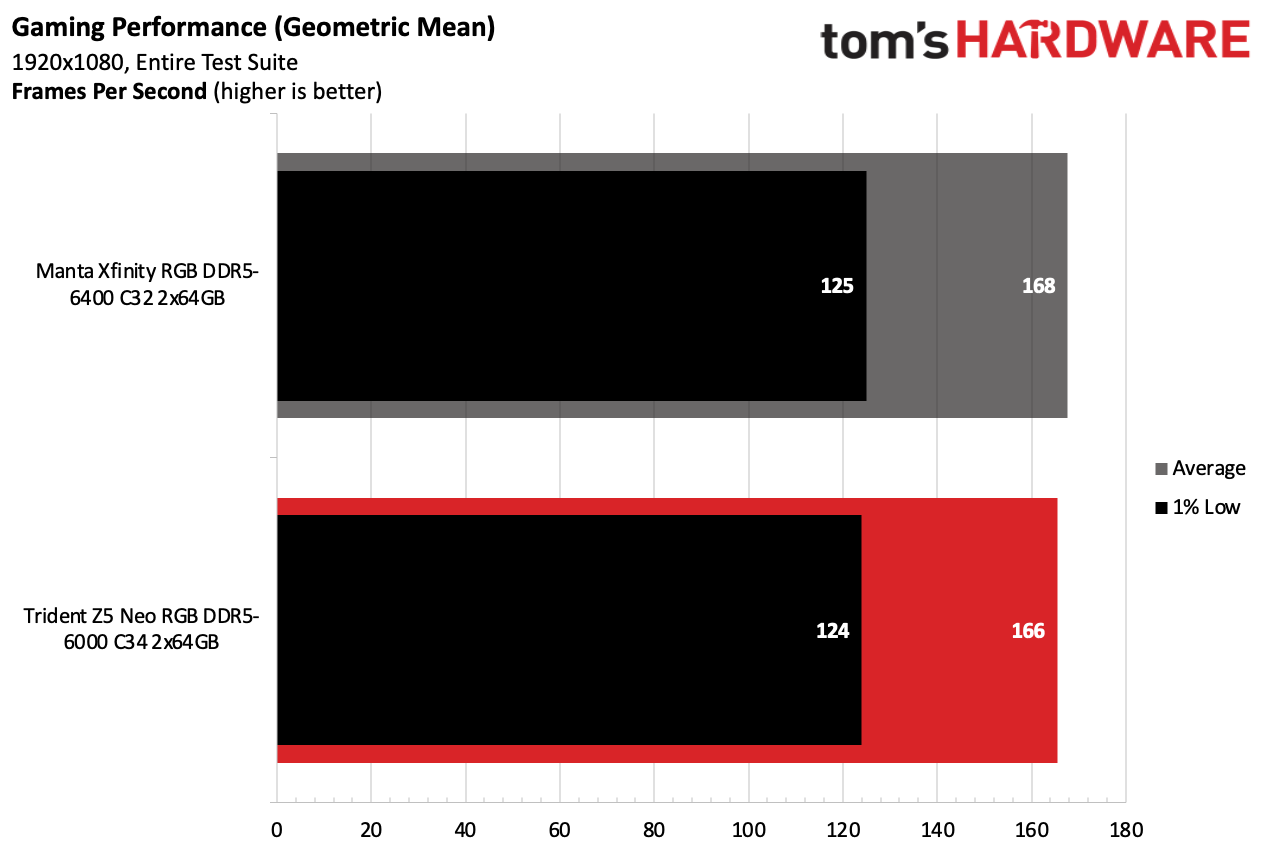
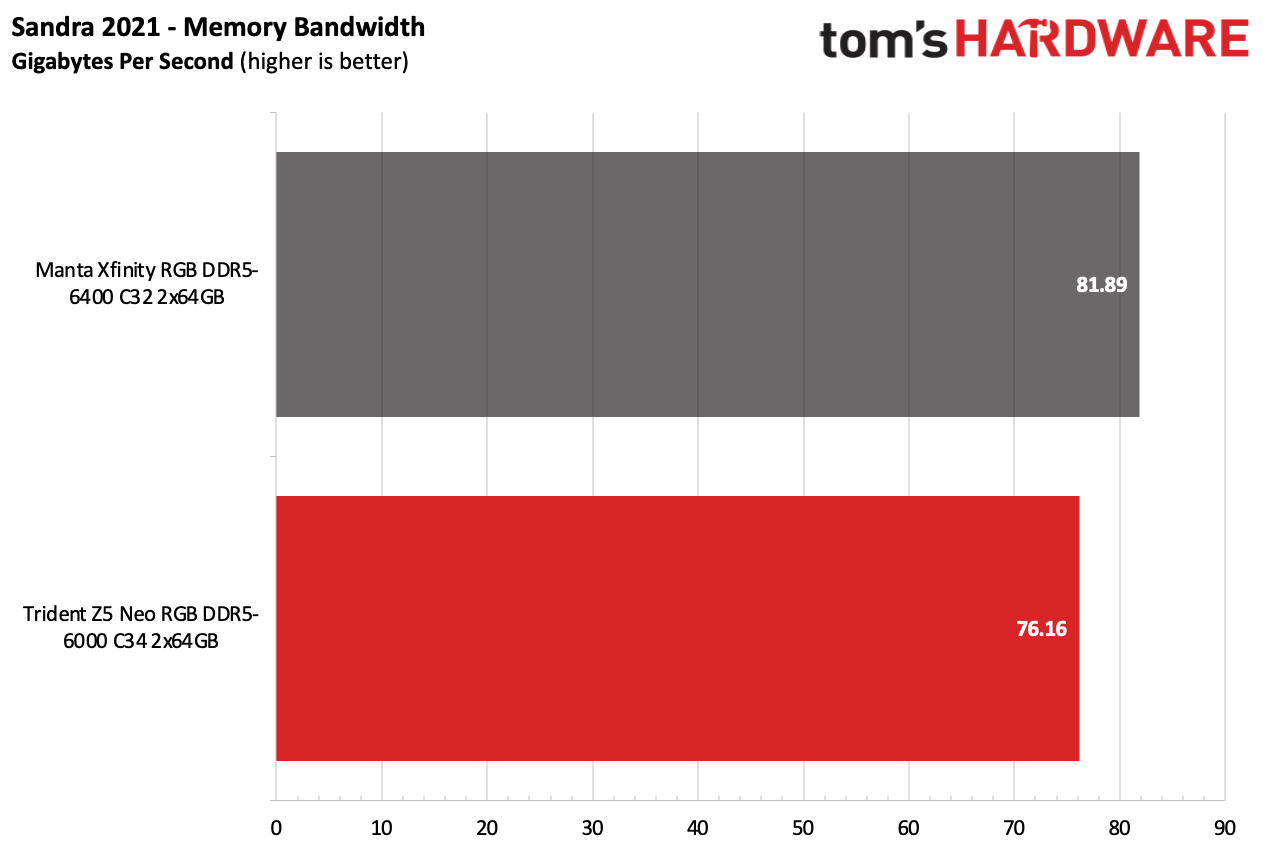
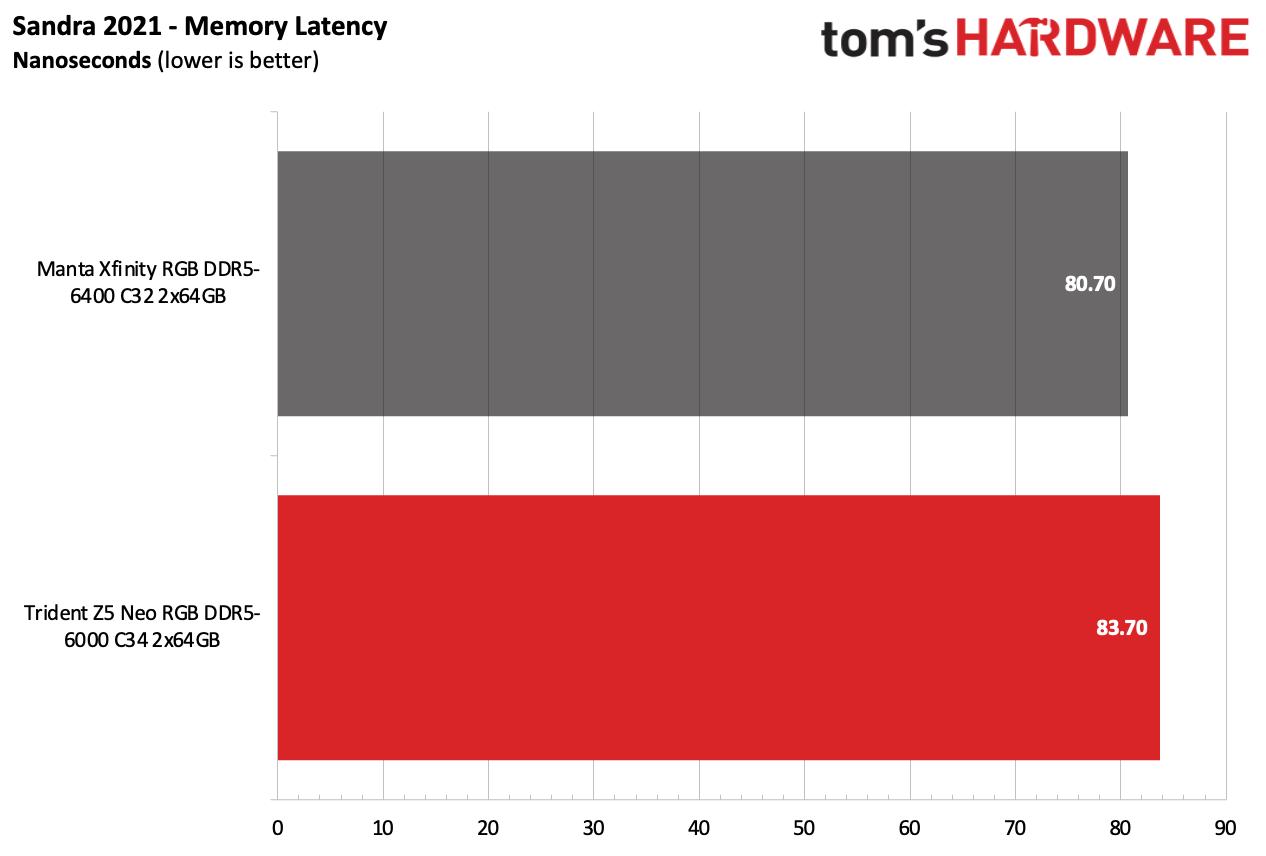
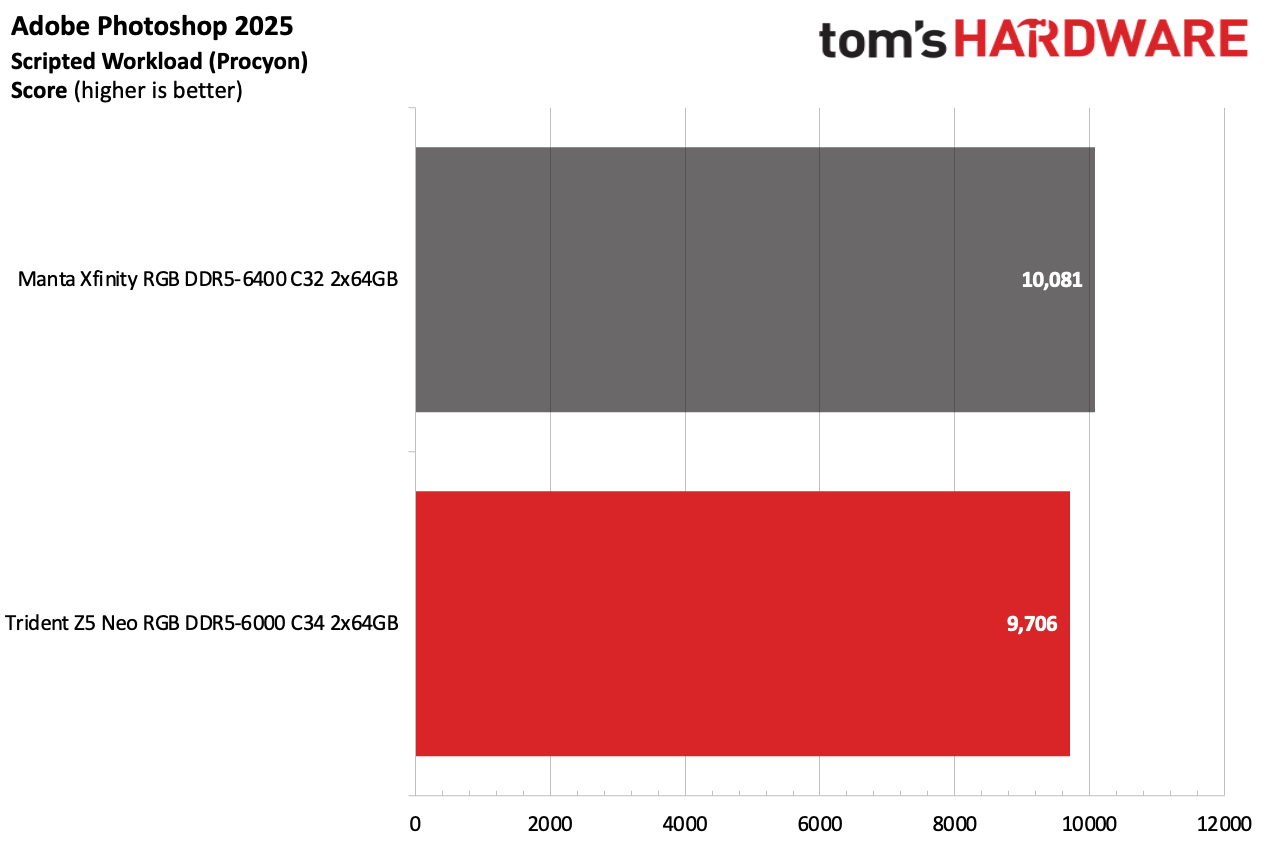
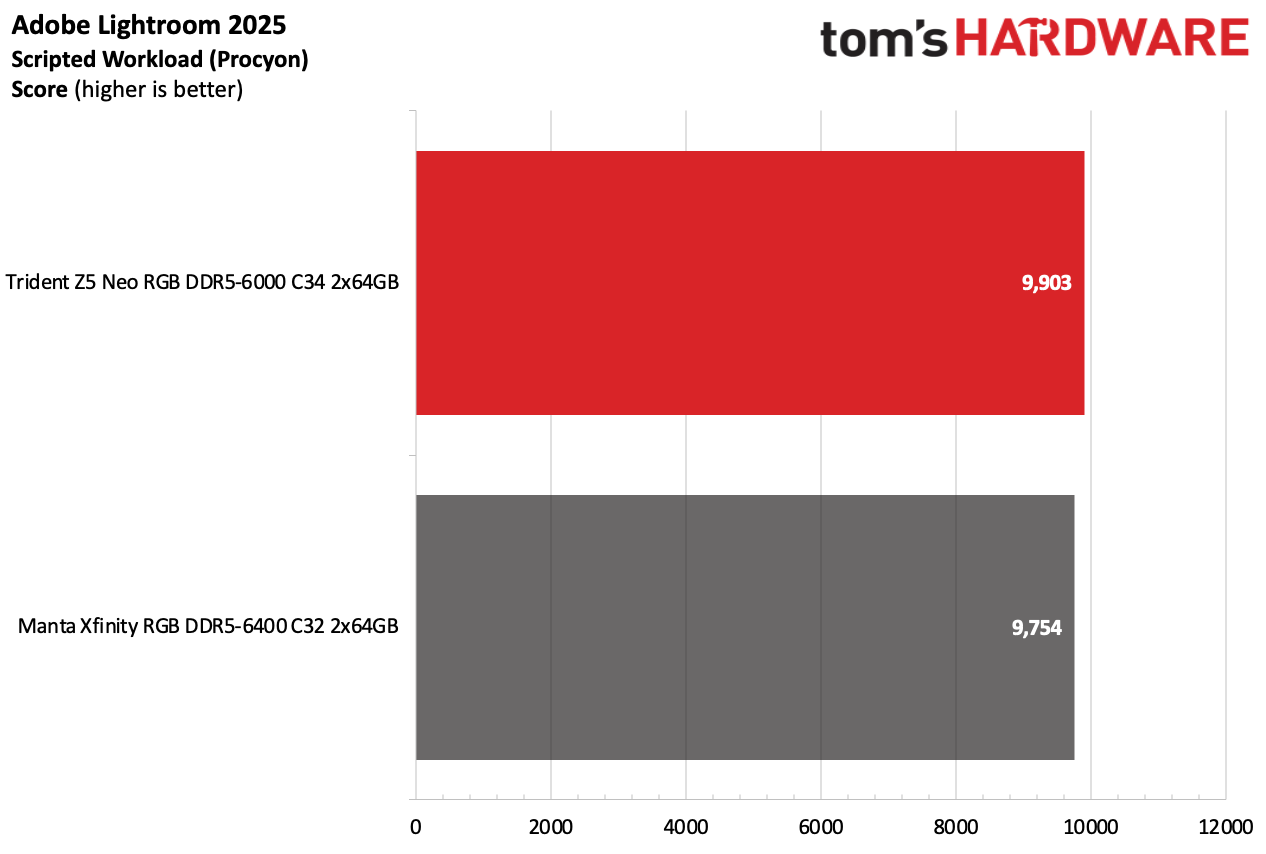
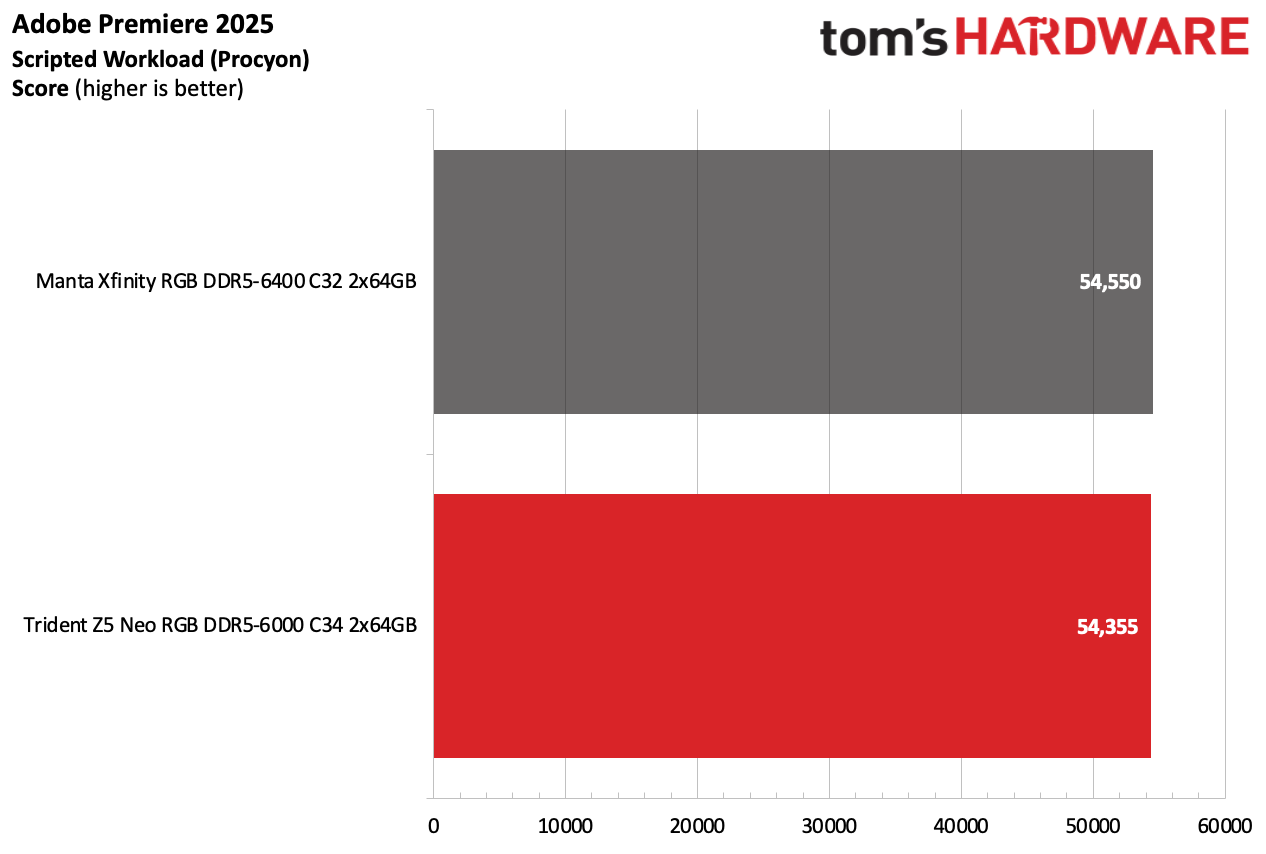
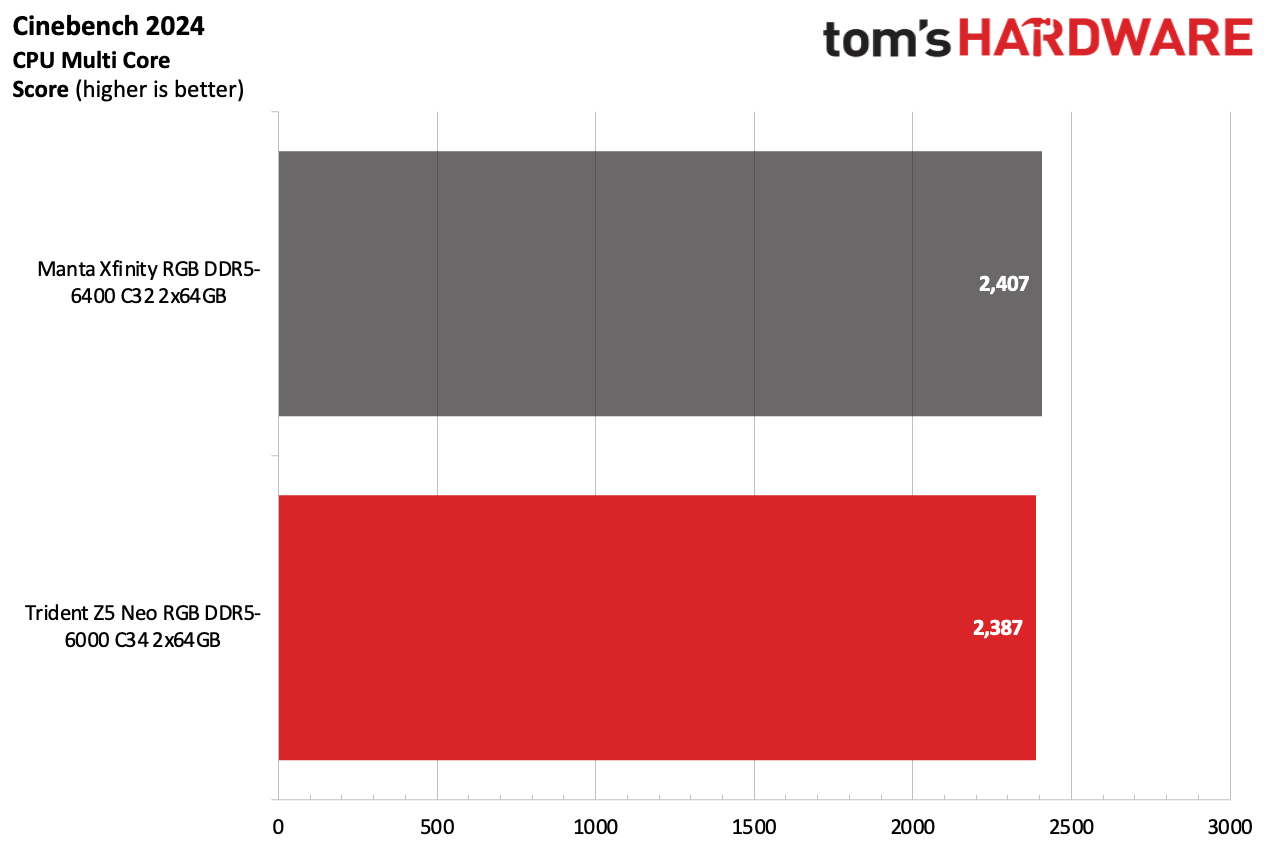
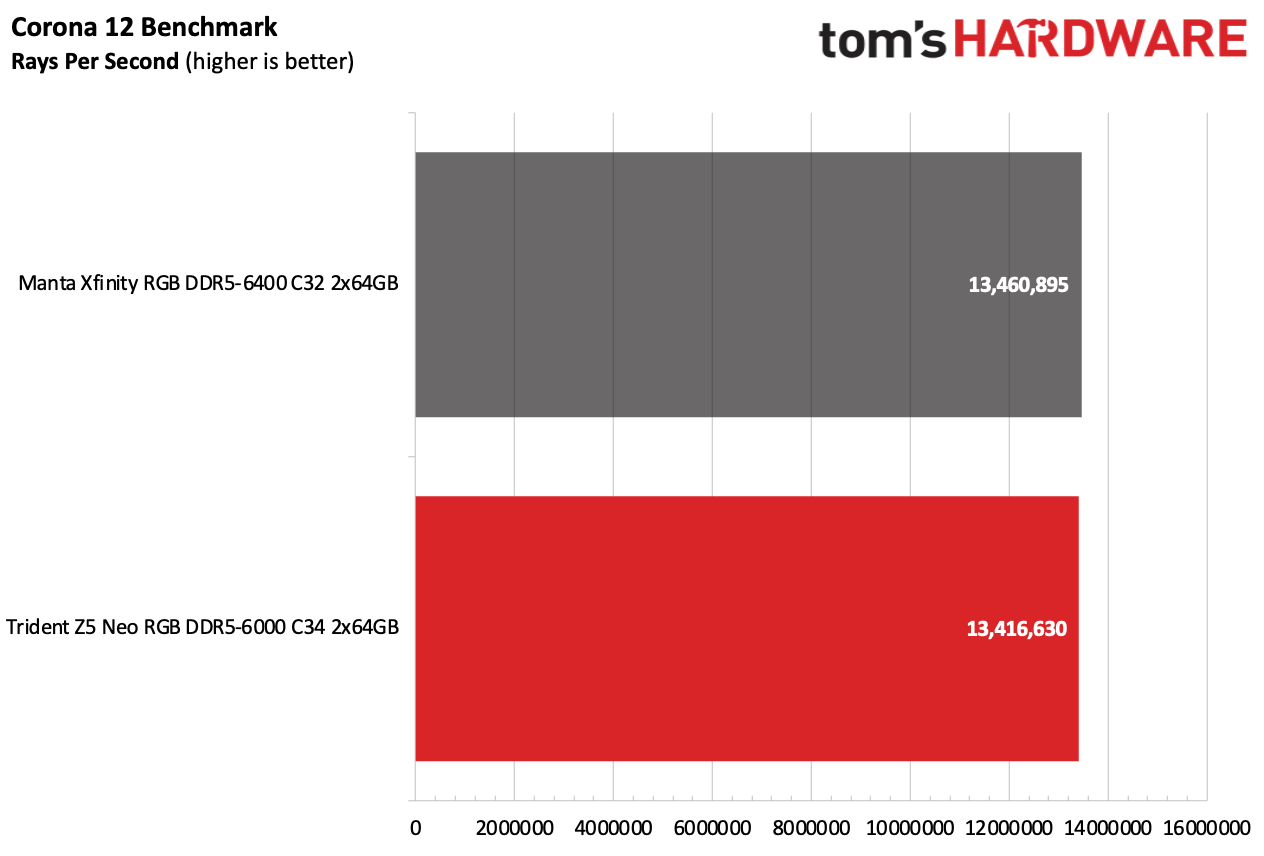
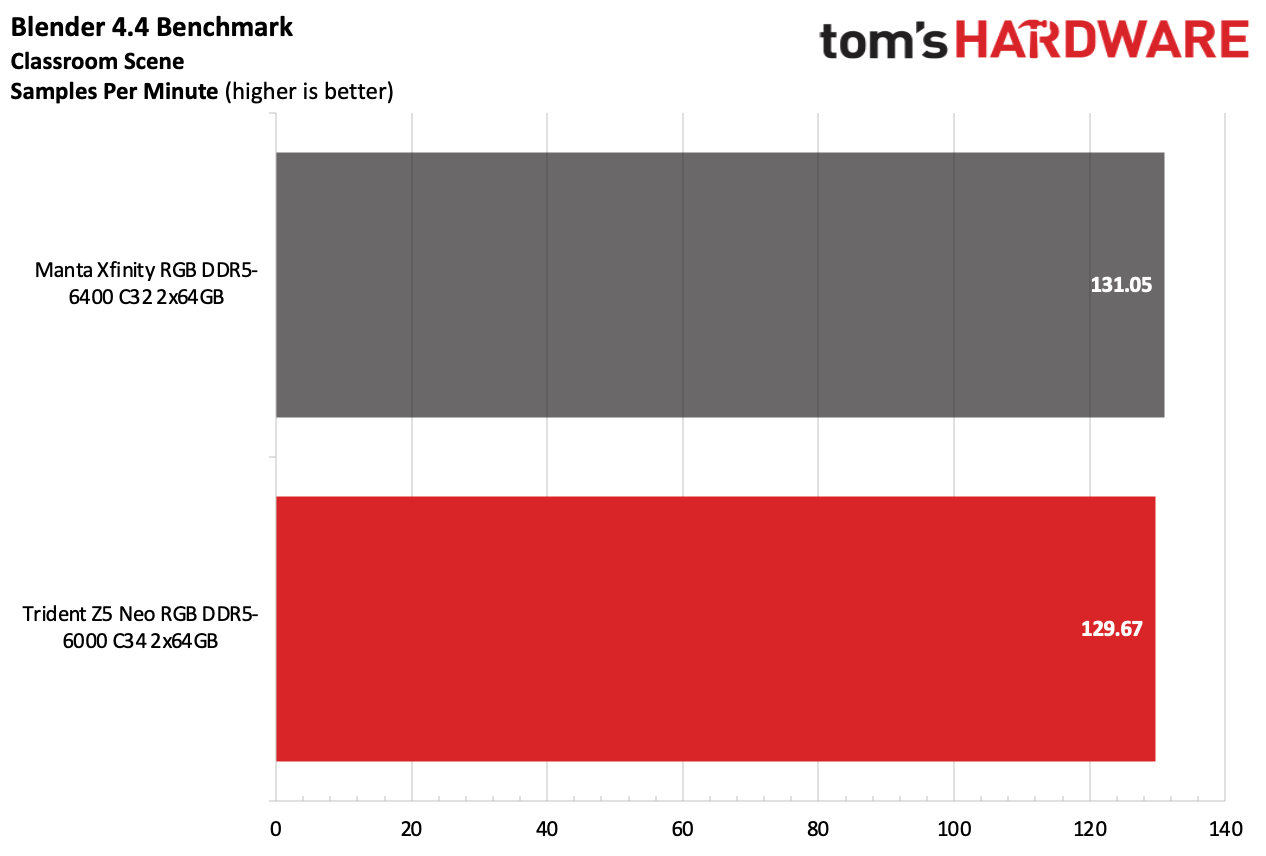
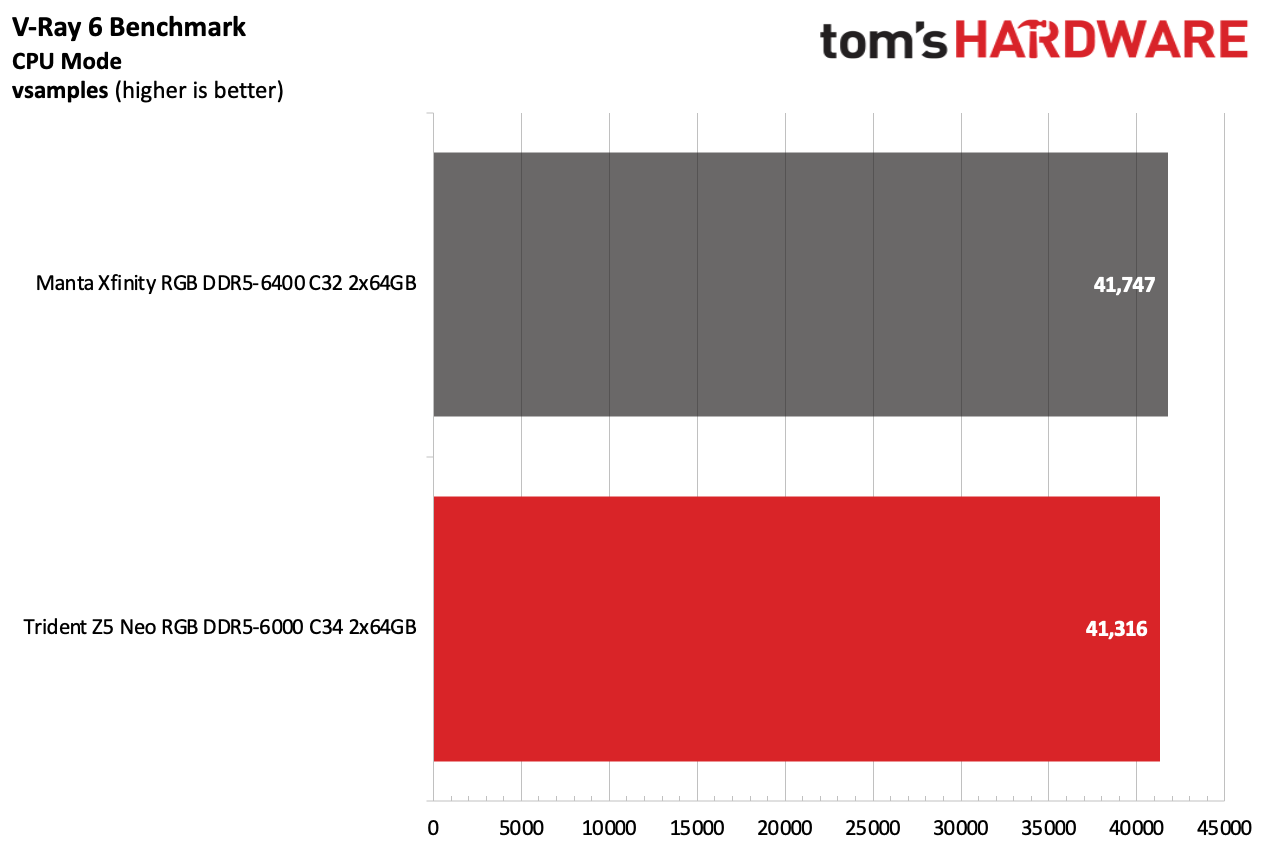
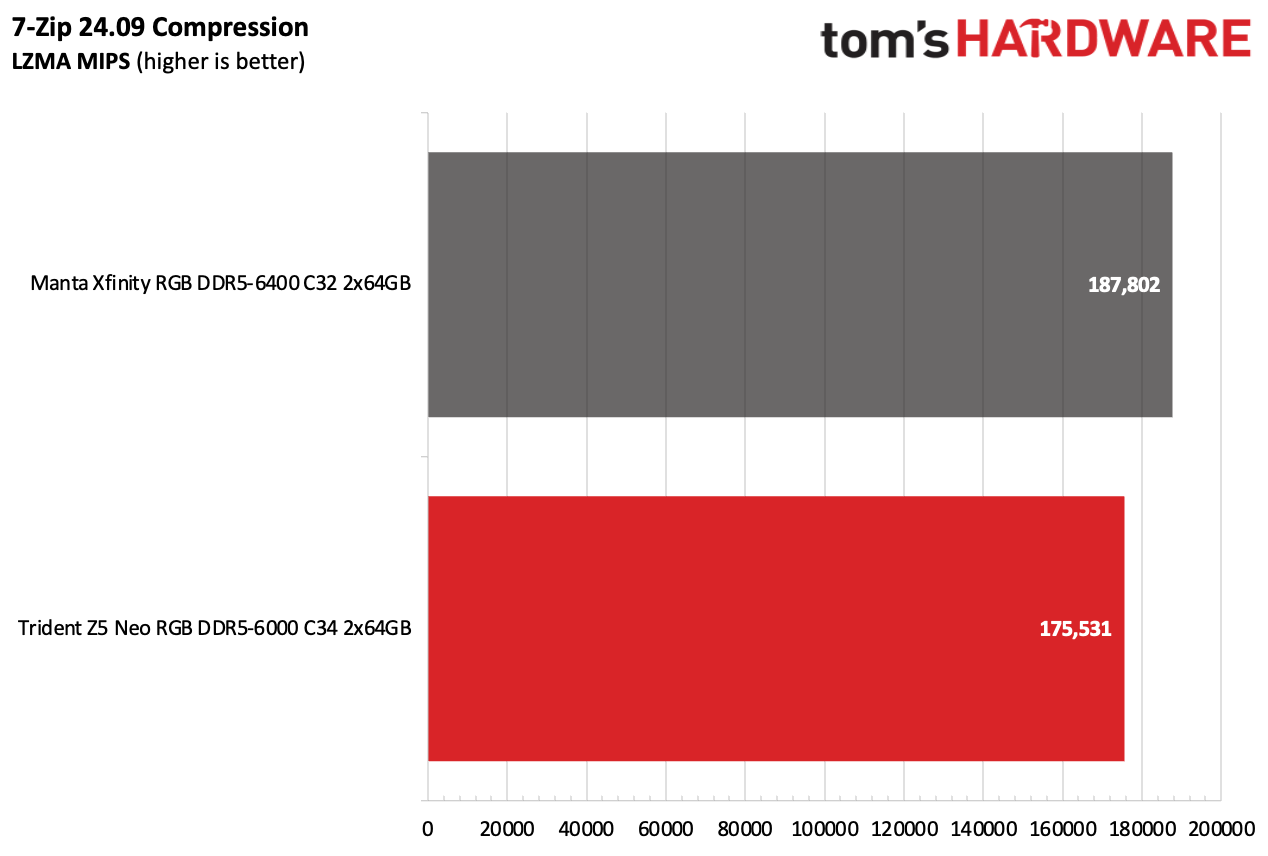
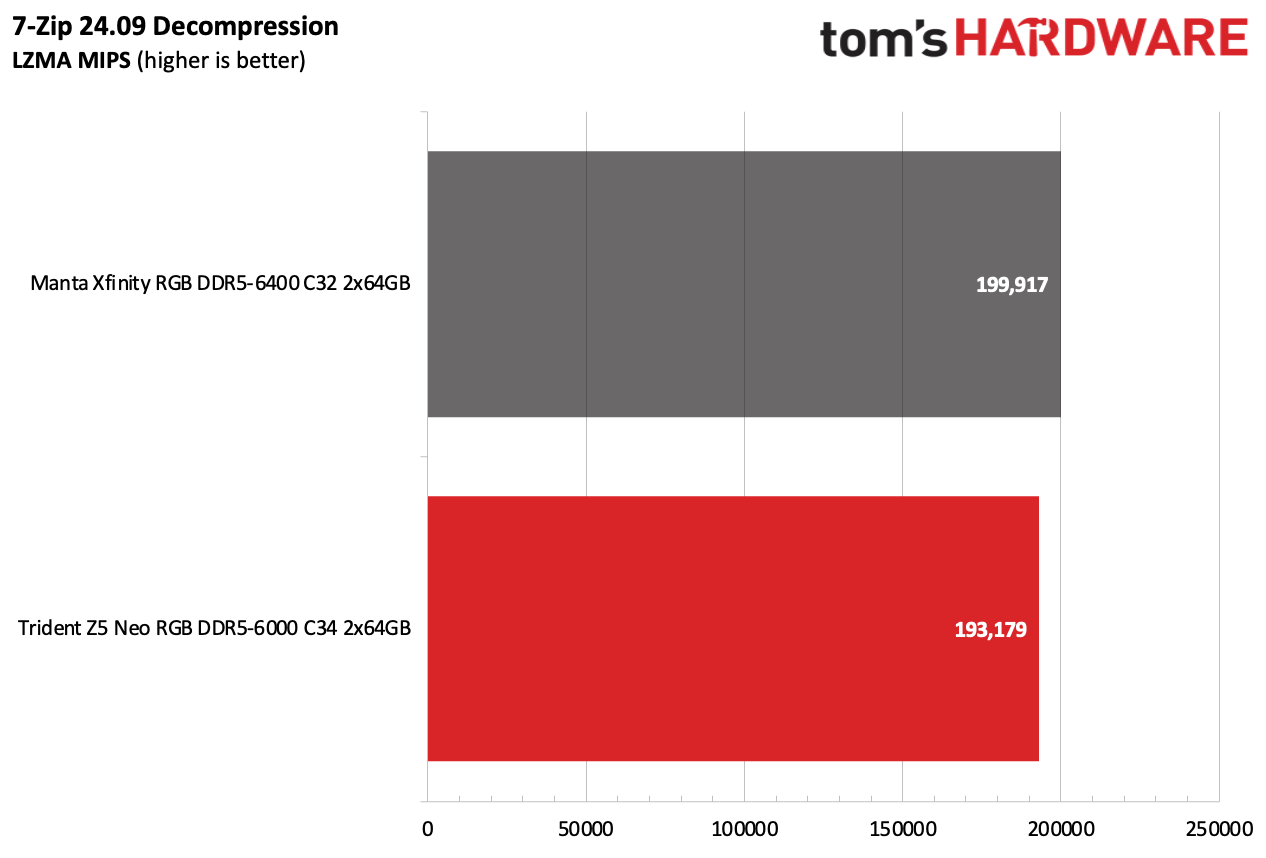
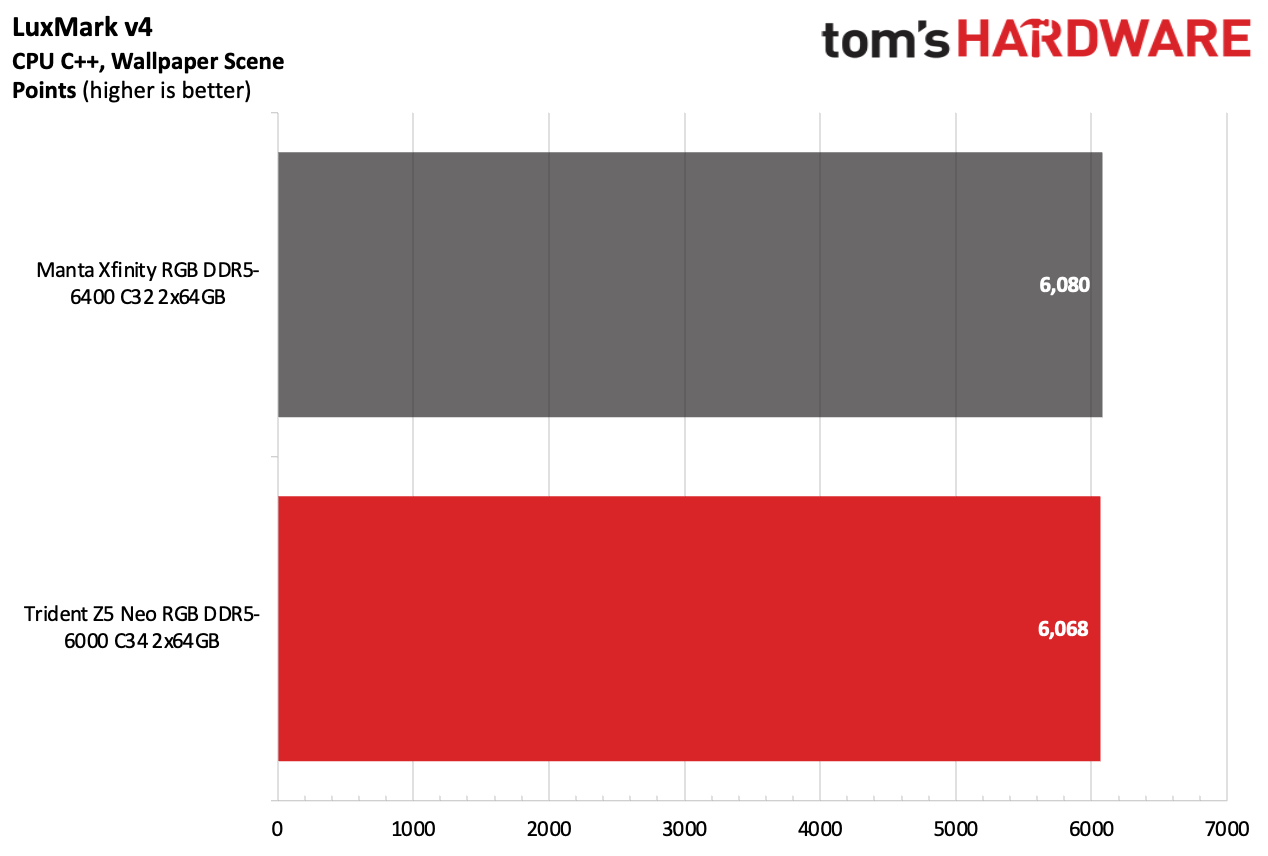
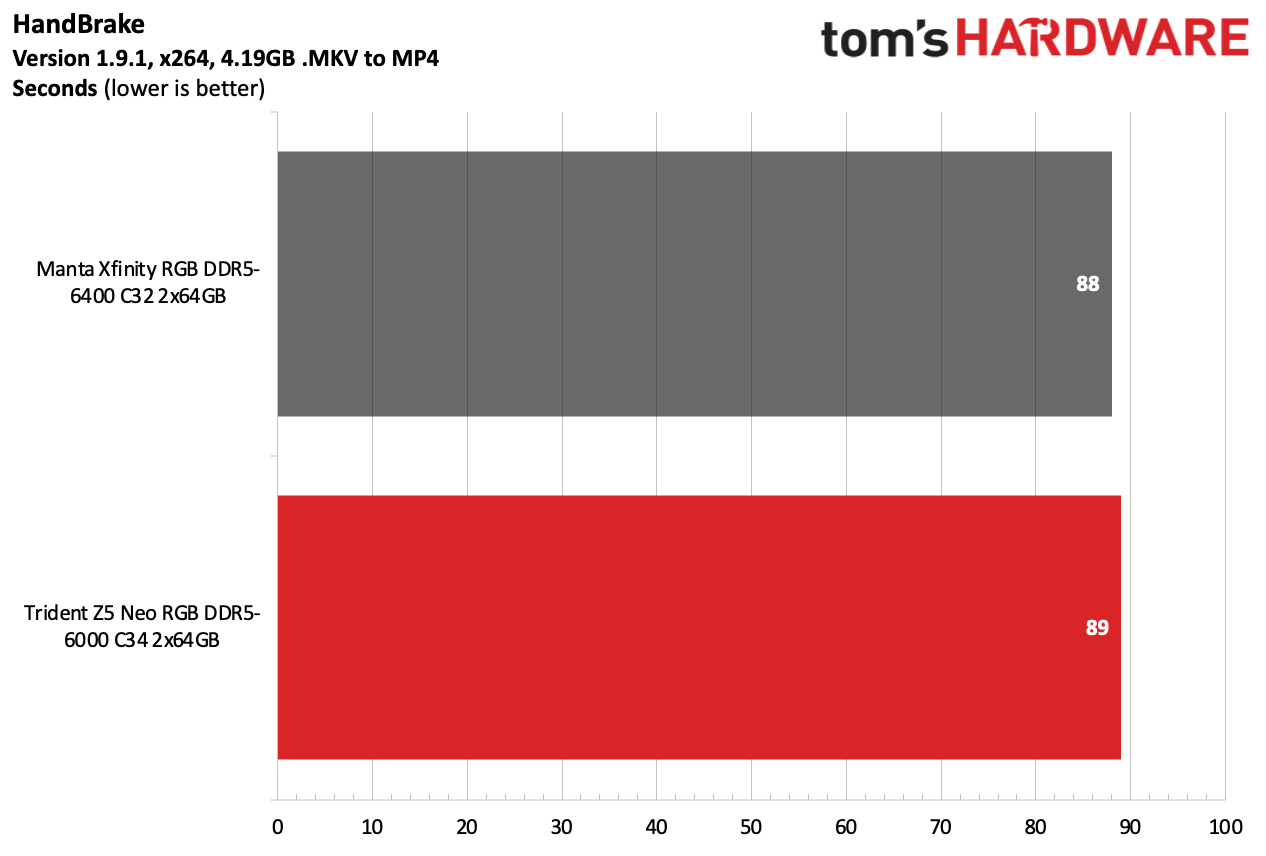
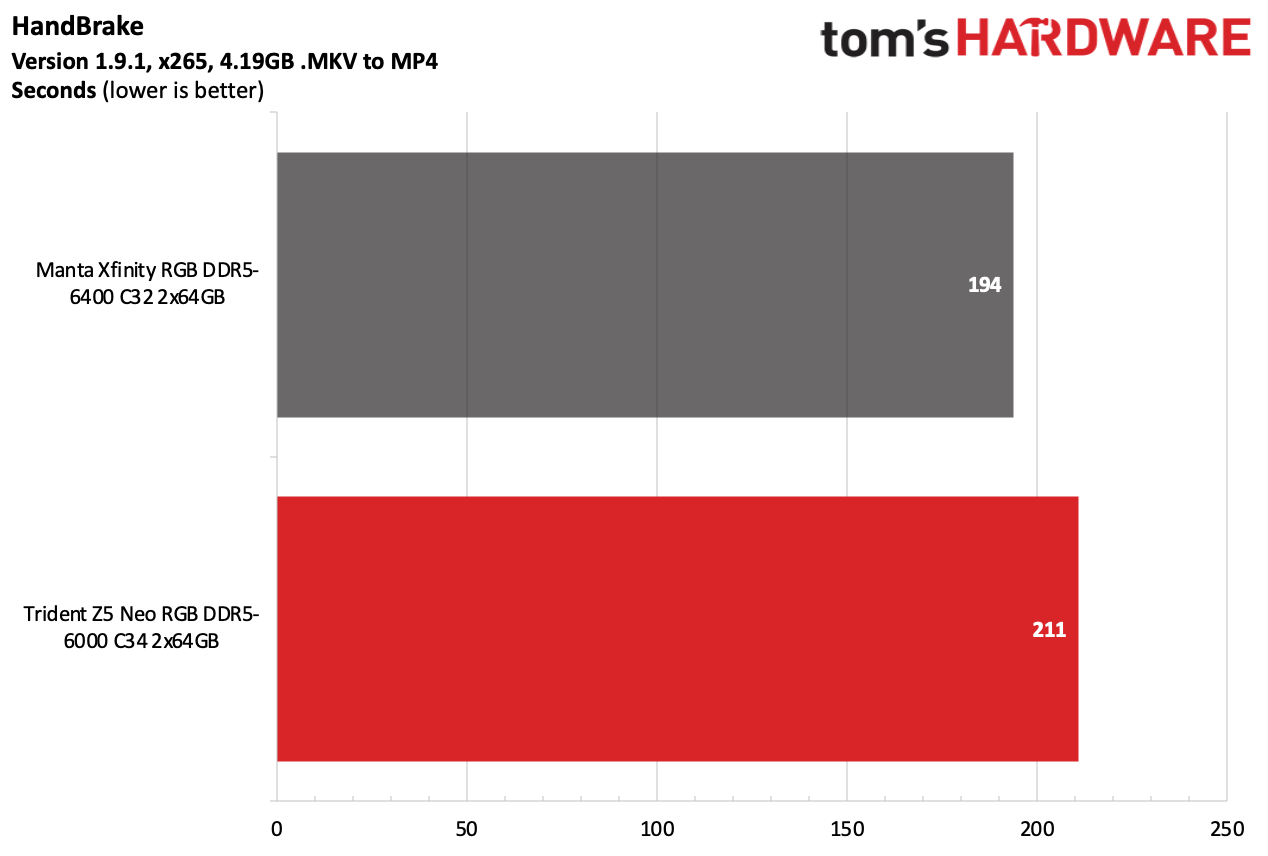
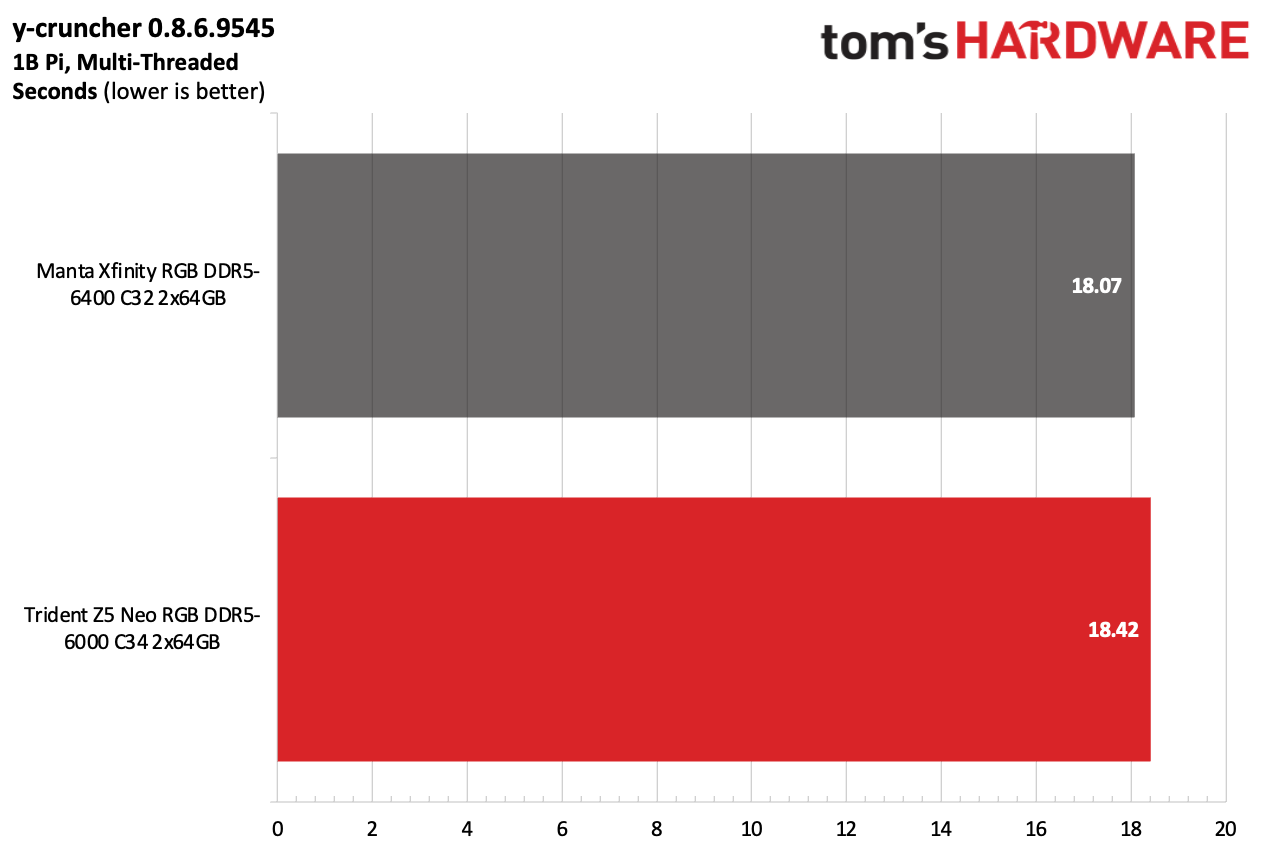
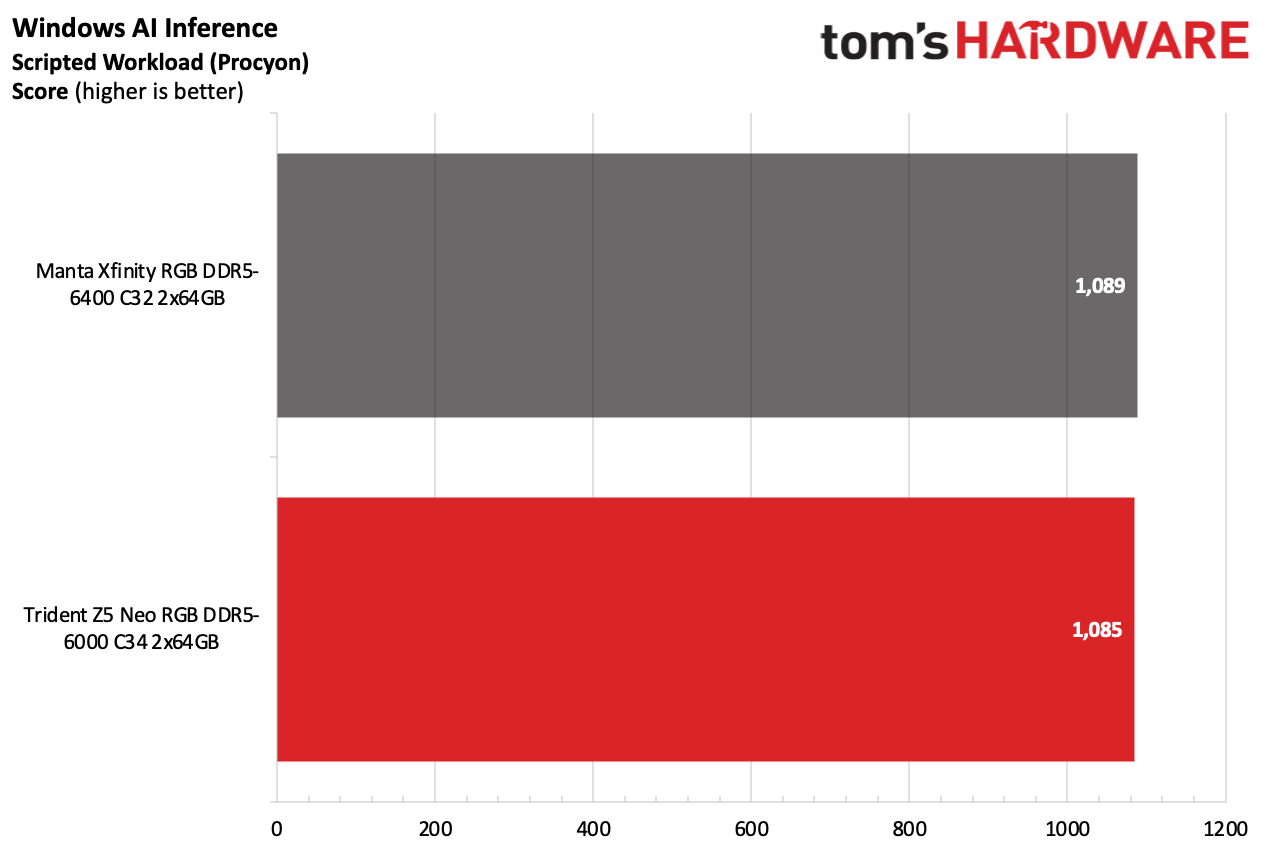
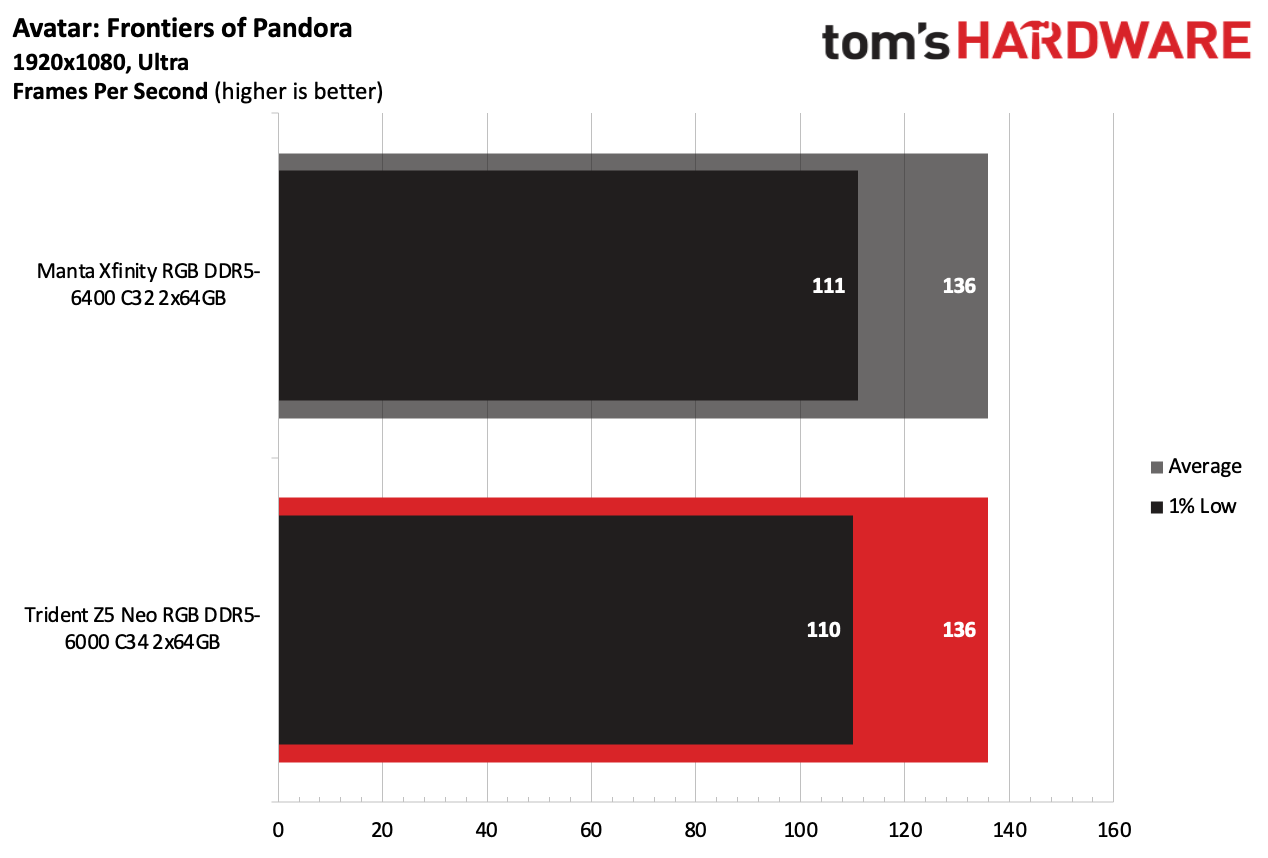
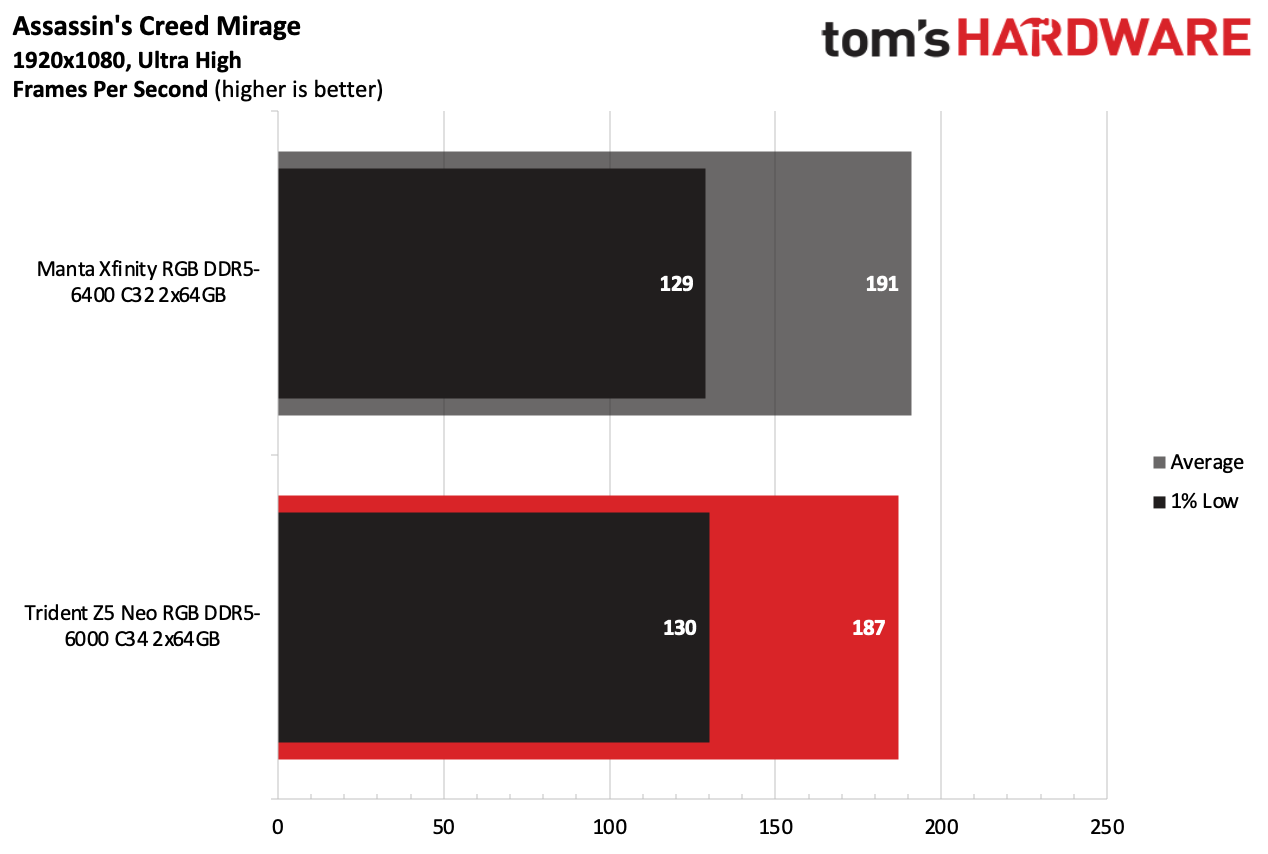
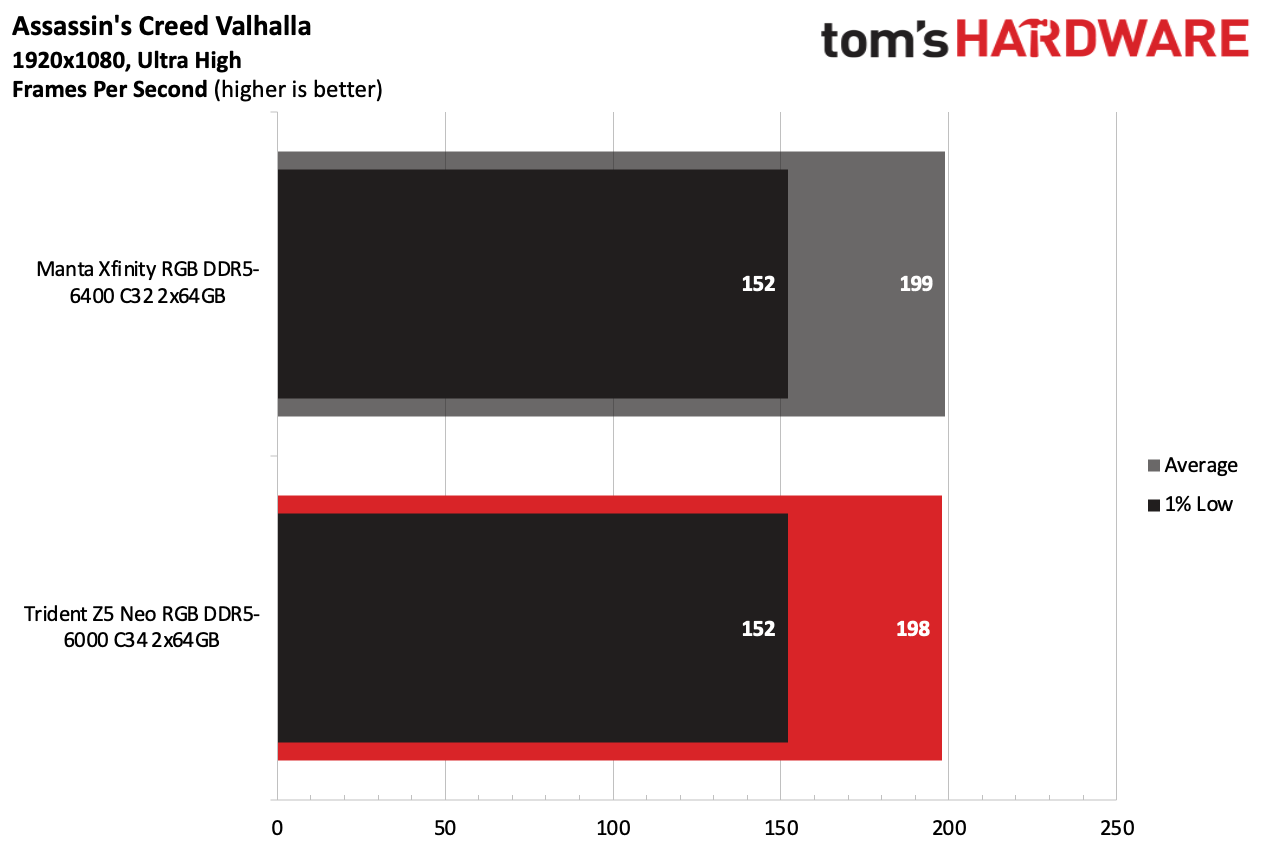
Thanks to its higher data rate and optimized timings, the Manta XFinity memory kit outperformed the Trident Z5 Neo in the majority of the scenarios. However, the Trident Z5 Neo edged ahead in the Adobe Lightroom benchmark. It shows that performance can vary depending on the workload.
AMD Performance
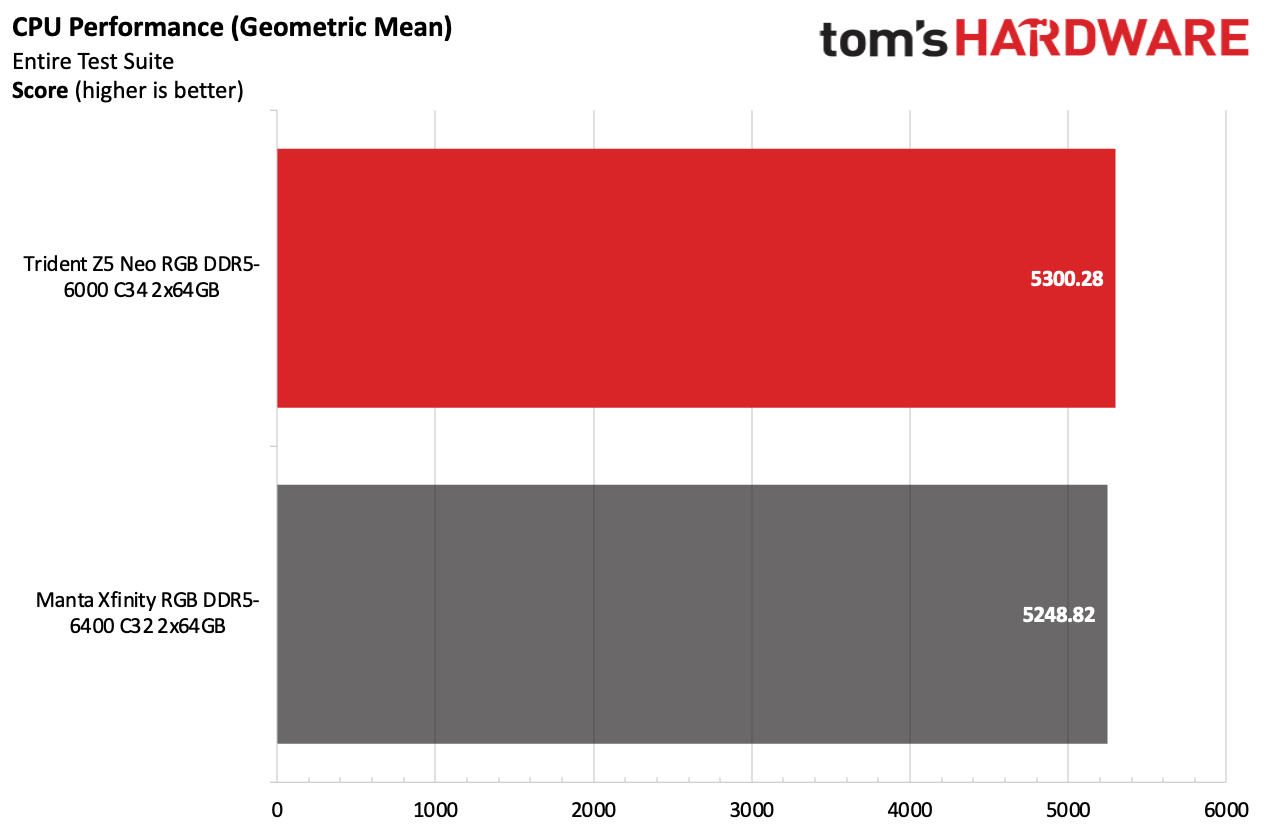
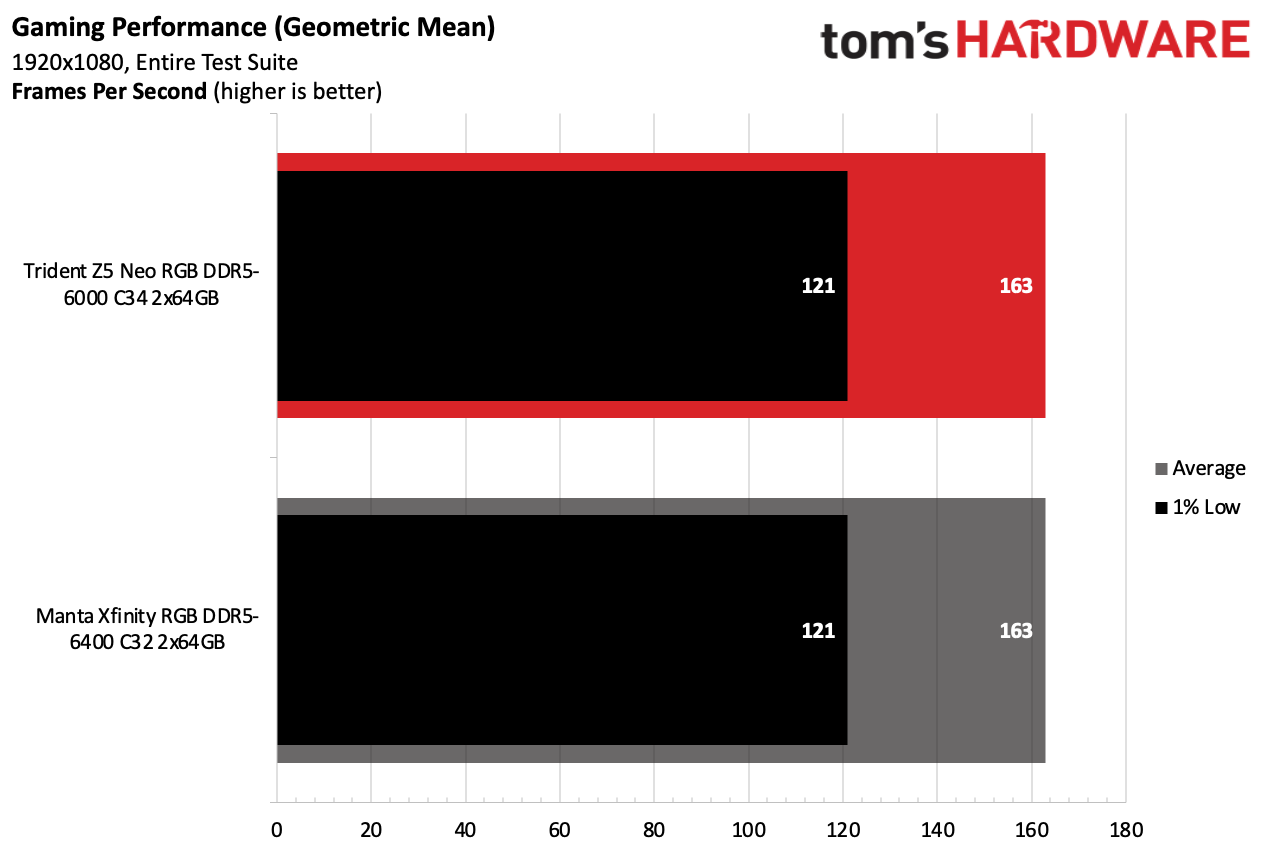
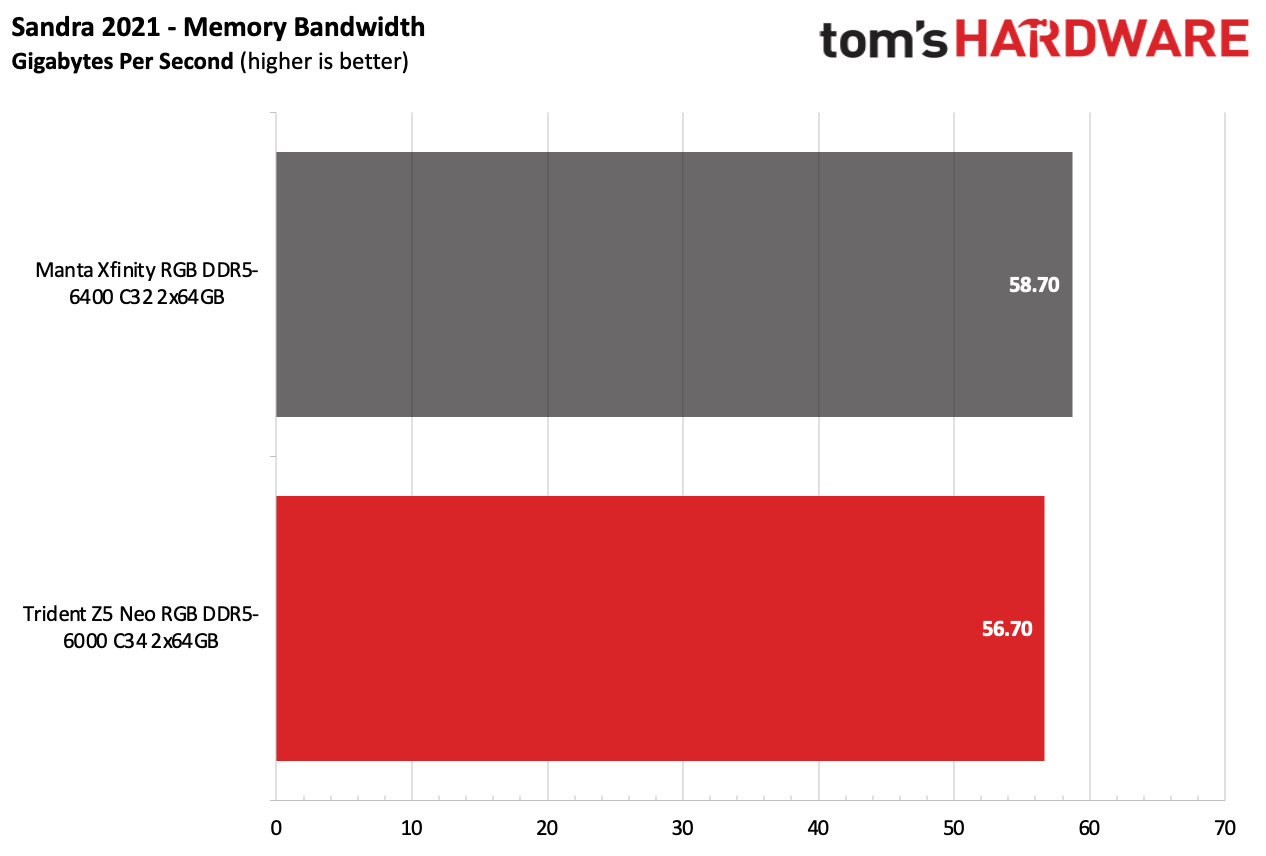
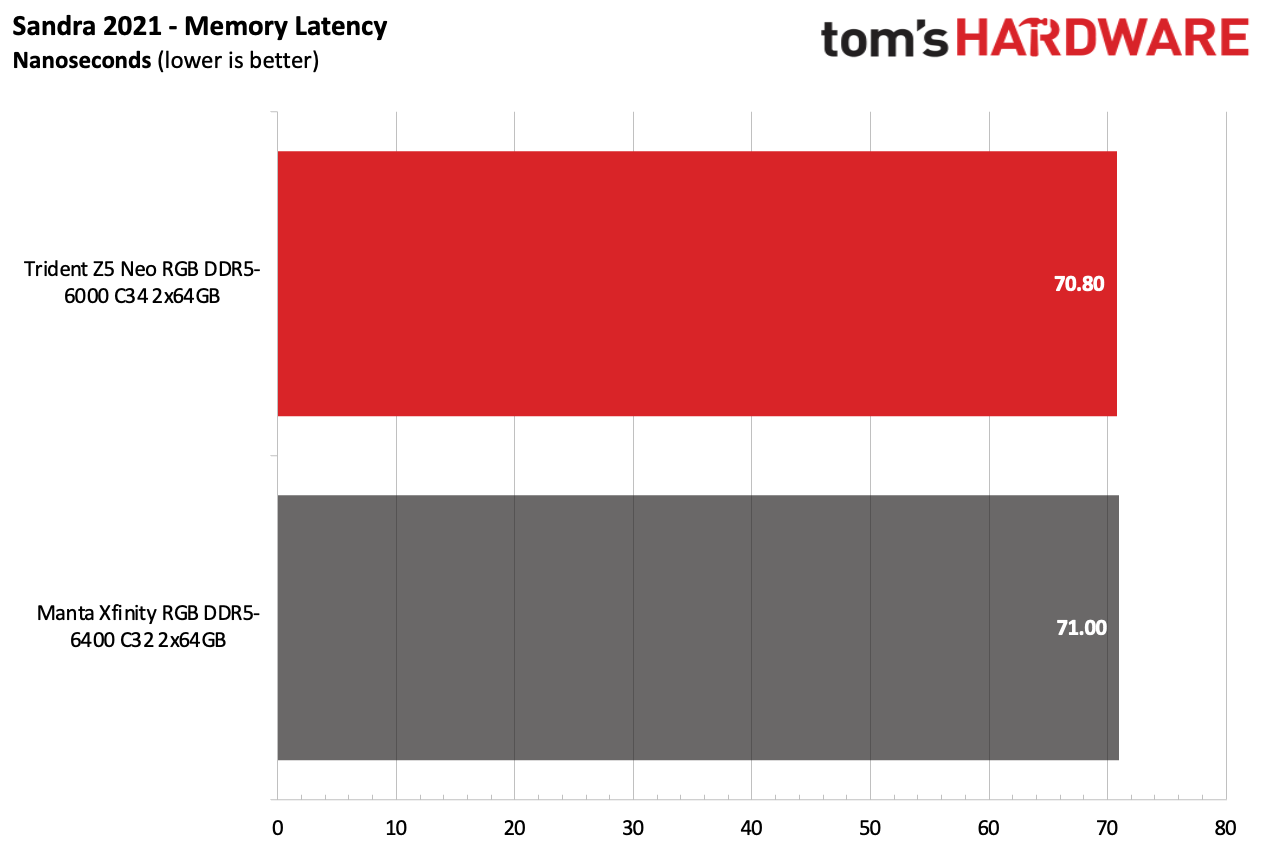
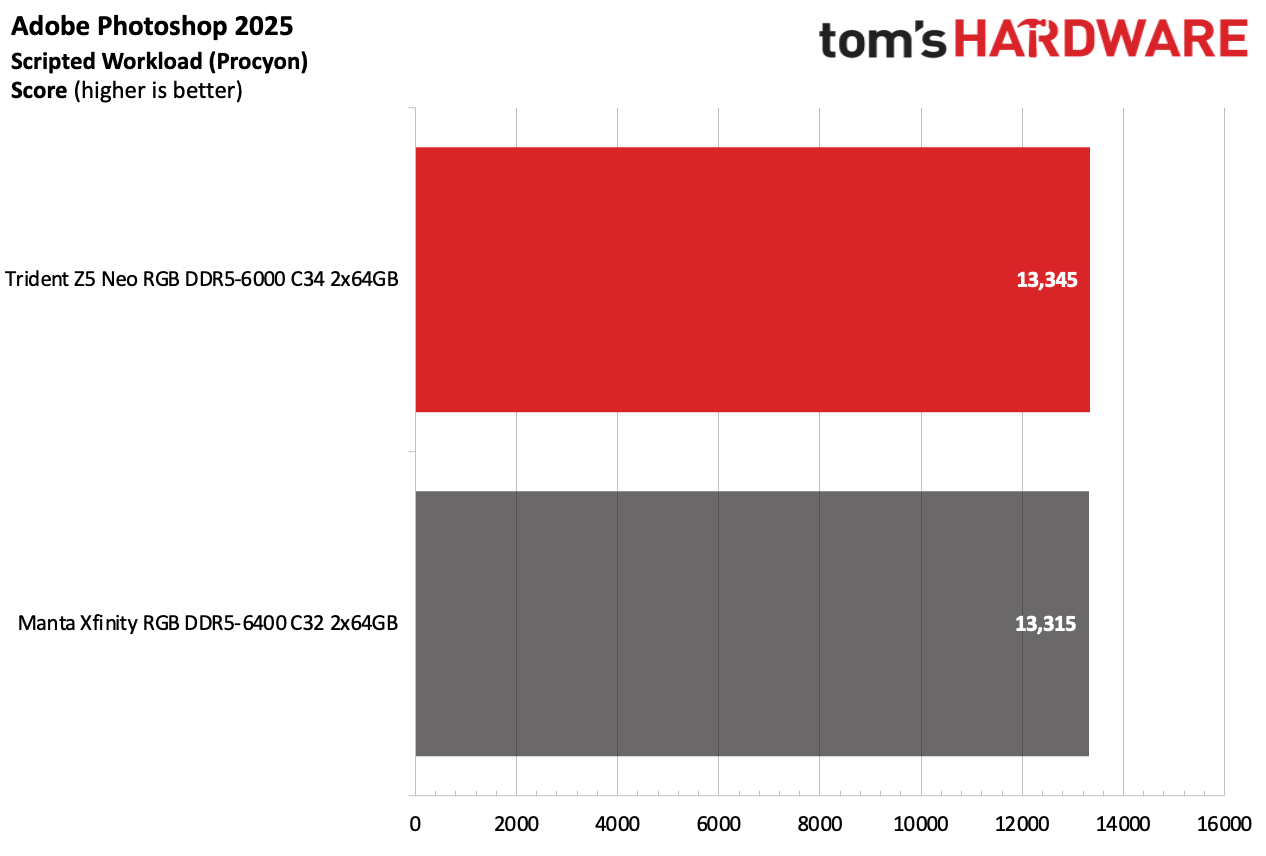
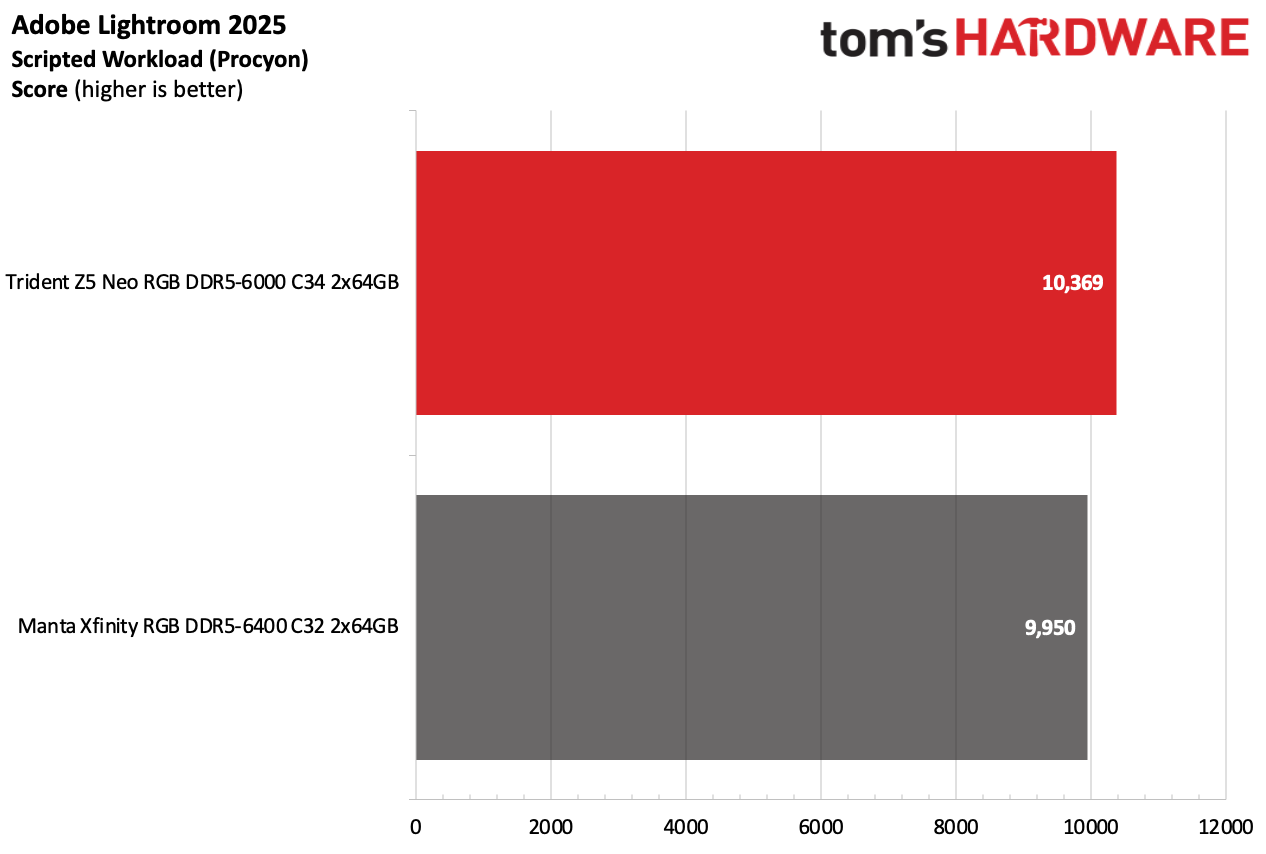
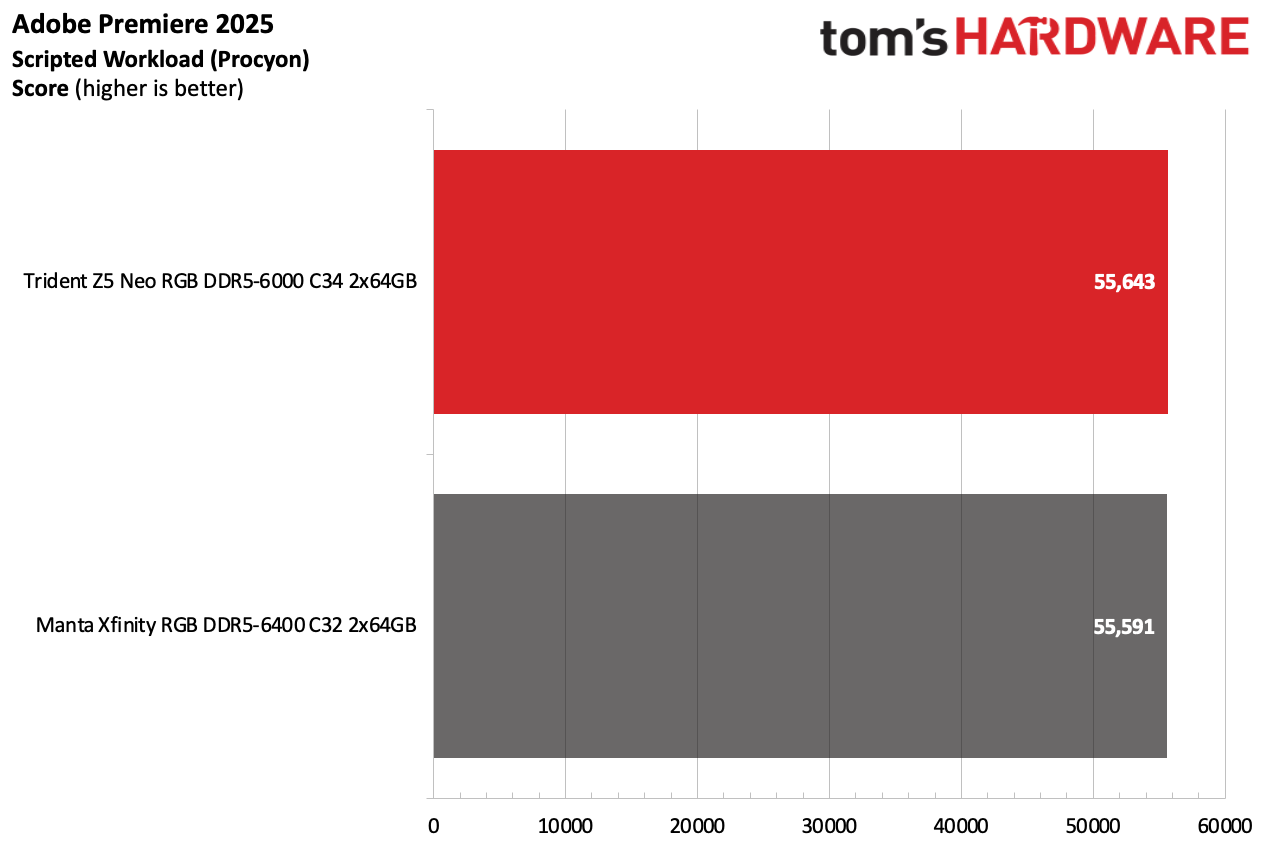
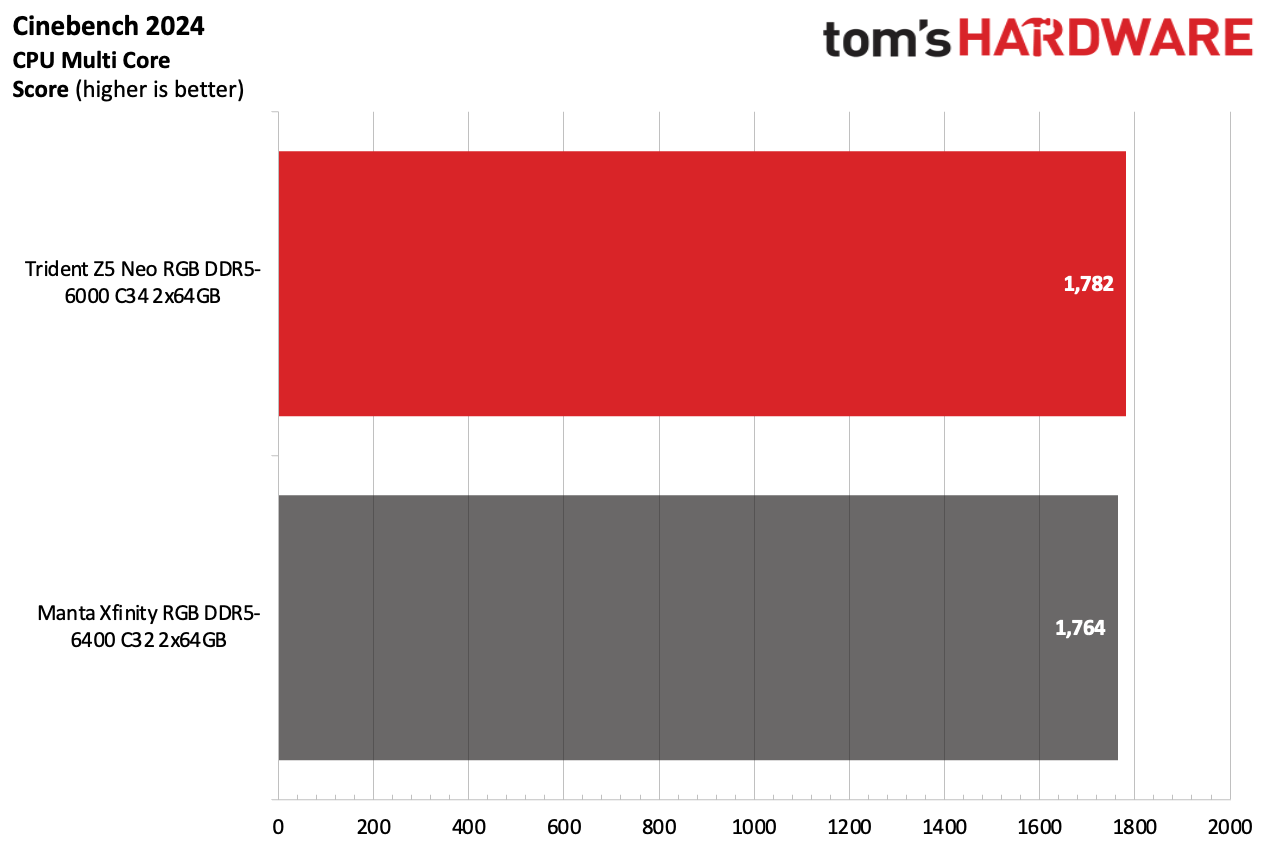
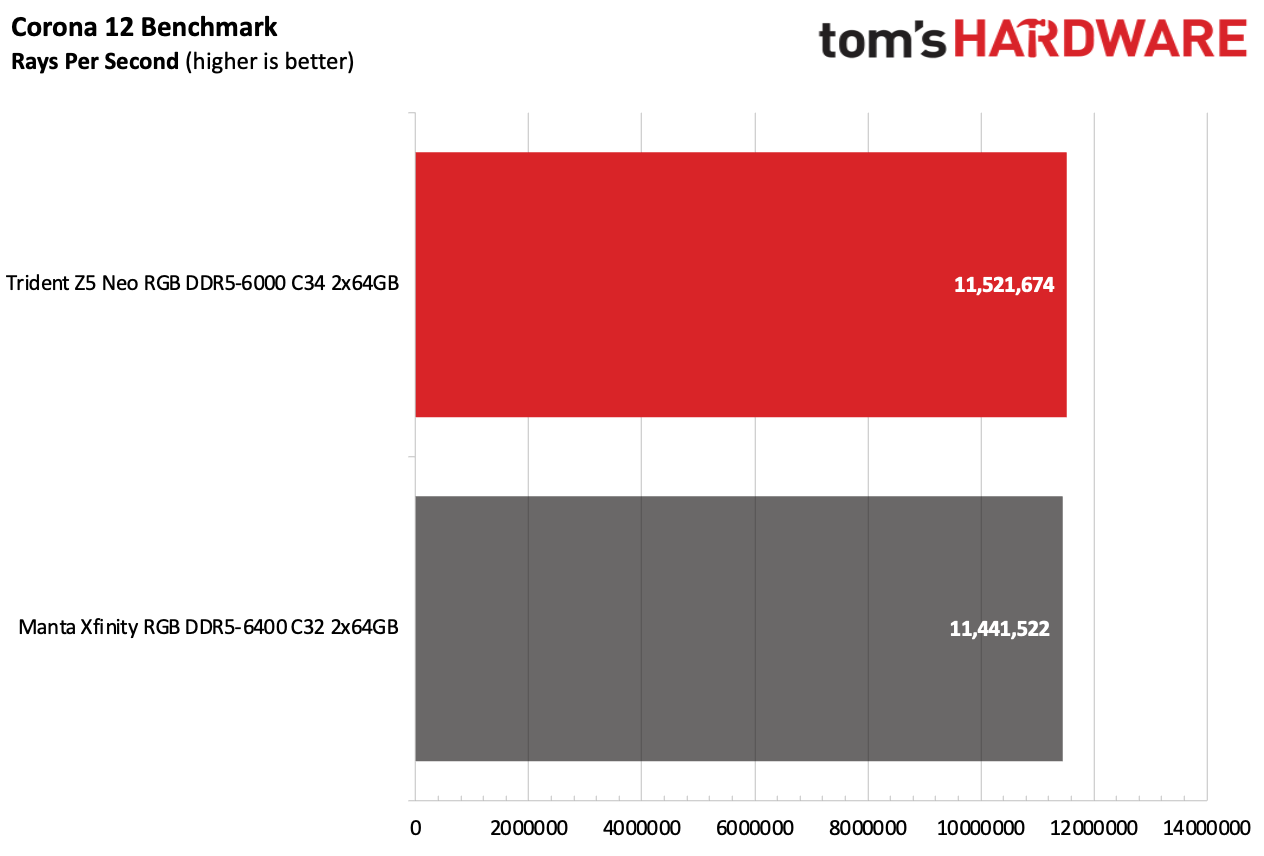
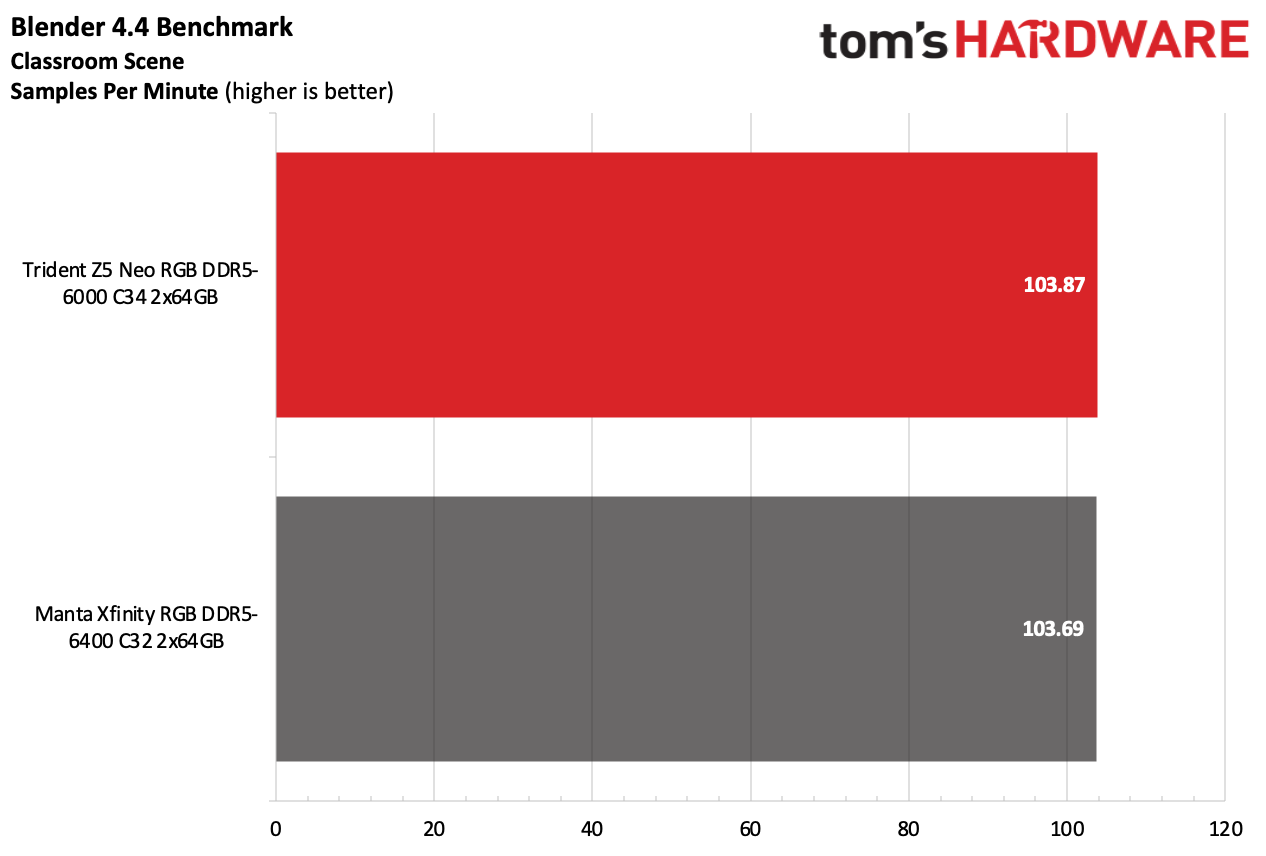
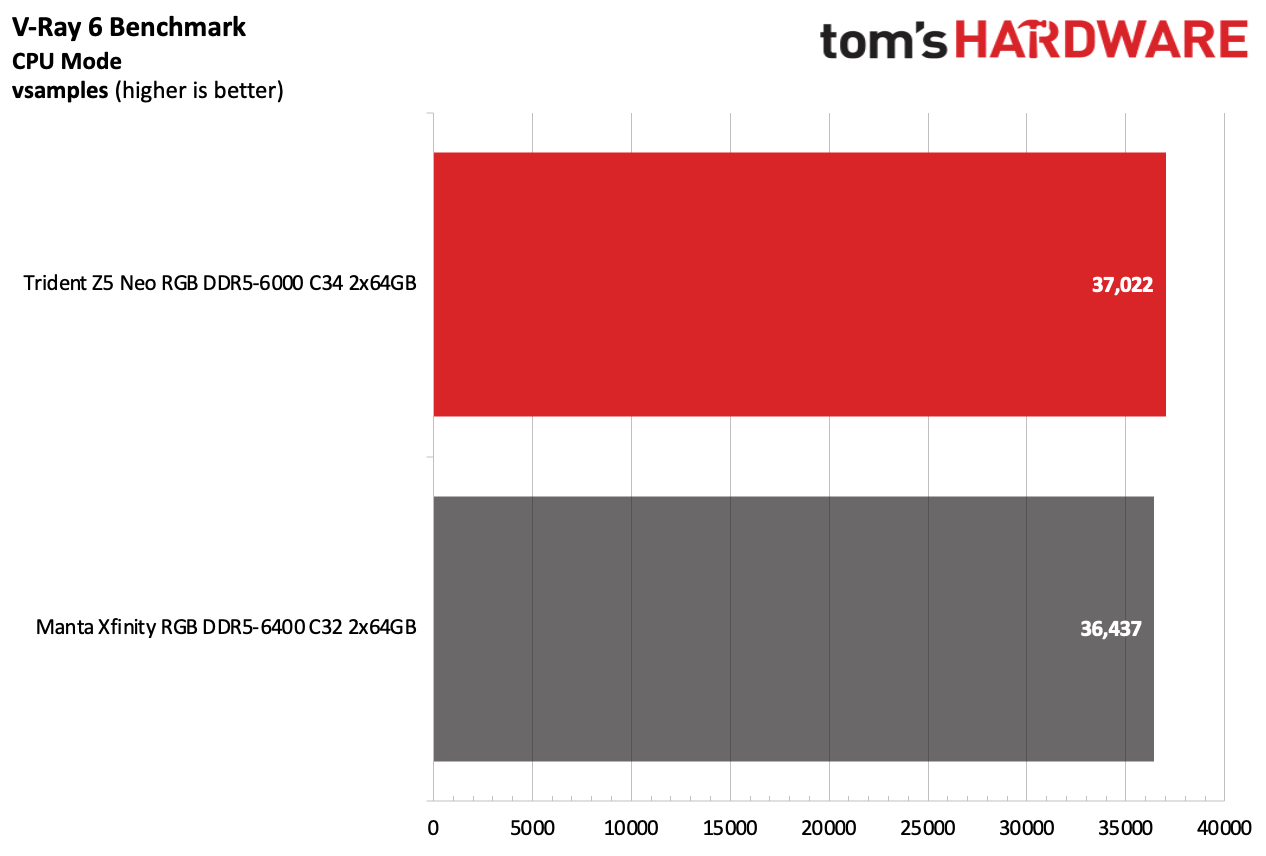
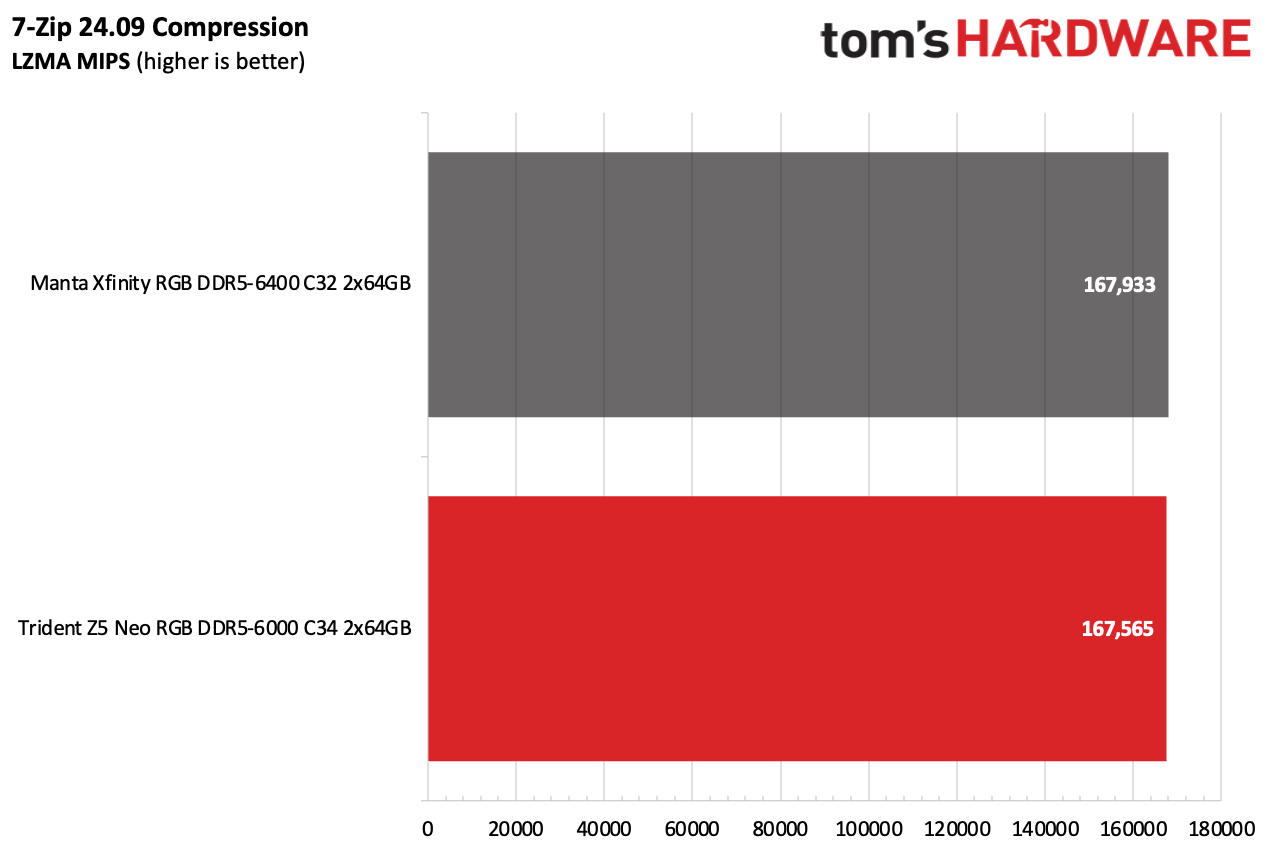
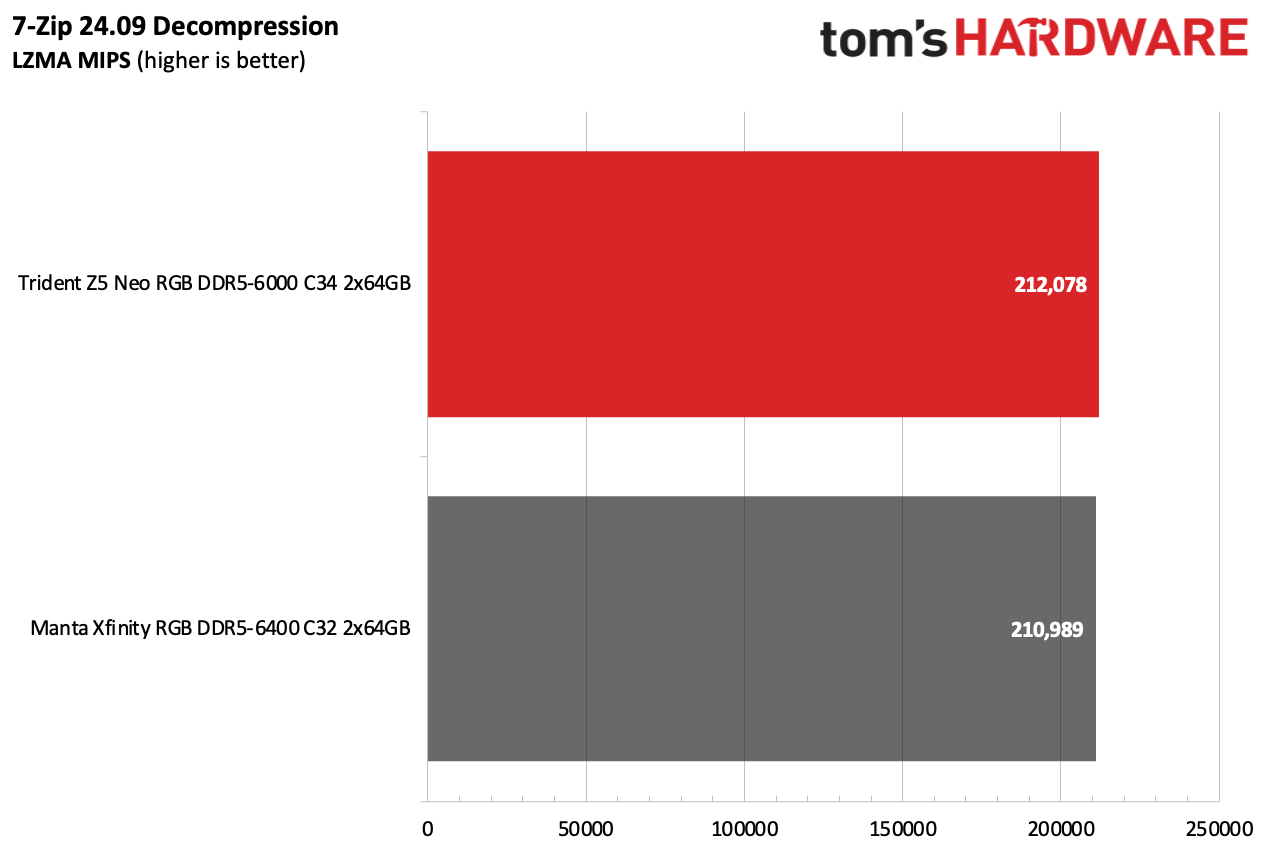
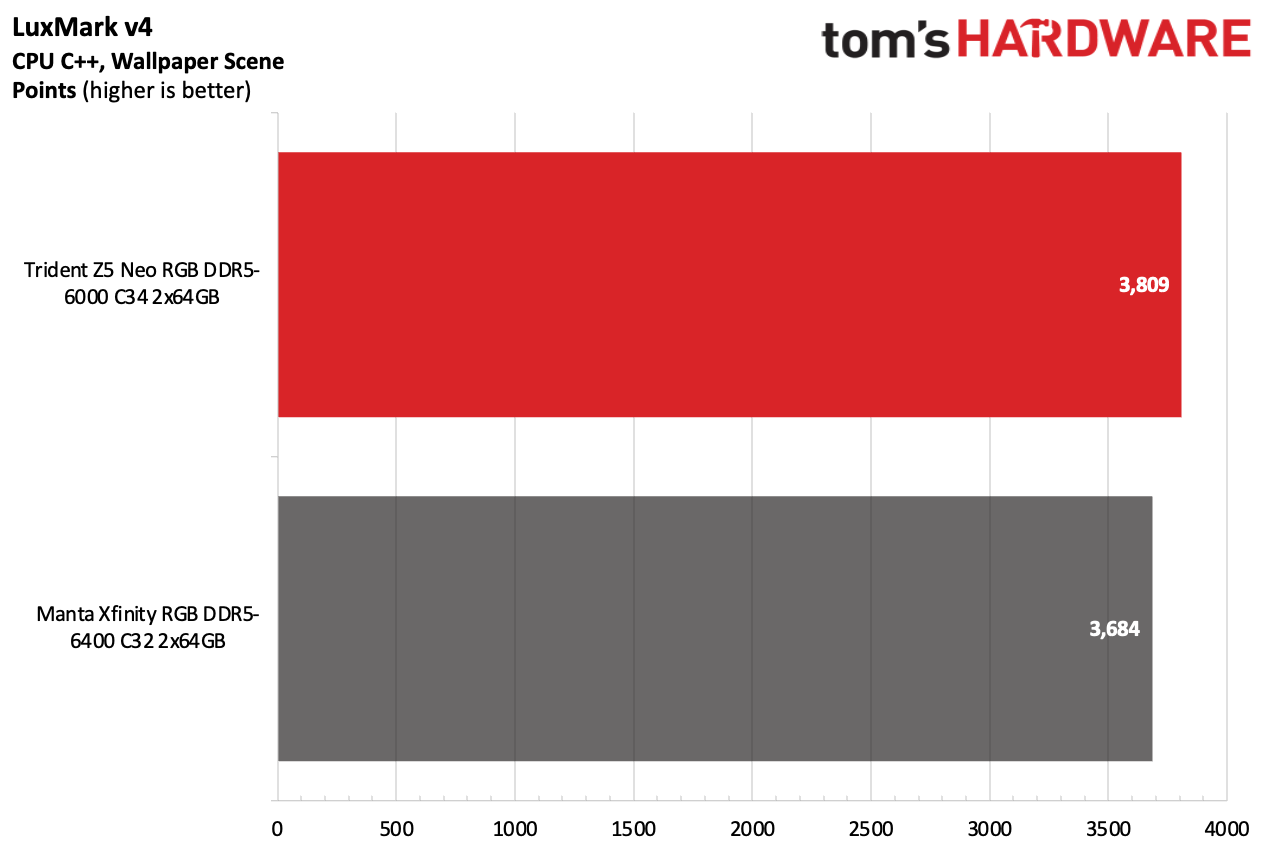
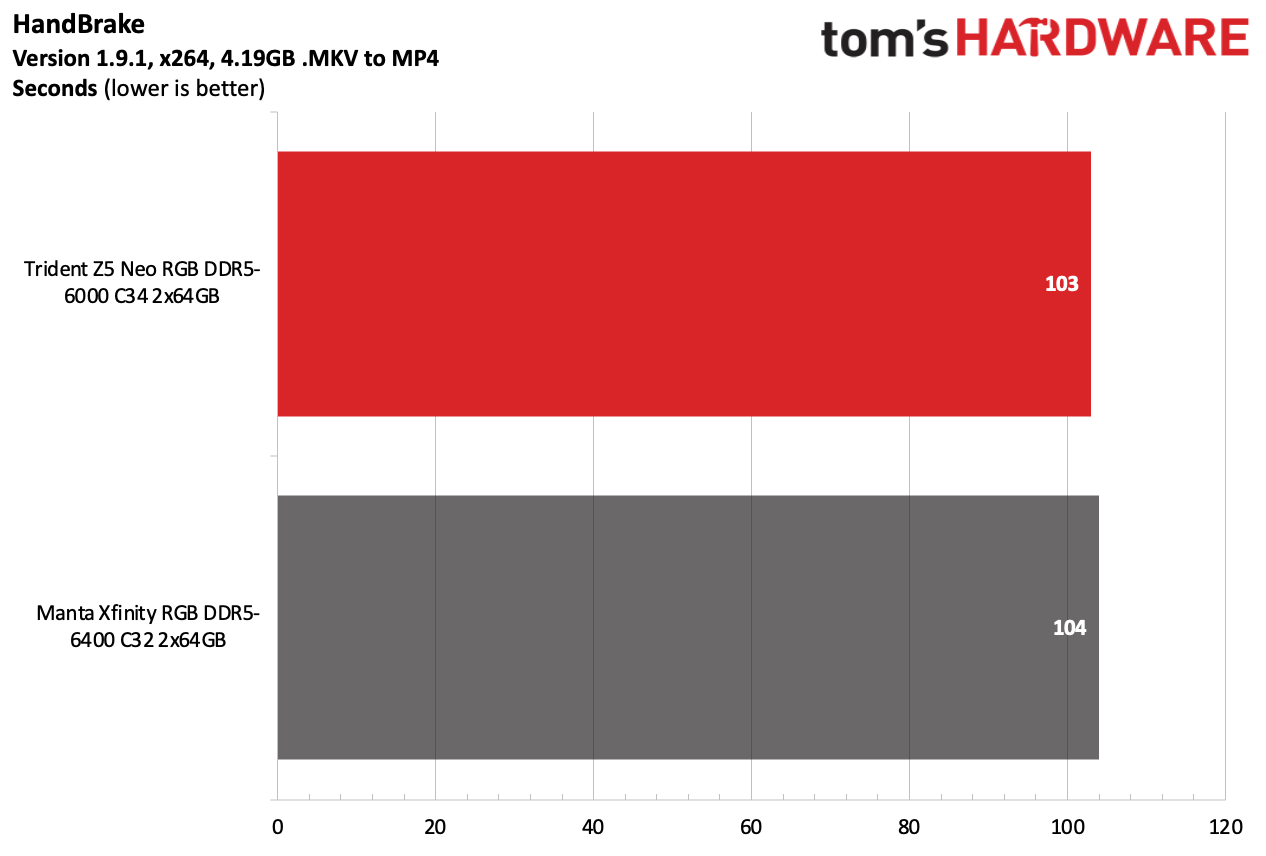
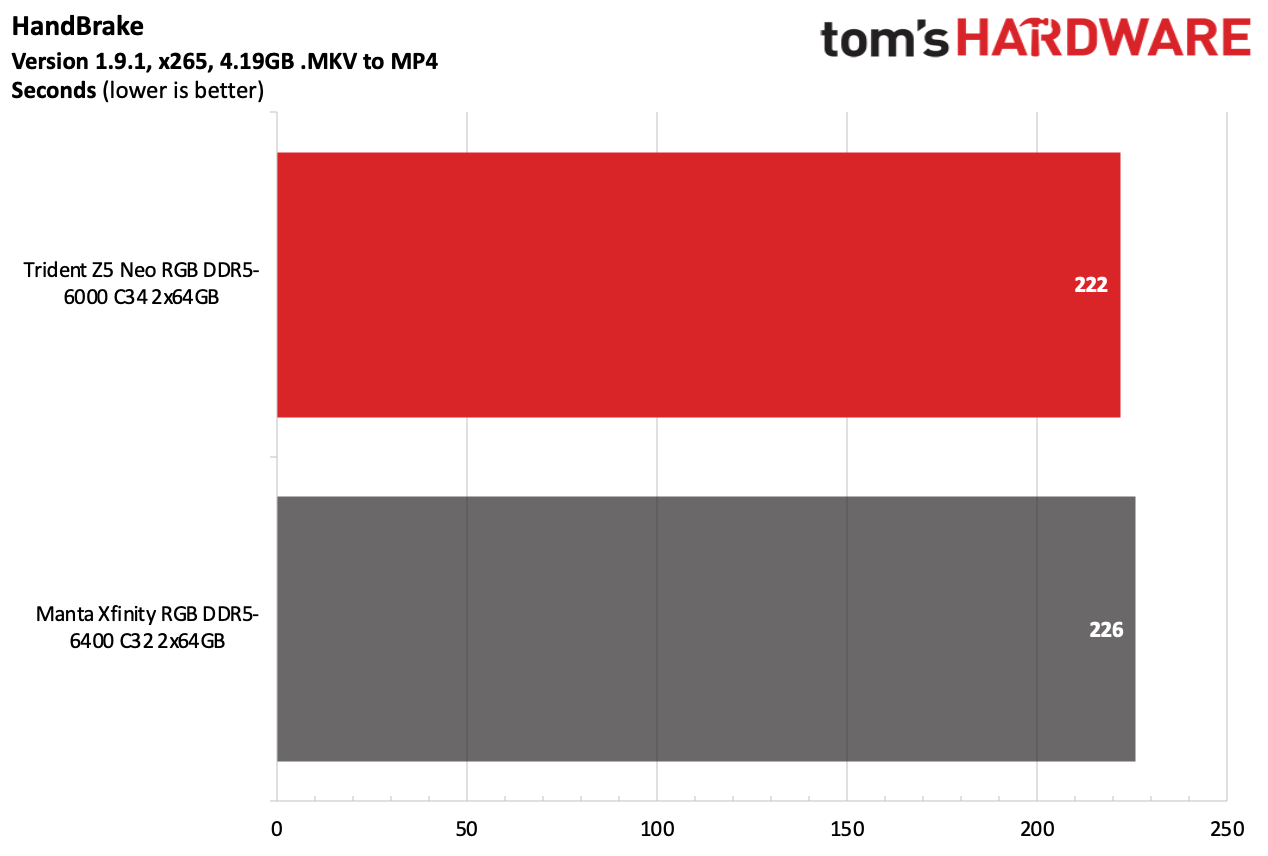
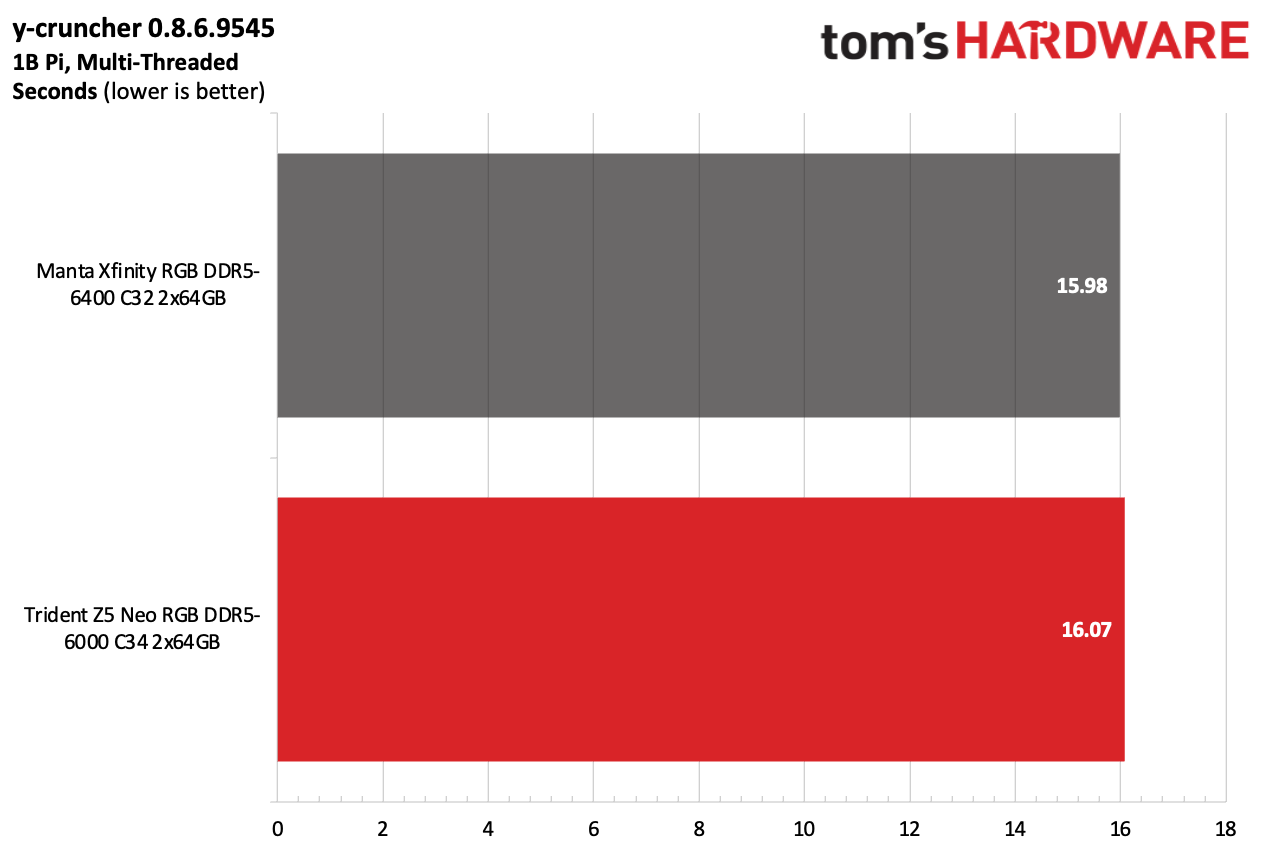
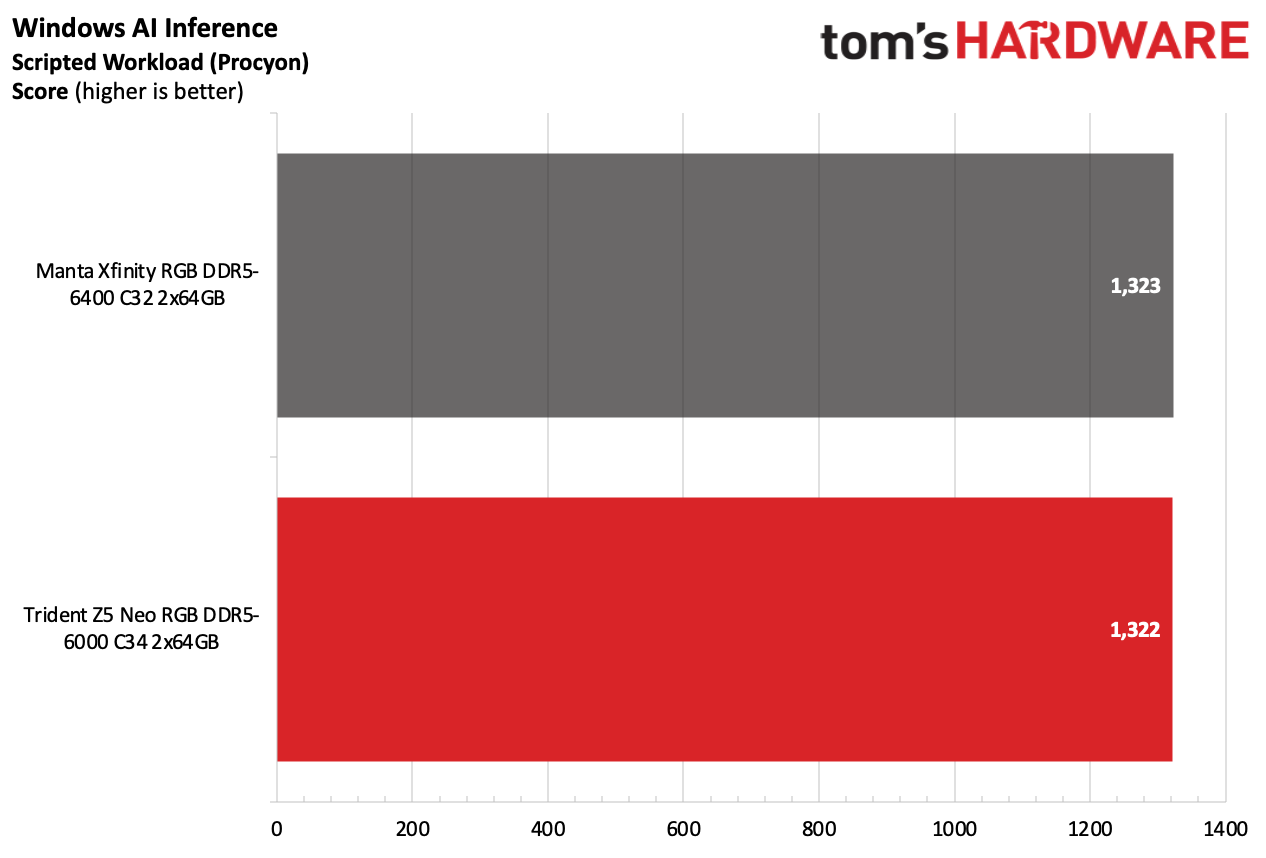
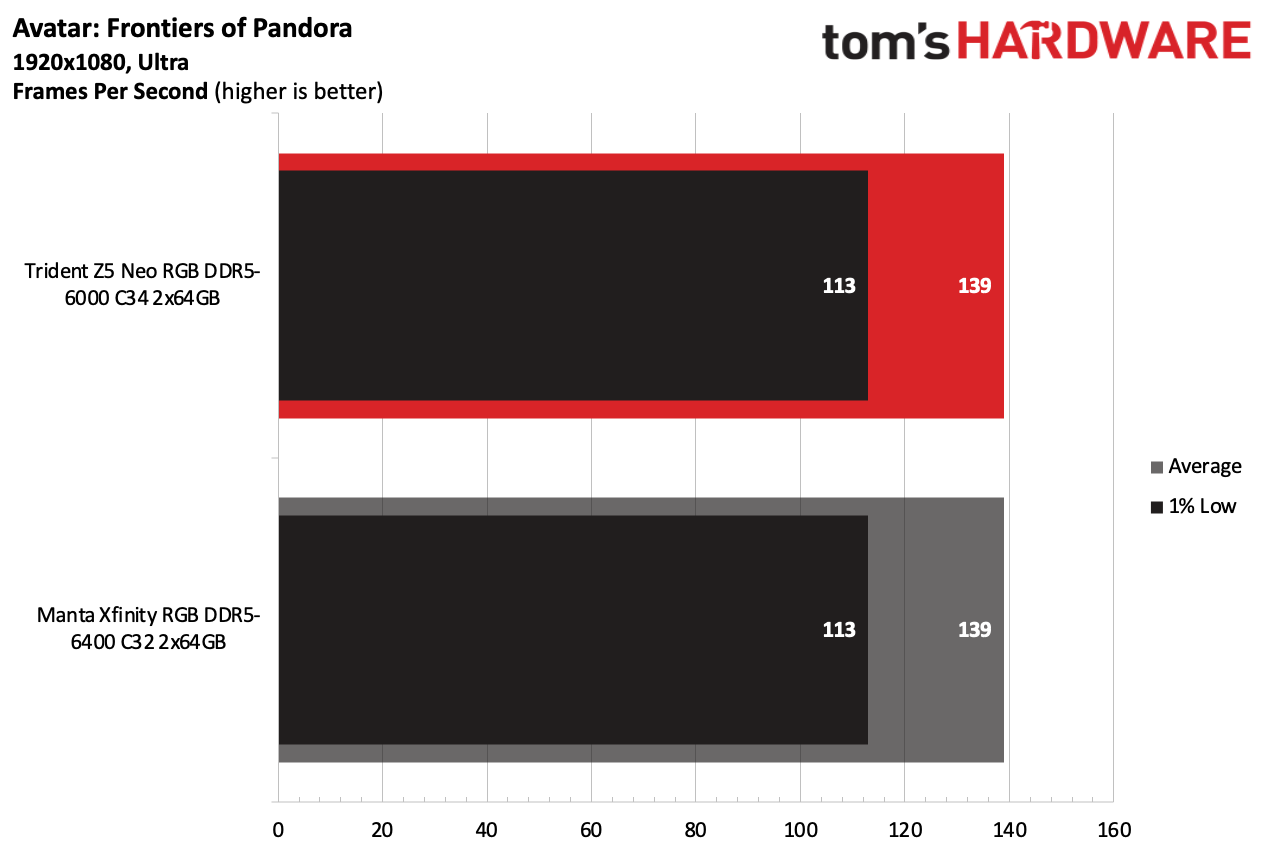
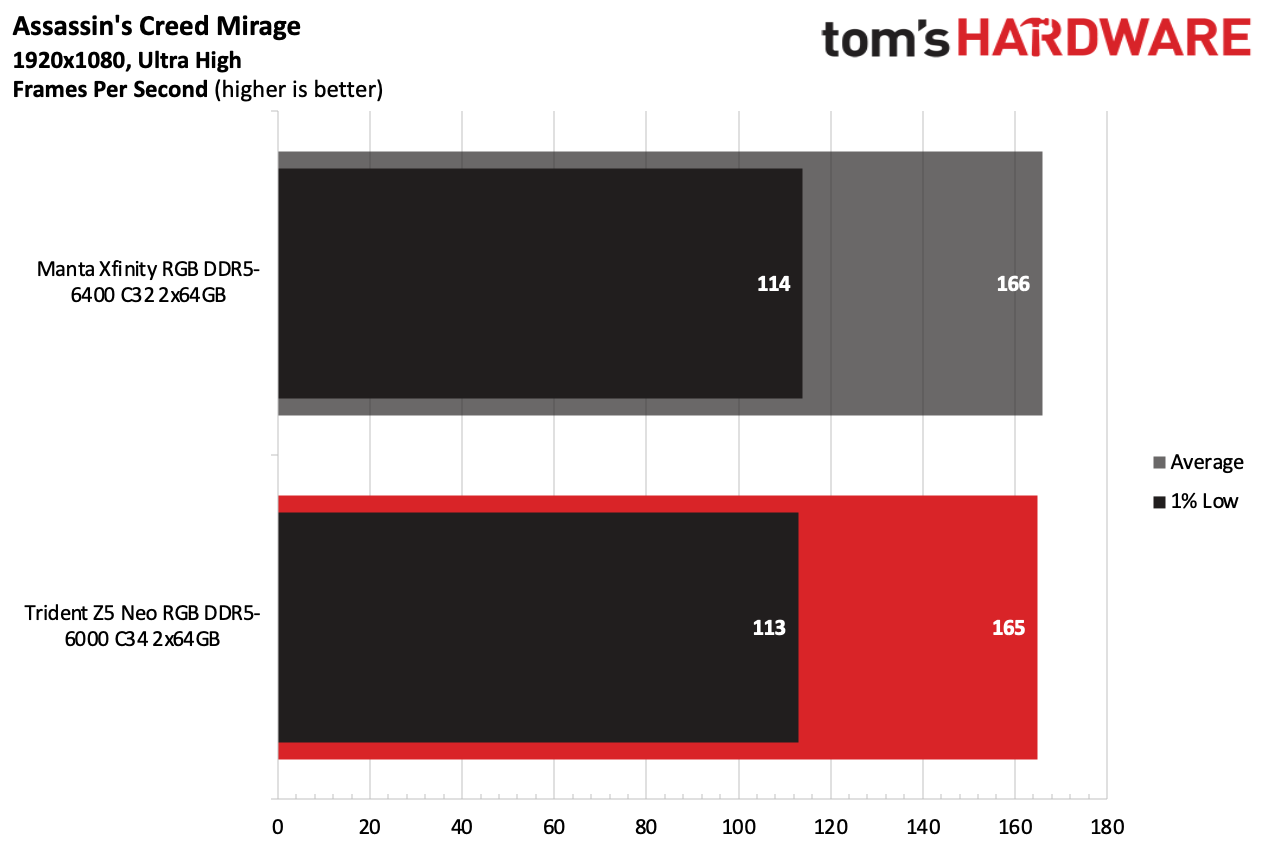
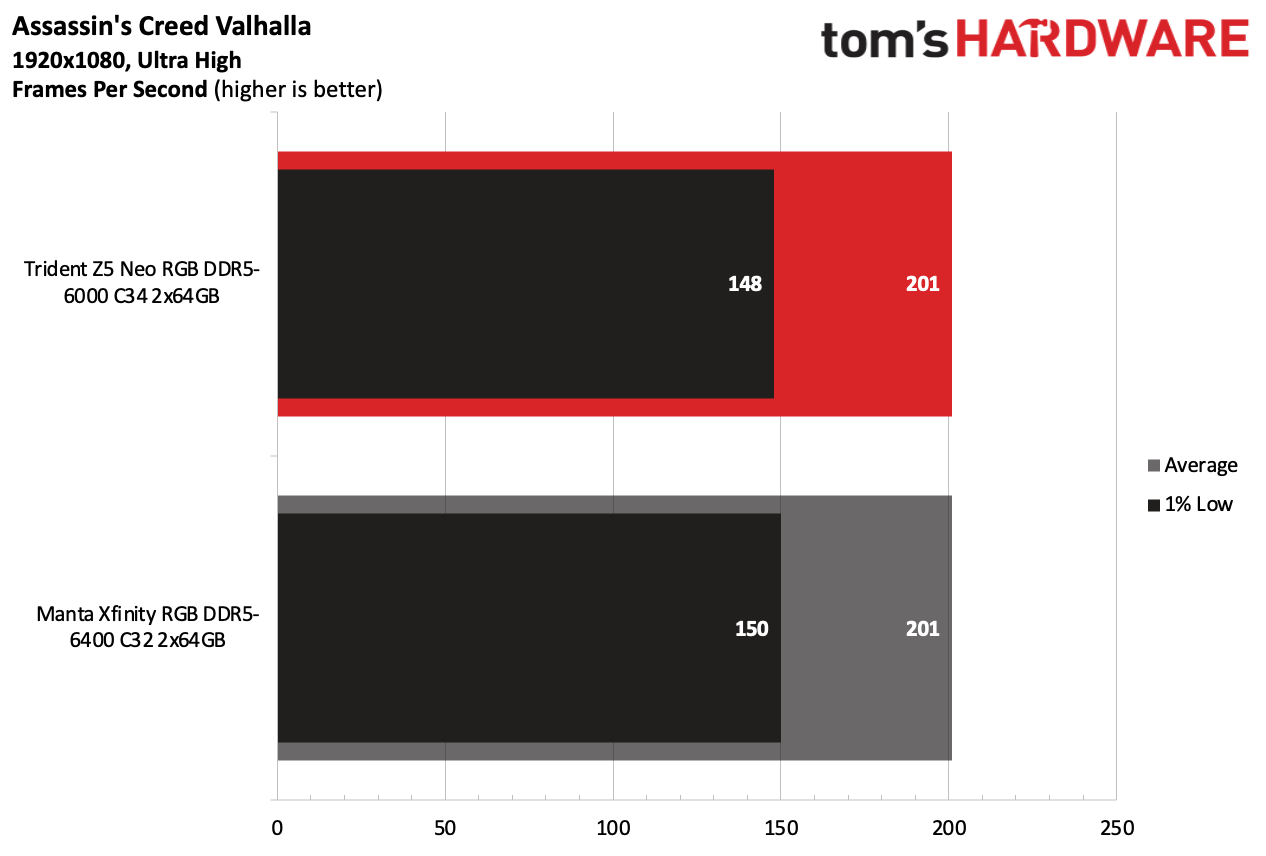
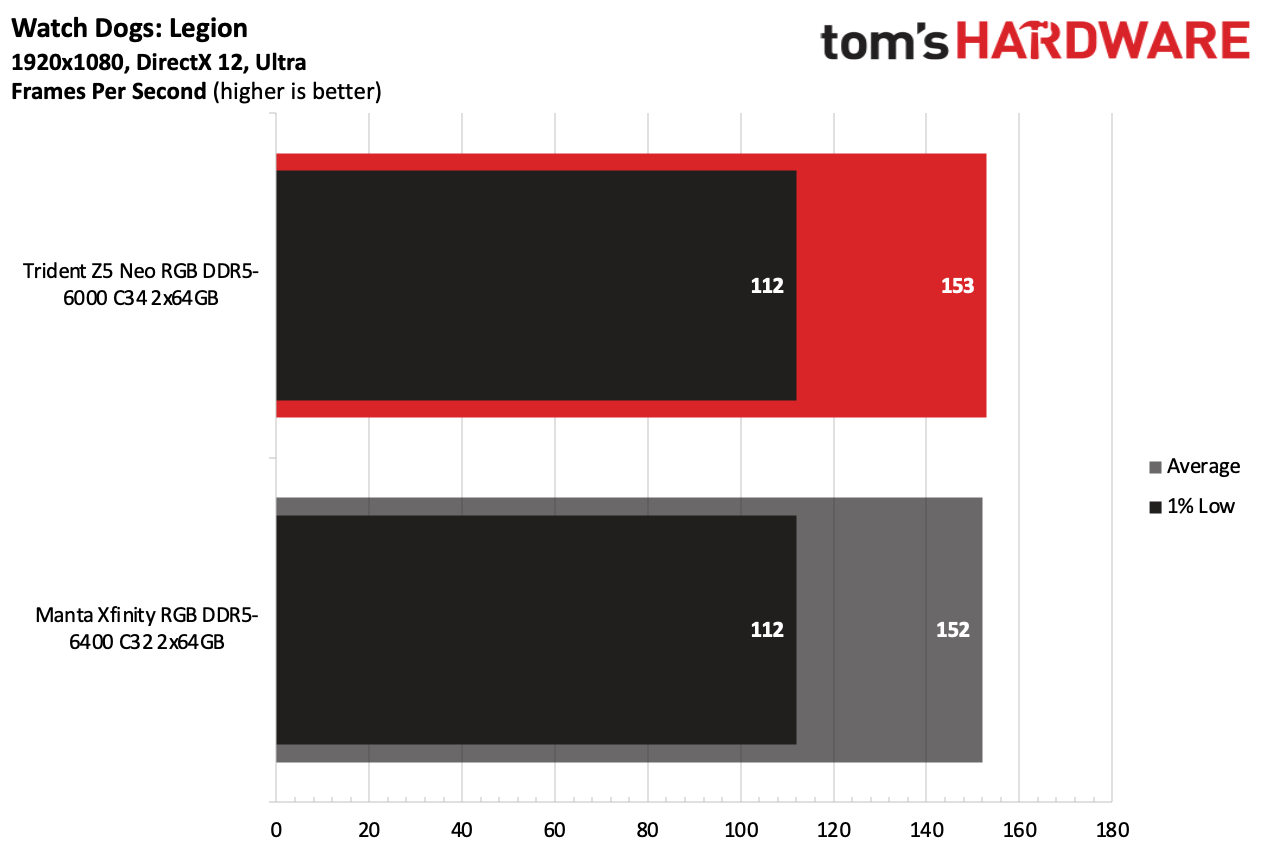
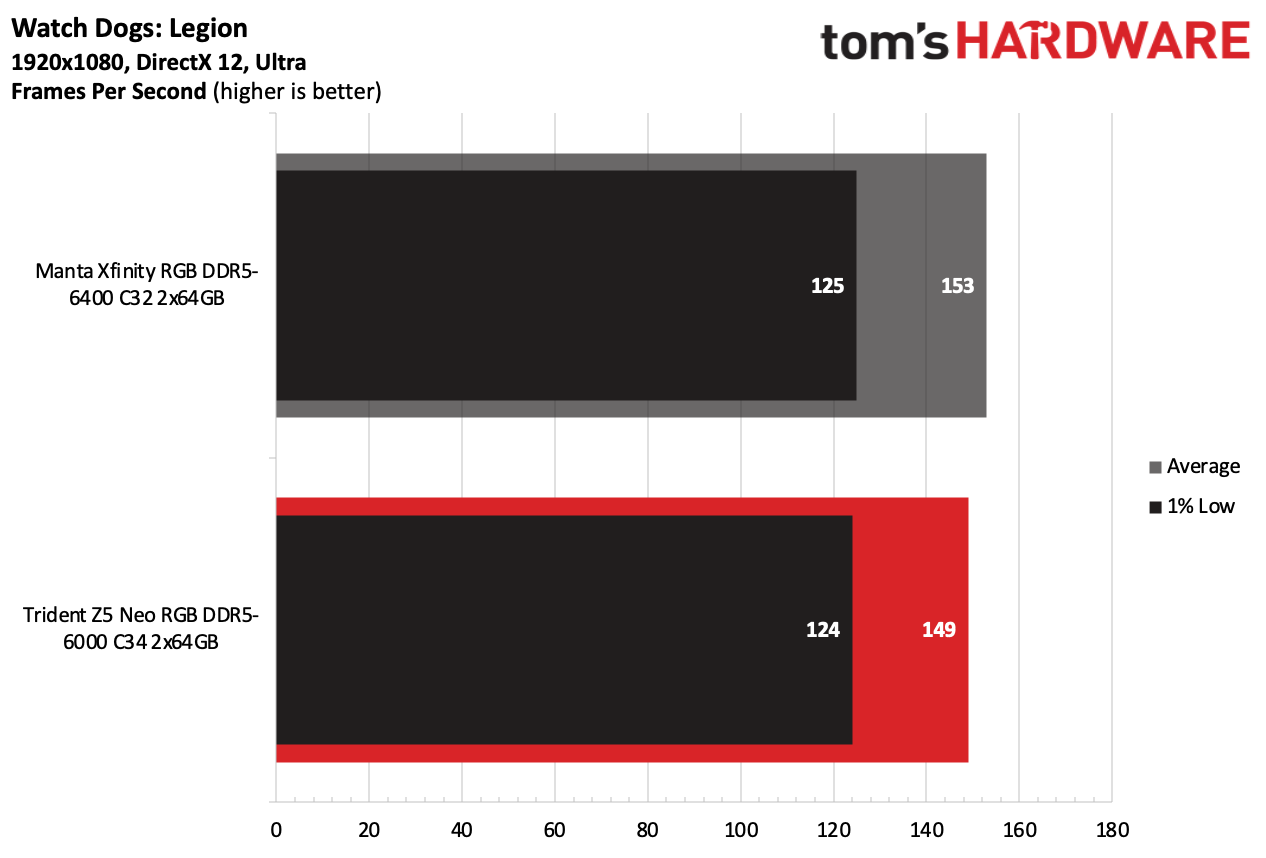
On the AMD platform, the Ryzen processor’s integrated memory controller (IMC) determines whether the unified memory controller clock (UCLK) and memory clock (MEMCLK) can run in a 1:1 ratio with memory above DDR5-6000. With our Ryzen 9 9900X, DDR5-6400 forces a 2:1 ratio, which imposes a performance penalty on the Manta XFinity. That's the reason why the Trident Z5 Neo came out on top.
Overclocking and Latency Tuning
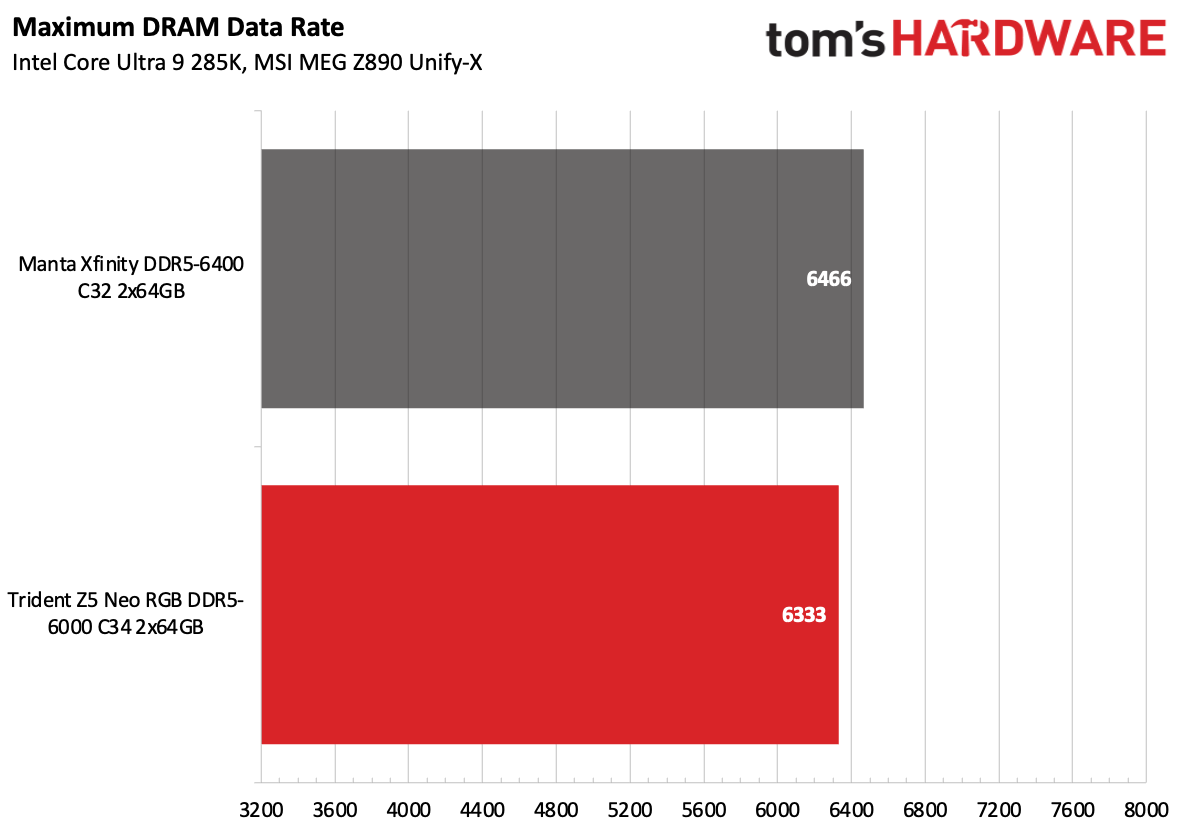
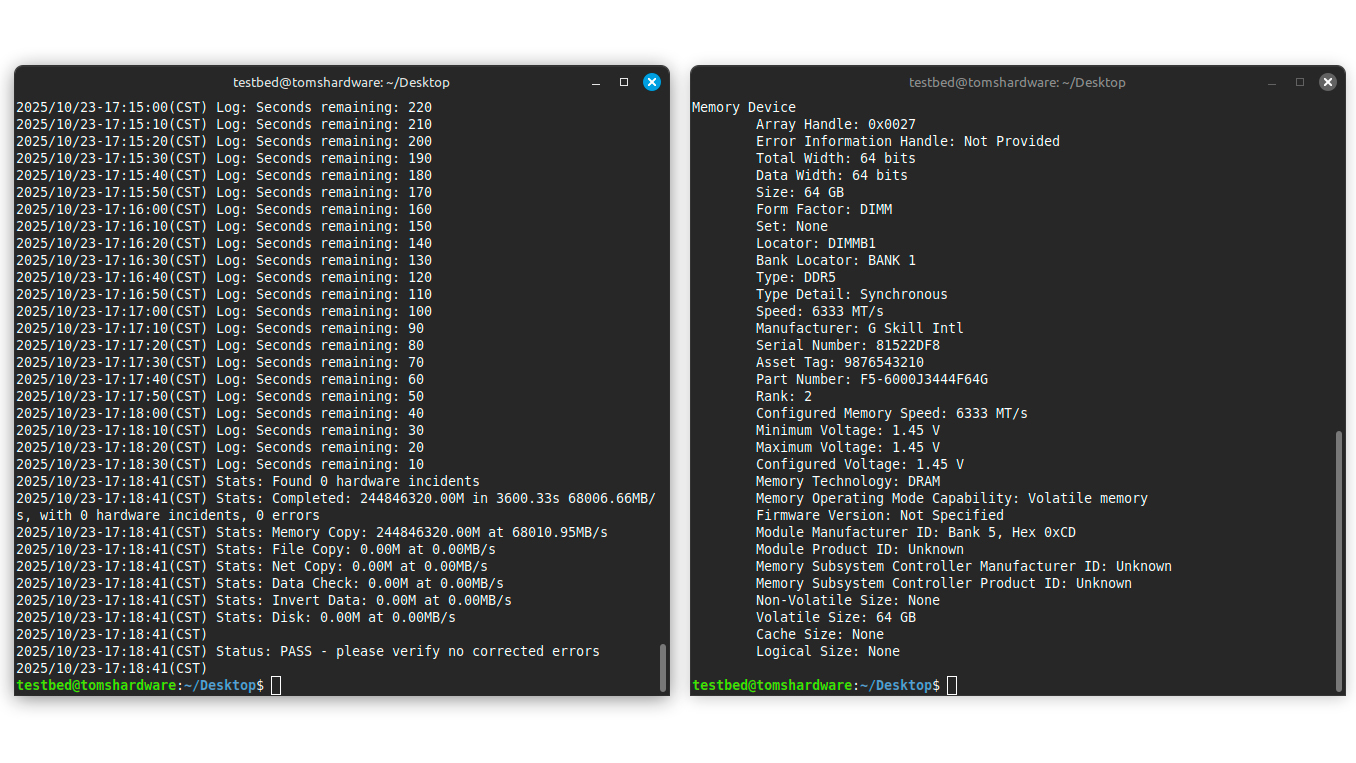
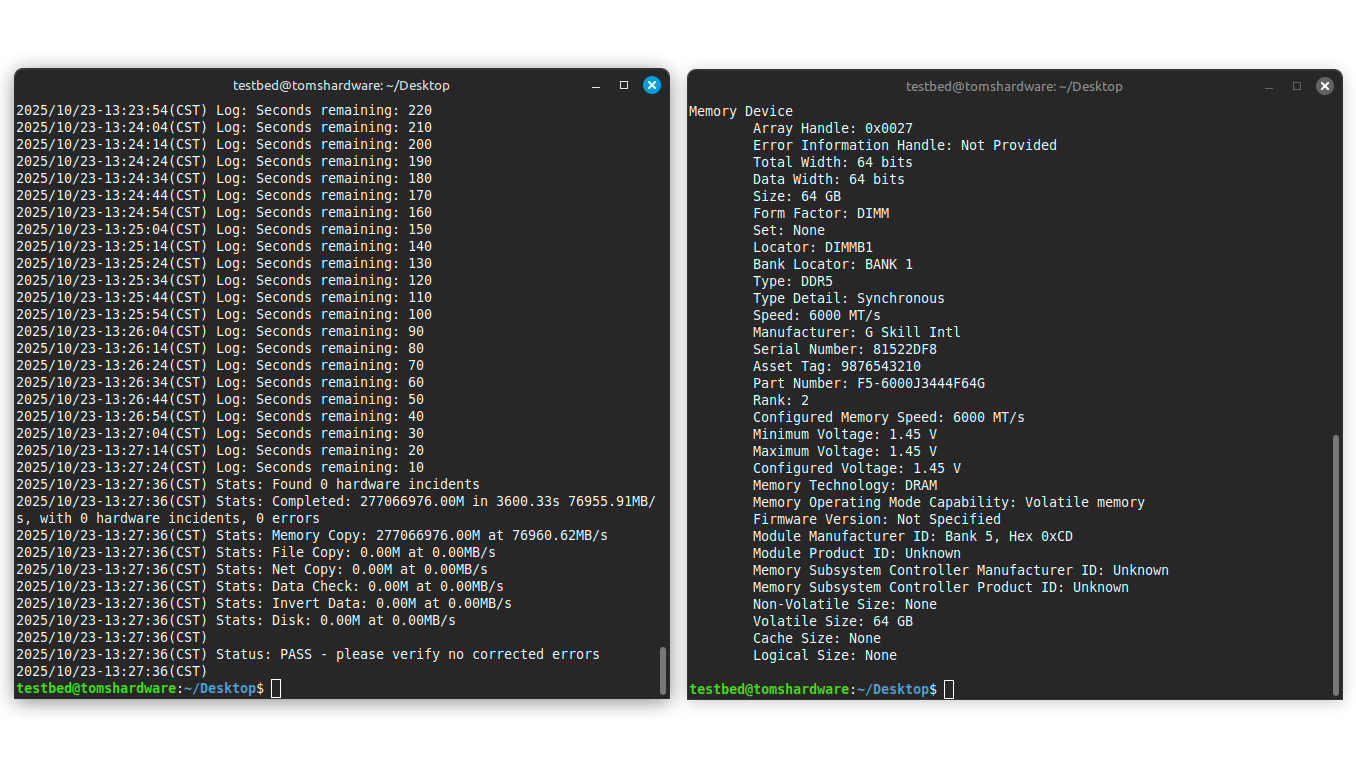
Sometimes you already know how an overclock will likely turn out, but it’s still fun to push memory beyond the manufacturer’s specifications.
On this occasion, we overclocked the memory from DDR5-6000 to DDR5-6333 while maintaining the memory timings at 34-44-44-96, with DRAM voltage increased from 1.35V to 1.45V. It just goes to show that high-capacity memory modules are difficult to overclock, even when applying substantial voltage.
Lowest Stable Timings
Swipe to scroll horizontally
V-Color Manta XFinity DDR5-6400 C32 | N/A | N/A | 32-44-44-92 | 32-45-45-96 (2T) |
G.Skill Trident Z5 Neo RGB DDR5-6000 C34 | 34-40-40-84 (2T) | 34-44-44-96 (2T) | N/A | N/A |
The CAS Latency (CL) was unlikely to cooperate since G.Skill probably binned it to the limit. The other timings, however, responded well with 1.45V applied. We managed to decrease the tRCD and tRP by four clock cycles and the tRAS by 12 clock cycles, a solid result overall.
Bottom Line
From a compatibility standpoint, DDR5-6000 is more likely to run perfectly on AMD’s platform without any performance penalty than DDR5-6400. That’s why many budget-conscious buyers choose DDR5-6000, and it’s where the Trident Z5 Neo RGB DDR5-6000 C34 excels. G.Skill’s memory kit delivers the complete package: beautiful aesthetics, good performance, and more than generous capacity. It’s just a victim of the unfortunate circumstances of a global memory shortage that is pushing up pricing.
The Trident Z5 Neo RGB DDR5-6000 C34 launched with a $419.99 MSRP just a couple of months ago. Fast forward to today, in the middle of a global DRAM shortage, and the price tag has skyrocketed to $1,599.99. On the bright side, Newegg generously includes a $50 Starbucks gift card so you can “drink coffee while you game.” Jokes aside, the Trident Z5 Neo RGB DDR5-6000 C34 is an excellent memory kit that’s worth every dollar once pricing stabilizes.






 English (US) ·