It's World Quantum Day 2026 – a day for demystifying and raising awareness of quantum science.
If you'd like an explanation of quantum theory, then head over Wikipedia, and good luck to you.
For our part on TechRadar, we'd like to raise awareness for the digital security aspect of quantum computing, which relies on the application of the same quantum phenomena.
Quantum computers will be able to solve what would normally be tricky mathematical calculations in the blink of an eye. That's bad news for cryptography, with quantum computers theoretically then able to make mincemeat of what is currently tough encryption to cut through.
That's one reason why some VPN companies, which rely on encryption to keep user internet traffic data safe, have introduced post-quantum encryption technology (PQE).
They've got ahead of that game to protect users from so-called harvest now, decrypt later attacks and, more than likely, also so that they can brag about having it already and looking better than the competition.
I mostly use a VPN for streaming, so I'm not too bothered by PQE in the VPNs I use but, if you're using a VPN for research into sensitive subjects, or uploading very private information, then you might want to consider choosing a VPN with PQE just to make sure.
Of the main VPNs that we recommend Mullvad, Windscribe, NordVPN, Surfshark, ExpressVPN and PureVPN are the ones with PQE on-board. That includes Windscribe Free, although it's limited to 10GB of use per month.
So, instead, the cheapest way to get unlimited use of a post-quantum-bolstered VPN is with Surfshark – and it just so happens that it's down to its lowest price all year right now.
The tough part about recommending VPNs for PQE is that, without a quantum computer, it's impossible to test them out and say which one really is best at it.
There's nothing particularly different about the VPN protocols themselves with these products. Instead, it's about the encryption systems they use and replacing the large-scale maths problems, which are the cornerstone of current cryptography, with puzzles for which there are no known quantum short-cuts.
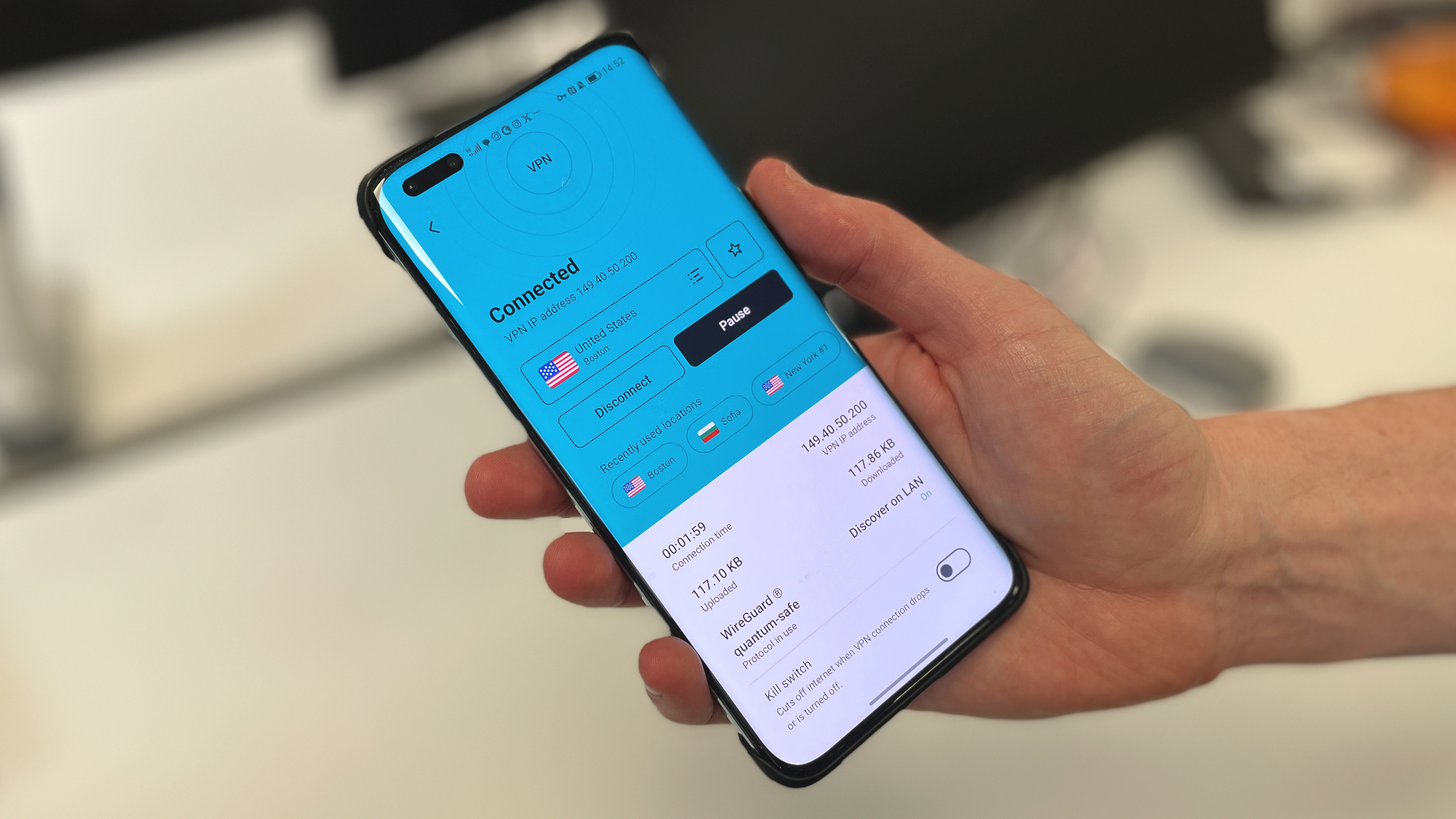
Quite what that looks like in practice is beyond my pay grade but users of the VPNs mentioned above will find they can enable PQE in the settings of their apps.
Give it a try (but don't expect it to do any wonders for your VPN speeds).









 English (US) ·