
 4 hours ago
4
4 hours ago
4
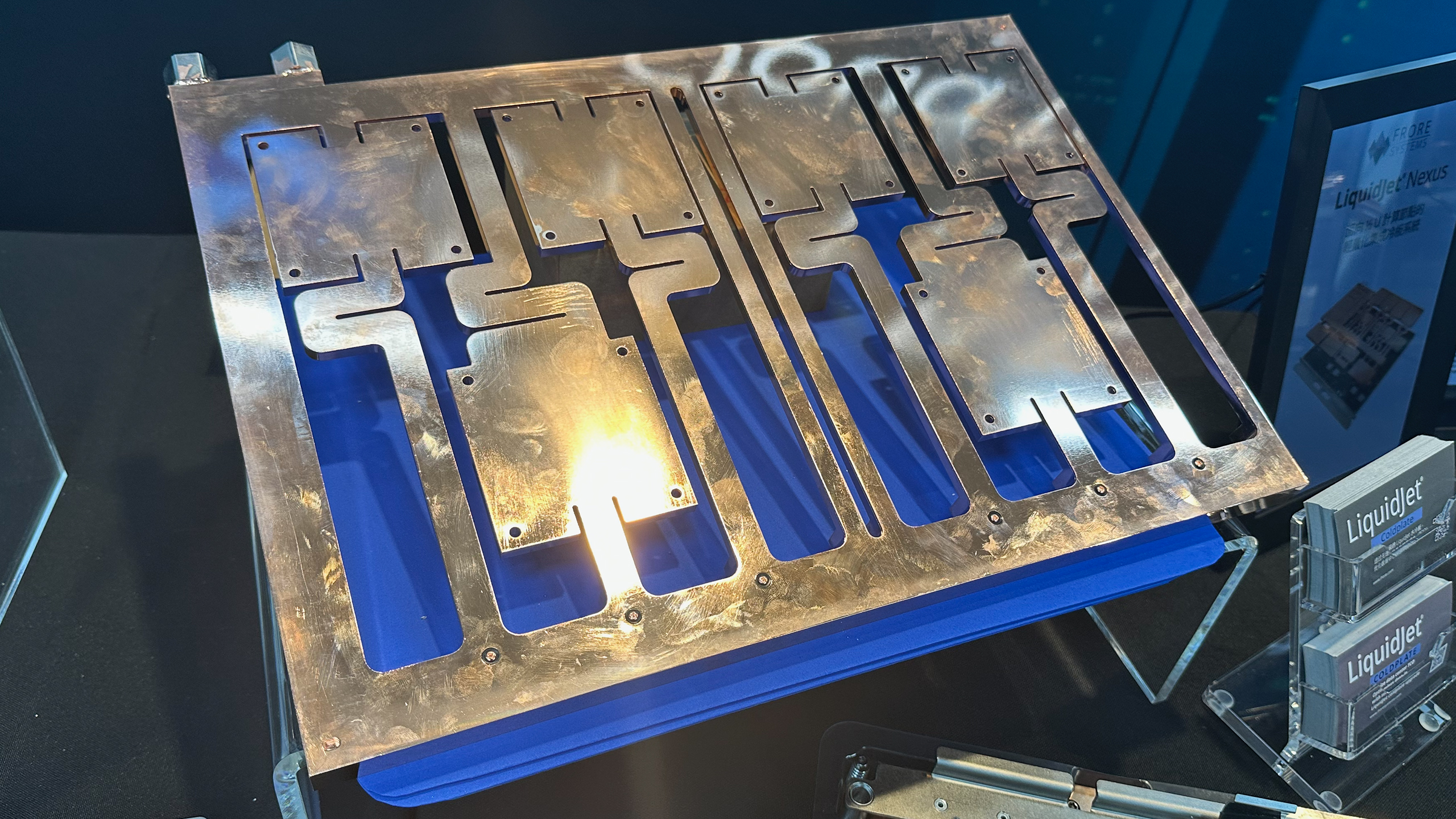
Frore Systems is showing off its LiquidJet Nexus at Computex 2026 in Taipei, Taiwan. The LiquidJet Nexus is a monolithic water block with innovative coldplates, designed to cool two Blackwell GPUs and a Grace CPU, that can replace the complex water block used today. Based on tests conducted by an ODM, the LiquidJet Nexus outperforms the default cooling solution used today and reduces GPU temperatures by around 6ºC, which increases token generation by 10%. Frore intends to build LiquidJet Nexus for Nvidia’s Rubin platforms and is ready to produce them for other accelerators, too.
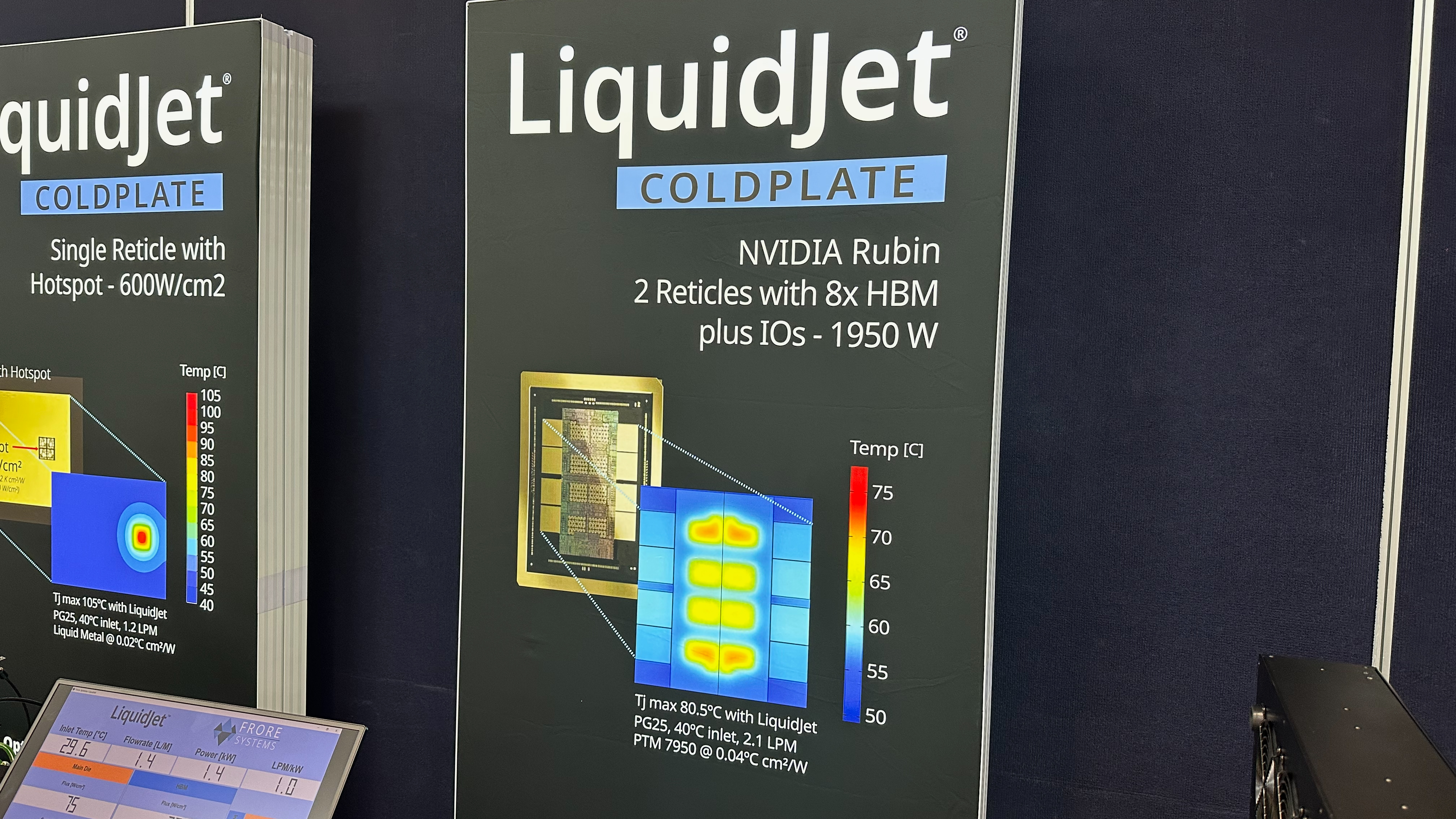
Earlier this year, Frore introduced its LiquidJet, a coldplate for AI accelerators, tailor-made for exact models of processors using tools originally meant to make semiconductors, in a bid to maximize cooling performance. The LiquidJet Nexus water block builds upon these principles, integrating them into a monolithic unit designed to cool down both GPUs and a CPU inside a server tray. For now, Frore is demonstrating LiquidJet Nexus for Nvidia’s Grace Blackwell superchip, though a version compatible with Vera Rubin is also incoming, we're told.
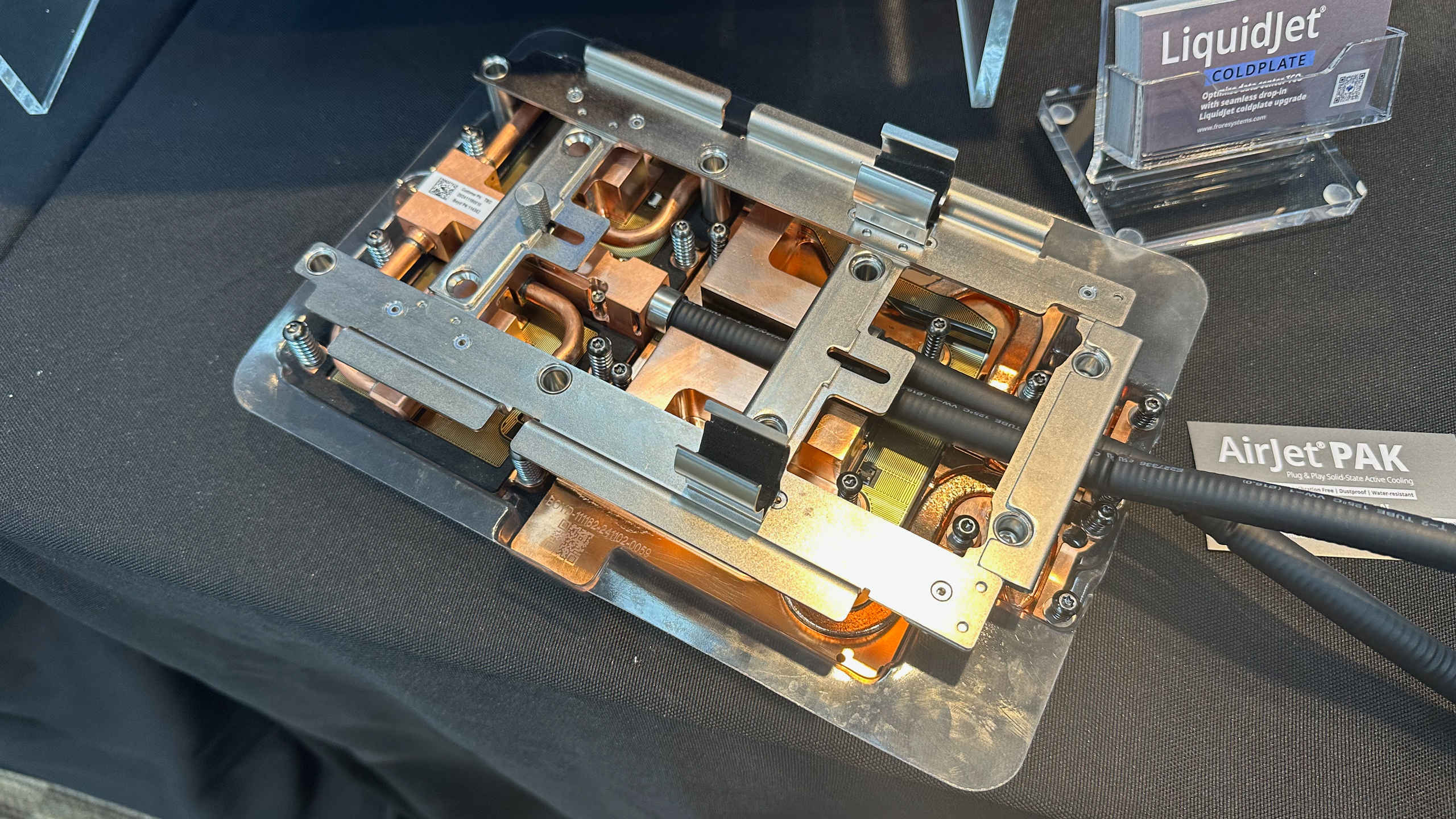
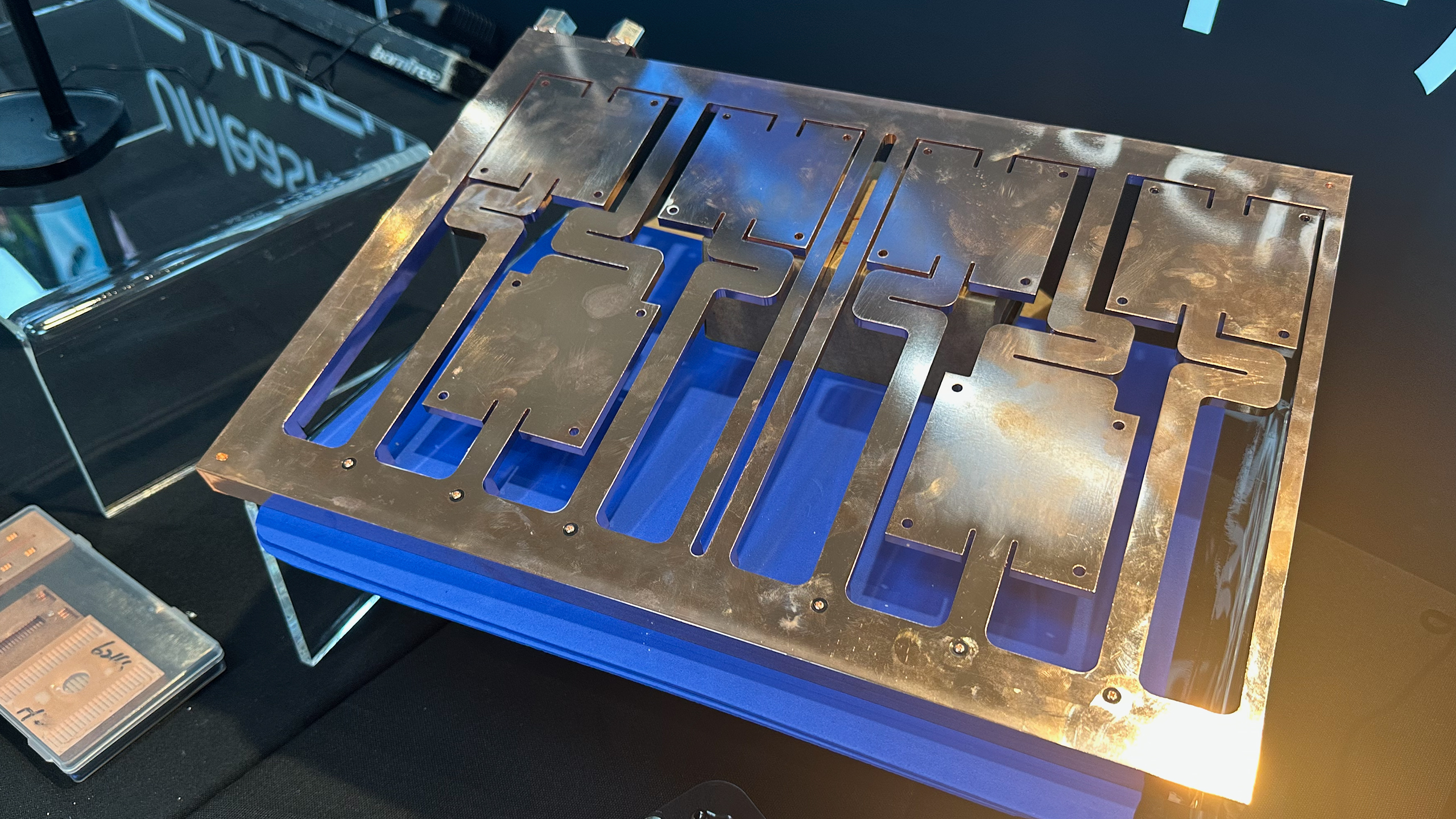
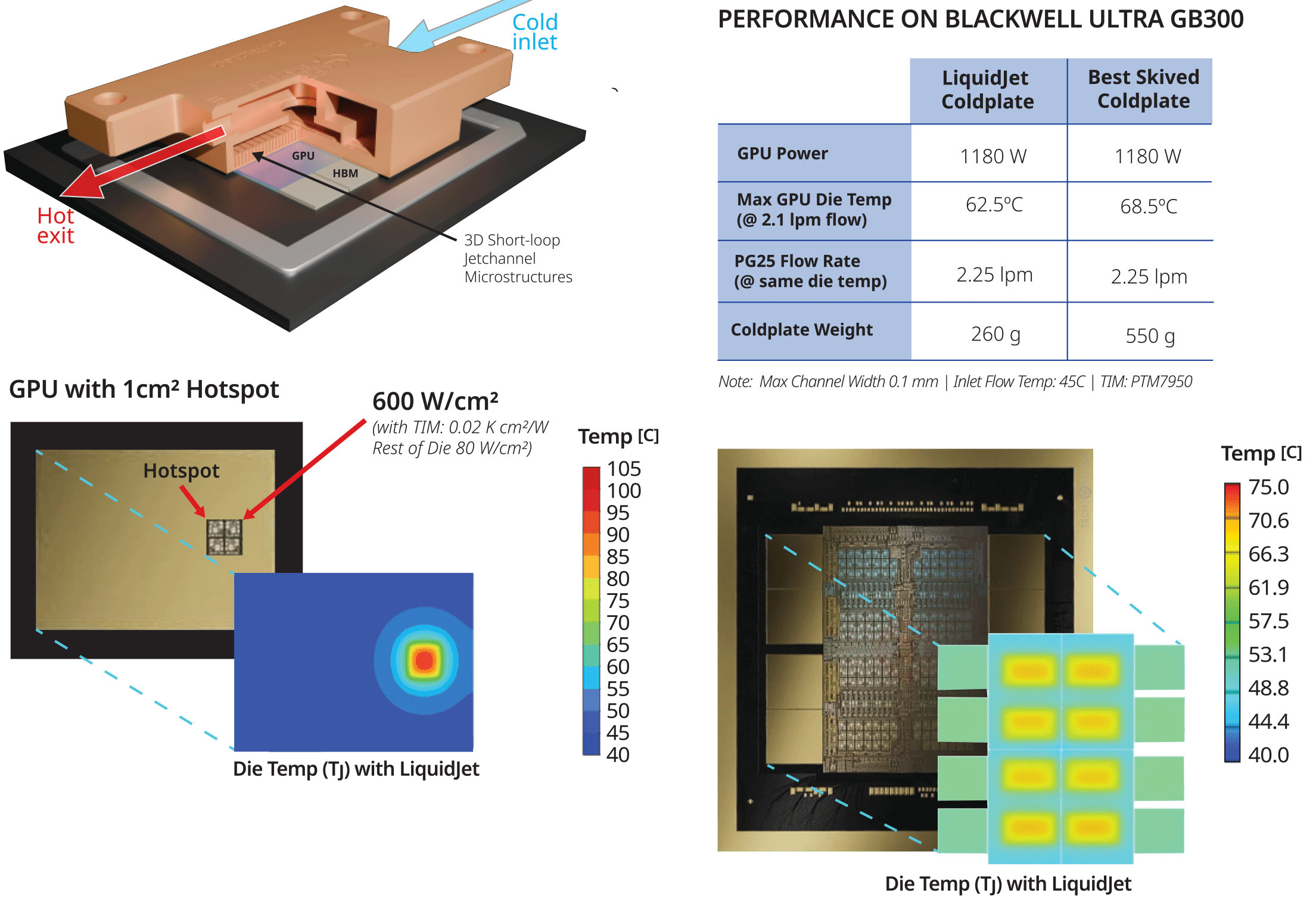
Frore’s LiquidJet coldplates are made using tools designed to produce semiconductors — using etching and bonding steps — and are architected in accordance with actual thermal maps of CPUs and GPUs they are meant to cool. As a result, they remove heat precisely from hotspots of these processors, and therefore enable better cooling performance than coldplates made using traditional milling methods. Based on tests conducted by a major ODM, Frore’s LiquidJet Nexus reduces the temperature of Blackwell GPUs by 6ºC compared to default cooling solutions, which in turn increases their token generation by 10%.
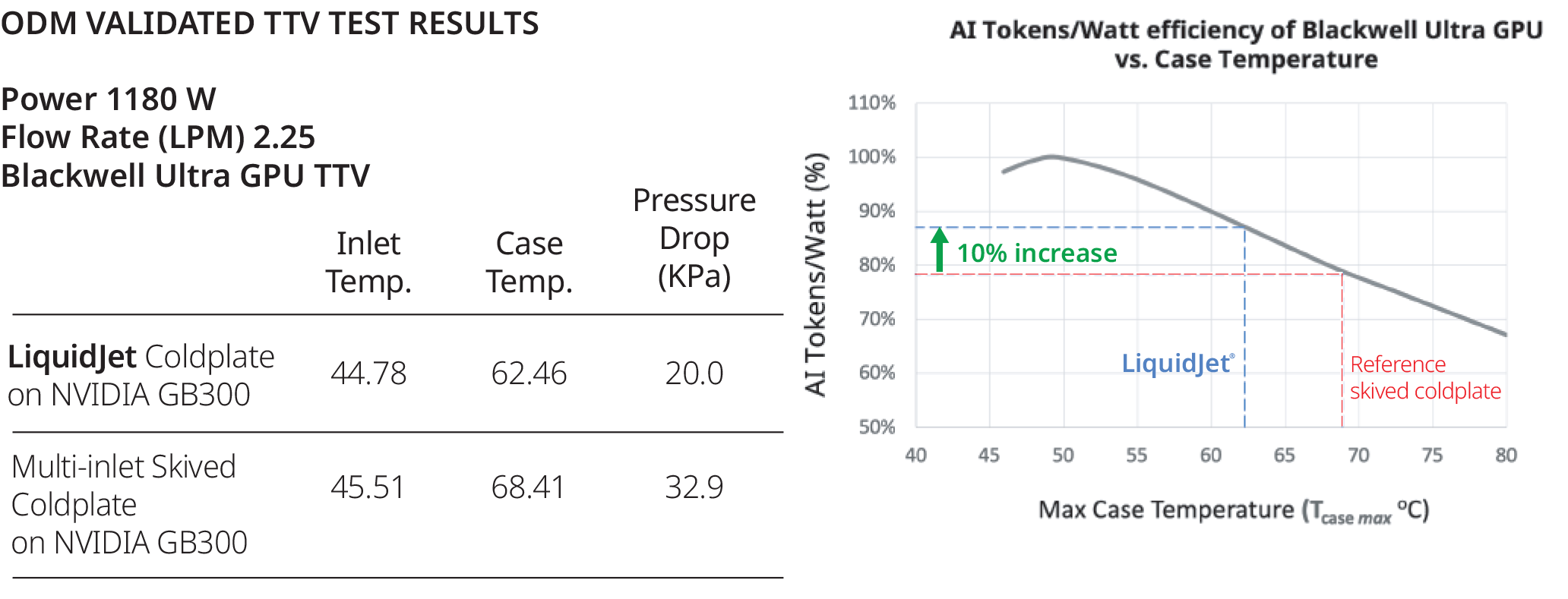
While a 6ºC temperature drop and a 10% performance improvement may sound humble, these performance improvements impact billion-dollar deployments, where such improvements could mean hundreds of millions in savings. Also, since Frore’s Liquid Jet Nexus is monolithic, it is less prone to leakage. This means less downtime and fewer damaged servers, which means more profits and fewer losses for their owners. Again, since we are talking about billion-dollar deployments, there are significant amounts of money at stake when it comes to cooling and efficiency.
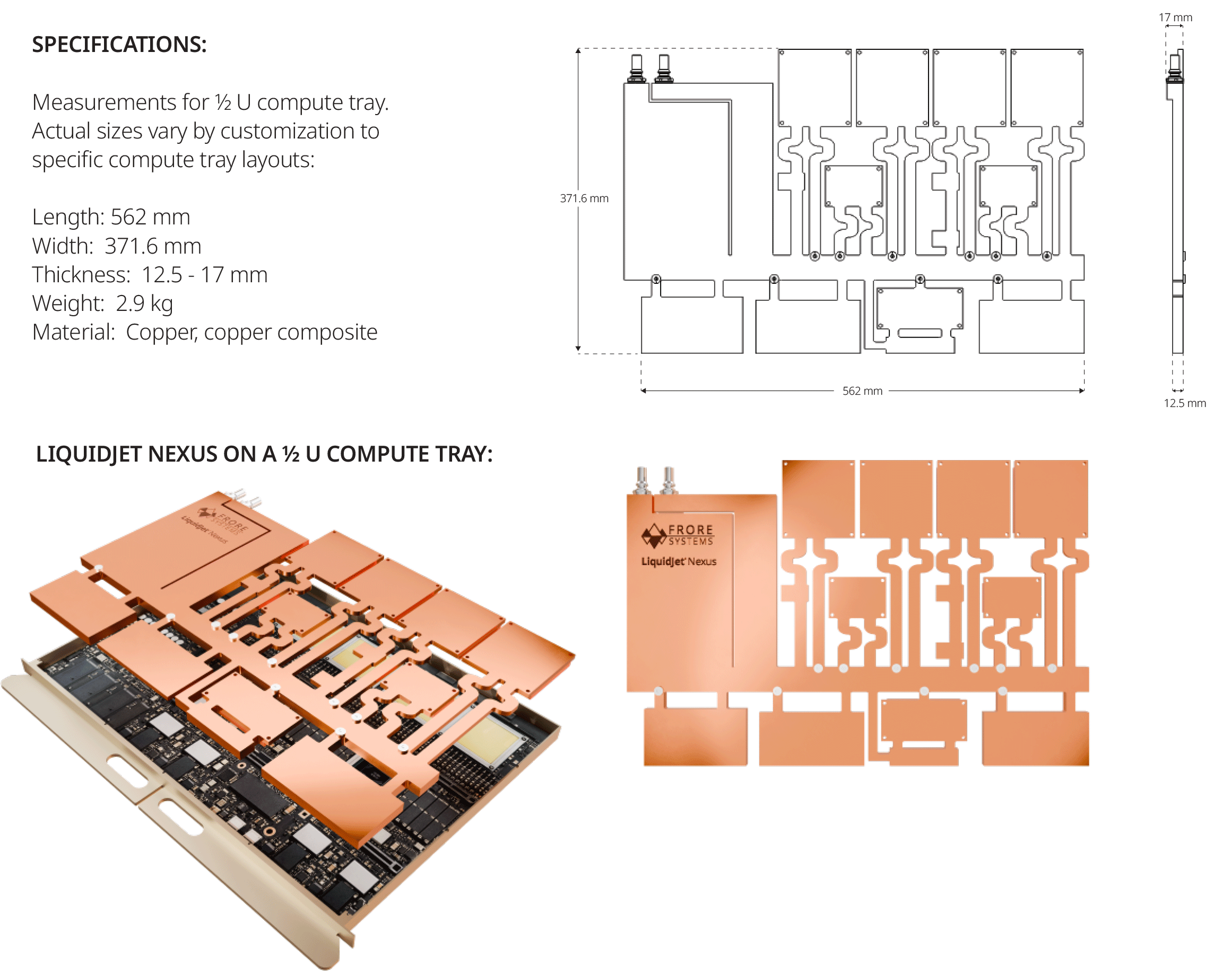
Frore says it is working with the majority of hyperscalers to build LiquidJet-based cooling solutions for their custom hardware. Since LiquidJet is designed to remove 400W – 600W of thermal energy per square centimeter, it can cool down very hot components. Furthermore, since these components tend to scale horizontally, it is not a problem to scale LiquidJet’s performance by increasing its dimensions.
In addition to being more performant and potentially significantly more reliable than existing liquid-cooling solutions for Nvidia Blackwell, Frore’s LiquidJet Nexus also weighs 65% less than rivals and is twice as thin (17 mm vs 34 mm), according to Frore.
While this may not be a significant advantage today (unless you ship your servers by plane), this will be a dramatic advantage for Nvidia’s next-generation Kyber chassis that places servers on their edge rather than horizontally, which will make the importance of LiquidJet Nexus’s weight a bigger factor, as the cooler must adhere to the cooling surface of the integrated heat spreader thoroughly. Meanwhile, it is hard to adhere a massive cooler to a vertically standing motherboard, so one with a lower weight should be easier to attach to the motherboard and chassis without worrying about longer-term deformations.
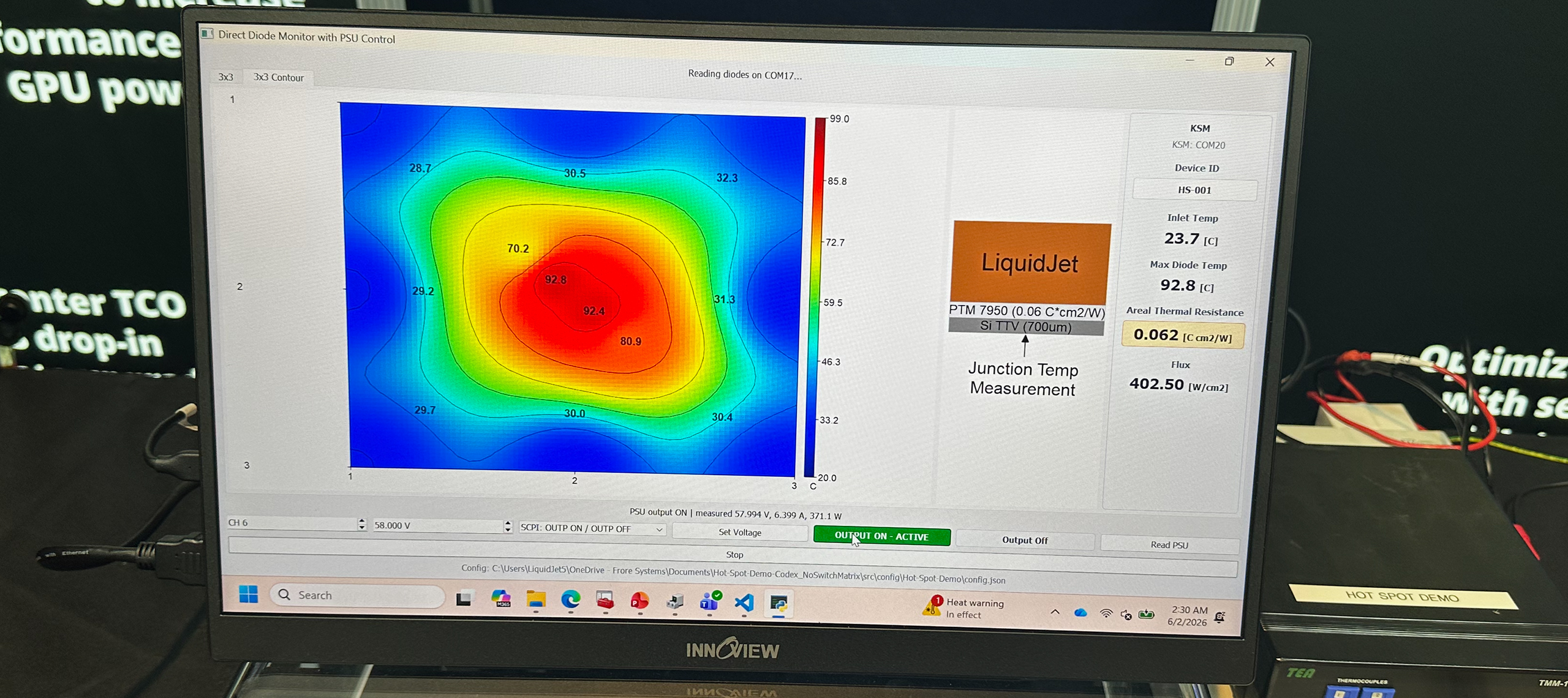
Speaking of Nvidia’s Kyber chassis, it is worth noting that they are designed for the Vera Rubin Ultra platform, which ups the TDP of GPUs all the way to around 3kW per unit, making its cooling a challenge. Meanwhile, Rubin Ultra GPU scales horizontally by employing a quad-chiplet design, so Frore can address its TDP by reinventing its coldplate, which is easy assuming the company is provided a thermal map of the unit. The same method can be applied to other processors, which is why Frore is indeed working with hyperscalers with custom silicon, in addition to other merchant silicon providers, aside from Nvidia.






 English (US) ·