
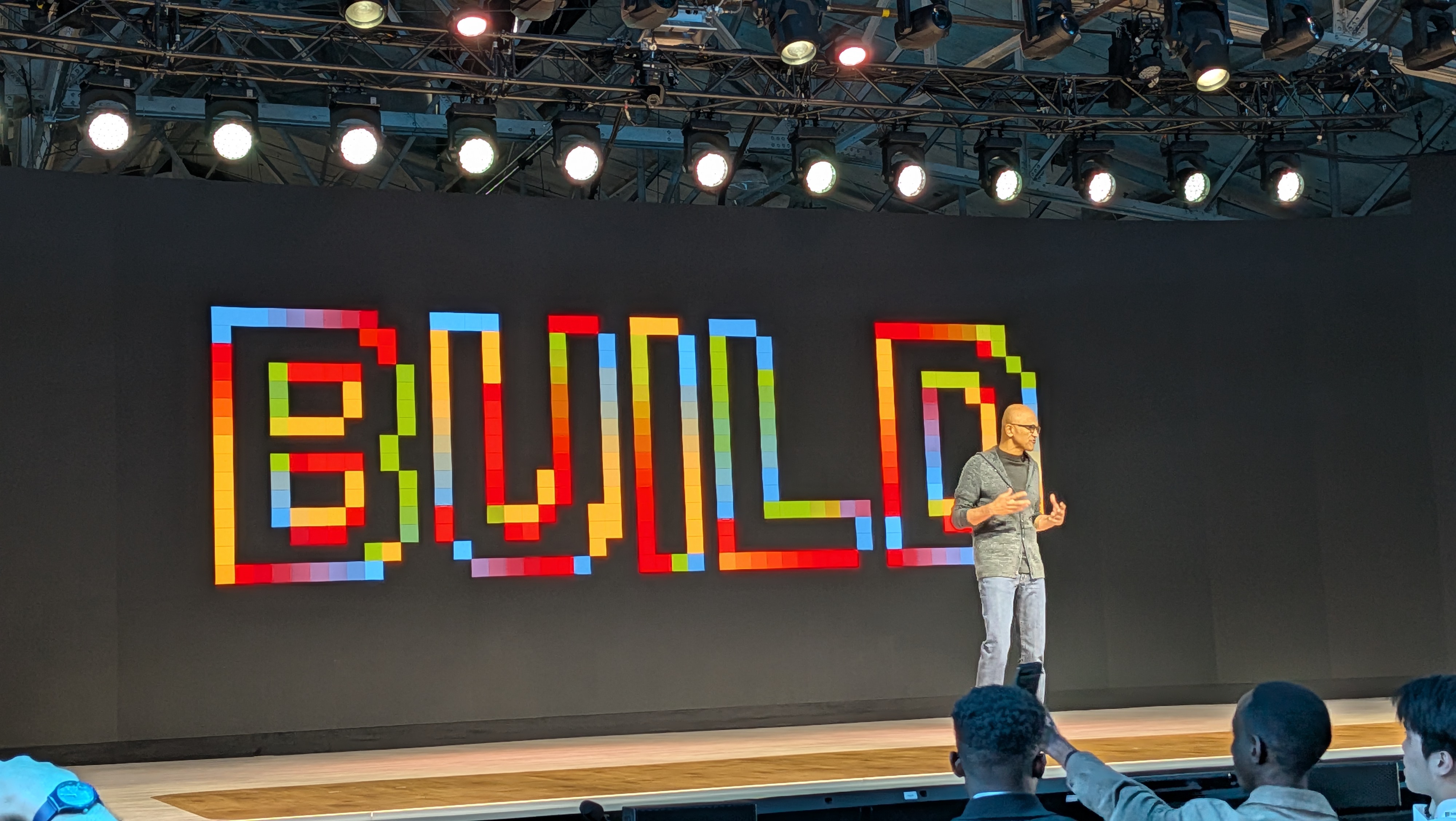
I've been out at Microsoft Build 2026 this week, where the event was dominated by headline-grabbing platform announcements and AI demonstrations.
However, there were also a number of smaller disclosures, roadmap updates, and technical previews may prove just as consequential over the next several years.
Below are four announcements that deserve a closer look.
MAI-Thinking-1 shows push toward first-party Frontier models
Somewhat lost amid the broader discussion about AI agents was Microsoft's introduction of MAI-Thinking-1, a new reasoning-focused model that represents a significant strategic shift for the company. The model reportedly features 35 billion parameters and a 128K context window, positioning it for complex coding, analysis, and multi-step reasoning tasks.
For developers, the announcement is notable not because Microsoft is entering the model race - it's already deeply involved in AI infrastructure, but because it suggests a growing emphasis on owning more of the AI stack. Rather than serving solely as a platform provider for third-party models, Microsoft appears increasingly interested in delivering differentiated models optimized for its own developer ecosystem.
The practical implications could be substantial. A Microsoft-controlled reasoning model can be tuned specifically for GitHub, Azure, Windows AI workloads, and enterprise governance requirements. It also gives Microsoft greater control over deployment, cost structures, and roadmap priorities.
While Build featured no shortage of agent-related announcements, MAI-Thinking-1 may ultimately prove one of the conference's most strategically important developments.
Microsoft Execution Containers bring security boundaries to AI workloads
One of the most technically significant announcements at Build 2026 may have been the introduction of Microsoft Execution Containers (MXC), a new security architecture designed to provide device-level guardrails for AI systems. While less visible than end-user AI features, MXC addresses one of the industry's biggest unresolved questions: how to safely run increasingly capable AI workloads.
According to Microsoft, the technology is intended to isolate AI processes and enforce security boundaries around model execution. As organizations deploy AI systems with access to enterprise data, code repositories, and operational workflows, traditional application security models become increasingly difficult to apply.
MXC appears designed to create a controlled execution environment where permissions, data access, and system interactions can be monitored and constrained. For regulated industries, this could become a foundational requirement for broader AI adoption.
The announcement also reflects a broader trend emerging across Build 2026. Microsoft's messaging was not solely about making AI more capable; it was equally focused on making AI more governable. In that context, execution security may become just as important as model performance.
Windows is becoming a more serious AI and developer platform
Several Build announcements highlighted Microsoft's ongoing effort to transform Windows into a first-class platform for AI development, as the company outlined new developer capabilities, expanded local AI infrastructure, and deeper support for running AI workloads directly on Windows devices.
A particularly interesting aspect of the announcement was Microsoft's continued investment in Windows AI Foundry and local model execution. The company emphasized support for running models across CPUs, GPUs, and NPUs, allowing developers to target a wider range of hardware configurations while maintaining a consistent development experience.
The event also showed a more developer-centric Windows experience, including enhanced command-line tooling, Linux-oriented workflows, and new AI-assisted development capabilities integrated directly into the operating system.
Taken together, these updates seem to suggest Microsoft increasingly views Windows not simply as an endpoint for AI applications but as a primary development and deployment environment. For developers building local or hybrid AI systems, that distinction could become increasingly important over the next several years.
Quantum Computing is still a major Microsoft focus
Although Build 2026 was overwhelmingly focused on AI, Microsoft also used the conference to spotlight progress in quantum computing through its Majorana 2 chip program. The company said the latest advances deliver qubits that are significantly more accurate than previous approaches, supporting its long-term ambition of reaching commercially useful quantum systems later this decade.
For software developers, the announcement was less about immediate deployment and more about platform direction. Microsoft has spent years building quantum development tools, simulators, and cloud-based experimentation environments. Improved hardware milestones make those investments increasingly relevant.
The timing is also notable, as AI workloads continue to drive demand for computing power, major technology vendors are simultaneously exploring entirely new computational architectures. Quantum computing remains experimental, but Microsoft appears determined to maintain a position at the forefront of the field.
While most Build attendees were understandably focused on AI agents, cloud infrastructure, and developer tooling, the quantum update served as a reminder that Microsoft's roadmap extends well beyond the current AI cycle.

Follow TechRadar on Google News and add us as a preferred source to get our expert news, reviews, and opinion in your feeds.







 English (US) ·