
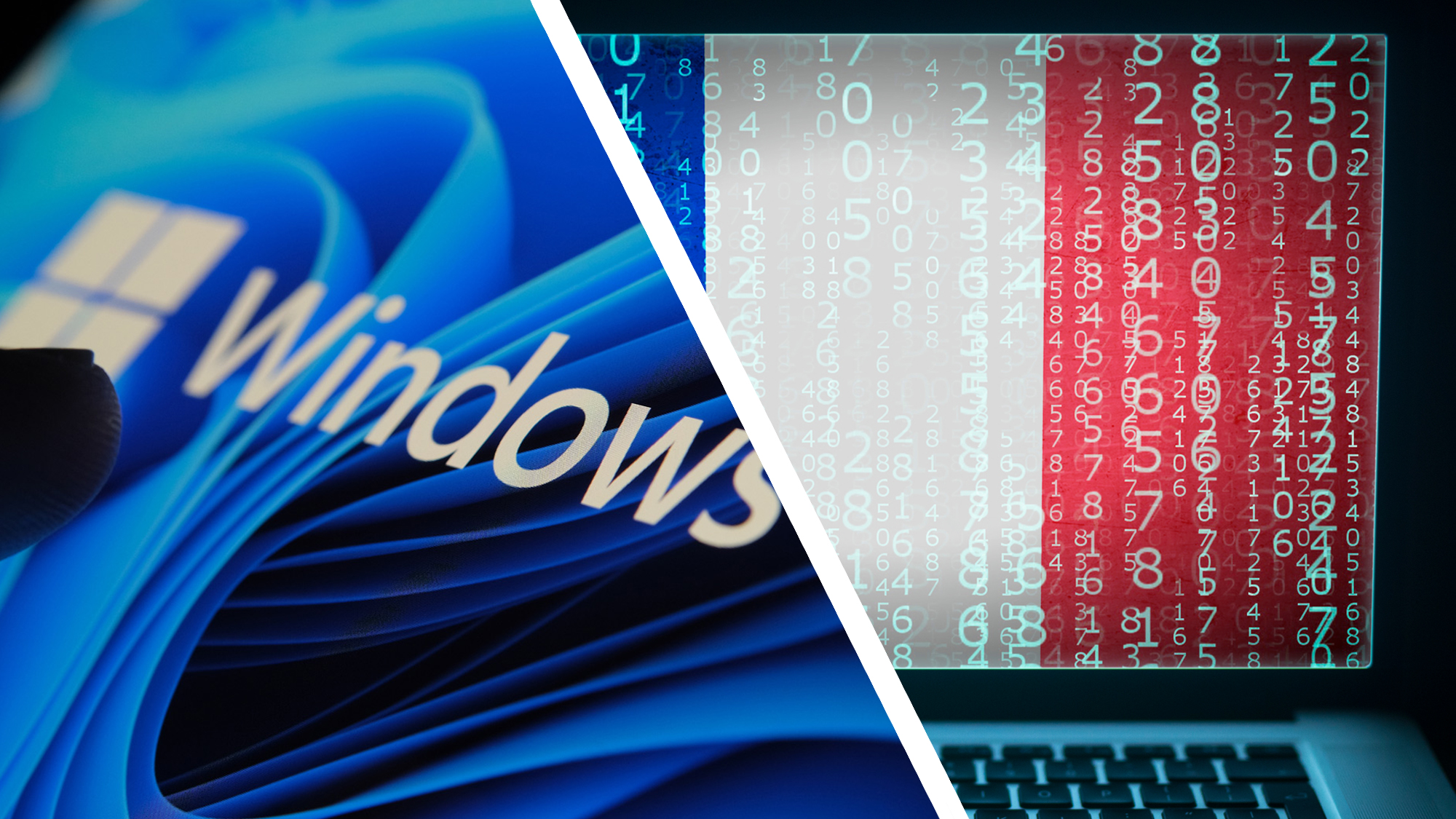
If you follow the latest desktop operating system news, and stories around Windows 11 in particular, you can't have failed to notice a trend: everybody hates it.
Well, that's not quite true, but if you hang out on some forums or subreddits, the posts you scroll through will very much give you this impression and convince you that the hate is very real. And you don't exactly see many folks rushing to Microsoft's defense, either, in the main.
Article continues below
So much so that I, and many others, have started to wonder if this really is a tipping point for Microsoft's OS where it's in danger of sliding into a meaningful decline. While members of the computing public defecting is one thing, though, something bigger just happened — the government of a large country has announced it's migrating away from Windows to Linux.
A lack of faith Microsoft should find disturbing
You may recall that last year in Europe, an entire German state, Schleswig-Holstein, axed Windows (and Microsoft's other services) to adopt Linux (and LibreOffice). Other countries (such as Denmark) have also been exploring ditching Microsoft's software, if not Windows itself.
We've heard the prediction that the big shift to Linux is coming a lot of times, but never has this felt a real threat for me — not until now.
However, the French decision is a blow to Microsoft of an entirely different magnitude, given that it's a national, not state-based, policy, affecting millions of computers. And while a government's concerns are obviously quite different to those of an individual, these entities are ultimately mulling the same path – migrating to an alternate OS (and if that isn't Linux, it's macOS) – and likely for the same reason: trust, or a lack of it.
It's crystal clear that there's been a growing lack of faith in Microsoft and the direction it has taken with Windows 11 since the launch of its newest operating system. But that feeling really intensified last year as Microsoft continued to push more AI features, and many Windows 11 users pushed back, and hard, insisting that they wanted the many problems with the OS fixed, rather than getting new AI tricks.
And boy are there a lot of issues with wonkiness in Windows 11, in terms of sluggish performance, jarring bits of interface, and indeed plain old-fashioned bugs. Of course, as you've doubtless seen, this almighty user backlash led to Microsoft promising that it's going to fix Windows 11 in all sorts of ways. Indeed, the company has gone well beyond what many hoped for, with an extensive list of remedies that covers elements I frankly wouldn't have believed if you'd have told me about all this a year ago.
Promises are one thing, though, and the reality of successfully actioning them will be entirely another. Now, let's be clear: I'm not saying Microsoft can't do this, and I love the new attitude of the various company execs in the Windows group, which includes listening to people, far and wide, on social media, actively engaging with them, and promising yet more fixes (or at least that 'things are being looked at').
However, I'm worried that Microsoft has bitten off more than it can chew here. The work in front of the company in terms of getting all this functionality implemented, pepping up performance, and smoothing over a heap of glitches and problems, collectively seems like a towering mountain of tasks. And what happens if 2026 rolls to a close and the grand campaign to fix everything in Windows 11 hasn't moved the needle nearly as much as is the suggestion now?
The goodwill Microsoft has earned is going to falter, and online sentiment is going to turn nasty (again). Windows 11 might be declared broken and unfixable, perhaps. Specifically, the area I'm most concerned about is Microsoft dropping the ball with fixing bugs.
Internal affairs

Okay, so we've seen Microsoft is listening, it's more engaged with the community, and is in the mood to generally roll up its sleeves and fix stuff. Great! And regarding preview versions of Windows 11 where the nuts-and-bolts of these cures are tested, just as promised, this month Microsoft revamped the entire Windows Insider program.
It's crystal clear that there's been a growing lack of faith in Microsoft and the direction it has taken with Windows 11.
That's good to see, too — although as a caveat, some testers still aren't quite happy with the new way of organizing these preview channels, but I'm not going to get into that here.
What concerns me, however, is that we haven't heard much of what Microsoft is going to do internally to improve its quality assurance, bug finding and ground root testing. In fact, we've heard lots about community feedback and Windows Insiders, but barely a peep about internal improvements within the company halls where Windows 11 is actually developed.
As far as I'm aware, the main statement from Microsoft on this was the following from its sweeping blog post on the 'commitment to Windows quality' last month: "As part of this effort, we are evolving how Windows is built behind the scenes to raise the quality bar and deliver innovation where it matters most, shaped by the feedback we are hearing from you.
"This includes deeper validation and broader testing across real-world hardware and usage scenarios before new experiences reach Windows Insiders [testers], and a more intentional approach to where and how new capabilities are introduced."
The 'intentional approach' comment refers partly to the freshly-introduced abilities to choose what features you want to test (rather than having to hope they're rolled out to your particular PC), but the main point here is the "deeper validation and broader testing across real-world hardware and usage scenarios" before new features even reach Windows Insider test channels.
This idea sounds all well and good, certainly, but it's a rather vague assertion. I haven't seen any further talk from Microsoft, or meat to those bones, about exactly what it's doing behind the scenes to improve the quality assurance processes with Windows 11. Whereas there's been plenty of extra noise about, well, pretty much everything else you can think of.
Maybe I'm being overly sensitive on this point, I'll give you that, and perhaps Microsoft just feels it's too dull (or confidential) to go into. But I really wish Microsoft would elaborate further, and I feel this way mainly because my real fear is that in this grand plan to rejuvenate Windows 11 and win back the faithless, the bugs will be Microsoft's undoing.
If it comes to the end of the year, and we remain in the familiar troubleshooting rut that Windows 11 has been in for some time now – since the 24H2 update, certainly – the danger is that people are going to throw their hands up in the air and give up.
And by familiar troubleshooting rut, I mean the following sequence of events:
- Patch Tuesday arrives: Windows 11 update released
- Bug found in update
- Fix for update deployed
- Another glitch found in update
- Another fix rolled out
- That fix works, but causes another additional problem as a side effect
- Accusations of Microsoft using AI to do too much of its coding abound
- Another fix for the new problem, here you go
- That one doesn't work at all
- Oh no, 'Microslop' has done it again, AI sucks etcetera
- Second rejigged fix for side-effect-bug does work, all is good finally
- Wait a couple of weeks, Patch Tuesday rolls around again, rinse and repeat this cycle or some close variation of it
Much ado about nothing?

To sum up my fear: Microsoft has made a whole big fuss here about getting Windows 11 right. If, by the end of 2026, we're still facing similar bugs and wonky aspects of performance being regularly introduced via Windows 11's monthly updates, as has been the case for some time, the computing public is going to start to lose all hope of the operating system ever getting it right.
Then those folks might look at France's mass migration to Linux – and other Windows 11 defectors on Reddit telling their tales of never having looked back – and decide to leave for one of those distros themselves, or perhaps for macOS. The latter is especially pertinent if any given person is searching for a new laptop, given what a hit the MacBook Neo has been so far, and that success looks set to continue for Apple (it seemingly can't make enough of these wallet-friendly notebooks).
We've heard the prediction that the big shift to Linux is coming a lot of times, but never has this felt a real threat for me — not until now (and part of that is the strides forward with Linux, too, particularly for gaming and with SteamOS).
It's by no means something I'd predict as likely – not yet – but if Microsoft makes a mess of fixing Windows 11 this year, and especially if the OS continues to be buggy, it's clear that alternative desktop platforms have never had a better chance of grabbing some meaningful territory.

Follow TechRadar on Google News and add us as a preferred source to get our expert news, reviews, and opinion in your feeds. Make sure to click the Follow button!
And of course, you can also follow TechRadar on YouTube and TikTok for news, reviews, unboxings in video form, and get regular updates from us on WhatsApp too.





 English (US) ·