
 2 hours ago
18

Published Oct 25, 2026, 12:01 AM EDT
Slowly and surely, draw your plans to watch
 Source: Paramount Pictures/IMDB
H.G. Wells' The War of the Worlds is a punchline now, and it's Amazon's fault. At time of writing, the newest adaptation of The War of the Worlds is a "screenlife" movie from 2025 that’s a frontrunner for the worst film of the 21st century.
War of the Worlds 2025 is worth watching once, if only to marvel at how its creators consistently made the dumbest possible choices at every opportunity, up to and including its metamorphosis into an ad for Amazon drone delivery in its final act. Even so, it isn't bad in the right way to be funny. It's bad in the way that makes you want to comb through it looking for the black box. You want to know why this happened, so the appropriate authorities can stop it from happening again.
That probably means it's going to be a while before we see another adaptation of The War of the Worlds. It'll take time for the Amazon stink to wear off. For now, that means the long history of War of the Worlds has a strange capstone on it.
Wells' 1898 novel isn't the first alien invasion story in the Western canon, but it's often credited with cementing the concept in the popular imagination. Naturally, that's led to multiple adaptations in the 128 years since it was published, with creators from Orson Welles to Steven Spielberg to the Asylum all taking their own swings at the material. The most famous version of The War of the Worlds is still likely Welles' 1938 radio play, which triggered a panic on its first broadcast by accidentally convincing some listeners that it was a live news program.
 Source: Paramount Pictures/IMDB
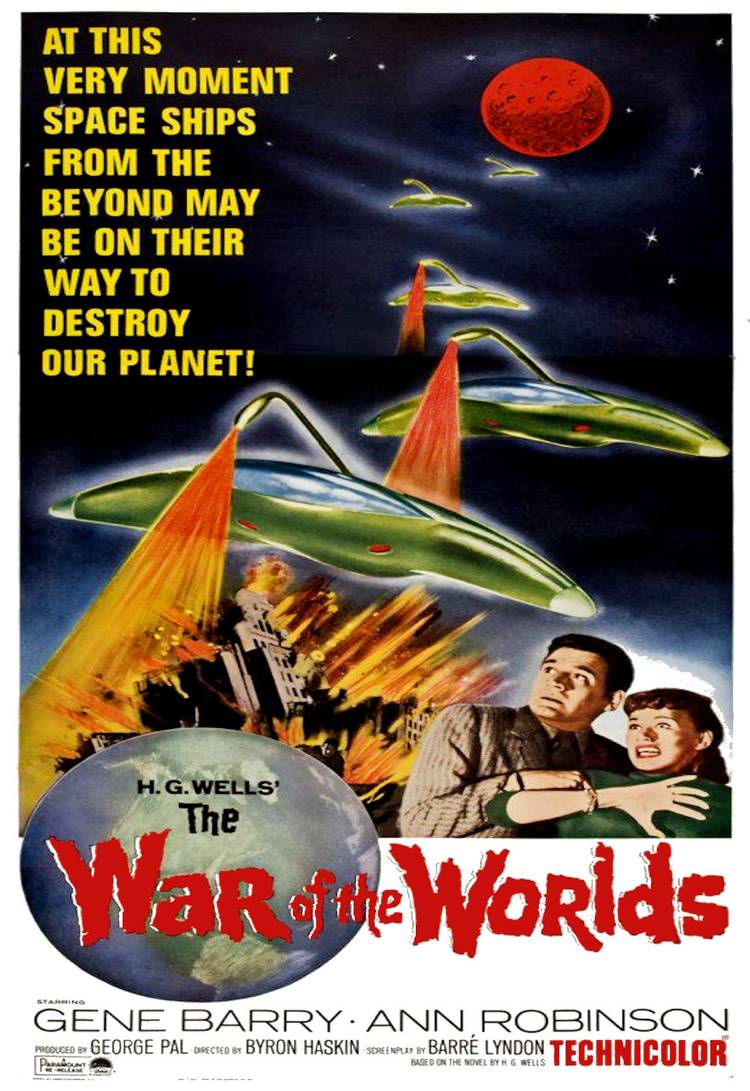
The first film adaptation of The War in the Worlds came out in 1953, starring Gene Barry and Ann Robinson, directed by Byron Haskin, and written by Barré Lyndon. It moves the setting from 1890s England to 1950s California and accelerates its pace, which turns Wells' story of the near-fall of humanity into an 85-minute war movie. 1953’s The War of the Worlds is currently free (and colorized) on YouTube, if you're interested in putting an old-school alien invasion on your Halloween viewing schedule.
Intellects vast and cool and unsympathetic
Haskin's War of the Worlds begins when a rain of strange meteors land all over the world. One hits near a small town in California, where physicist Dr. Clayton Forrester (Barry; and yes, the MST3K mad scientist was named after the War of the Worlds character) is on hand to investigate. He deduces the meteor must be hollow, but it's still too hot from reentry for him to get any closer.
Later that night, the meteor reveals itself as an alien "cylinder" from Mars, which studies the world through electronic eyes on flexible metal stalks. When three locals try to make peaceful contact, the cylinder immediately incinerates them with a heat ray, then proceeds to lay waste to any other humans it sees. There was no miscommunication, and this wasn’t any human’s fault. The Martians came to clean human life off the face of Earth.
After an initial disastrous exchange between the U.S. Army and the cylinders, Forrester flees the scene alongside local resident Sylvia (Robinson). As the U.S. military tries to defend against the Martians, who initially seem invincible, we follow Forrester and Sylvia through the battles and their aftermath.
 Source: Paramount Pictures/IMDB
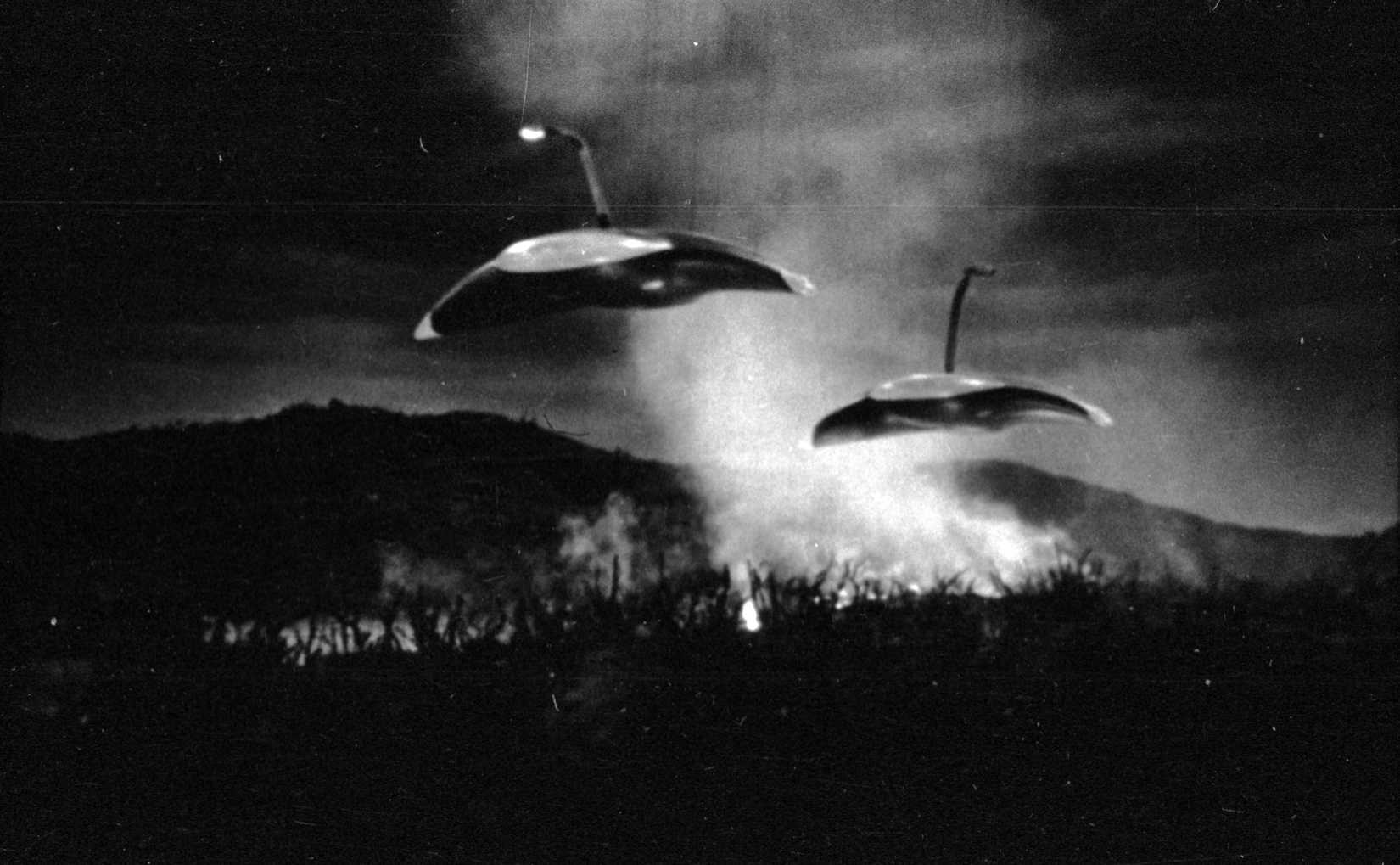
Like many other science fiction movies from the 1950s, you do have to meet The War of the Worlds halfway. Its special effects were groundbreaking at the time of its release, which earned the film an Oscar, but they border on quaint now, especially in modern restorations. The movie was simply never meant to be watched in higher resolutions.
If you can suspend your disbelief, it's easy to see why audiences in the '50s thought The War of the Worlds was horrifying. The Martians' heat rays make people flash and disappear, replaced by man-shaped piles of ash. It’s a simple effect, but it’s still creepy, if only because the cylinders wield the heat rays like they're weeding a garden.
The first major conflict between the Martians and the U.S. military in The War of the Worlds is a nightmare of men and machines being blasted into nothing. The military’s leaders move fast, listen to reason, do everything right, and still have no chance at all. The movie is punctuated by reports from outside the U.S. of other nations losing cities and battles, unceremoniously swept off the map by the cylinders. This isn't a war; it's a disaster movie, and the disaster is winning.
There's a bleak power to The War of the Worlds that must've hit even harder during the Cold War. Watching it now, it’s still got some of that impact, in ways that almost remind me of cosmic horror. It's easy now to mock it for its early effects work, but if you can meet The War of the Worlds where it lives, you’ll see why it's become a sci-fi/horror classic.
The War of the Worlds (1953) is now streaming on YouTube.





 English (US) ·