
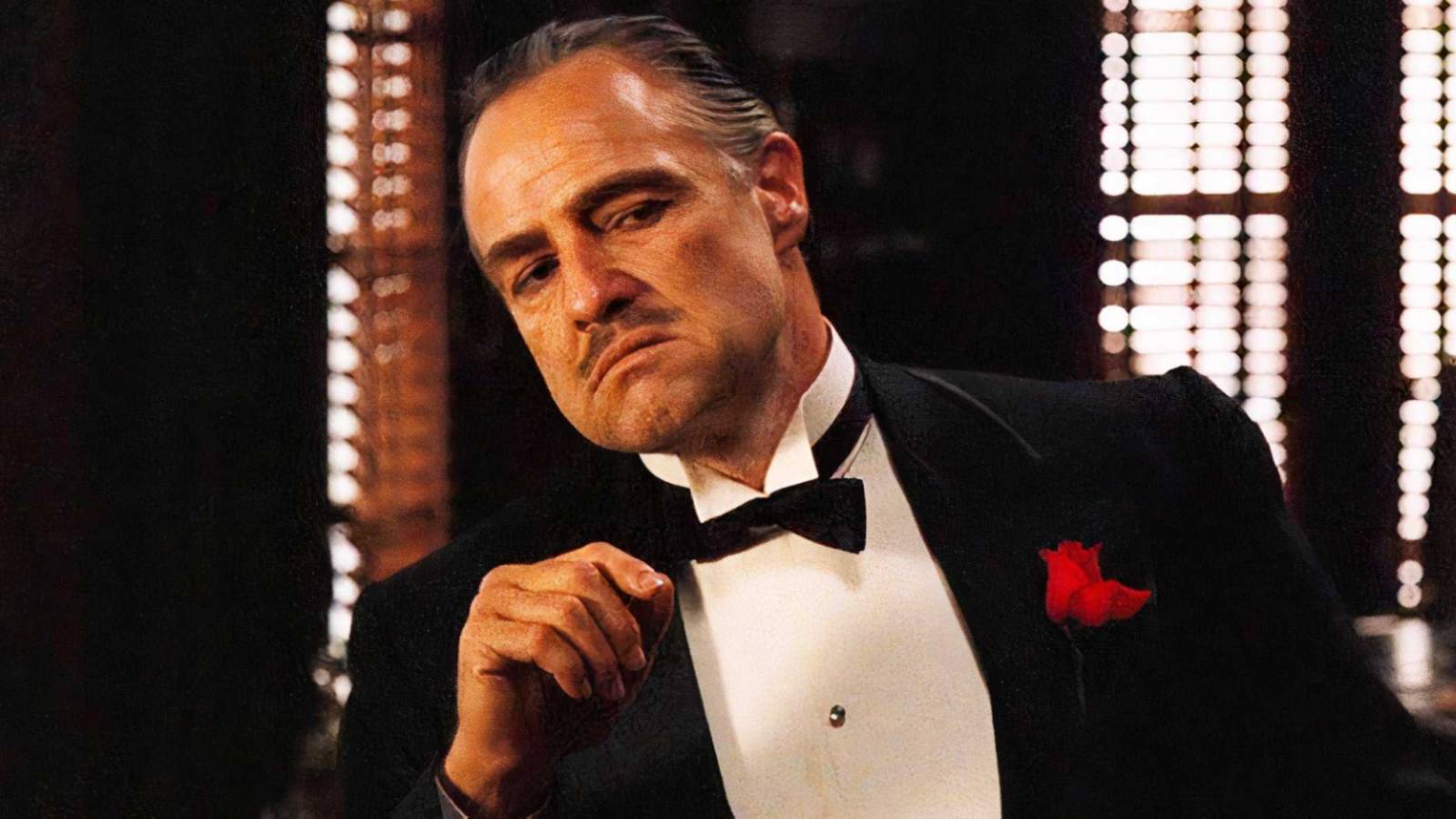
 Image via Paramount Pictures
Published Jun 1, 2026, 8:41 PM EDT
Lloyd 'Happy Trails' Farley: the man, the myth, the legend. What can be said about this amazing - and humble - man that hasn't been said before? Or, more accurately, what can be said in public? Born in Calgary, Alberta, Canada, Lloyd is a master of puns and a humorist, who has authored one pun book to date - Pun and Grimeish Mint - and is working on a second. His time with Collider has allowed Lloyd's passion for writing to explode, with nearly 1,000 articles to his name that have been published on the site, with his favorite articles being the ones that allow for his sense of humor to shine. Lloyd also holds fast to the belief that all of life's problems can be answered by The Simpsons, Star Wars, and/or The Lion King. You can read more about Lloyd on his website, or follow his Facebook page and join the Llama Llegion. Happy trails!
What is it about the gangster genre that demands such endless fascination? 120 years from its beginnings in the 10-minute 1906 silent film The Black Hand, the likes of The Godfather and Goodfellas have captivated moviegoers with their tales of organized crime life. To this day, the genre retains prominence, with Collider providing a list in March of the 25 best gangster movies of the last five years. The fact that a century-old genre can still produce enough acclaimed films to justify a "25 best of the last five years" list speaks to its enduring appeal. But while The Black Hand may have set the stage for the gangster film, it would be 1931's Little Caesar, one of the earliest and easily one of the best, that would define the genre in the future.
'Little Caesar' Gives an Uncompromising Depiction of the Criminal Underworld
The film is based on the 1929 novel of the same name by W. R. Burnett, and stars Edward G. Robinson as Caesar Enrico "Rico" Bandella. Rico and his friend Joe (Douglas Fairbanks Jr.) are small-time criminals who decide to move to Chicago to better their lives. Rico longs to be as revered a name as the infamous Diamond Pete Montana (Ralph Ince) and promptly joins the gang of Sam Vettori (Stanley Fields). Joe, however, decides he wants to leave the criminal life behind and becomes a dancer at a nightclub with his dance partner and girlfriend, Olga (Glenda Farrell). But as Joe finds out, leaving the gangster life isn't so cut and dry, and Rico pulls him in to participate in the robbery of the nightclub.
That idea of being unable to sever ties to a criminal past is just one of the many tropes of the genre that Little Caesar pioneered (just ask Carlito Brigante of Carlito's Way or the titular hero of the John Wick franchise). The tale of Rico establishes the "rise-and-fall" template of the genre, with Rico ruthlessly doing whatever it takes to climb his way to the top of Chicago's criminal empire, only to tragically fall back into a small-time world that's even worse than the one he left. It also encapsulates the complex nature of the Chicago crime scene: the "honor among thieves"; ever-changing alliances; strong-arming; veiled threats; and public executions, both successful and, luckily for Rico, botched.
In doing so, Little Caesar takes full advantage of the leniency afforded movies before the Hays Code. It offers an uncompromising depiction of gangster life and the greed and violence that come with it. While by no means graphic, the film explicitly shows gunfire, violent deaths, and a purely irredeemable character. The police, led by Sergeant/Lieutenant Thomas Flaherty (Thomas E. Jackson), are competent, yes, but lack the romanticism and charisma afforded the mobsters they chase, which also serves to give the film a moral ambiguity. Most importantly, it eschews the moralistic, happy ending mandated by the Hays Code in favor of one of Hollywood's all-time greatest endings.
Edward G. Robinson Defines the Gangster Character in 'Little Caesar' With a Star-Making Performance
The film rests on the shoulders of "Little Caesar" himself, Edward G. Robinson, who, at the time, had played the lead character in only a handful of movies prior. Yet he took the opportunity that Little Caesar provided and ran with it, excelling in a go-for-broke portrayal of an ambitious man lured by the prominence and riches that came with standing in the criminal order. He establishes Rico as the proverbial anti-hero, one who chases the American Dream and catches it, however briefly, fulfilling the hopes of an audience on the precipice of the Great Depression while simultaneously performing acts that were appalling to the same.
 Related
Robinson gives Rico an unprecedented depth in that regard, with an intense charisma that is positively engaging. He hides an animalistic rage beneath a sharp suit and commands the respect he desires with a ruthlessness that is almost chillingly realistic. His cadence is distinct and sharp, a rapid-fire delivery that defies contradiction. It's a portrayal that would define the stereotype of the cigar-chomping, "wise-guy" spewing gangster for generations. Even Warner Bros.' Looney Tunes utilized Robinson's defining role in 1946's "Racketeer Rabbit," with Bugs Bunny going tête-à-tête with Rocky, a loving caricature of Robinson's creation.
The heights to which Rico reaches are earned, but Robinson's true strengths as an actor come through in Rico's downfall. It begins with his inability to kill Joe, who refuses to join him. He approaches Joe slowly, gun drawn, but as he comes nearer, the camera captures the emotional battle raging within between ruthlessness and mercy for his long-time friend. His choice for the latter starts his fall from grace, with Rico eventually finding himself in a flophouse, beaten and deprived of all he had gained. But when he hears others reading from an article about him in the paper in which Flaherty derides him, how he fled when the going got tough, and, worse, calling him "yellow," you can see the rage building up in those same eyes, relighting the fire inside and pushing Rico to reclaim his throne, only to be shot down by Flaherty. And in dying, he utters the famous last words, "Mother of mercy, is this the end of Rico?" Robinson perfectly captures the torture of those words as Rico lies dying, inflicting not only the tragedy of his life ending, but the legacy of respect he had longed for being usurped by a false narrative of cowardice. It brings to an end one of the earliest and all-time best of the gangster movie genre.

Little Caesar
Release Date January 25, 1931
Runtime 79 Minutes
Director Mervyn LeRoy







 English (US) ·