
 Image via Prime Video

Published Feb 8, 2026, 9:14 AM EST
Back in 2021, Hannah’s love of all things nerdy collided with her passion for writing — and she hasn’t stopped since. She covers pop culture news, writes reviews, and conducts interviews on just about every kind of media imaginable. If she’s not talking about something spooky, she’s talking about gaming, and her favorite moments in anything she’s read, watched, or played are always the scariest ones. For Hannah, nothing beats the thrill of discovering what’s lurking in the shadows or waiting around the corner for its chance to go bump in the night. Once described as “strictly for the sickos,” she considers it the highest of compliments.
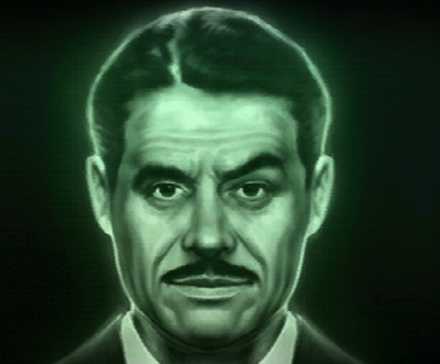
The final moments of Fallout Season 2 don’t end with an explosion, a cliffhanger death, or a last-minute betrayal. They end with something quieter, and far more dangerous. Lucy (Ella Purnell) and Maximus (Aaron Moten) return to the Lucky 38, step into Robert House’s (Justin Theroux) penthouse suite, and look out over New Vegas as the weight of what’s coming finally settles in. There’s going to be a war. Lucy believes she could have stopped it. Worse, she believes it’s her fault. As Maximus reaches for her hand, the episode fades not to destruction, but to observation. House’s face flickers onto an old monitor, and it’s an image that reframes everything. Not because House is back, but because of when he chooses to reappear, and who he is presumably watching from the shadows.
The Timing of House’s Return Isn’t Accidental
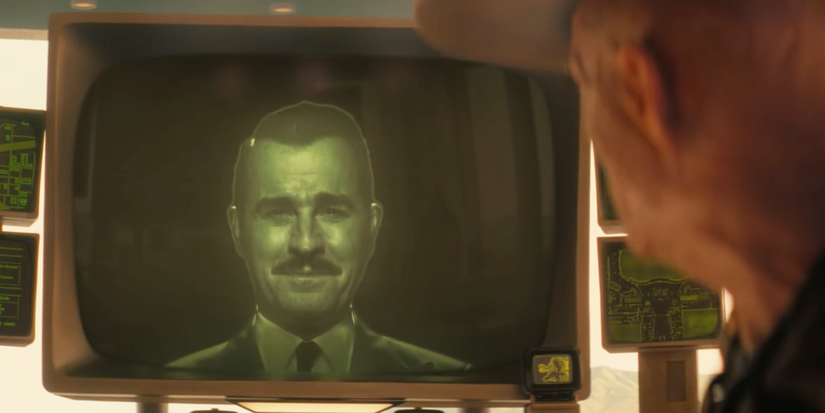 Image via Prime Video
Fallout rarely introduces power at moments of confidence. It introduces it at moments of fracture. Lucy has just accepted moral responsibility for a conflict she doesn’t fully understand, and Maximus is standing beside her without answers, structure, or a plan. Both characters are emotionally exposed in different ways, and the show lets that vulnerability sit before revealing House’s presence. That matters because Robert House has never operated through brute force. His influence has always come from positioning himself as the only option left standing when chaos takes hold. He doesn’t seize control. He offers clarity — and lets others walk into his framework willingly. By placing House’s return immediately after Lucy internalizes guilt and inevitability, the series isn’t teasing nostalgia. It’s setting the stage for persuasion.
Related
Robert House Doesn’t Need Control
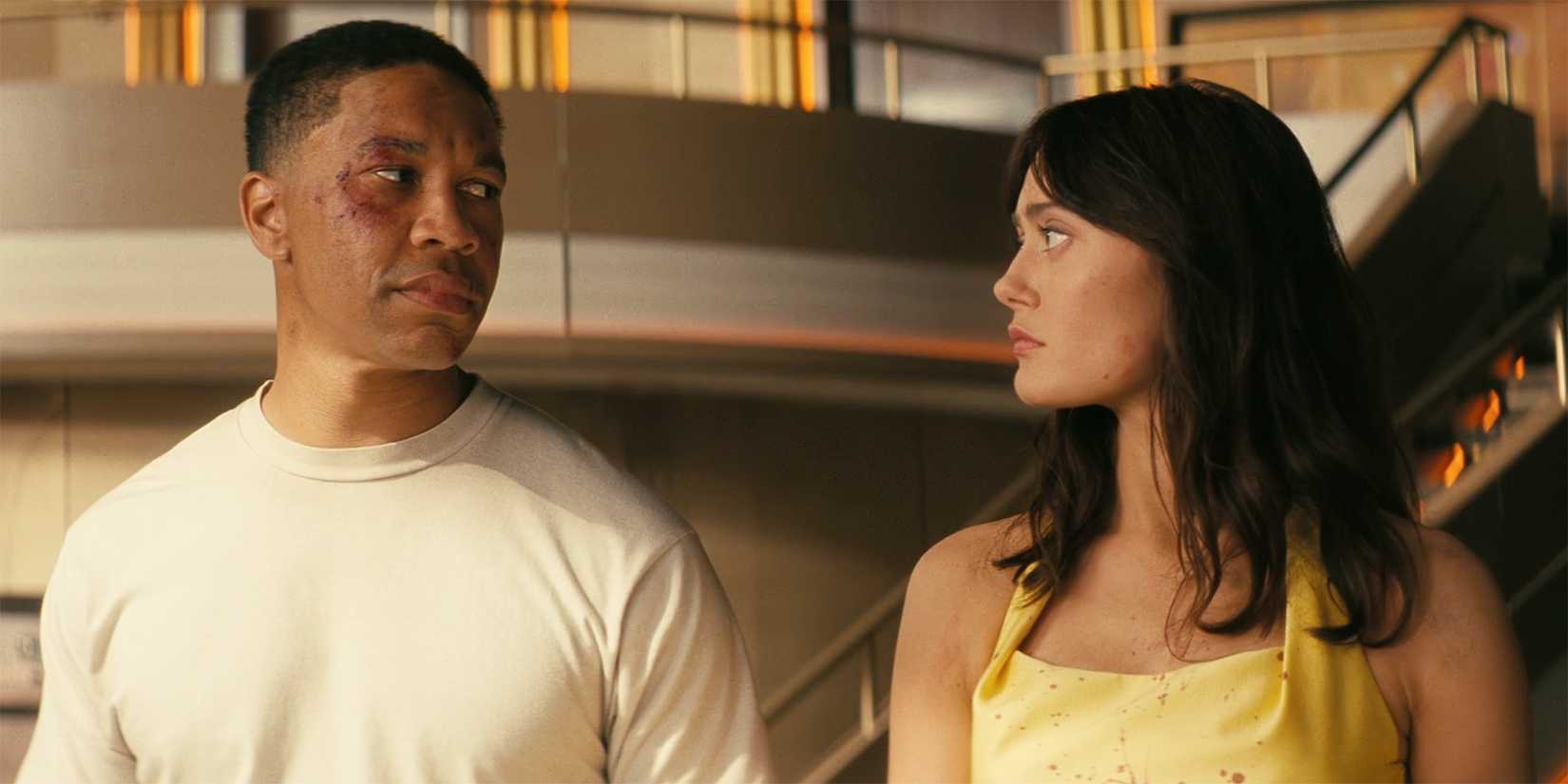 Image via Prime Video
House has never needed loyalty in the traditional sense. What he needs is alignment. His philosophy isn’t built on domination, but on managed outcomes. He believes the world is too broken for idealism and too dangerous for sentiment, and he has always framed himself as the one figure capable of minimizing damage when everything else fails. Lucy is uniquely susceptible to that logic. Her defining trait throughout the series has been moral accountability. She wants harm to mean something. She wants consequences to be preventable. In the aftermath of the finale, Lucy isn’t looking for power — she’s looking for a way to stop things from getting worse. House’s worldview slots neatly into that desperation. He wouldn’t promise peace. He would promise fewer casualties than the alternative.
Maximus approaches the problem from the opposite direction. He has spent two seasons watching institutions collapse under their own hypocrisy while individuals suffer for decisions they never made. The Brotherhood gave him purpose without protection. The Wasteland offered chaos without meaning. House represents something Maximus has never fully experienced: a system that actually functions. Even if it’s flawed, even if it’s morally compromised, it works. Together, Lucy’s guilt and Maximus’ hunger for structure create the conditions for an alliance that wouldn’t feel like a betrayal. It would feel like a compromise made under pressure.
Why This Alliance Would Be So Dangerous
What makes a potential Lucy–Maximus–House alignment so unsettling isn’t that House might manipulate them: it’s that he wouldn’t need to. Fallout’s sharpest critiques have always targeted partnerships that make sense in the moment and unravel later. House doesn’t lie about who he is. He simply argues that morality is a luxury the Wasteland can no longer afford. If House positions himself as an advisor rather than a ruler, a strategist rather than a savior, Lucy and Maximus could plausibly convince themselves they’re using him, not the other way around. That illusion of agency is exactly how House has always operated. He allows others to believe they are choosing pragmatism over idealism, never realizing how narrow those choices have become. Crucially, the show doesn’t rush this implication. House doesn’t speak in the finale. He watches. Observation before intervention has always been his preferred posture, and the silence suggests patience rather than urgency. Whatever influence he exerts next doesn’t need to be immediate to be effective.
Fallout’s History of Reasonable Mistakes
This potential alliance fits squarely within Fallout’s broader thematic patterns. The franchise has never been interested in clear-cut villains so much as reasonable systems taken too far. The most catastrophic outcomes in Fallout rarely stem from obvious evil; they come from rational decisions made under impossible circumstances. Lucy and Maximus don’t need to trust House to work with him. They only need to believe that cooperation reduces harm in the short term. That belief has justified nearly every major institutional failure in the series’ history. If Season 3 follows through on this setup, the result wouldn’t be a shocking twist. It would be a slow erosion of values under the weight of responsibility — exactly the kind of tragedy Fallout has always been best at telling.
The final image of House’s face on that flickering monitor isn’t a promise of domination: it’s a promise of involvement. And in a moment where Lucy feels responsible for what’s coming and Maximus lacks a framework to stop it, House’s offer — whatever form it takes — may feel like the only viable path forward. That’s what makes this potential alliance so unexpected. Not because it contradicts who Lucy and Maximus are, but because it aligns with who they are when hope gives way to necessity. If Fallout is heading in this direction, Season 3 may not be asking whether House is trustworthy. It may be asking something far more uncomfortable: how much compromise feels acceptable when the alternative is total collapse? And by the time that question is answered, it may already be too late.
Release Date April 10, 2024
Network Amazon Prime Video
Showrunner Lisa Joy, Jonathan Nolan
Directors Frederick E. O. Toye, Wayne Che Yip, Stephen Williams, Liz Friedlander, Jonathan Nolan, Daniel Gray Longino, Clare Kilner
Writers Lisa Joy, Jonathan Nolan







 English (US) ·