
 Image courtesy of Everett Collection

Published Feb 11, 2026, 1:00 PM EST
Cathal Gunning has been writing about movies, television, culture, and politics online and in print since 2017. He worked as a Senior Editor in Adbusters Media Foundation from 2018-2019 and wrote for WhatCulture in early 2020. He has been a Senior Features Writer for ScreenRant since 2020.
Although Buffy the Vampire Slayer did a lot to revolutionize TV during its years on the air, one of the show’s most groundbreaking episodes was an unlikely outing. While the seminal ‘90s procedural The X-Files had a big part to play in making supernatural shows a fixture of American network TV, Buffy the Vampire Slayer also deserves credit.
While the Sarah Michelle Gellar series wouldn’t have existed without the influence of The X-Files, Buffy the Vampire Slayer went on to influence innumerable shows in turn. If it weren’t for this ‘90s classic, viewers would never have gotten Supernatural, Grimm, Teen Wolf, Charmed, Riverdale, Lucifer, Veronica Mars, and the recent Netflix hit The Vampire Diaries.
As this list implies, Buffy the Vampire Slayer’s influence extended beyond its blend of character drama and supernatural story elements. Some of the above shows, like Veronica Mars, were influenced by Buffy the Vampire Slayer’s rapid-fire, self-referential dialogue rather than the show’s mixture of paranormal plotting with the teen drama format.
Buffy the Vampire Slayer Season 4 Episode 10 Was Almost Entirely Silent

Of course, not everyone was impressed with Buffy the Vampire Slayer’s witty dialogue when the show was at the peak of its popularity. Inevitably, some critics claimed that Buffy the Vampire Slayer used its razor-sharp dialogue as a crutch, saying that the show would fall apart without the ability to rely on this snappy repartee.
One could argue that there is nothing wrong with a series relying heavily on its dialogue, as everything from Gilmore Girls to one of the greatest TV shows ever, The Sopranos, prioritized well-written character interactions over fast-paced, complex plotting. However, the creators of Buffy the Vampire Slayer still thought that this persistent criticism was worth debunking.
In season 4, episode 10, “Hush,” The Gentlemen, a group of genuinely creepy ghouls that are released from a fairy tale, descend on Sunnydale and steal the voices of the town’s inhabitants. Part of what makes this plot so spooky is the unnerving appearance and movement of these inventive monsters, but their arrival is only the beginning of the episode’s innovation.
Thanks to the voice-stealing villains, almost all of “Hush” is told without dialogue. There is less than 17 minutes of onscreen speech in the full-length episode, and the rest of the story is told as a tense, terrifying silent story that borrows from Nosferatu: A Symphony of Terror and The Cabinet of Dr. Caligari.
“Hush” Is One of Buffy The Vampire Slayer’s Greatest Episodes Ever
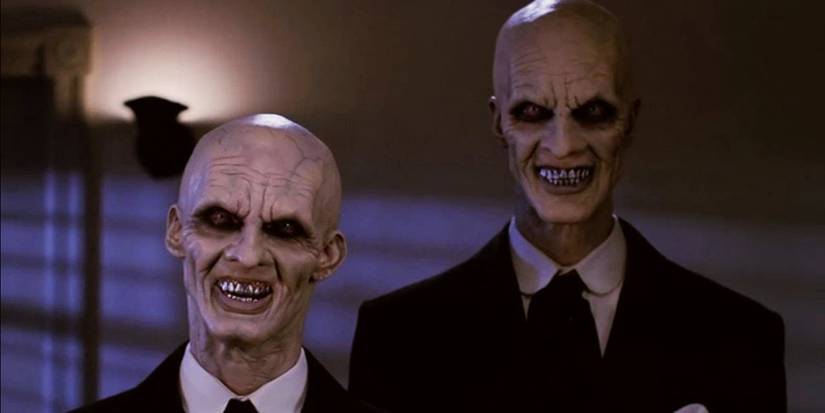
Harking back to classic silent era horror movies is an ambitious choice for any ‘90s network series, but Buffy the Vampire Slayer was nothing if not daring. After all, what is widely seen as Buffy the Vampire Slayer’s best episode ever is not a horror endurance test nor a particularly poignant teen drama, but rather an inventive musical outing.
The series went out of its way to play with the constraints of its genre and the expectations of its audience, resulting in classic episodes like “Hush.” While the villains are deeply creepy, what is most effective about this outing is the episode’s ability to convey the terror of losing one’s voice in such a limited runtime.
“Hush” uses the loss of the main cast’s voices as an opportunity to pay off various subplots from the season, as the miscommunications between characters and the things they haven’t been able to bring themselves to say come to light. The result is an episode that is as poignant and engaging as it is scary.
There Have Been Many Risky Silent Episodes Since “Hush”
Despite the almost universal acclaim that “Hush” enjoyed upon its release and since, the episode still has its detractors. Thanks to that risky premise, there are critics who claim that “Hush” isn’t one of Buffy the Vampire Slayer’s best episodes, but rather a gimmicky experiment that only won over viewers and reviewers thanks to its novelty value.
This view is more than a little contrarian, considering how well the premise of voice loss is integrated into both the episode itself and the larger story arc of season 4. However, the real proof of the episode’s success comes from the ongoing trend that “Hush” inspired. Buffy the Vampire Slayer’s risky outing led to a string of silent episodes.
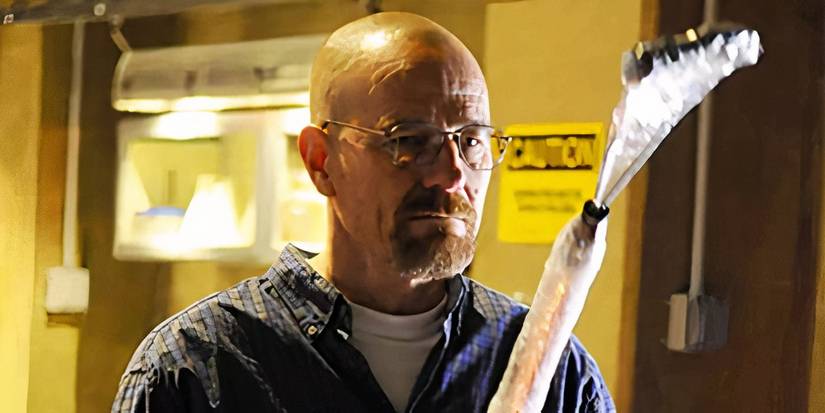
Most notably, Breaking Bad’s infamously daring season 3, episode 10, “Fly,” directed by future Knives Out helmer Rian Johnson, featured little dialogue in its sparse story of Walter White hunting the titular tiny lab contaminant. Meanwhile, BoJack Horseman’s equally acclaimed season 3, episode 4, “Fish Out of Water,” only featured minor moments of dialogue in its opening and closing scenes.
Outside these particularly acclaimed examples, The Bear, Mr Robot, Only Murders in the Building, Evil, The X-Files revival, and Inside Number 9 all featured near-silent episodes that took part in this trend, and each built on the blueprint offered by “Hush.” Thus, Buffy the Vampire Slayer’s proof that the show wasn’t entirely built on dialogue ironically made dialogue-free episodes a trend.
Release Date 1997 - 2003
Network The WB




 English (US) ·