
 3 weeks ago
40
3 weeks ago
40
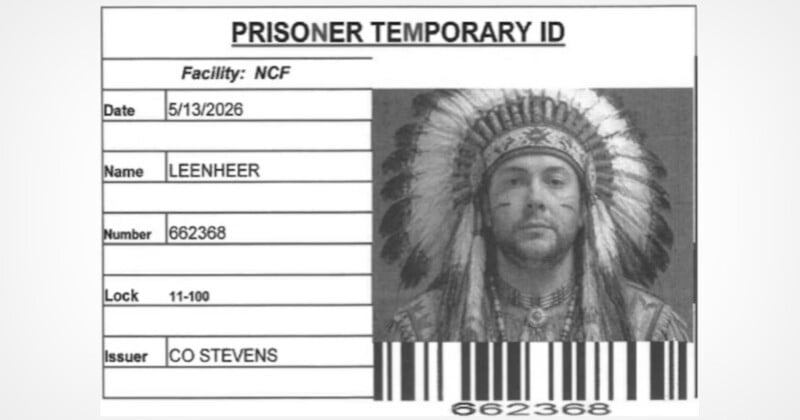 Dylan Leenheer’s prisoner ID photo, which the lawsuit alleges was digitally altered to depict him wearing stereotypical Native American attire | Image via Flood Law
A former inmate has filed a lawsuit accusing correctional officers of digitally altering his prison photograph to make him appear wearing a stereotypical Native American headdress and clothing.
Dylan Leenheer, a Native American man and former inmate at Newberry Correctional Facility in Luce County, Michigan, has sued the Michigan Department of Corrections (MDOC) and three individual staff there. Leenheer is currently on parole but was incarcerated at the Newberry Correctional Facility in May.
According to a report by Michigan news outlet WLUC which has seen the lawsuit filed by Flood Law, Leenheer was subjected to “intentional racial humiliation” as a Native American man at the hands of corrections officers Jay Stevens and Robert Marsh and library technician JoLynn Cebula while he was incarcerated at the Newberry Correctional Facility.
The complaint says Leenheer is a member of the Gun Lake Tribe and was one of only three Native American prisoners housed in Unit 11 at the facility. On May 13, Leenheer requested a replacement temporary identification card from officers Stevens and Marsh.
Leenheer alleges that Stevens digitally edited his identification photograph, using photo-editing software to make him appear in stereotypical Native American clothing, including a feathered headdress and facial paint. The lawsuit includes a scan of the altered photograph.
According to the complaint, Stevens then permitted the altered image to be displayed in the Unit 11 window, where other prisoners and staff could see it, allegedly “subjecting” Leenheer to “public humiliation on the basis of his race and ethnicity.”
The complaint also makes allegations against Cebula. Leenheer says he requested photocopies of the altered ID card from the law library so he could support a grievance he had filed. He alleges that Cebula refused to make the copies, declined to sign the request form explaining the denial, and would not return the ID card to him, telling him she thought it was “funny.”
According to a further report by Interlochen Public Radio, Maura Battersby, a senior attorney with Detroit-based Flood Law, which is representing Leenheer, says the firm has also been contacted about two other incarcerated men who allegedly had their identification photographs digitally altered using racial stereotypes. According to Battersby, one of the men is Black and the other is from India.
The law firm has asked that body-camera footage and other records potentially showing how the photograph was altered be preserved. Battersby says that being incarcerated does not strip a person of their basic human dignity or constitutional rights.
“From what we presently know, it appears that it’s a broader pattern,” Battersby says. “We know enough to know that this was really blatant and really brazen, but we don’t know the full extent of it as of yet.”
“There’s a tendency… to say that because you’re serving a prison sentence, you deserve what you get,” Battersby adds. “It’s not a free-for-all.”
The lawsuit states that Leenheer suffered emotional distress, humiliation, anxiety, depression, and other damages as a result of the edited photo. The complaint seeks compensatory damages for Leenheer and “exemplary damages” against the defendants.
Affiliate Disclosure PetaPixel articles may include affiliate links; we may earn a commission if you buy through one.



 English (US) ·