
 3 weeks ago
17
3 weeks ago
17
What is time? It feels like PlayStation 5 was released yesterday, but it’s actually more than five years old. This year will see its sixth birthday, which is usually when we can expect to start hearing more about a console’s successor. Seven years is a typical console generation lifespan; no PlayStation has ever been released more than seven years after its predecessor, and the eight-year gaps between Switch and Switch 2, or Xbox 360 and Xbox One, are the longest ever for a home console. (Both pale next to the Game Boy’s incredible 12-year run, though.)
If it doesn’t feel like it’s time to start thinking about the PS6 yet, it’s because lengthening game development times have slowed the pace of new releases for PS5, because initial take-up of the console was slowed by supply issues, and because the Covid-19 pandemic distorted everyone’s sense of time. But the time is upon us all the same.
As it happens, there are reasons why the PS5 could keep going for a few years yet. But regardless, Sony is surely already planning for the next PlayStation, and considering how it’s going to extend PS5’s dominance of the dedicated home console market and crushing defeat of Xbox into the next generation. Here’s what we know so far.
What is the latest PS6 news?
Sony is considering pushing back the launch of the PlayStation 6 to 2028 or even 2029. That’s according to a Bloomberg report on the RAM crisis that is engulfing the whole computing sector. The insatiable demand for memory chips to put in processors in the AI datacenters being built out by Microsoft, Google, Amazon, and others is causing severe supply issues and huge price hikes in the cost of all kinds of computing, including games hardware. The crisis has forced Valve to delay the launch of its Steam Machine and allow the Steam Deck to run out of stock.
The implication is that Sony feels it’s better to sit out the crisis a while longer and see if prices stabilize, and if it can secure a supply of chips for the PS6, before it commits to manufacturing and launch dates for the new console. Earlier leaks had suggested that Sony planned to begin manufacturing PS6 in 2027 for a late 2027 or early 2028 release date, which would have been consistent with their strategy for the previous three console generations.
What is PS6’s release date? When is it coming out?
We don’t know, and we’re probably a long way from knowing. Until recently it seemed that a November 2027 release for the PlayStation 6 was on the cards, if not actually the plan, following the pattern established by the PS3, PS4, and PS5.
Sources don’t appear to believe that the decision to delay the PS6 beyond this point has been taken yet. But it is definitely in consideration due to the RAM crisis, with Sony now looking at 2028 or even 2029 as a possible release date for the new console.
Why might PS6 be delayed?
As well as the current difficulty of securing enough chips and setting a reasonable price point, there are other reasons Sony might choose to wait before releasing the PS6.
The PS5 has sold well, on par with the PS4, but it has done so in what appears to be a shrinking overall market for dedicated home consoles. The adoption rate for the current generation has been slow, with the biggest games like Fortnite, Roblox, and Minecraft still very playable on older hardware. Lengthening game development cycles (also impacted by the Covid-19 pandemic) mean that current hardware feels underexploited; GTA 6, bound to be the PS5’s defining game, hasn’t been released yet. Meanwhile, diminishing returns from technological advances are clashing with the ballooning cost of developing games for current specs.
All of these are reasons why consumer demand for another generation of PlayStation is probably on the low side — and why, as Bloomberg’s Jason Schreier put it, a 2027 release for PS6 would be “a disaster for everyone involved.”
What will PS6’s price be?
It’s too early to predict the pricing for PS6, not least because the RAM crisis is driving rapid increases in the cost of consumer electronics. For this reason, Valve is currently unwilling to set a price for the Steam Machine, a device that it expects to launch this year. That being the case, it would be foolish to predict how much a PS6 will cost in 2028 or beyond.
That said, be ready for the console to cost more than previous generations, due to demand for microchips as well as inflation and general economic factors. Earlier generations of PlayStation saw their prices reduced over their lifespans, while the PS5 costs more now than it did at launch, and the PS5 Pro has hit $750.
Analysts were predicting that the PS6 might launch at $600 back in 2024. They would likely revise that estimate upward now. For its part, Sony’s rival Microsoft has warned that the next Xbox will be a “very premium, very high end” — meaning, expensive – device.
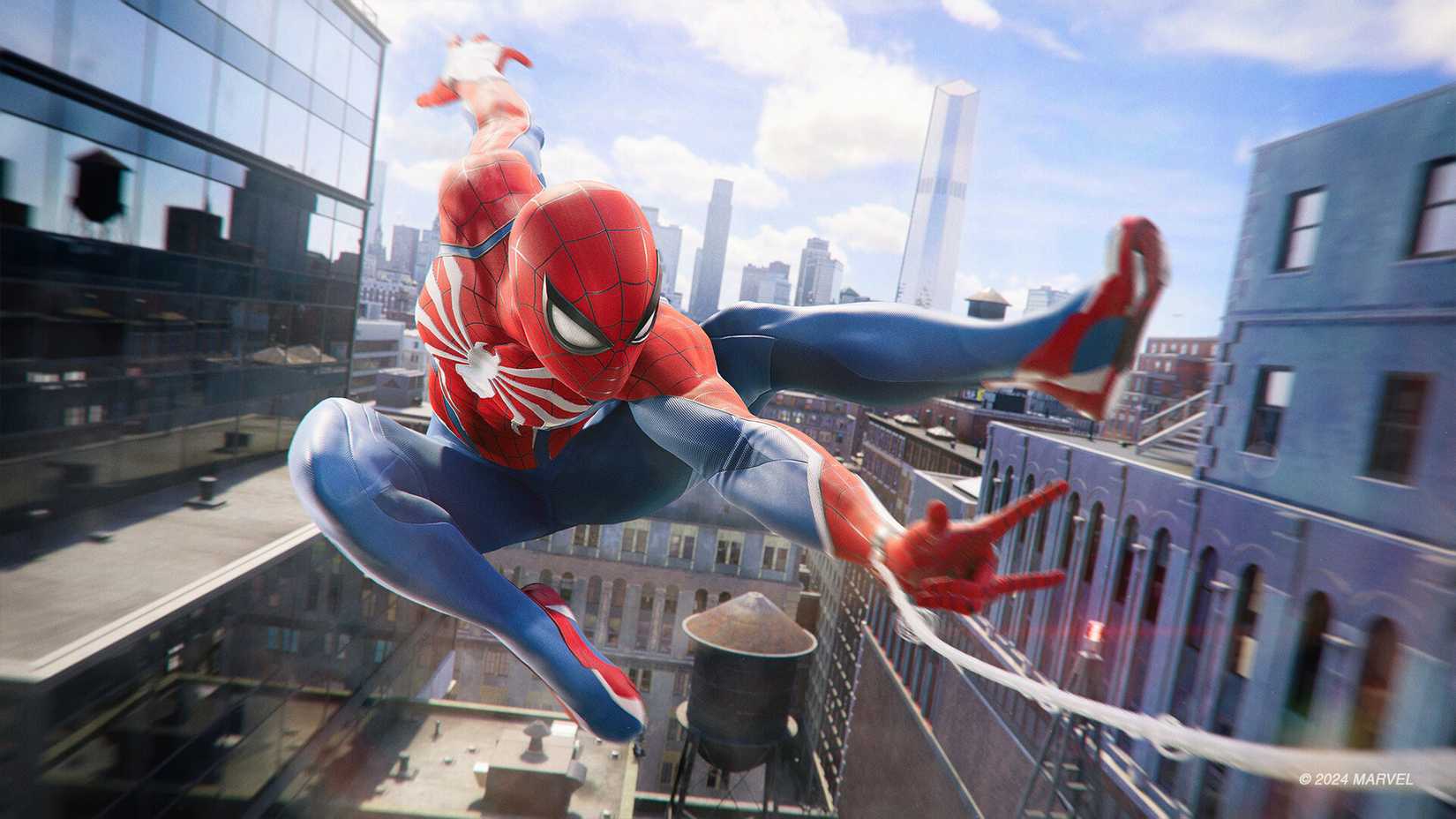 Image: Insomniac Games/Sony Interactive Entertainment
What games will PS6 have?
It’s very hard to say what games PS6 will have at this point, not least because of the potential delay to its launch. Although games planned for PS6 are almost certainly already in development, most developers — Sony itself included — will be keeping their options open in terms of platform while they wait to see when the new console will arrive.
Here’s an example: When Sony-owned developer Insomniac was hacked in 2023 its future development roadmap leaked, including proposed dates for Marvel’s Spider-Man 3 in 2028 and Marvel’s X-Men in 2030. Who knows if these dates remain accurate — a 2025 Venom game didn’t materialize, but Marvel’s Wolverine’s 2026 launch still seems locked in.
Assuming they are, Spider-Man 3 was probably planned as a PS6 game. If PS6 doesn’t launch until 2028 or 2029, will Insomniac delay Spider-Man 3, shift it to PS5, or go for a cross-gen launch? All seem plausible.
We can safely assume Marvel’s X-Men will be a PS6 game, though. So that’s one!
There are a bunch of other contenders, all unconfirmed, including Gran Turismo 8, a new Astro Bot game, an unannounced title in development at Naughty Dog (not thought to be The Last of Us Part 3), and whatever Santa Monica Studio is currently making. All of these could go to PS5, PS6, or both.
And what about Grand Theft Auto 7? Well, given how long it is taking Rockstar Games to make GTA 6, it might be safer to earmark GTA 7 for PS7. Or maybe PS8.
Will PS6 be backward-compatible?
At last, here’s a question we can answer with a degree of certainty. It’s highly likely that the PS6 will be backward-compatible with PS5 games, and probably PS4 games, too.
Like Microsoft, Sony has announced that it’s going to continue to work with chip supplier AMD on the processors for its future hardware. Reports suggest that the PS6 will use a next-gen Zen processor that’s compatible with the x86 architecture used in PS4 and PS5, making backward compatibility easy to implement.
Backward compatibility has also become an expectation among players, who have become used to bringing their game libraries forward onto new hardware. It’s arguably a necessity for Sony and its partners, too. The pace of game development has slowed enough that the PS5 would have really struggled for software in its first few years if it hadn’t also been able to play PS4 games.
 Image: Naughty Dog/Sony Interactive Entertainment
What are PS6’s tech specs? How powerful will it be?
There have been a few unconfirmed leaks about the PS6’s specs, although as yet there’s nothing quite substantial enough to treat as gospel. All we know for sure is that AMD will once again supply the silicon.
That being said, we can expect the processor will be a custom iteration of AMD’s next-gen Zen 6 chip. Similarly, the new RDNA 5 graphics unit from AMD will likely form the basis of the PS6’s GPU.
Some have suggested that the console will have as much as 30 GB of GDDR7 RAM, but there doesn’t seem to be enough evidence to support this yet.
Most agree on the target performance of the spec, though: the PS6 should be capable of 4K gaming at 120 frames per second with advanced ray tracing. (This doesn’t mean that all games will run at this level, though — far from it!)
What about the next-gen PlayStation handheld?
This is a whole separate topic, really, but it’s worth mentioning here. Sony is widely reported to be working on a handheld PlayStation to compete with Nintendo’s Switch 2 as well as the Steam Deck, Xbox Ally, and other PC handhelds.
The key question about this device is its level of compatibility with the PlayStation catalog. Full PS4 compatibility would seem to be a given, and most reports suggest the handheld will be able to run PS5 games too — if not necessarily all of them, or at the same quality as PS5.
In fact, some level of PS6 compatibility is even possible, because the handheld is rumored to use a cut-down version of the same Zen 6 and RDNA 5 architecture employed in PS6. With increasing overlap between hardware generations being a trend, and with third-party games needing to run on a very wide range of hardware (factoring in PC and, sometimes, Switch and Switch 2), there’s a chance that the handheld PlayStation will be able to keep pace with its biggest brother for some time.
Check out this Digital Foundry report for lots more detail on the topic of the PlayStation handheld.




 English (US) ·