Every Season of 'The Wire,' Ranked According to Rotten Tomatoes
3 weeks ago
20
Image via HBO
Published May 4, 2026, 1:12 PM EDT
Jeremy has more than 2500 published articles on Collider to his name, and has been writing for the site since February 2022. He's an omnivore when it comes to his movie-watching diet, so will gladly watch and write about almost anything, from old Godzilla films to gangster flicks to samurai movies to classic musicals to the French New Wave to the MCU... well, maybe not the Disney+ shows.
His favorite directors include Martin Scorsese, Sergio Leone, Akira Kurosawa, Quentin Tarantino, Werner Herzog, John Woo, Bob Fosse, Fritz Lang, Guillermo del Toro, and Yoji Yamada. He's also very proud of the fact that he's seen every single Nicolas Cage movie released before 2022, even though doing so often felt like a tremendous waste of time. He's plagued by the question of whether or not The Room is genuinely terrible or some kind of accidental masterpiece, and has been for more than 12 years (and a similar number of viewings).
When he's not writing lists - and the occasional feature article - for Collider, he also likes to upload film reviews to his Letterboxd profile (username: Jeremy Urquhart) and Instagram account.
He has achieved his 2025 goal of reading all 13,467 novels written by Stephen King, and plans to spend the next year or two getting through the author's 82,756 short stories and 105,433 novellas.
When it comes to acclaimed television shows of the 21st century, few are as universally praised as The Wire. While it wasn't as popular while it was on the air, in the years since its final episode in 2008, its reputation has increased significantly. What was once an acclaimed but underrated crime/drama series is now considered legendary and an essential watch for fans of prestige TV shows. When it comes to other HBO shows, perhaps its only competitor is The Sopranos, and even then, when judging what the greatest show of the 2000s was, one could get technical and point out that The Sopranos aired its first season in 1999.
So, The Wire is considered great, but what's it about? When it began in 2002, The Wire was predominantly concerned with following a group of police in Baltimore undertaking a wire-tapping operation to bring down a drug-dealing gang known as the Barksdale organization. Each season following the first introduced a new area of Baltimore that would be focused on, though it did this without ever forgetting previous storylines or characters. By the final season, the scope of the show and the size of its cast were huge, making The Wire feel like a true epic. It's great television from start to finish, but some seasons hit harder than others, as demonstrated by how they're ranked below, according to critics on Rotten Tomatoes.
5
Season 1 (2002)
Rotten Tomatoes Rating: 86%
Image via HBO
Season 1 of The Wire introduces viewers to a talented (and huge) cast from the get-go. Impressively, the size only grows as the seasons go on, but the increasing scope of the show is more incremental once you get past the first season. Things can feel overwhelming, at least initially, so if there's any reason why Season 1 is considered by critics to be a little less great than other seasons, it's probably due to the confusion some may feel when they start the show. It's possible to experience a feeling of being thrown into a televisual deep end, so to speak.
After a handful of episodes, things get clearer. By the end of the season, the fairly straightforward (by The Wire's standards) story about a wire-tapping operation taking on a street gang comes to a logical and emotionally powerful close. But one gets the sense that this world feels lived in, and that the characters all have immense histories, and those things take time to become accustomed to. For that reason, on first watch, season one of The Wire is the most challenging season. But on a rewatch, it's far more comprehensible, and even on a first watch, it comes together in the end. Either way, it's a strong start to the show and allows future seasons to build off it and become even better.
4
Season 5 (2008)
Rotten Tomatoes Rating: 93%
Image via HBO
The Wire is a show that's received a great deal of acclaim for its season finales, so it's fitting that it also has a great series finale. As mentioned before, by the fifth and final season of The Wire, the show was essentially painting a portrait of Baltimore as a whole. Just about every character who didn't die in the first four seasons makes some sort of appearance in the fifth and final season, even if for just a moment or two. The final episode itself runs for longer than some movies (at 93 minutes), which demonstrates just how many storylines needed to be concluded as the show came to a close.
Season 5 undoubtedly gives The Wire a satisfying conclusion, with its final three to four episodes being particularly memorable. The show's primary storyline isn't quite as beloved, though, as the main institution introduced in the fifth season was The Baltimore Sun, with a new storyline exploring the role the media played in the city, and how it influenced street crime and the police department. While focusing on the Sun and the media as a whole wasn't quite as popular with fans of the show, Simon and his writing team did a tremendous job showcasing how budget cuts were degrading the newspaper, with the remaining newsroom employees being urged to "do more with less." The Sun also was the setting for, arguably, the series' most underrated conflict between Metro Desk Editor Gus Haynes (Clark Johnson) and General Assignment Reporter Scott Tempelton (Tom McCarthy), the latter of which resorted to fabricating his stories in order to grow his reputation, and would serve to tie everything together in the season's final episode. Season 5 was still compelling television, but perhaps not on the same level as the storylines other seasons focused on. Still, since Season 5 also serves as a pitch-perfect conclusion to the show's other narrative threads, it does ultimately stand as a great season of television.
3
Season 2 (2003)
Rotten Tomatoes Rating: 95%
Image via HBO
The Wire's second season may alarm some viewers who've just gotten used to the Season 1 status quo. Newcomers expecting the storyline from Season 1 to remain the focus will be taken aback by the introduction of the Port of Baltimore storyline, which revolves around dockworkers and how they're impacted by another criminal organization, this one run by a man known only as "The Greek." Beyond importing drugs into the city of Baltimore, he also imports stolen goods and sex trade workers, the latter of which is what initially gets the attention of the city's police (some newly introduced officers, and some who were introduced in Season 1).
The Barksdale crew (the street-level gang focused on in Season 1) take a backseat here, though they remain important to the show. Numerous members of the once-powerful gang have been imprisoned following Season 1, but their attempts to rebuild are given a good deal of attention, with this storyline regaining more of a central focus in Season 3. If there's one complaint to be made about Season 2, it's that most of the new characters introduced here only play small roles in the subsequent seasons, which makes Season 2 feel comparatively disconnected. However, like any season of The Wire, it's still amazingly well written, acted, and filmed, making for tense and very engaging TV.
Collider Exclusive · TV Medicine QuizWhich Fictional Hospital Would You Work Best In?The Pitt · ER · Grey's Anatomy · House · Scrubs
Five hospitals. Five completely different ways medicine goes sideways on television — brutal, chaotic, romantic, brilliant, and ridiculous. Only one of them is the ward your instincts were built for. Eight questions will figure out exactly where you belong.
🚨The Pitt
🏥ER
💉Grey's
🔬House
🩺Scrubs
FIND YOUR HOSPITAL →
01
A critical patient comes through the door. What's your first instinct?Medicine under pressure reveals who you actually are.
AStay completely present — block everything else out and work through it step by step, right now.
BTriage fast and delegate — get the right people on the right problems immediately.
CTrust my gut and move — I work best when I stop overthinking and just act.
DAsk the question everyone else is ignoring — what's the thing that doesn't fit?
ETake a breath, make a joke to cut the tension, and then get to work — panic helps no one.
NEXT QUESTION →
02
Why did you go into medicine in the first place?The honest answer says more about you than the one you'd give in an interview.
ABecause I wanted to be where it matters most — right at the edge, when someone's life is actually on the line.
BBecause I wanted to help people — genuinely, one patient at a time, in a system that makes it hard.
CBecause I was drawn to the intensity of it — the stakes, the drama, the feeling of being fully alive.
DBecause medicine is the most interesting puzzle there is — and I needed a problem worth solving.
EBecause I wanted to make a difference — and also, honestly, I didn't know what else to do with my life.
NEXT QUESTION →
03
What do you actually want from the people you work with?Who you want beside you under pressure is who you are.
ACompetence and calm — I need people who don't fall apart when things get bad.
BTrust and reliability — I want to know that when I pass something off, it's handled.
CConnection — I want colleagues who become family, even if that gets complicated.
DIntelligence and the willingness to be challenged — I have no interest in people who just agree with me.
EFriendship — people I actually like spending twelve hours a day with, because those hours are going to happen either way.
NEXT QUESTION →
04
You lose a patient you fought hard to save. How do you carry it?Every doctor who's worked a long shift has had to answer this question.
AI carry it. All of it. I don't look for ways to put it down — that weight is part of doing this work honestly.
BI process it and move — you have to, or the next patient suffers for the one you just lost.
CI feel it deeply and lean on the people around me — I don't think you're supposed to handle that alone.
DI go back over every decision — not to punish myself, but because I need to understand what I missed.
EI grieve it genuinely, find some way to laugh about something unrelated, and try to be kind to myself — imperfectly.
NEXT QUESTION →
05
How would your colleagues describe the way you work?Your reputation on the floor is usually more accurate than your self-image.
AIntense and completely present — no small talk during a shift, but exactly who you want there.
BSteady and dependable — not the flashiest in the room but never the one who drops something.
CPassionate and occasionally chaotic — brilliant on the hard cases, prone to drama everywhere else.
DBrilliant and difficult — right more often than anyone else, and everyone knows it, including me.
EWarm and self-deprecating — not the most intimidating presence, but genuinely good at this and easy to like.
NEXT QUESTION →
06
How do you feel about hospital protocol and procedure?Every institution has rules. What you do with them is a choice.
AProtocol is the floor, not the ceiling — I follow it until the patient needs something it can't provide.
BI respect it — the system is broken in places, but the structure is there for a reason and I work within it.
CI follow it until my instincts tell me not to — and my instincts are usually right, even when they cause problems.
DRules are for people who haven't thought hard enough about when to break them.
EI try to follow it and mostly do — with a few memorable exceptions that still come up in meetings.
NEXT QUESTION →
07
What does this job cost you personally?Nobody works in medicine without paying a price. What's yours?
AEverything outside these walls — I've given this job my full attention and the rest of my life has gone around it.
BMy idealism, mostly — I came in believing the system could be fixed and I've made a complicated peace with that.
CStability — my personal life has been as chaotic as the OR, and that's not entirely a coincidence.
DMy relationships — I am not easy to know, and the people who've tried to would probably agree.
EMy sense of gravity — I use humour as a coping mechanism, which not everyone appreciates in a hospital.
NEXT QUESTION →
08
At the end of a long shift, what keeps you coming back?The answer to this question is the most honest thing about you.
AThe fact that it's real — that nothing else I could be doing would matter this much, right now, today.
BThe patients — individual human beings who needed something and got it because I was there.
CThe people I work with — I have walked through impossible things with these people and I'd do it again.
DThe next unsolved case — there's always another puzzle, and I'm not done yet.
EBecause despite everything — the exhaustion, the loss, the absurdity — I actually love this job.
REVEAL MY HOSPITAL →
Your Assignment Has Been MadeYou Belong In…
Your answers have pointed to one fictional hospital above all others. This is the ward your instincts, your temperament, and your particular brand of dysfunction were built for.
The Pitt
You are built for the most unsparing version of emergency medicine television has ever shown — one that puts you inside a single fifteen-hour shift and doesn't let you look away.
You need your work to be real, not romanticised — meaning over drama, honesty over aesthetics.
You find purpose inside the work itself, not in the chaos surrounding it.
You've made peace with the fact that this job takes from you constantly, and gives back in ways that are harder to name.
Pittsburgh Trauma Medical Center demands exactly that kind of person — and you would not want to be anywhere else.
ER
You are the person who keeps the whole floor running — not the most brilliant in the room, but possibly the most essential.
You show up, do the work, absorb the losses, and come back the next day without needing the job to be anything other than what it is.
You care about patients as individual human beings, not as cases to solve or dramas to live through.
You believe in the system even when it fails you — and you understand that emergency medicine is about holding the line just long enough.
ER is television about endurance. You have it.
Grey's Anatomy
You came to medicine with your whole self — your ambition, your emotions, your relationships, your history — and you have never quite managed to leave any of it at the door.
You feel things fully and form deep attachments to the people you work with.
Your personal and professional lives are permanently, chaotically entangled — and that entanglement drives both your greatest disasters and your most remarkable saves.
You understand that extraordinary medicine often happens at the intersection of clinical skill and profound human connection.
It's messy at Grey Sloan. You would not have it any other way.
House
You are drawn to the problem above everything else — the symptom that doesn't fit, the diagnosis hiding underneath the obvious one.
You're not primarily motivated by the patient as a person — though you are capable of caring, even if you'd deny it.
You work best when the stakes are highest and the standard answer is wrong.
Princeton-Plainsboro exists to house one extraordinary, impossible mind — and everyone around that mind is there because they're smart enough to keep up.
The only way forward here is to think harder than everyone else in the room. That is exactly what you do.
Scrubs
You understand that medicine is tragic and absurd in almost equal measure — and that the only sane response is to hold both of those things at the same time.
You are warm, self-aware, and funnier than most people in your field.
You use humour to get through terrible moments — and at Sacred Heart, that's not a flaw, it's a survival strategy.
You lean on the people around you and let them lean back. The laughter and the grief are genuinely inseparable here.
Scrubs is a show about learning to become someone worthy of the job. You are still very much in the middle of that process — which is exactly right.
↻ RETAKE THE QUIZ
2
Season 3 (2004)
Rotten Tomatoes Rating: 100%
Image via HBO
It's fitting that Season 3 of The Wire has a 100% approval rating on Rotten Tomatoes, because it's honestly hard to fault. After a season spent licking their wounds, the Barksdale gang bounces back, getting the same sort of screen time they had in Season 1. The gang has to contend with a new street gang led by the ruthless Marlo Stanfield, which makes for an engaging (and tragic) turf war narrative. While battling the Stanfield crew for control of the corners of West Baltimore, infighting within the Barksdale crew between Avon Barksdale and Stringer Bell led to a dramatic, memorable, and maybe even stomach-churning conclusion.
Season 3 also has a storyline revolving around Hamsterdam, which is a new (and small) area within Baltimore where drugs are made legal, to explore whether legalization rather than criminalization could be a solution to the city's concerns around drug-taking and drug-related violence. Furthermore, Season 3 also introduces viewers to the world of Baltimore politics, following a young politician named Tommy Carcetti who aspires to become the city's mayor. The scale is much greater than what was seen in Seasons 1 and 2, but it's all incredibly well-balanced, and makes for a superb season of television that's nearly impossible to fault on any level.
1
Season 4 (2006)
Rotten Tomatoes Rating: 100%
Image via HBO
Season 4 of The Wire sees the show at its absolute peak, which is saying something, considering the other four seasons are all pretty close to perfect, if not themselves arguably flawless. The police continue to play a pivotal role, conflicts between street gangs keep playing out, and the political side of the show becomes more high-stakes, with a season-long narrative about Baltimore's mayoral election taking up a major part of the season. Yet the most emotionally devastating and compelling storyline comes from the new area of the city, which is focused on during the show's fourth season: that of an underfunded inner-city school.
The young characters introduced in Season 4 play limited roles in the final season, but it's the penultimate season where they really shine. Introducing children into a show like this might not seem like a great idea on paper, but the young cast members are remarkably naturalistic and fit in with the rest of the cast perfectly. It also might feel so emotional and grounded because a storyline set in a school is something most viewers can personally relate to, or are at least more likely to relate to, than storylines set around police departments, street gangs, or political institutions. There's a near-universal relatability to the part of Baltimore introduced in season four that makes this batch of episodes so remarkably powerful, ultimately giving Season 4 the edge and making it The Wire's greatest season.
Directors
Ernest R. Dickerson, Ed Bianchi, Steve Shill, Clark Johnson, Daniel Attias, Agnieszka Holland, Tim Van Patten, Alex Zakrzewski, Anthony Hemingway, Brad Anderson, Clement Virgo, Elodie Keene, Peter Medak, Rob Bailey, Seith Mann, Christine Moore, David Platt, Dominic West, Gloria Muzio, Jim McKay, Leslie Libman, Milcho Manchevski, Robert F. Colesberry, Thomas J. Wright

 Image via HBO
 Image via HBO
 Image via HBO
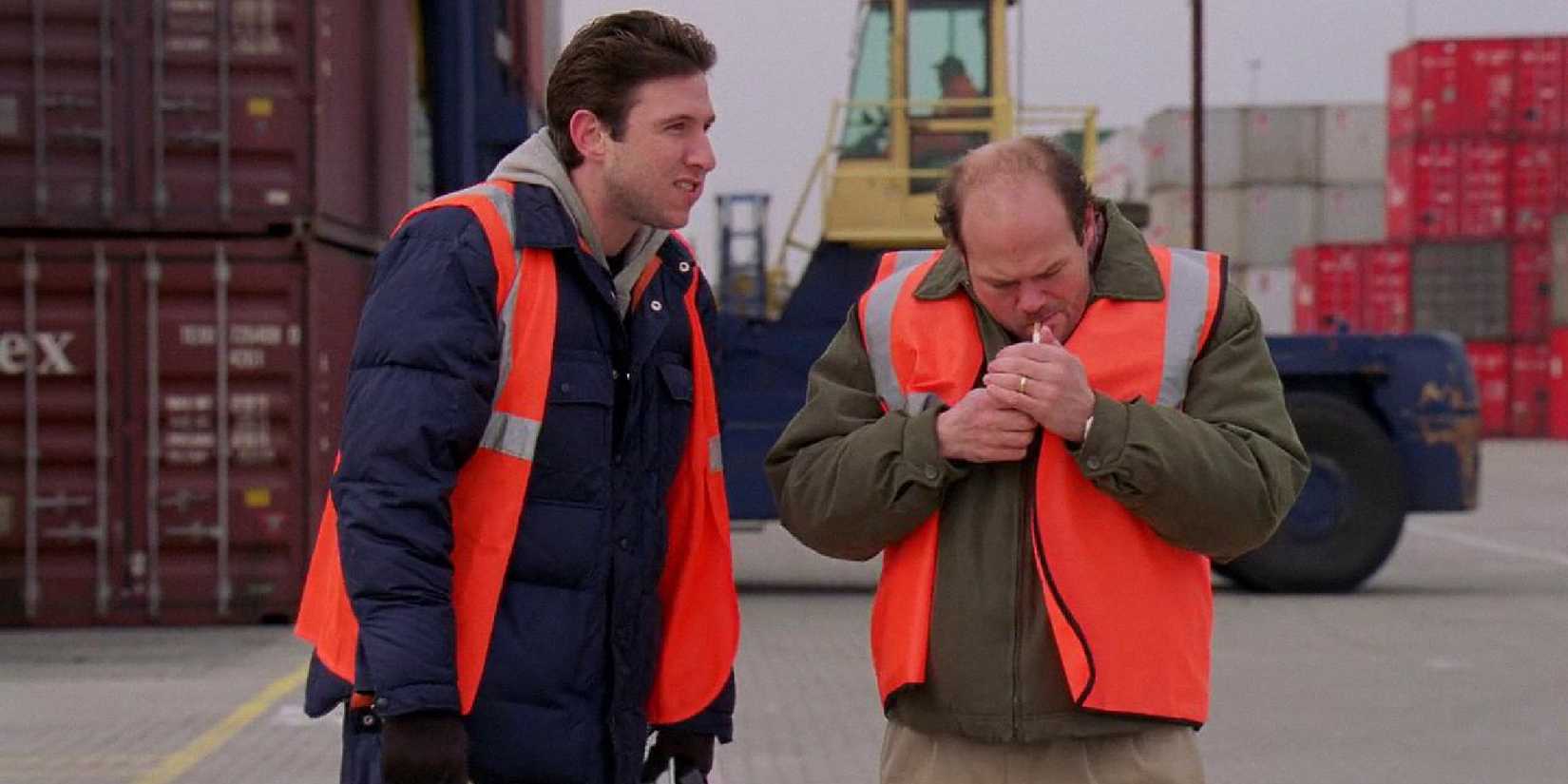 Image via HBO
 Image via HBO
 Image via HBO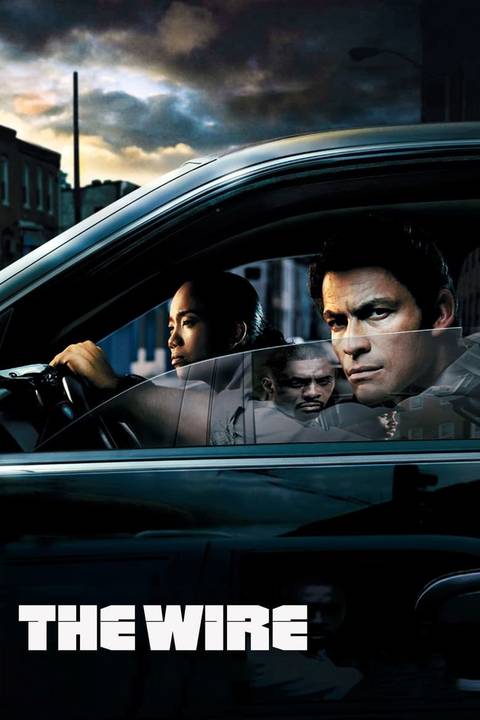







 English (US) ·