
The Pokémon series has always allowed for players to choose their trainer's name. But each Pokémon protagonist also has an official, canonical name as well. The option to name the main characters of any Pokémon game is a tradition that dates back to the original games, Japan's Pokémon Red and Green. As time went on, and characters from the mainline games were given roles in different titles, they also received canon names that have stuck with them since.
Though some players believe that the default names given in each game are the canon choice, this isn’t always the case. The official names of the Pokémon game protagonists have been confirmed in a number of different ways.
Many received canon names by appearing in Pokémon Masters EX as trainers that the player is able to recruit in-game. Regardless of how they got their names, the Pokémon games have some thematically appropriate protagonist names.
The Official Name Of Every Pokémon Protagonist
Pokémon Protagonists Have Canon Names In Other Media

All the official names of the Pokémon protagonists are in the table below, separated by release. The first generation of Pokémon games simply used the name of one of the versions as the protagonist's name.
This was originally true for the second generation as well, but Gold was later renamed Ethan in the HeartGold and Soul Silver remakes. Some earlier Pokémon games – Red, Blue, Yellow, Gold, and Silver – didn't have the option to play as a female protagonist, meaning there is only one name for those games.
|
Red and Blue |
Red |
N/A |
|
Yellow |
||
|
FireRed and LeafGreen |
Leaf |
|
|
Gold and Silver |
Ethan |
N/A |
|
Crystal |
Kris |
|
|
HeartGold and SoulSilver |
Lyra |
|
|
Ruby and Sapphire |
Brendan |
May |
|
Emerald |
||
|
Omega Ruby and Alpha Sapphire |
||
|
Diamond and Pearl |
Lucas |
Dawn |
|
Platinum |
||
|
Brilliant Diamond and Shining Pearl |
||
|
Black and White |
Hilbert |
Hilda |
|
Black 2 and White 2 |
Nate |
Rosa |
|
X and Y |
Calem |
Serena |
|
Sun and Moon |
Elio |
Selene |
|
Ultra Sun and Ultra Moon |
||
|
Let's Go, Pikachu! and Let's Go, Eevee! |
Chase |
Elaine |
|
Sword and Shield |
Victor |
Gloria |
|
Legends: Arceus |
Rei |
Akari |
|
Scarlet and Violet |
Florian |
Juliana |
|
Legends: Z-A |
Paxton |
Harmony |
|
Winds and Waves |
(Unknown) |
(Unknown) |
While Pokémon spin-off games typically don't follow the same rules as the main series, a couple also have pairs of named protagonists. For the sake of simplicity, Pokémon games with unnamed protagonists, a wide array of protagonists, or protagonists who are Pokémon themselves will be excluded.
|
Trading Card Game |
Mark |
Mint |
|
Trading Card Game 2 |
||
|
Puzzle Challenge |
Ethan |
N/A |
|
Snap |
Todd Snap |
N/A |
|
Detective Pikachu |
Tim Goodman |
N/A |
|
Masters EX |
Scottie |
Bettie |
|
Champions |
Willem |
Becca |
Following the early games, Pokémon protagonists were given more natural-sounding names, which is a little ironic, seeing as Emerald and Pearl are more common names than Red or Blue. Some protagonist names are still references to the names of their respective versions, like Selene, whose name means moon. This trend can be seen in many of the newer Pokémon games as well.
How Pokémon Trainers Get Their Canon Names
Trainer Names Typically Tie In With Their Version's Title Or Themes

Some Pokémon protagonists didn't get their official name right away. For instance, in Red and Blue, there were a handful of default options, including Satoshi and Shigeru (with Red and Blue among them), referencing Pokémon creator Satoshi Tajiri and Nintendo icon Shigeru Miyamoto. Red's name was later canonized by his appearance in subsequent generations.
It may seem as if the Pokémon protagonist names are random, but a few of them do have deeper meanings. Victor and Gloria from Pokémon Sword and Shield are references to the lyrics of the UK national anthem, which mentions both victory and glory. Meanwhile, Pokémon Black and White's protagonists derive their names from the Germanic "hild," meaning battle.
For Pokémon Scarlet and Violet's trainers, Florian is a name derived from Latin terms meaning "flowering" or "blooming," and Juliana means "youthful." Both of these represent the fact that the characters are young children who are studying at school. Pokémon protagonists are always kids for a reason, and Florian and Juliana are just starting out on their big Pokémon adventure.
Pokémon Legends: Z-A has similarly meaningful names in Paxton and Harmony. The X in Paxton and Y in Harmony reference Pokémon X and Y, where the game's setting of Kalos debuted. Paxton also features the Latin word "pax," meaning "peace," while Harmony's similar definition is clear in English.
We don't yet know the protagonists' names in the latest mainline entry in the franchise, Pokémon: Winds and Waves. If the pattern continues, though, we can expect the official names to tie in to the games' themes.
That means the names might be themed around wind or air, like Marina or Gale. They may also lean into the Southeast Asian, Hawaiian, and Okinawa inspirations for the region. Names like Kai (meaning "sea"), Sora / Soren (meaning "sky"), Mina / Minato (meaning "harbor"), or Bayu (meaning "wind"), would all fit right into the games.
It's likely that the inevitable remakes of classic games like Pokémon Black and White will retain the names of their Pokémon trainer protagonists, barring some massive change in the storyline that shakes things up. This is certainly the case with the Pokémon FireRed and LeafGreen remakes that were released in February 2026 to celebrate the series 30th anniversary.
Recent games removed the ability to name a trainer's rivals. This is a shame, especially since the games still lack proper voice acting, which would necessitate the removal of certain name customization for the purpose of recording lines.
Does It Matter Which Pokémon Protagonist You Choose?
Players Can Sometimes Choose Between Male & Female Protagonists
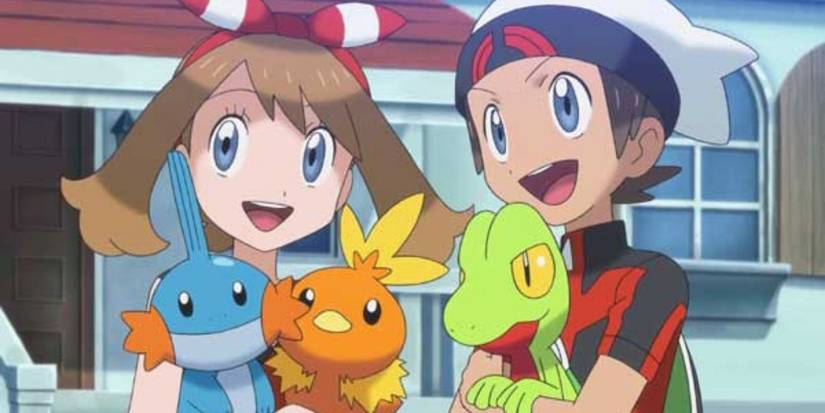
Picking a Pokémon protagonist mostly boils down to the player’s preference. In terms of canon, it isn’t really clear if there is one correct choice in this regard. Both the male and female protagonists appear in other Pokémon media as characters, so it doesn’t seem like one is the correct or canon choice.
In terms of the actual content of the games, there is no difference between choosing the male or female protagonist. There are some games where the protagonist that isn't selected becomes a prominent character in the story, as is the case with Pokémon HeartGold and SoulSilver. Also, the official Pokémon protagonist names are often the default choice when starting a game.
If you're playing the earlier games, picking a certain gender will lock you into using only the outfits and looks of that gender. However, as of Pokémon: Z-A, this is no longer the case. Z-A removed the gender lock on outfits, allowing any character to wear any article of clothing, whether it's traditionally "feminine" or "masculine." There's a chance that this was a Z-A exclusive feature, but it's more likely to be the norm in all the games moving forward.
Players don’t have to feel like they’re missing out on any important part of Pokémon lore based on their choice of protagonist. While it can seem overwhelming, it ultimately doesn’t seem to make much of a difference.
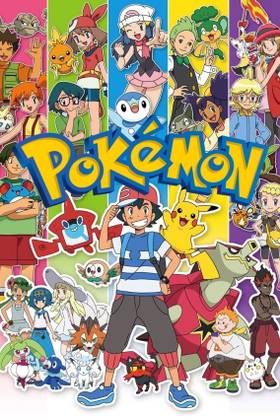
Created by Satoshi Taijiri, Ken Sugimori, Junichi Masuda
Latest Film Pokémon the Movie: Secrets of the Jungle
First Episode Air Date April 1, 1997





 English (US) ·