
For decades, the rapid rise in anime’s popularity has sparked debate among production teams about whether Japanese anime should be altered to appeal to a broader audience or whether international viewers should be expected to engage with anime on its own terms. On this note, the creator of the legendary anime Neon Genesis Evangelion, Hideaki Anno, has issued a warning.
Neon Genesis Evangelion exemplifies this philosophy, as Anno refused to compromise his creative vision, resulting in a classic praised by both fans and critics. Its dense Judeo-Christian iconography, paralyzing psychological deconstruction, and famously abstract finale were expected to alienate Western fans, but had the opposite effect. Proving that maintaining artistic integrity is the best way for anime to thrive.
Anime Has A Distinct And Easily Recognisable Identity; Global Accommodation Is The Death Of Cultural Specificity

The meteoric rise in anime popularity has put pressure on production companies eager to expand into the global market to adapt anime for overseas fans. There is an urge to homogenize anime content to maximize overseas returns. The temptation to scrub away the distinct Japanese cultural nuances and historical contexts is what Hideaki Anno rejects.
This strategy is built on a fundamental misunderstanding of what made anime a global sensation in the first place. Overseas audiences do not seek out anime to find something familiar; they do so because it offers an alternative to Western narratives. When creators try to universalize their work, it loses its cultural reference points, ingrained timing, and uniqueness.
Hideaki Anno, speaking to Forbes Japan, addressed the recent surge in international viewership of anime and stated that most directors he knows haven’t made any conscious changes in how they make anime. Anno is firmly opposed to studios focusing on the rising global market; instead, he argues they should keep making anime that appeals to the Japanese fanbase.
 Related
"We Will Be Overtaken In No Time": With Chinese Anime On the Rise, Jujutsu Kaisen's Studio Believes Japan Is In Trouble
The founder of Studio Madhouse and Studio MAPPA is warning people that Chinese donghua will soon take over Japanese anime if things do not change.
Anno leads by example because, while he acknowledges that the environment has changed over the years, with companies increasingly eager to expand into the global market, he has never created anything with an international audience in mind. His stance is that the work must, first and foremost, be well-received and interesting in Japan.
He goes on to say that if people around the world enjoy his work, he will be grateful, but it is clear that Japanese audiences are the primary focus. He stated that he does not want to change his work for non-Japanese-speaking audiences and encouraged them to adapt.
This philosophy is evident in Evangelion, as everything from its themes and language to its references is tailored to Japan. This creative decision elevated Evangelion to classic status in the anime industry, and Anno argues that creators must adopt this philosophy for anime to continue to rise in popularity while retaining its quality.
Neon Genesis Evangelion is the Definitive Proof of Concept, Leading by Example
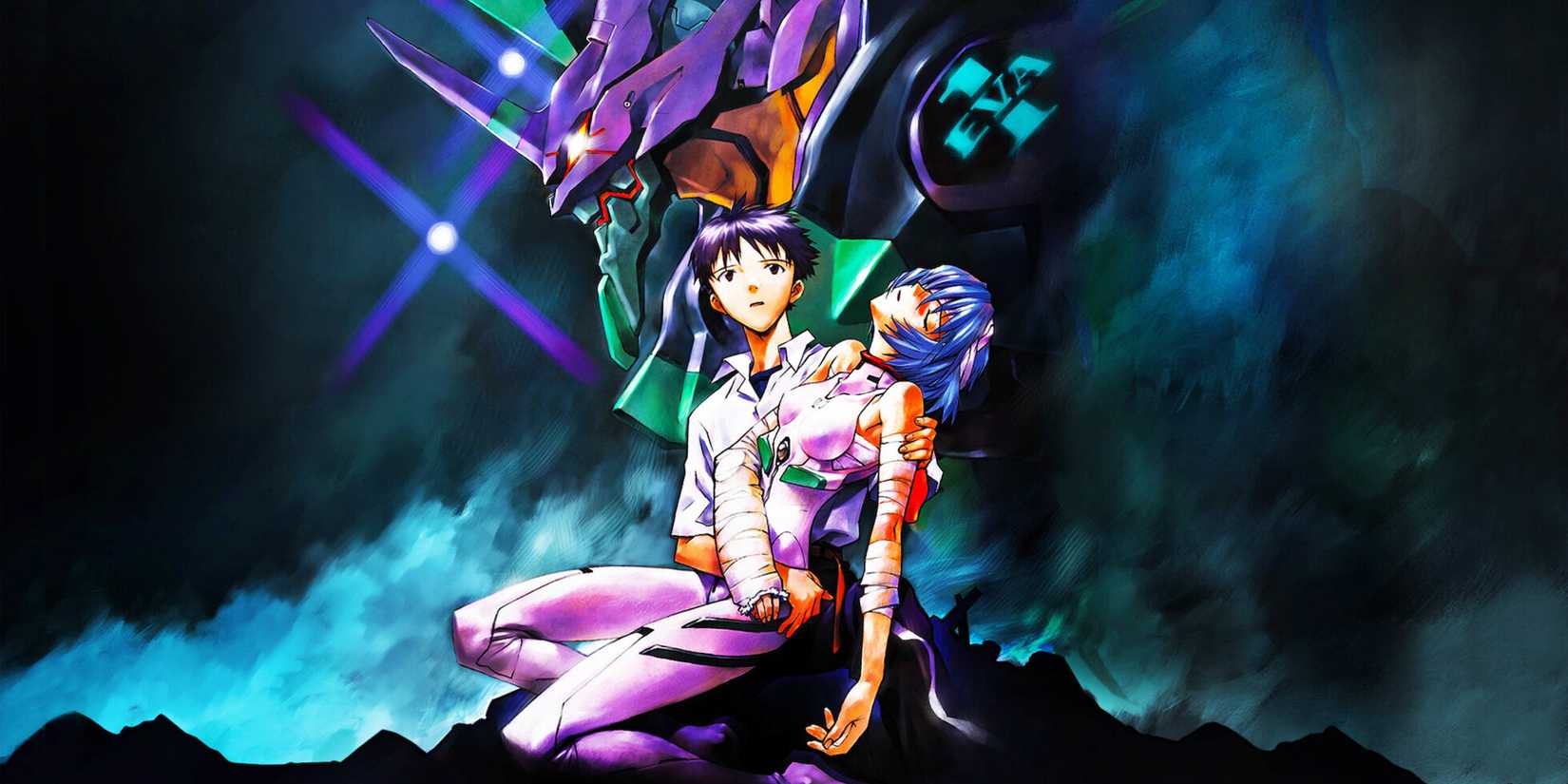
Hideaki Anno’s magnum opus serves as a strong counterargument to the philosophy of global accommodation. By modern studio standards, Neon Genesis Evangelion is unaccommodating to foreign audiences. It does not attempt to adapt its plot and themes for non-Japanese audiences, combining Judeo-Christian iconography, a deeply alienating psychological deconstruction, and an abstract final two episodes, which entirely abandon traditional plot resolution.
In 1995, Western streaming executives or risk-averse producers would have dismissed the Neon Genesis Evangelion script, likely diluting the anime into a bland, predictable mecha series tailored for international viewers. However, Evangelion’s success demonstrates how misguided this approach is. During the creation of the final episode, Anno remained committed to his original concept, prioritizing the quality for the domestic audience.
The anime went on to gross 10 billion yen at the Japanese box office, largely because Anno refused to compromise his creative vision. He chose to produce, distribute, and market the film independently through his own Studio Khara, shielding the creative process from external interference. By keeping control in-house, he prioritized domestic quality and accepted full responsibility for the result.
The anime serves as a reminder that audiences are not fragile. They do not need to be spoon-fed, and creators do not need to pander to them. On the contrary, viewers are fully capable of doing the intellectual legwork to unpack highly specific art, and doing so is far more gratifying than consuming something safe and lacking in creative flair.
The key takeaway from Evangelion is that genuine worldwide appeal often results naturally from local and personal authenticity. When artists follow their own creative instincts without worrying about international appeal, they produce works that stand the test of time. Evangelion showed that the best industry strategy is to encourage audiences to evolve and adapt.
 Related
25 Best Anime Ever Made, Ranked
Anime has exploded in popularity recently, so it's natural to wonder what series in the medium rank among the best to watch all the way through.
Fans Must Learn To Meet Anime Where It Is: Hideaki Anno’s Blueprint for Saving a Declining Industry
 Custom Image by Diana Acuña
The success of anime is the result of the world adapting to understand the industry, not the other way around. For the past three decades, international audiences have learned to read, interpret, and appreciate Japanese storytelling on its own terms. They learned to navigate and appreciate the unique language, pacing, narratives, and visual shorthand that differ from Western media.
Anno said, “The audience will have to adapt” because film and TV are less interactive than video games and follow different rules. Trying to please a global audience without caution could harm story consistency. Viewers trust creators to tell their stories without interference. Studio Ghibli and Hayao Miyazaki were built without a single thought spared for the overseas market.
Anno believes the anime industry is set to decline very soon, at the 2014 Tokyo Anime Fair. Anno stated that “the Japanese animation industry has hit a dead end… It will be tough to escape unless we can make animation without commercial considerations… It may even be too late.” Ultimately, for anime quality to improve, creators need creative freedom.
Hayao Miyazaki has long proclaimed that the industry is in dire straits, as has Yushiyuki Tomino, the creator of Gundam. Creators can only be free to express themselves when they don’t have to focus on appealing to a wider audience to secure further commercial considerations. To avert this reality, Anno has poignant suggestions.
For creative freedom to persist, the anime industry must address labor shortages, low wages, and studios’ inability to monetize IPs. On average, those working in the anime industry worked 219 hours per month, well above the Japanese national average of 162.3 hours per month. The maximum reported was 336 hours per month.
Animators are overworked and receive only a small share of profits. The anime industry generated $31.41 billion in revenue in 2023 and is on track to exceed $70 billion globally by 2030, yet creators receive only a small share of these figures. If creators are paid well, there will be less need to pander to overseas audiences.
Evangelion is a testament to what can be achieved when anime creators are given the freedom to realize their vision. Fans appreciate anime as it is, not as studios think they want it. Anime does not need to be changed; the process needs to be streamlined, and creators need to be properly remunerated to ensure its quality and continued popularity.
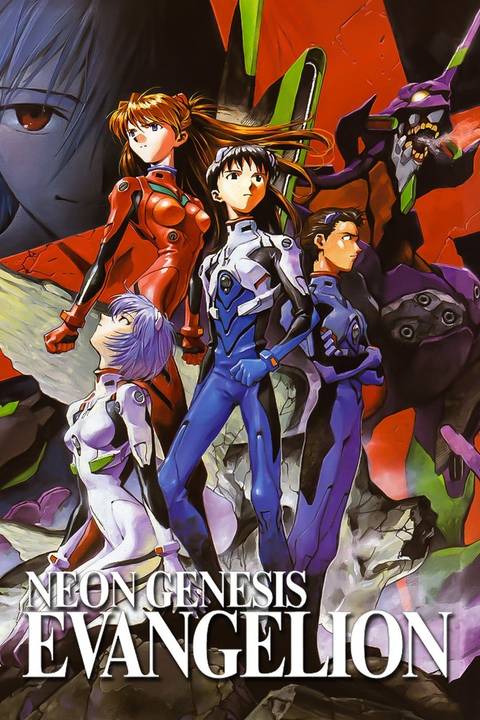
Release Date 1995 - 1996
Network TV Tokyo
Directors Keiichi Sugiyama, Masahiko Otsuka, Tensai Okamura, Shoichi Masuo, Minoru Ohara, Seiji Mizushima, Tetsuya Watanabe, Ken Ando
Writers Akio Satsukawa, Yoji Enokido
-

Megumi Ogata
Shinji Ikari (voice)
-
Kotono Mitsuishi
Misato Katsuragi (voice)








 English (US) ·