Engineer open-sources DIY radar system that's 95% cheaper than $250,000 commercial offerings, has 20 kilometer range — Moroccan engineer designs Aeris-10 radar, shares it on GitHub
3 days ago
12
(Image credit: Nawfal Motii)
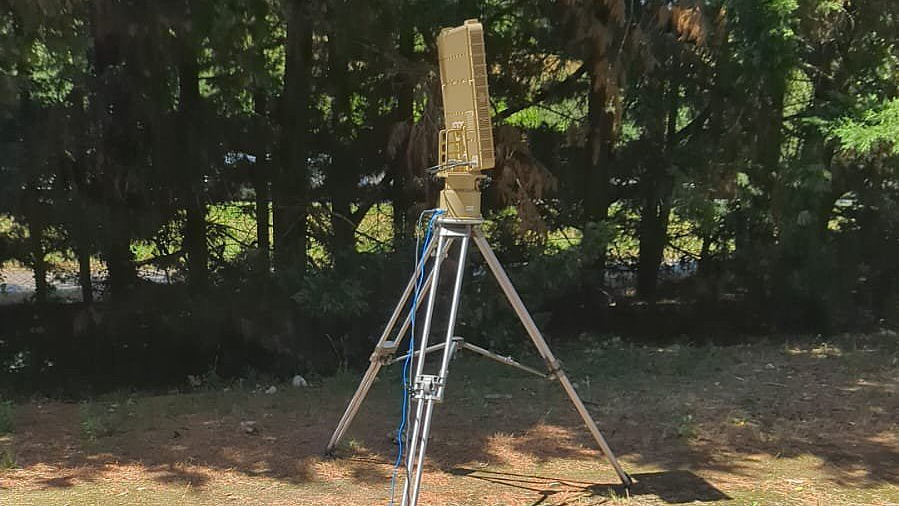
"Nice radar you got there," followed by "thanks, I just had it jammed," might be the new word exchange among buddy electronics enthusiasts. In a move that might ruffle the feathers of many large companies with exceedingly pricey wares, a Moroccan electronics engineer named Nawfal Motii has designed the open-source Aeris-10 radar system that is purportedly comparable to commercial systems costing $250,000.
Aeris-10 comes in two variants: 10N Nexus with a 3-km range and an 8x16 patch antenna array, and the 10E Extended, capable of reaching up to 20 km thanks to its 32x16 slotted waveguide array. Motii published the entire project on GitHub, including all the necessary schematics, PBC layouts, components, firmware, and software with a GUI for controlling and monitoring the system.
On the technical end, the Aeris-10 uses an XCA7A50T FPGA as a central brain for doing its FFT math, along with Moving Target Indicator (MTI), Doppler-effect estimation of moving object speed, and CFAR false alarm detection control. The figurative spinal cord is an STM32F746xx microcontroller that orchestrates the frequency synthesizers, ADCs, DACs, the GPS, barometer, stepper motors, and cooling setup.
Article continues below
The fact that Aeris-10 offers a true phased array system and ±45° elevation/azimuth adjustments are seemingly its differentiating factors. Prices for electronics are exceedingly floaty in these ship-shinking days, but a brief estimate pins the bill of materials at $5,000 for the 10N and $7,200 for the 10E. Despite the number of zeros on those figures, they're pocket change compared to amounts commanded by off-the-truck offerings. A cursory look puts commercial phase-array systems at somewhere $120k and $200k, and well past those prices for longer-range units.
Motii claims that military surplus radars can be had for $10k to $50k, but those are invariably decades-old tech with next to no spare parts availability. He says that building a DIY system is also a hard ask for a small team, as the testing gear can cost $50k on its own. Describing himself as "a guy in a workshop in Morocco with a soldering iron and an obsession," he took it upon himself to fix that particular problem.
Anyone can hit the project's GitHub page and get their own radar system going, but not everyone might have the necessary electronic and mechanical skills necessary for building one. To that effect, Motti says he's reached an agreement with the Crowed Supply platform, aiming for a Q3 2026 release. The site isn't your standard dice-rolling crowd-sourcing platform, though, as apparently it only accepts fully-designed projects with functional prototypes, rejects 90% of submissions, and claims it never had a scam.
Interestingly enough, this project was originally licensed under the MIT license, but Motti was advised that said license does not protect physical hardware, so it changed to the CERN-OHL-PT license. Should you elect to build your own unit, be aware that the frequencies it operates in are almost assuredly highly regulated in your legal jurisdiction.
Get Tom's Hardware's best news and in-depth reviews, straight to your inbox.
Bruno Ferreira is a contributing writer for Tom's Hardware. He has decades of experience with PC hardware and assorted sundries, alongside a career as a developer. He's obsessed with detail and has a tendency to ramble on the topics he loves. When not doing that, he's usually playing games, or at live music shows and festivals.
Engineer open-sources DIY radar system that's 95% cheaper than $250,000 commercial offerings, has 20 kilometer range — Moroccan engineer designs Aeris-10 radar, shares it on GitHub

 3 days ago
12
3 days ago
12



 English (US) ·