
 3 weeks ago
40
3 weeks ago
40
A maker bored with the staid, regimented, and inartistic designs of traditional/modern factory-produced PCBs has perfected their own hand-inking and home-etching process. Elliot Andal of the ALTco channel on YouTube began their video by lamenting how mass-produced PCBs are dominated by straight lines and angles due to the dominance of electronics CAD apps. Andal narrowed down the best photo resist and etching substances and then prepared an artistic-looking PCB that will be used for a fan controller. This 3D-printed filtered fume extractor design is destined to be used in ALTco’s soldering workshop.
Making a real hand-drawn PCB - YouTube
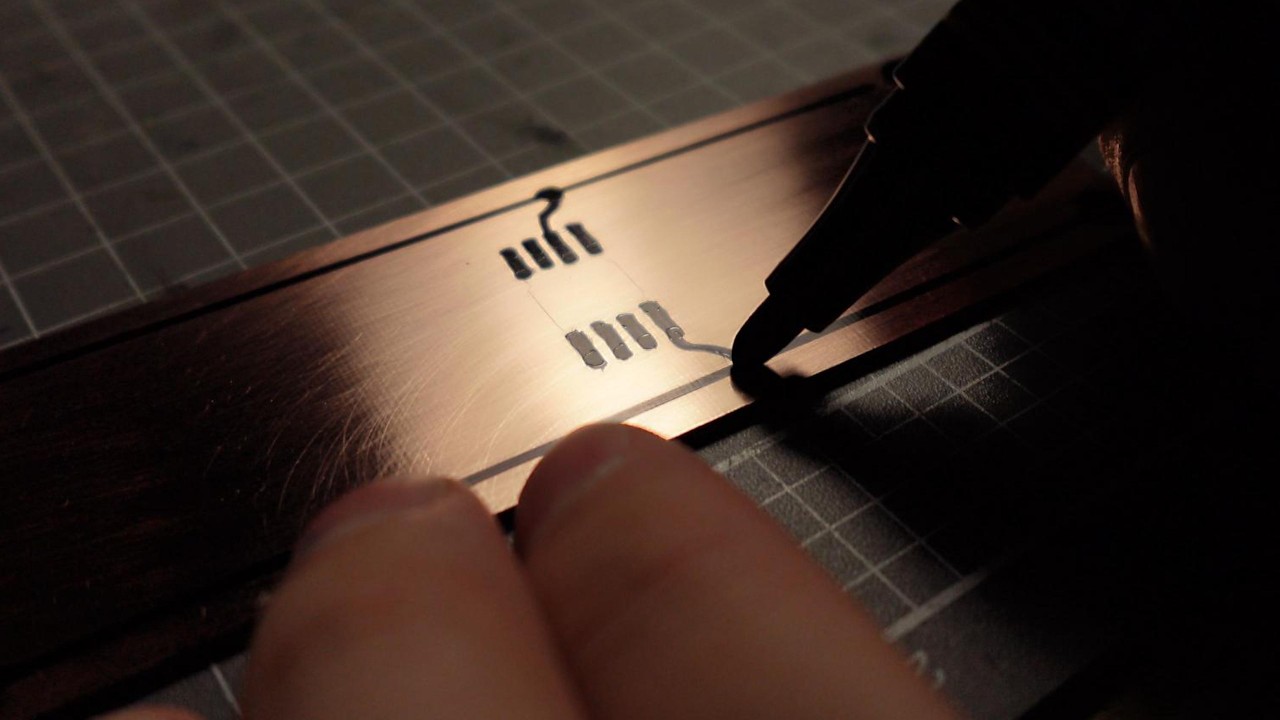
Andal knew what PCB traces they wanted to draw, and had a few materials ready for testing the process. Key source materials would be a blank copper-clad circuit board, which was cut to scale, a number of paints and markers to test for photoresist properties, and several etching chemical choices.
The electronics buff experimented with various combinations of the above materials, as well as different ways to prepare the circuit board surface ahead of drawing out the PCBs. You can check out the various failures and learning process with Andal in the video, but the refined hobbyist technique for making PCBs relied on the following key choices.
- A blank copper-clad circuit board, no particular brand was mentioned, and you can find this stuff in lots of shapes and sizes online
- The Pentel N850 permanent marker bullet tip for photoresist drawing
- And reliable old Ferric Chloride for etching away unprotected copper
So, in the end, the ‘standard’ ingredient of the blank copper circuit board remained. From the multitude of pens and paints, the Pentel stood out for even coverage and flawless ‘resist’ behavior. Finally, etching agents such as hydrogen peroxide, vinegar, and salt were seen to be unsuccessful alternatives to ferric chloride.
With the materials and technique now set, Andal carefully drew their final PCB design, complete with arcs, curves, and the ALTco logo. It etched very cleanly in the proven ferric chloride bath and was subsequently cleaned to gleaming copper in all the right places. With that result, Andal soldered all the necessary ICs and wires. For a finishing touch, they ended up tinning the whole set of traces with solder so it looks even nicer.
At the end of the video, you can see the finished filtered soldering fume extractor in action, with its PCB on proud display, not hidden within. The ALTco voiceover humbly says that it works “surprisingly well.”
The last homebrew PCBs project we looked at used rustic hexagonal clay substrates and a prehistoric-inspired firing method before traces were painted with silver ink.

Follow Tom's Hardware on Google News, or add us as a preferred source, to get our latest news, analysis, & reviews in your feeds.








 English (US) ·