'Dune: Part Two's Most Ambitious Scene Has a Deeper Meaning
4 weeks ago
9
Image via Warner Bros
Published May 23, 2026, 5:15 PM EDT
Julio is a Senior Author for Collider. He studied History and International Relations at university, but found his calling in cultural journalism. When he isn't writing, Julio also teaches English at a nearby school. He has lived in São Paulo most of his life, where he covers CCXP and other big events. Having loved movies, music, and TV from an early age, he prides himself in knowing every minute detail about the things he loves. When he is older, he dreams of owning a movie theater in a small countryside town.
Few franchises have such a complex lore as Dune. In Dune: Part Two, Denis Villeneuve explores many elements of the original Frank Herbert novel while also elevating some of them with original ideas. One of those is the Bene Gesserit, the ancient sisterhood that has been pulling the strings of nearly every major galactic event for millennia. They are present everywhere, from laying the seeds of the Fremen prophecies on Arrakis to plotting the demise of House Atreides with House Harkonnen and the Padishah Emperor Shaddam IV Corrino (Christopher Walken). But the scene that defines them is also one of the movie's best and most underrated: when Lady Margot Fenring (Léa Seydoux) applies the Gom Jabbar test to Feyd-Rautha Harkonnen (Austin Butler) on Giedi Prime. It's the same test applied to Paul Atreides (Timothée Chalamet) in the first Dune movie, but, this time, there are very different intentions behind it.
Feyd-Rautha’s Gom Jabbar Test Is Very Different From When Paul Atreides' Took It
Feyd-Rautha is the heir to Baron Vladimir Harkonnen (Stellan Skarsgård), and his introduction in Dune: Part Two happens in a gladiator arena during his birthday celebrations. The sequence is grand in every way. The black sun of Giedi Prime painting everything in chalky black and milky white, Feyd-Rautha's psychopathy in the arena, how the people worship him... It's all very impressive from a visual standpoint, but what comes next manages to be even more impactful because, despite Feyd-Rautha seeing himself as a predator, he actually becomes the prey, targeted by Lady Margot and her ulterior Bene Gesserit motives.
After his psychotic birthday bash, Feyd-Rautha walks through the corridors of the Harkonnen castle in Giedi Prime by himself, followed by Lady Margot. He puts a knife to her throat and asks her what she's on about, but the tables quickly turn. After playing coy at first, she quickly gets him under her control and leads him to the guest wing of the castle, where he has never been before. Feyd-Rautha is clearly out of his element, and what he does now isn't up to him anymore. He follows Lady Margot into her chambers, where she commands him to kneel and put his hand on a box, a Gom Jabbar needle to his throat now. He evidently passes the test, as he's still alive for the remainder of the movie and has his two hands, and, in the next scene, Lady Margot reports on the test and on securing his Harkonnen bloodline by conceiving a girl with him to Reverend Mother Gaius Helen Mohiam (Charlotte Rampling) and Princess Irulan (Florence Pugh), who's also a Bene Gesserit. Plans within plans.
Feyd-Rautha's experience with the Gom Jabbar is very different from when Paul Atreides takes the test in the first movie. Back then, it is mostly about Reverend Mother Mohiam chastising Lady Jessica (Rebecca Ferguson) for defying her orders and conceiving a son, Paul, instead of a daughter for Duke Leto Atreides (Oscar Isaac) as planned. Now, it's all about finding someone who can potentially stand up to Paul after he has already become a leader among the Fremen. Lady Fenring completely dominates Feyd-Rautha, to the point where she doesn't even have to use the Voice to make him comply. She identifies all his weaknesses, gets what she came for, and leaves him. He is a psychopath who murdered his own mother, and seeing him reduced to an almost animalistic state is even satisfying to a point, because it reveals a lot about what the Bene Gesserit really want and how they act to get it.
Feyd-Rautha Is the Best Alternative for the Bene Gesserit To Retain Their Power
Collider Exclusive · Sci-Fi Personality QuizWhich Sci-Fi Hero Are You Most Like?Paul Atreides · Captain Kirk · Princess Leia · Ellen Ripley · Max Rockatansky
Five iconic heroes. Five completely different ways of facing an impossible universe. One of them shares your instincts, your values, and your particular way of refusing to back down. Eight questions will tell you which one.
🏜️Paul Atreides
🖖Capt. Kirk
✊Princess Leia
🔦Ellen Ripley
🔥Max Rockatansky
FIND YOUR HERO →
01
How do you lead when the stakes couldn't be higher?The way you lead under pressure is the most honest thing about you.
AI absorb everything — every variable, every pattern — and move only when I know the path forward.
BI read the room, make the call, and own the consequences. Hesitation costs more than mistakes.
CI rally people. A cause needs a voice, and I refuse to let fear be louder than conviction.
DI assess the threat, establish what needs doing, and get it done without waiting for permission.
EI don't lead. I act. Others can follow or not — I'm already moving.
NEXT QUESTION →
02
What is your greatest strength in a crisis?The quality that keeps you alive when everything else fails.
APrescience — the ability to see further ahead than anyone else and plan accordingly.
BImprovisation — I'm at my best when the plan falls apart and I have to invent a new one.
CConviction — I know what I'm fighting for, and that certainty doesn't waver under fire.
DComposure — I stay functional when everyone around me is falling apart. Panic is a luxury.
EEndurance — I outlast things. I take the hit and keep moving long after others have stopped.
NEXT QUESTION →
03
What is the thing you'd sacrifice everything else for?Your deepest motivation is your truest compass.
AThe survival and dignity of my people — even if I have to become something frightening to ensure it.
BThe safety of my crew — every single one of them. No one gets left behind.
CFreedom — for my people, for every world still crushed under the weight of an empire.
DThe truth — what actually happened, what's actually out there, whether anyone believes me or not.
EThe one person — or the one memory — that still makes any of this worth surviving for.
NEXT QUESTION →
04
How do you relate to the people around you?Who you are to others under pressure is who you really are.
AWith intensity and distance — I care deeply, but the weight I carry makes closeness complicated.
BWith warmth and irreverence — I take the mission seriously, not myself.
CWith directness and trust — I say what I mean, and I expect the people I work with to rise to it.
DWith professional care but clear limits — I'll protect you, but I won't pretend we're family.
EWith wariness that slowly becomes loyalty — I don't trust easily, but when I do, it holds.
NEXT QUESTION →
05
You're facing a threat that no one else believes is real. What do you do?How you respond when you're the only one who sees it defines everything.
APrepare in silence. If they won't listen, I'll be ready when they finally have to.
BKeep pushing until someone listens — and if no one does, handle it myself.
CBuild the case, find the allies, and make the threat impossible to ignore.
DDocument everything. The truth matters even if no one believes it yet.
EStop trying to convince anyone. Survive it. That's the only argument that counts.
NEXT QUESTION →
06
What has your heroism cost you personally?Every hero pays. The question is what — and whether they'd pay it again.
AMy innocence — I've seen what I'm capable of, and I can't unsee it.
BPeople I loved — the command chair has a view, but it's a lonely one.
CA normal life — I gave up everything ordinary the moment I chose the cause.
DMy sense of safety — I know exactly what's out there now, and I can't pretend otherwise.
EAlmost everything — and I'm still not sure what I'm carrying it all for. But I keep going.
NEXT QUESTION →
07
How do you feel about the rules of the world you're in?Every hero has a relationship with the system. What's yours?
AI understand them deeply — and I know exactly which ones must be broken, and why.
BI respect the spirit of them and bend the letter when the situation demands it.
CThe system is the problem. I'm not here to work within it — I'm here to dismantle it.
DI follow protocol until protocol stops being useful. Then I make the call myself.
EThe rules collapsed a long time ago. What's left is instinct, and mine are reliable.
NEXT QUESTION →
08
When everything is on the line, what keeps you going?The answer is the most honest thing about you.
ADestiny — or something that feels so much like it that the difference no longer matters.
BThe people on my ship — their faces, their trust, the fact that they're counting on me.
CThe belief that what we're fighting for is worth every sacrifice, including this one.
DSheer refusal to let it win — whatever it is. I don't stop. That's just who I am.
EI'm not sure anymore. But the road is still there, and I'm still on it.
REVEAL MY HERO →
Your Hero Has Been IdentifiedYour Sci-Fi Hero Is…
Your answers point to the iconic sci-fi hero who shares your instincts, your values, and your particular way of facing the impossible.
Paul Atreides
You carry a weight most people would crumble under — the knowledge of what you're capable of, and the burden of what you might have to become.
You see further ahead than others and you plan accordingly, even when the vision frightens you.
You are driven by loyalty to your people and a sense of destiny you didn't ask for but can't escape.
Paul Atreides is not simply a hero — he is someone who understands the cost of power and chooses to bear it anyway.
That gravity, that willingness to carry what others won't, is exactly you.
Captain Kirk
You lead with instinct, warmth, and an absolute refusal to accept a no-win scenario — because you've always believed there's a third option nobody else has thought of yet.
You take the mission seriously without ever taking yourself too seriously.
Your crew would follow you anywhere, not because you demand it, but because you've earned it.
Kirk's genius isn't tactical — it's human. He reads people, bends rules with purpose, and wills outcomes into existence through sheer conviction.
That combination of warmth, audacity, and relentless optimism is unmistakably yours.
Princess Leia
You are the kind of person who holds the line when everyone else is losing faith — not because you're fearless, but because giving up simply isn't something you're capable of.
You lead through conviction. Your voice carries because your belief is unshakeable.
You gave up everything ordinary the moment you chose the cause, and you've never looked back.
Leia is not a supporting character in her own story — she is the moral centre of the entire rebellion.
That same fierce, principled, unbreakable core is what defines you.
Ellen Ripley
You are not reckless, not grandiose, and not particularly interested in being anyone's hero — you just refuse to stop when it matters.
You see threats clearly, you document the truth even when no one listens, and when the time comes you handle it yourself.
Ripley's heroism is earned, not performed. She doesn't have a speech — she has a flamethrower and a plan.
You share her composure under the worst possible pressure, and her refusal to pretend the monster isn't there.
When it counts, you don't flinch. That's everything.
Max Rockatansky
You have been through fire that would break most people — and what came out the other side is something the world underestimates at its peril.
You don't ask for help, don't need validation, and don't wait for anyone to tell you the rules no longer apply.
Your loyalty, when it finally arrives, is absolute — but it's earned in silence and tested in action, not in words.
Max is not a nihilist. He is someone who lost everything and found, against his will, that he still has something worth protecting.
That bruised, stubborn, ultimately human core is exactly yours.
↻ RETAKE THE QUIZ
In Dune: Part Two, the Bene Gesserit play a larger role than in Villeneuve's first Dune movie. Reverend Mother Gaius Helen Mohiam is present for most of the important events, and we meet other members of the Sisterhood, like Lady Fenring and Princess Irulan themselves. Not just that, but Reverend Mother Mohiam also reveals that she convinced the Emperor that House Atreides needs to be annihilated, something that speaks of the influence the Sisterhood holds in the political sphere in the Dune universe and how they are always focused on consolidating and perpetuating their position.
When it's discovered that Paul Atreides not only survived, but is also leading a crusade against the Empire's dominion over Arrakis, this is an immediate threat to the Bene Gesserit for a number of reasons, from possibly disrupting the flow of spice as a commodity, to reestablishing House Atreides as a major power in the universe. For millennia, the Sisterhood has built a position in which they aren't openly in power, but rather behind it, pulling strings and making arrangements towards their ultimate goal. The political structure of the Empire is similar to Middle Age fiefs, with lords and vassals, and the Bene Gesserit have been articulating the movements of every political player, from the smallest to the biggest, for millennia. Using their influence, they are present in every court and advise every lord, while also being present among ordinary people, both in big urban centers and on remote planets, like Arrakis. They have managed to gather this much influence through the heavier use of spice, which granted them prescience and abilities superior to those of an ordinary person - enough to make them feared and respected even among high-borns like Feyd-Rautha.
Reverend Mother Mohiam advising the Emperor to exterminate House Atreides is a major departure from the original Dune novel, but one that works, in the sense of how it highlights just how insidious the Bene Gesserit can be to perpetuate their influence and status. House Atreides rose as a potential threat to the Emperor's rule and, by proxy, the Sisterhood's own condition as advisors of power. One of the signs that the Atreides posed a risk is the very fact that Lady Jessica defied her orders to bear a daughter to Duke Leto - Jessica is a Bene Gesserit herself, but disobeyed her direct orders for the love she had for her husband. The fact that the Atreides were capable of inspiring such sentiment was dangerous for the political order of the Empire, and is what ultimately motivated the Bene Gesserit to plot their downfall.
Paul Atreides is aware of the Bene Gesserit's involvement in his father's death and the destruction of his house. His ascension on Arrakis puts the Sisterhood in a delicate position, because it's something they hadn't foreseen. For them, the best possible outcome to the whole Arrakis affair is Paul's crusade being defeated, which is why Feyd-Rautha becomes such an important puzzle piece for them. For that to happen, however, the Bene Gesserit had to find out if he could be controlled. This was Lady Fenring's most important mission regarding Feyd-Rautha: finding out if he could be a tool to defeat Paul, allowing them to keep their status. She succeeds in learning about his mind and what drives him - "desire and humiliation," according to Reverend Mother Mohiam - and that he can be controlled through pain and his "sexual vulnerability," as Lady Margot states. Much easier to understand and control than Paul Atreides.
Lady Fenring Uses Feyd-Rautha as Part of the Bene Gesserit’s Eugenics Program
Image via Warner Bros.
Another purpose of Lady Fenring's mission in Giedi Prime is related to another of the Bene Gesserit's machinations. Apart from their political role, the Sisterhood also has a crucial role as a religious organization in the Dune universe. While the Imperium has no official religion, they are looked upon as spiritual guides, and have their own internal beliefs and rituals in this sense. The Gom Jabbar test is one of them, meant to assess whether a man is a prospect to be the Kwisatz Haderach - the man who will save humankind from stagnation and lead it to a new age of enlightenment.
The arrival of the Kwisatz Haderach, however, will only happen through one of the Bene Gesserit's most insidious practices - eugenics. Over the millennia, they have set in motion a secret breeding program between the Great Houses, using their influence to cross members of these houses until a man is born who has the correct genetic crossing to be the Kwisatz Haderach. According to the Bene Gesserit's eugenics plan, the Kwisatz Haderach is supposed to be finally born from a crossing between houses Atreides and Harkonnen - an Atreides female and a Harkonnen male. However, Lady Jessica's decision to bear Duke Leto a son once again thwarts their plans, leaving House Harkonnen's genetic line in danger.
This is another reason for Lady Fenring's mission in Giedi Prime: to secure Feyd-Rautha's genetic line by bearing his daughter. To ensure the continuity of their eugenics program, many of the Bene Gesserit themselves act as concubines to the great houses. Lady Jessica herself never married Duke Leto, being only his concubine, but the fact that a Bene Gesserit's past is supposed to be secret meant that she never knew she was the daughter of Baron Vladimir Harkonnen, so her having a son meant the crossing between Atreides and Harkonnen happened one generation earlier, making Paul the Kwisatz Haderach.
Related
The Scene Between Feyd-Rautha and Lady Margot Is Original to Denis Villeneuve’s Movie
Denis Villeneuve promotes many changes in his movies from the original Dune novel, and the scene between Feyd-Rautha and Lady Margot Fenring is among the biggest ones. She is a relevant character in the novel, also deeply loyal and in line with the Bene Gesserit, but her direct involvement in the story is much smaller, mostly as the wife of Count Hasimir Fenring, who is himself a close advisor to the Emperor. They are the ones who supervise the change of power from House Harkonnen to House Atreides on Arrakis, and she leaves notes to Lady Jessica warning her of the plot to destroy her family. Count Fenring was supposed to be played by Tim Blake Nelson in Dune: Part Two, and scenes were even recorded, but, sadly, they ended up cut from the final version.
Like in the movies, Lady Margot is a crucial part of the Bene Gesserit breeding program, and is also tasked with securing the Harkonnen bloodline through Feyd-Rautha. Her own husband, Count Fenring, was once a Kwisatz Haderach prospect, but can't have children of his own. They have such a close relationship, that he is even aware of her missions and duties as a Bene Gesserit, and is often complicit. She also succeeds in securing the Harkonnen bloodline, but the books never mention what happens to the child afterward, and House Harkonnen continues with a diminished and only indirect involvement in the main plot.
Even though it's a departure from the story told in the book, the scene between Feyd-Rautha and Lady Margot in Dune: Part Two is a great addition to Dune lore, even without Count Fenring's involvement. Not only does it shed light on Feyd-Rautha as a character and makes him a more complex challenge to Paul Atreides in the audience's eyes, but it also highlights the coldness and objectivity with which the Bene Gesserit operates. In the books, this scene is only mentioned, but actually showing things happening has a striking effect on the story, especially since Lady Margot later provides a firsthand report of her findings from a purely objective point of view, focusing only on him as the object of her mission and nothing more.
These themes are futher explored in the HBO Max series Dune: Prophecy, and likely as well in the upcoming sequel Dune: Part Three.

 Image via Warner Bros
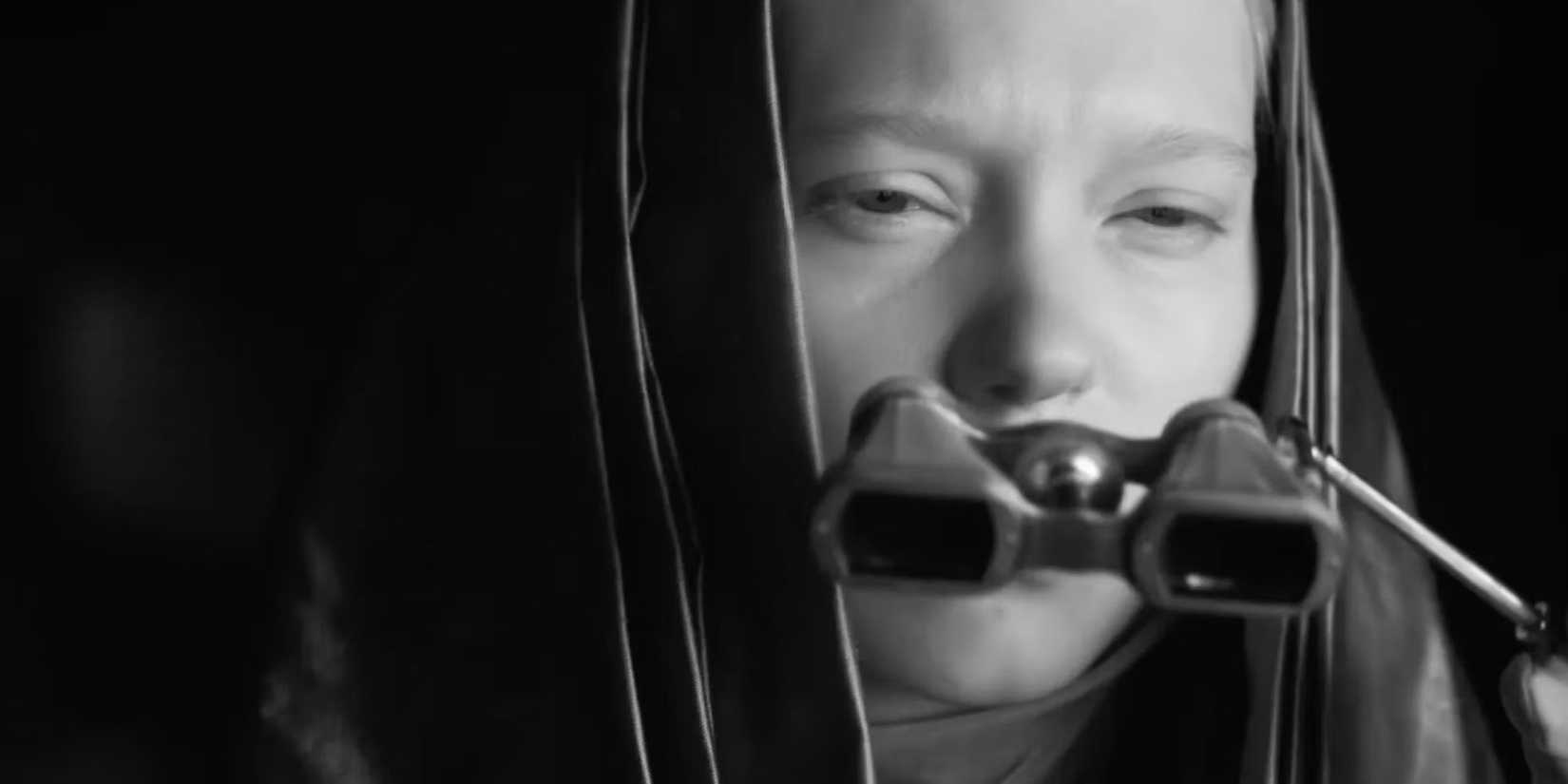 Image via Warner Bros.







 English (US) ·