
 Image via HBO

Published Apr 12, 2026, 9:00 PM EDT
Sign in to your Collider account
[Editor's note: The following contains major spoilers for DTF St. Louis.]
Summary
- In the finale of the HBO limited series 'DTF St. Louis,' Floyd's death is revealed to be an emotional unraveling, a love triangle undone by DTF's false promises.
- Jason Bateman's Clark gives the show a tender, needy friendship that fuels tension and emotional stakes.
- A Playgirl past and an unscripted kitchen moment deepen Floyd, and while the ending was set, future seasons could be possible.
From creator/writer/director Steven Conrad, the season finale of the seven-episode HBO limited series DTF St. Louis has aired, finally revealing the circumstances around the tragic death of Floyd Smernitch (David Harbour). Never set up as a puzzle in need of solving, but instead more of an emotional unraveling, a messy love triangle that shined a light on the loneliness of three people who loved each other and were desperate for connection while looking for it in all the wrong places ultimately collapsed on itself. Clark (Jason Bateman) seemed to genuinely want to boost his friend’s confidence but did so in such a misguided way that it left Floyd feeling trapped in a black hole without the validation and love he so desired. What makes it all even more heartbreaking is watching Clark and Floyd attempt to shortcut fulfillment through the DTF app instead of just getting real with each other and their loved ones about what they were really feeling.
Collider recently got the opportunity to chat one-on-one with Conrad about the season’s undeniably bittersweet ending and what led to Floyd’s fate. During the interview, he discussed the impact Bateman had on who Clark became, creating tension through conversation, Floyd’s Playgirl past and how it affected his present, the unscripted moment in the kitchen in the first episode of the season, having a very clear sense of Floyd’s fate and why it had to play out this way, avoiding fan theories, and whether there could be another season.
Jason Bateman Helped Shape Who Clark Forrest Became in ‘DTF St. Louis’
"His draw to Floyd is immediate because it just makes him feel safe."
 Image via HBO
Collider: You had been working on the development of the series and the characters for a bit of time before you finally got to shoot it. I would imagine there were changes that happened with the characters when it went from Pedro Pascal being in the series to Jason Bateman being in the series. What were the biggest changes that happened with this that you think ultimately worked to the advantage of what the series is now?
STEVEN CONRAD: I hadn’t quite apprehended it, but when Jason and I started to talk about doing this together, he mentioned that some of what Clark’s energy could be is that his draw to Floyd is immediate because it just makes him feel safe. He wanted to start with, “I like being with this guy. This guy is big, he’s keen, he’s really sweet, and he’s funny, and I like being with him.” Jason could do that. You could see Jason’s Clark enjoying being with Floyd in a way that I knew could start somewhere. And then, if you have a place to start, you have a place to go. Jason made that explicit, and it seemed like a very important foothold.
It seems like very different versions of all these characters could have existed.
CONRAD: Clark needs a friend. He really needs a friend. That’s a tricky thing to count on an actor being able to dramatize. I would be so challenged if someone said to me, “Okay, start and make this clear that you need a friend.” I wouldn’t know how to start behaving like that. Jason inherently knew how to do that.

Related
From a writing standpoint, it feels like there’s a huge challenge you had with this show, with big chunks of episodes being conversations between characters, whether it’s Clark and the detectives, or Clark and Floyd. There are a lot of just people having conversations. Were you ever worried about or nervous about making that interesting and keeping that interesting?
CONRAD: If you just bear in mind, all the time, that you’re really creating tension, and all of it is there to create tension, you can create tension with conversation the same way you can create tension with score. But if you forget that that’s the point, then it can be boring. Hopefully, if they were to be dissected, the idea that this was a genre piece that did have something to say about a mystery, a thriller, a psychological thriller, a weird kind of erotic thriller, these conversations circulate inside the thoughts that would exist in those genres.
Floyd Smernitch Was a Man Fully Committed to His Bad Ideas in ‘DTF St. Louis’
"It probably seemed like a good idea at the time for guys to do an exposé in Playgirl in the ‘90s."
 Image via HBO
How did Floyd’s Playgirl past come about? What led to that detail?
CONRAD: It probably seemed like a good idea at the time for guys to do an exposé in Playgirl in the ‘90s. Our art department researched, and they weren’t really helped out by the concepts. They were very cheap, Top Gun, super macho, comically not good, full commitment to a bad idea kind of thing. I felt like the earlier we could get this notion out, that previously there have been full commitments to bad ideas, it would seem just as likely now that you’re going to make this same commitment to a middle-aged bad idea, something that lacked sense but was also beautiful. Floyd felt very free about his body and didn’t have inhibitions about that. It’s true of his marriage. He’s married to a partner who has very few sexual inhibitions. I like that about their partnership. It’s evolved over time. Some years were more intense, some years very, very quiet. But I feel like those two have a sexuality that was really very rewarding.
Playgirl just came from me wanting to get to know Floyd a little more and wondering what he was like when he was 24. How stupid could he have been? How smart had he been? What was he proud of? There’s a really small detail in there that I’m not even sure is visible, but he has a little get-to-know-you section where they ask him what his favorite snack is and what he wants to be someday. His answers are really very beautiful and honest, and I just wanted that to feel honest, not knowing that someone else might laugh at it.
There’s a shot in the first episode with David Harbour and Linda Cardellini in the kitchen, when he rests his stomach on the celery that’s on the counter. Was that scripted? Did you have a conversation about that? How did that moment happen?
CONRAD: That wasn’t scripted. That was one of the first things we shot. I was still getting to know David, as a partner, on the set. I saw the setting, and he’d come in and out with his belly. I knew that belly could touch the to touch the food that Carol was preparing if he just stood normally by the table. The trick would be to say, “This character is so used to this that he doesn’t even think about where this part of his body is anymore.” David plays a character who is 30 pounds heavier than David usually is. This person ends way in front of where they used to end and maybe isn’t aware that that’s where they end now because they didn’t always end there. It seemed to me like he didn’t know that he went out that far, so he would likely not know that he brushed up against anyway.
That sounds really complicated, but it was really a simple little piece of comedy. The best comedy says other things. The idea of having such a divorced relationship to your body in middle age just seemed so understandable to me. So, I thought it up in the moment. Instantly, he recognized that as something he wanted to do, and he just worked out the timing of it all. There’s another element to that scene. It’s the full box of Cheez-Its that he has tucked under his arm that’s holding the Batman comic book, and that was David’s idea, to have Cheez-Its, belly, Batman. That’s all you need to know about Floyd at the moment.

Related
Once you did have a sense of what the series was and you were ready to shoot it, did you always know by that point how it was going to end and how everything would play out? I know sometimes people do a show like this, and they’re still changing their mind and working on the ending of it all the way through. Did you know exactly what your ending would be?
CONRAD: Yes, I have done both of those versions of things too, over the many years. You could fall into a group of fellow filmmakers and they like the spontaneity of creating something on the day. I’m terrified by that. I love to be able to say to our filmmaking partners, “The last time we’re going to see this character is going to be this.” We made a TV show called Patriot for Amazon, and I knew what the last image was going to be, ultimately of our final season, and I could share with our lead actor. I could always say to him, “We are going to wind up here, and you are going to be sharing this. That’s coming. That’s three hours away.” I don’t know what I would say to them if we couldn’t start the show with Floyd feeling some huge emotional deficit, some real driving need. The first time we see him, he’s struggling to connect with his stepson. His clothes don’t fit anymore. You know he’s not comfortable in his skin anymore. He took the time to write this note about grownupsies. You have a sense that this man knows what grownupsies feels like. I like to be able to say to David, “This is where you start and this is where we’re headed. And there’s a lot to do between now and then.”
I think that destination is very important. It helps you pick your mood. So much of what we do is allowing the audience to feel a certain kind of mood. I didn’t have this with HBO, but it’s been true with other places I’ve worked, where you start to have conversations about the lighting, and they’ll resist there being any darkness in the show. Shouldn’t it have a mood? Shouldn’t it make you feel a kind of way? If there’s no mood, then you’re not feeling. And if you’re not feeling, you’re going to probably stop watching. Knowing where the show goes really helps me make all those other decisions. So, I don’t think I’ll allow myself to be in a situation that is open-ended. All the scripts were written before we started to make the show. Everything changes a little bit, but wholesale changes don’t happen to us when we go to shoot.
‘DTF St. Louis’ Was Never Meant To Be Viewed as a Puzzle That Needed Solving
"It has to deliver other satisfactions to the audience."
I initially thought that maybe Floyd killed himself. Then, I thought maybe he had a heart attack. And then, I suspected Clark. And then, I suspected Carol. And then, I suspected Richard. Did you want to keep us guessing until the end? Did you want us to keep questioning those characters’ motives because it feels like some of that comes from how the audience perceives the characters and what they project onto them?
CONRAD: That’s a good question. Having some awareness of what you’re up to is probably a real good idea in a story like this because it’s not a puzzle. I don’t think it should be approached entirely like it’s a puzzle because it has to deliver other satisfactions to the audience. They didn’t take a puzzle out to try to solve. They sat down to watch seven hours of drama. So, it’s important that there’s curiosity because there’s curiosity on the part of the detectives, and you shouldn’t be ahead of them, otherwise there’s less engagement. Wondering is a great quality to provoke from somebody in the audience, but making it too much of a game can turn it into another preoccupation.
Honestly, if your whole goal was just to figure these things out, you could do it because it’s going to be someone who’s in the pilot unless it’s just sloppy. There’s only so many choices and so many scenarios that you could figure it out. But I think anybody who enjoys it tells themselves to stop trying to figure it out so they can just enjoy it. It’s tough to turn that part of your motor skills off. You just go, “I could solve this crime. I know more than they do.” But the experience of how this happened is as important as what happened. Making sure you are good at how is important too.
What led to your specific decision for Floyd’s ultimate fate? As you were trying to figure that out, why did this feel right? Had you thought of other possibilities?
CONRAD: No. Going in, this all made sense. You could just see it. Somehow, something happened and you could just see the dilemma. It was the invention of DTF St. Louis and their tagline, “All the excitement, none of the consequences.” As soon as that dropped into our creative world, we thought, “Oh, this is going to be a thing they’re playing with like matches.” None of the consequences seemed to be a bad bet. You watch two people you kind of like think there won’t be consequences, but of course there are. When you share intimacy with anyone, there will be consequences. So, I knew they would be mistaken about that gamble. And then, I started thinking about, what could be the most consequential thing for this man to lose?
I knew it wasn’t his marriage. I knew it was going to be a greater achievement, and that achievement of a stepfather or a stepmother to a young person is such a monumental thing to be good at, if you can find a way to be good at that. I knew this was going to have that tragic feel at the end. I thought, “This ought to be the thing that breaks and can’t be fixed because of recklessness and because you’ve allowed this reckless thing into your home, one way or another, and you didn’t see this coming. Here’s a consequence you never expected. You’d be assessed and misunderstood by a young person who isn’t capable yet of recognizing what it is you’re doing and only feels strange and lonely because he’s seen you do it.” I knew that was going to happen. The rest of it was there for me to try to figure out how to create a path that ultimately seems obvious in terms of it being satisfying, but not so obvious that it doesn’t have energy.

Related
‘DTF St. Louis’ Makes Unexpected Progress in Its Twisty Love Triangle Murder Mystery
Richard Jenkins reveals the detail he improvised for Homer while Joy Sunday shares her excitement to be filming Season 3 of 'Wednesday.'
Did you see any of the theories that viewers were talking about as they watched the season?
CONRAD: No, I can’t. That’s just a recipe for four hours of sitting down and tearing your hair out. No, and don’t tell me about it either. People are probably going to guess it in one way or another. The answers are sort of there. Floyd’s ideation, he’s suffering from heavy duty depression, he hasn’t bought new clothes, he’s suffering economically, he lacks intimacy. It wouldn’t take a genius, an emotional genius, to know that this person needs a tremendous amount of tenderness. The only repository for it is his weather broadcasting partner, which was almost enough, except that flirting with the fun of this new friendship allowed for a really dark unexpected incident to happen, and it was enough to destroy. Floyd was easy to destroy because he was barely keeping himself together.
Creator Steven Conrad Says There Could Be a Way To Do Another Season of ‘DTF St. Louis’
"You could do it somewhere else and find another vein of storytelling."
 Image via HBO
Is this a series where you feel like you’ve completed the story you wanted to tell and that’s it? Because I would tune in for another season of Homer and Jodie working on another case together.
CONRAD: That’s exciting. If you take The White Lotus model, and you have the upstairs-downstairs thing with these privileged people with problems, and then these people who work at this place, you could do it somewhere else and find another vein of storytelling. I don’t know. Sex and violence, you could spend your whole career just writing about those two things and not repeat yourself. The possibility is there, for sure. Homer has got to retire, though. He might be a consultant on some future DTF crime. I like the idea of Jodie. She’s my kind of hero. She’s like Rocky. She always had it. All she needed was some events to draw it out of her. She didn’t change. She just got recognized. I like her an awful lot, and I like Joy Sunday considerably, too.
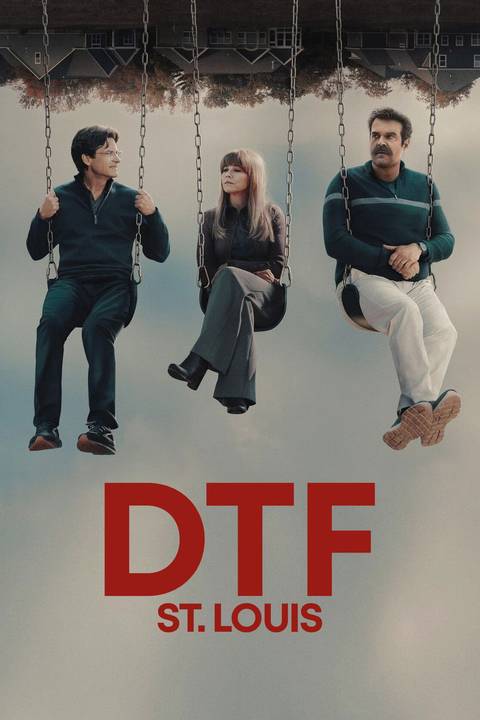
Release Date 2026 - 2026-00-00
Network HBO
Showrunner Steve Conrad
Directors Steven Conrad
Writers Steven Conrad
Cast


DTF St. Louis airs on HBO and is available to stream on HBO Max.







 English (US) ·