

Published Oct 17, 2026, 2:45 PM EDT
Mary Kassel is a Senior Writer & Critic who joined the Screen Rant team in 2023.
After graduating from Emerson College with a degree in Media Arts Production, Kassel started at Screen Rant with a focus on the critical analysis side of movies and television while continuing to work on set in film production.
At Screen Rant, Kassel primarily writes for the Classic TV section, mining their encyclopedic knowledge of television history for content. However, they also contribute to the Books team and review both film and television as a critic.
The greatest sci-fi and fantasy TV shows are all in conversation with each other. Inspired by the works that came before them, recent science fiction series are breaking boundaries with new technology and innovative ways of shooting that further immerse audiences in their fantastical worlds. The use of green screen has changed the level at which sci-fi is made. However, it has some drawbacks. It's always obvious when a performer can't fully drop into the scene because they don't have anything physical to work with.
This has posed an interesting problem for older science fiction franchises that are making their mark in the modern era. Dune was ahead of its time thanks to the brilliant narrative written by Frank Herbert. Other long-running shows, like Star Trek and Doctor Who, all hold a special place in the hearts of audiences. However, they've had to adapt quite a bit to keep up with the changing landscape of sci-fi visuals. It turns out that inspiration came from an unexpected place.
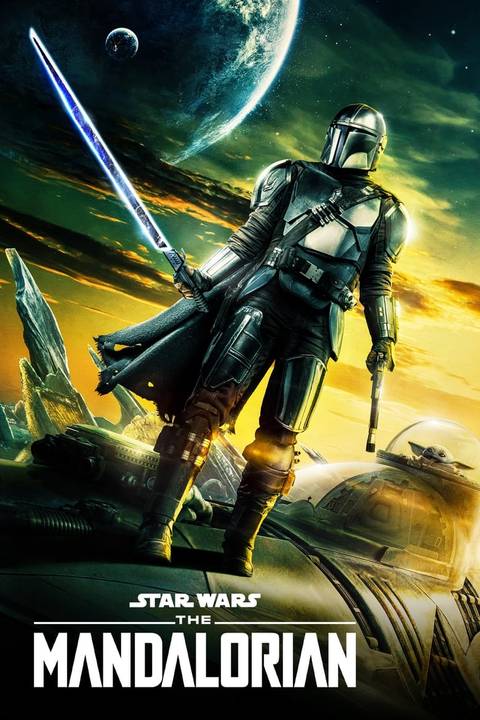
The Mandalorian is one of the best Star Wars TV shows on Disney+, and without its use of The Volume, a groundbreaking new way to shoot fantastical scenes and backdrops, it wouldn't be the same. Airing for three seasons, The Mandalorian proved it was possible for live-action Star Wars TV shows to be successful. This wasn't an easy task, so the series had to pull out all the stops, visually and narratively, to set the bar for epic space sagas on television today.
The Mandalorian Pioneered The Volume Filming Technique Later Used By Spielberg, Star Trek, Doctor Who & More
 Disney+ via MovieStillsDB
The Volume, as it's called within the industry, is a massive, curved wall of LED screens that create backgrounds and environments for use during shooting. The use of The Volume solved many problems for The Mandalorian. Not only was it extremely cost-effective, as it could create the same conditions many times over for continuity, but it was also a more realistic landscape for the actors. This opened the door for the cast to give their best performances and ensured the sci-fi elements would make sense.
The best episodes of The Mandalorian are defined by their gorgeous visuals and the feeling that the audience is really there with Din Djarin, and The Volume was instrumental in creating this effect. It's not surprising that the likes of Spielberg, Star Trek, and Doctor Who rushed to use The Volume in their projects. The Volume was used for The Fabelmans, Doctor Who series 14, episode 1, "Boom," and both Star Trek: Discovery and Star Trek: Strange New Worlds have incorporated it into filming.
The Mandalorian's Visuals Remain Some Of The Best In Star Wars
 Image via Lucasfilm
While it's not only because The Volume was used, the advanced lighting and visualization technique has had a lot to do with The Mandalorian's beautiful filmmaking. Every episode of The Mandalorian is stunning to witness, transporting the viewer to parts of the Star Wars universe they never dreamed could exist on screen. It's the realism and physicality of these environments that set the series apart from other contributions to the genre.
The Mandalorian universe has prompted some of the best additions to the Star Wars franchise in years. Bringing live-action additions to the Star Wars franchise to the small screen always seemed impossible because the TV shows would have to live up to the legacy of the movies. However, The Mandalorian stepped up to fill the niche in television. Space operas belong on TV, not only because there's more time to develop the world-building and characters, but because the visuals can finally live up to film thanks to today's technology.
Release Date 2019 - 2023-00-00
Network Disney+
-

Din Djarin / The Mandalorian
-

Katee Sackhoff
Bo-Katan Kryze


 English (US) ·