
 3 weeks ago
25
3 weeks ago
25
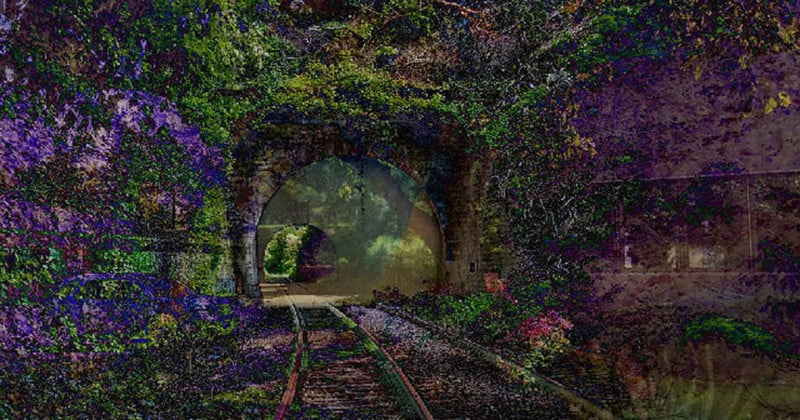
The U.S. Department of Justice has urged the Supreme Court to decline a request from a computer scientist seeking copyright protection for an image created entirely by an AI system.
According to a report by IP Watchdog, the Department of Justice urged the Supreme Court on January 23 not to hear a petition filed by Stephen Thaler, who is attempting to copyright an image titled A Recent Entrance to Paradise. Thaler submitted the application on behalf of an AI system he calls the Creativity Machine, which he identified as the sole creator of the work.
The U.S. Copyright Office previously rejected Thaler’s application, citing its long-standing requirement that copyrighted works must be authored by a human being. In Thaler’s filing, the Creativity Machine was listed as the only author of the image. That decision was upheld through two rounds of internal administrative review. The Copyright Office’s Review Board concluded that the image “was autonomously created by artificial intelligence without any creative contribution from a human actor.”
In response to Thaler’s latest bid to copyright the image created by AI, the Department of Justice argued that the U.S. Court of Appeals for the District of Columbia Circuit correctly affirmed the Copyright Office’s refusal to register the work. The government said the appeals court properly applied existing law by denying copyright protection to an image that was openly acknowledged to have been created without human authorship. Thaler’s petition for a writ of certiorari, filed in October, contends that denying copyright protection to AI-generated works could put at risk the rights of other creators who rely on technology to produce their work.
IP Watchdog reports that in its brief, the Department of Justice countered that the court of appeals reached the correct conclusion and that its ruling does not conflict with any Supreme Court or other appellate court precedent. It argues that although the Copyright Act does not expressly define the term “author,” the statute consistently assumes that an author is a human being. The brief cited several provisions that it said “make clear that the term refers to a human rather than a machine.” It noted that copyright ownership initially belongs to an “author,” but a machine “cannot own property.” It also pointed out that copyright duration is generally calculated based on the life of the author plus 70 years, even though machines “do not have ‘lives’.” In addition, the brief argued that copyright termination provisions, which allow rights to pass to an author’s surviving spouse or heirs, cannot logically apply to a machine with no family.
The government also rejected Thaler’s claim that the image could qualify as a “work made for hire.” According to the brief, the work-made-for-hire doctrine permits an employer or commissioning party to be treated as the author, but only when there is an employment relationship or a written agreement. The Department of Justice argues that neither condition can exist with a nonhuman entity such as the Creativity Machine.






![20 Years Later, One of the Best Sitcoms of the 21st Century Returns With Hilarious First Look [Exclusive]](https://static0.colliderimages.com/wordpress/wp-content/uploads/2026/02/malcolm-in-the-middle-life-s-still-unfair-feature.jpg?w=1600&h=900&fit=crop)

 English (US) ·