
 4 weeks ago
20
4 weeks ago
20
This September, we are turning our Toyota Tacoma into a mobile photography studio, building a custom set into the truck bed, and driving it 7,500 miles across the United States, photographing that same set against dramatically changing landscapes along the way.
We’ll be photographing it against mountains, deserts, forests, salt flats, red rocks, coastlines, and everything we find in between. And because the set is physically attached to the truck, every photograph comes with a strange set of limitations. If we want to change the composition, we literally have to move the truck. We can’t control the sun, the weather, or what the landscape gives us. Not to mention, we also have to light the set itself.
It is essentially an experiment in combining two types of photography that approach image-making very differently: controlled studio photography and completely uncontrolled landscape photography.
And strangely enough, the whole idea started because we needed to move.
We are leaving our hometown of Richmond, Virginia, and moving across the country to Los Angeles, California. At first, the 3,000-ish miles between the two felt like nothing more than a logistical problem. Pack everything up, load the truck, drive west, and get there as quickly as possible.
But the phrase “it’s about the journey, not the destination” kept getting stuck in our heads.
Instead of treating the drive as something we needed to get through, we started wondering what would happen if we made it one of the most important parts of the move.
Naturally, we decided to turn it into a photography project.
A New Kind of Personal Project
We are photographers and set designers who build immersive worlds from scratch for every photo shoot we do using plywood and paint.
Over the years, personal projects have become a huge part of how we push ourselves creatively and, honestly, have become the driving force behind a lot of the work we do.
A few years ago, we created our 100 Set Project, where we challenged ourselves to build and photograph 100 different sets in one year. More recently, we created The Attic Series, turning our small attic into a functioning photo studio and building 25 completely different sets inside the exact same space.
So we are no strangers to giving ourselves slightly complicated photography challenges. But almost everything we have created has existed inside a controlled studio environment.
This time, we wanted to take everything we know about set design and studio photography and throw it into a situation where we can control almost nothing.
This new project, All About the Journey, is part studio photography, part landscape photography, part set design, part road trip, and one very big experiment.
Studio Photography Meets Landscape Photography
This is probably the part of the project that excites us most because we genuinely don't know exactly how it is going to work. We have a pretty solid idea, but there are just so many variables at play that creating all of this will involve a lot of adjusting in real time.
Most of our photography is incredibly controlled. We build the set, choose the colors, position the lights, and obsess over pose and framing.
Landscape photography is almost the opposite. You have to work with what is in front of you.
You don't get to move the mountain six inches to the left or turn the sun down a few stops.
For this project, those two approaches have to coexist.
We are designing the set specifically for the truck bed, which is already proving to be an interesting challenge. It needs to be visually interesting enough to hold its own in the photographs, but open enough that the landscape remains a major part of the image.
It has to give us enough depth to create an interesting photograph while still being small enough to physically fit inside the bed of a Toyota Tacoma.
It also needs to survive 7,500 miles.
And wind.
And potentially rain.
And whatever else we have failed to anticipate.
Not to mention color. The color we choose to paint the set will have to complement a wide variety of color palettes seen in all the landscapes across the United States—deserts, mountains, red rocks, lakes, forests, etc.
The build starts in the next few days, and figuring out that balance is going to be one of the biggest challenges of the entire project.
The Entire Truck Becomes Part of the Composition
There are some strange technical limitations that come with attaching your photo set to a vehicle.
Normally, if a composition isn't quite working, you move the camera. Or the model. Or the set.
For this project, creating a completely different frame means moving the entire truck.
That means something as simple as changing our angle suddenly involves terrain, roads, parking, accessibility, and whether we can physically position a pickup truck where we want it.
Lighting is going to be another major challenge.
We will be photographing across different landscapes, elevations, weather conditions, and times of day. We need the artificial light inside the set to feel intentional while still allowing the natural landscape behind it to exist.
We also don't necessarily want this to look like a studio set that has simply been Photoshopped onto a landscape. The relationship between those two worlds is the entire point.
The lighting solution that works on a cloudy morning along the coast might be completely useless in the middle of the desert. We will have to adapt constantly.
That uncertainty is a huge part of why we wanted to do this.
7,500 Miles of Changing Landscapes
The route has grown significantly since we first came up with the idea.
What started as a relatively straightforward drive from Richmond to Los Angeles somehow turned into a 7,500-mile route across the country.
We are kicking things off in Richmond before heading north along the East Coast through Washington, D.C., New York, Connecticut, Massachusetts, and all the way up to Cape Cod.
From there, we start heading west.
The goal isn't necessarily to photograph in every state we drive through. We are looking for landscapes that feel distinctly different from one another.
Our route will eventually take us through Colorado and Utah, then farther south toward the Grand Canyon and the American Southwest.
Once we reach California, the landscape changes all over again. We are planning to photograph among the redwoods before working our way down the Pacific Coast Highway through Big Sur, finally arriving in Los Angeles.
More than 7,500 miles.
More than 20 days.
Two people.
One truck.
One photo set.
And our golden retriever, Joey.
At least, that's the plan.
Part of the point of this project is leaving enough room for things to change once we are actually out there.
We might find a location we never knew existed. Weather might completely derail a shoot. Something might break. A location might look nothing like we imagined.
There are so many variables that we simply can't control from behind a computer screen in Virginia.
And that is kind of the point.
Creating a Character Who Doesn't Quite Belong
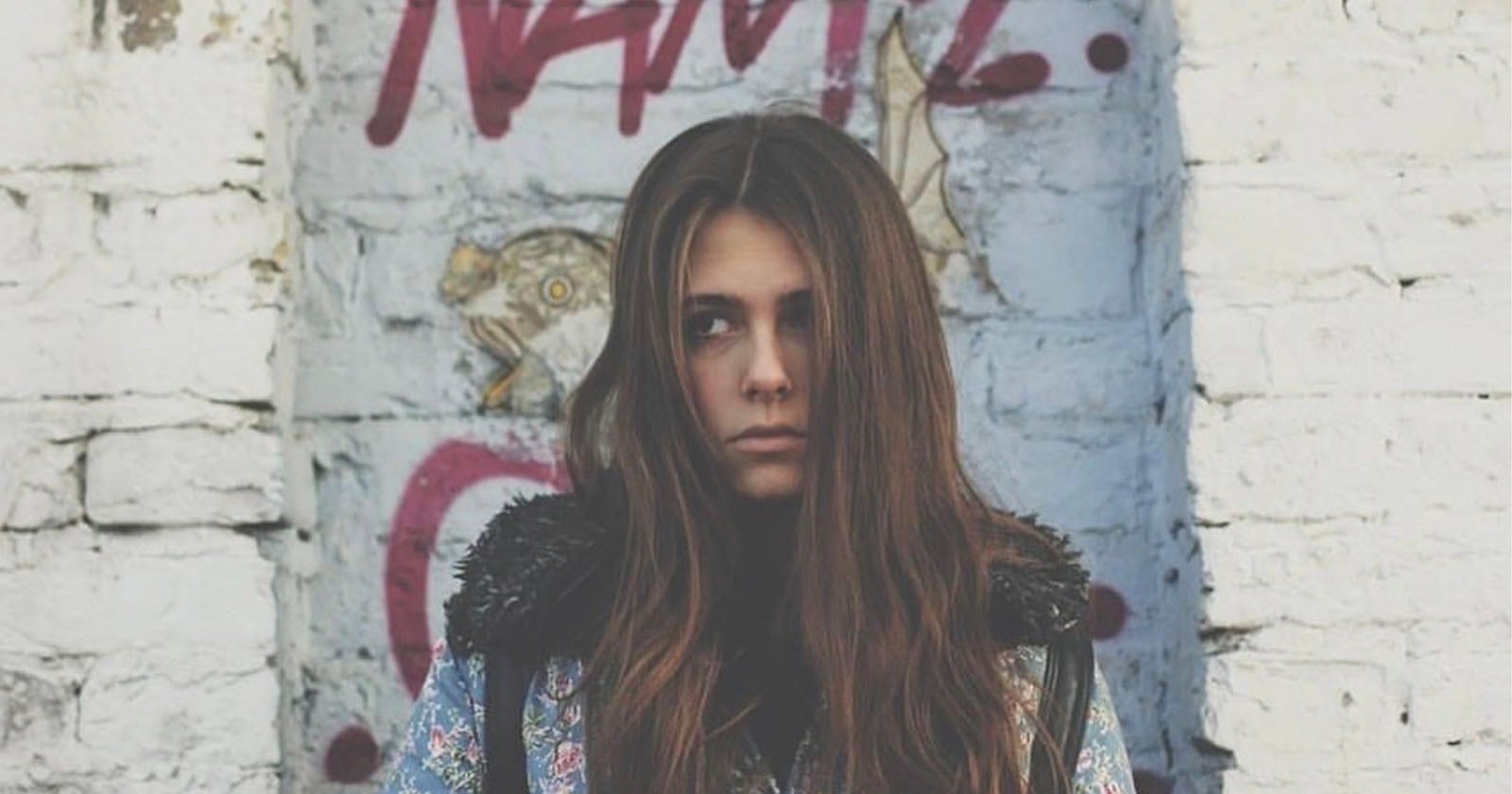
I will be the model throughout the series, and David will be photographing me.
Since the set and character will repeat throughout the photographs, we wanted the wardrobe to have that same sense of continuity.
We are working with Wild & Pree to create outfits using the same print in several different silhouettes.
The idea is for the character to feel slightly out of place wherever she goes. A little like a lost traveler who somehow brought her own strange little world with her.
The silhouettes can change from photograph to photograph, but the repeated print helps connect the images visually.
There is also something slightly ironic about putting this very styled, colorful character into these massive natural landscapes.
What Gear Do You Bring When Space Is the Limitation?
Gear is another interesting part of this project because we honestly can't bring very much of it.
Between two people, a 70-pound dog, everything we need for a cross-country move, the set itself, wardrobe, tools, emergency supplies, camera equipment, and lighting equipment, every inch of the truck matters.
There is no room for the usual “maybe we'll need this” gear.
Everything has to earn its place.
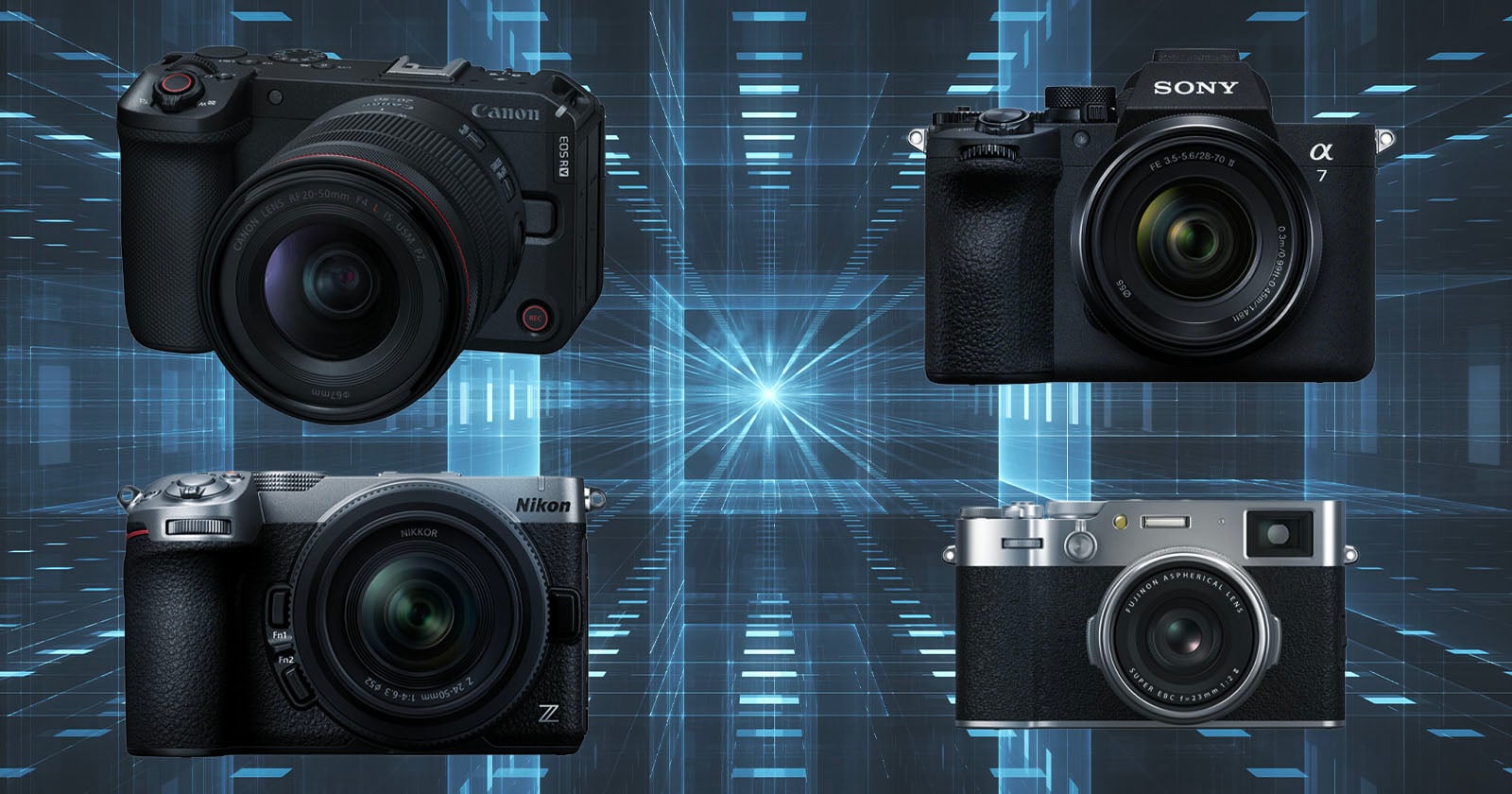
The project is being presented by Adorama, which is helping us put together the gear needed to actually pull this off.
The interesting part of choosing gear for something like this isn't necessarily figuring out what equipment would be ideal if we had unlimited space. It is figuring out the smallest kit that can solve the largest number of problems.
Portability matters. Power matters. Reliability matters. Versatility matters.
And whatever we bring has to survive being hauled across the country for three weeks.
One Big Experiment
There is something really energizing about having a clear vision without knowing exactly how you are going to pull it off.
This entire project started because we had to drive across the country. The drive was originally just a logistical problem standing between our old life in Richmond and our new one in Los Angeles.
But we stopped looking at the drive as something we needed to get through and started looking at it as a creative opportunity.
You really can make art out of almost anything. Sometimes you just have to look at the thing you were already going to do and ask what else it could become.
All About the Journey kicks off in mid-September and will take us more than 7,500 miles across the United States over 20+ days.
We'll be documenting the build, the shoots, the mistakes, the landscapes, and everything that happens in between.
If you want to experience the project as it unfolds, you can Join the Journey, our daily newsletter from the road where we’ll be sharing what actually happened that day: the successes, the failures, the unexpected problems, and the stories behind the photographs.
Because this time, getting there isn’t the point.
The journey is the project.





 English (US) ·