
 3 weeks ago
28
3 weeks ago
28
When I first heard about the Dwarf Mini Smart Telescope, I have to admit I was skeptical. A smart telescope you can carry in a pocket (albeit a large pocket like a photographer's vest), plop down, and produce decent astrophotos seemed like a stretch. Smart telescopes have certainly evolved over the last few years, and I've reviewed a few of them.
So here's one from DwarfLab that's wrapped up in a small form factor (7.2" x 4.0" x 2.4" and 1.9 lb) that claims it can get really good images of the night sky without a lot of fuss: the DWARF mini Smart Telescope. It has a pair of 1,016 mm and 45 mm full frame equivalent lenses; one is wide for Milky Way photography and also acts as a finder scope, and the other can get you a nice field of view for nebulae, galaxies, comets—you name it. It can also be used as a nature scope for, say, bird or distant animal photography. It uses a Sony STARVIS 2 IMX662 sensor, and it includes a sun filter and a dual-band filter for bringing out the narrow-band spectrum in nebulae.
Amazingly, for such a small telescope, it can find deep-sky objects you select in its library and also shoot mosaics for items that won't quite fit in its field of view. It can run 4 hours on battery and will allow you to plug in an auxiliary battery for longer sessions via a USB-C port. That same USB port will let you plug the DWARF mini into your computer, and it will appear as a hard drive so you can get your images off for further processing.
Here's the quick specs rundown:
- Optics: 150mm f/5 telephoto lens; 30 mm aperture wide lens
- Sensor: Sony IMX662; 1080p (2 MP); 2.9 μm pixels
- Tracking: Supports alt-az and equatorial tracking
- Maximum exposure: Up to 90 seconds per subframe in EQ mode
- Battery: Built-in 7,000 mAh; up to about 4 hours of imaging
Taking an Image
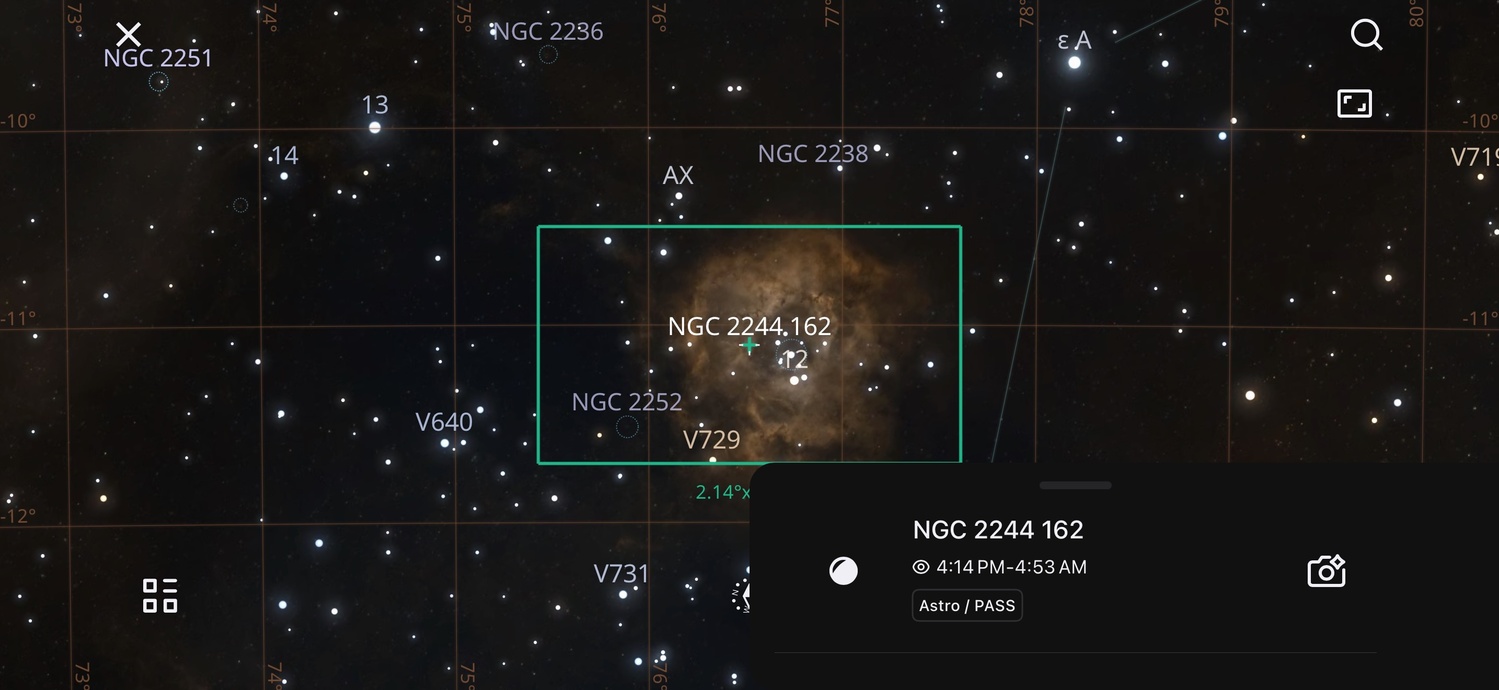
For finding a target, connect the app via Wi-Fi and Bluetooth. Manually point the optical tube toward the sky. The telescope software will figure out where it's pointing at that moment, which will allow it to move and find your target automatically. This is done via a method astronomers call plate solving. The DWARF mini identifies the star patterns it sees by comparing them to its internal star maps. When it knows where it is pointing, it knows where everything else is.
The DWARF mini app has a rather large catalog of what is up on any given night and will make suggestions, but you are not held to those. You can manually type in just about any object you'd like. If the object is below the horizon, it will tell you.
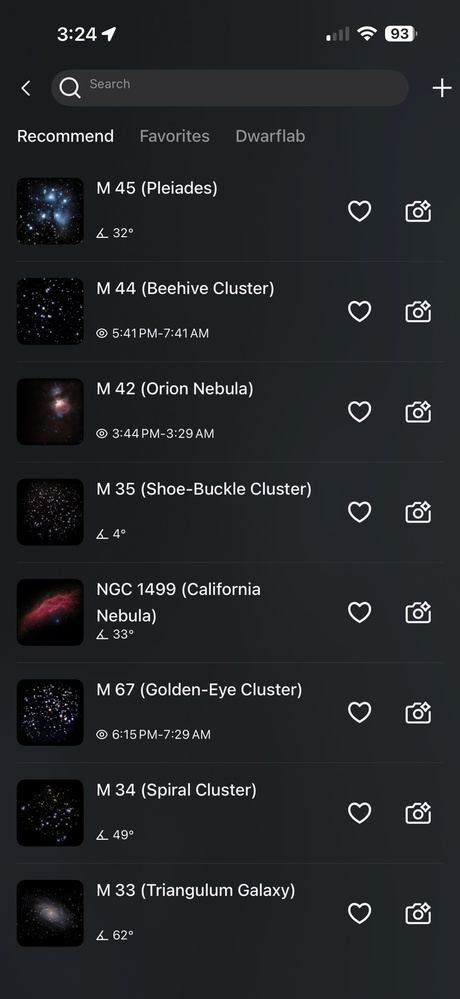
The software/telescope combination will lock onto your target and keep tracking it. In alt-az mode, 10-second exposures are considered ideal; in equatorial mode, you can image for up to 90 seconds per exposure. You'll be taking multiple images, and the DWARF mini will automatically stack them so you can see your image getting brighter and more detailed in real time.
How Long Do You Need for an Image?
For the sun and the moon, it's quick because they are bright—fractions of a second. For galaxies and nebulae, anywhere from 30 minutes to several hours sounds right. It depends on how deep you want to go and how much faint detail you want.
How Do You Process Your Images?
For many would-be astrophotographers, that's the hard part, and it puts many aspiring astrophotographers off. However, the good news is the DWARF mini will stack and process your images for you. If you want even better processing, you can upload your image to the DwarfLab servers, and usually in under a minute, you'll get an image back that is better than the one you sent. The service is free and included with the DWARF mini purchase.
If you want to process the files on your own, you can download a JPEG, a PNG, or even files in FITS format, which the pro astrophotography apps use. The FITS files will be either stacked or aligned into one file, or the individual short exposures will be offered, and you can stack them yourself. That allows you to use pro-grade sharpening, noise reduction, and color correction in apps like Siril or Pixinsight.
Still, using the onboard processing or processing from DwarfLabs, you'll get a perfectly fine image for posting or sharing.
Trying the Dwarf Mini
The little smart telescope is easy to use. The first time you use it, you'll pair your phone to the Mini, then follow the on-screen prompts. If you are using alt-az mode, put the scope on any flat surface or any tripod, and you are ready to go. As described above, the scope will find the target of your choice, and usually do so in under 2 minutes, including some time for plate solving and initialization. It's automatic, and I didn't need to be involved.
I started with M42, the Great Nebula in Orion. It's bright, and it's in a good position from my backyard to the east. You can let the Mini decide the number of exposures, or you can manually set the parameters. I decided to put the scope in equatorial mode to allow for the longer exposure time, and the software prompted me on moving the scope left/right or up/down to get myself polar-aligned, which is needed for the best, most accurate tracking.
Here's the Mini in my backyard on a garden table getting itself aligned. The body of the telescope is pointed to the north celestial pole, while the optical assembly is pointing toward the constellation of Orion.
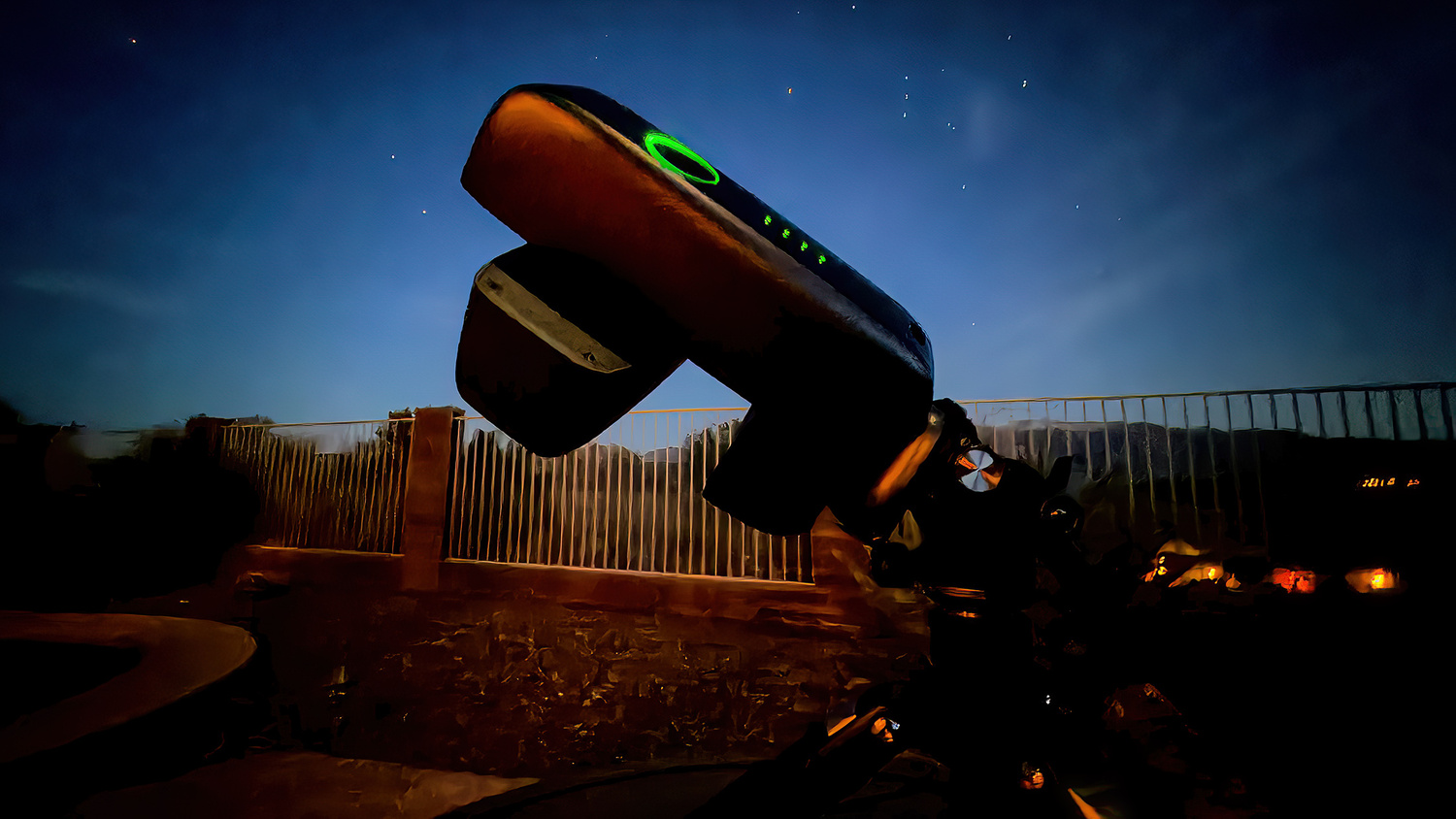
It only took a couple of minutes, and the scope moved to my target, centered on M42, and started tracking. I pressed the autofocus button and got very sharp focus. I've tried some other smart telescope autofocus routines and found them not as good as this scope.
I started with the Orion Nebula at multiple exposures at 90 seconds, but the Mini said the exposure would be too bright. Orion is one of the brightest objects in the nebula catalog. I cut the exposure down to 30 seconds and took 30 minutes' worth.
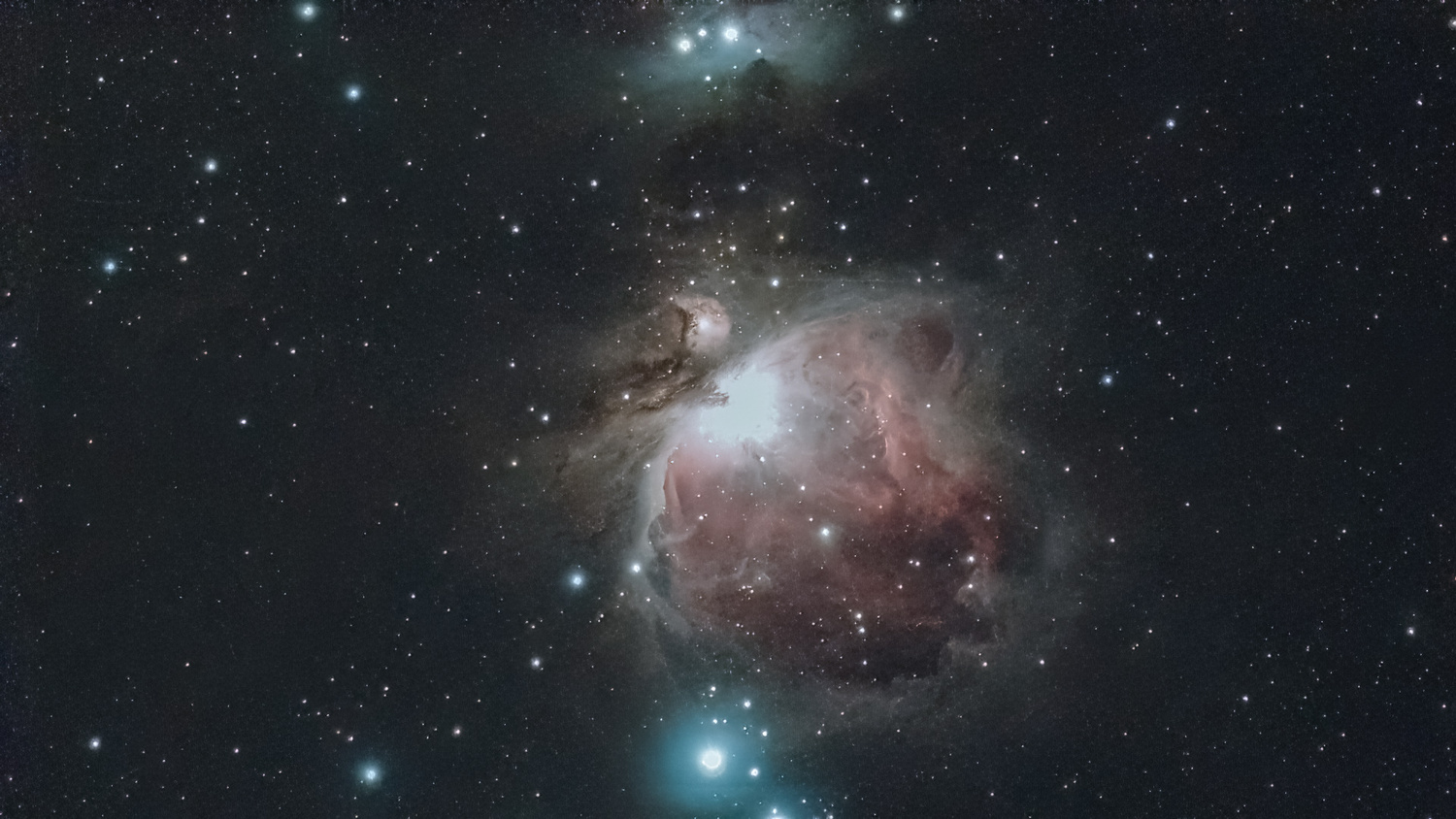
I thought this was an excellent result. I think back to my start in astrophotography 20 years ago, with a couple of thousand dollars' worth of mount, telescope, and a camera, and Orion didn't look this good. Of course, I've learned a lot, and the industry has learned a lot too. We now have computer control, plate solving, faster, less noisy, and more sensitive imaging chips, and very smart software.
I thought I could take the image further, so I put it into PixInsight, a complex but powerful software program used heavily by advanced amateurs and pros. It was able to sharpen things up, reduce noise, and correct the color to be more accurate.
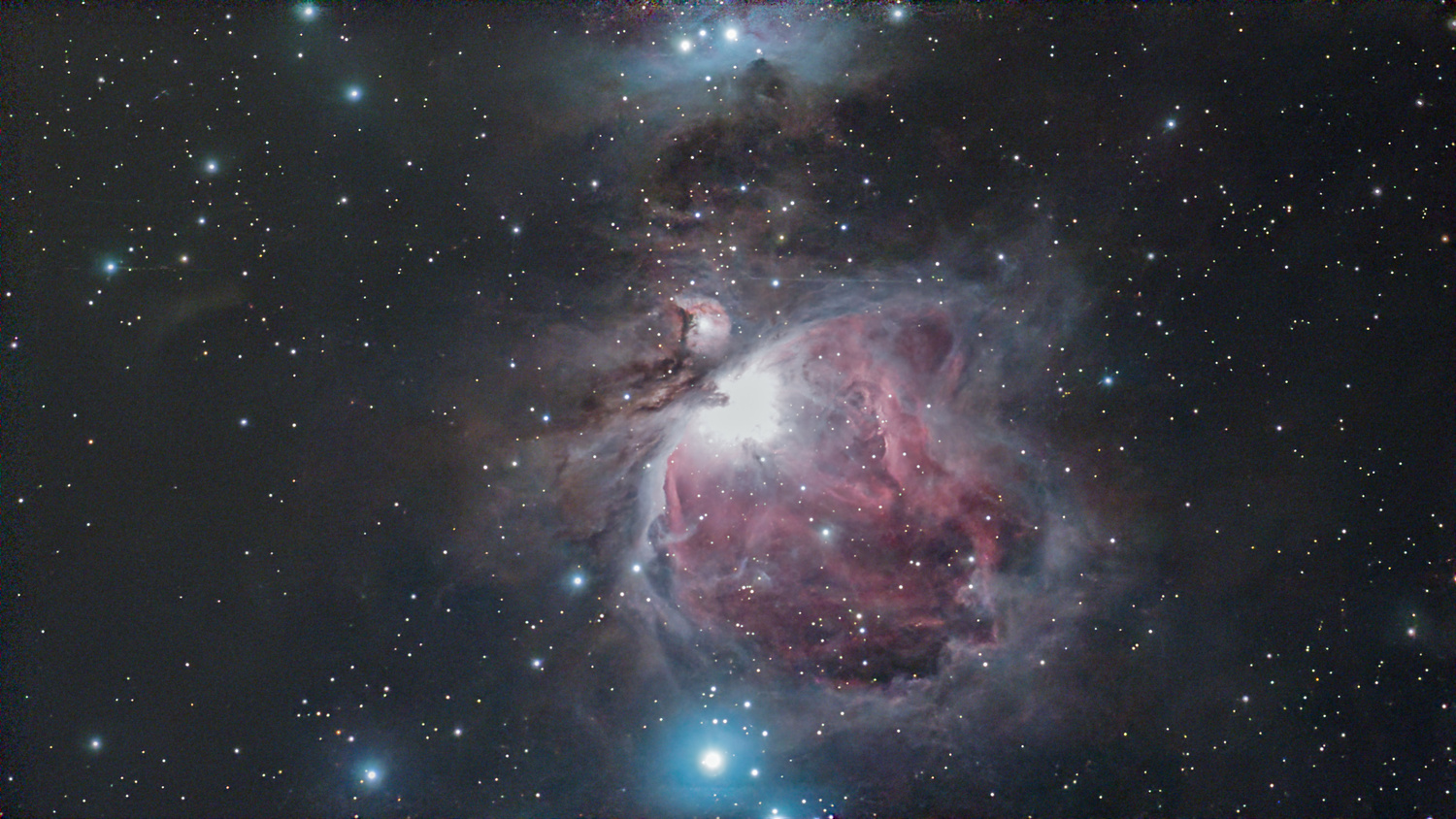
Experienced Photoshop users could clean the image up as well, but I have to emphasize that out of the camera, you're going to get good images—likely beyond your expectations—that you can share.
In the quicker and dirtier alt-az mode, I tried the Pleiades, also known as the Seven Sisters. This star cluster got 40 minutes of exposure, and the Mini picked up some of the stellar dust around the stars. These were 10-second exposures.
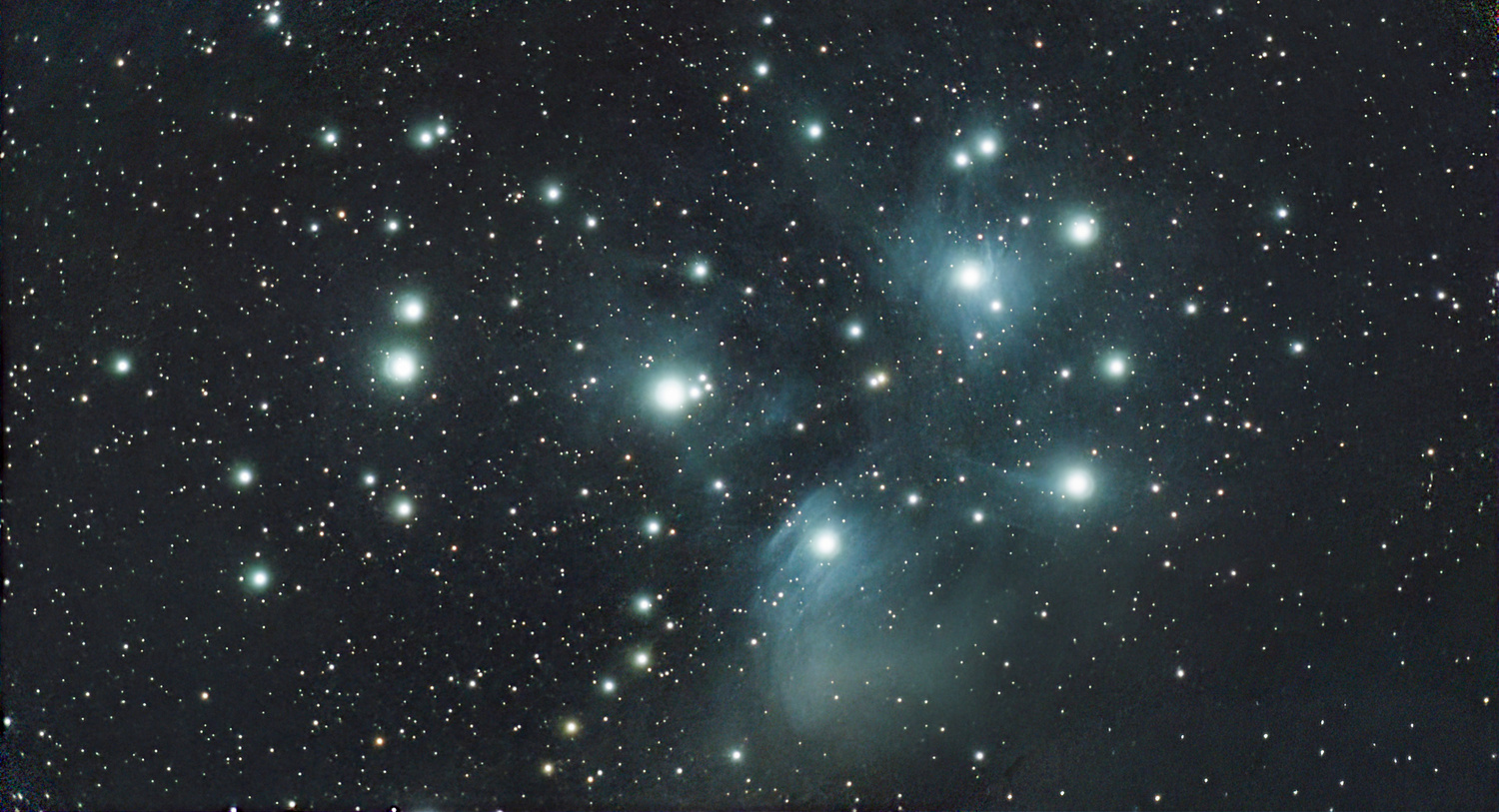
Another really good result from a telescope that is so small.
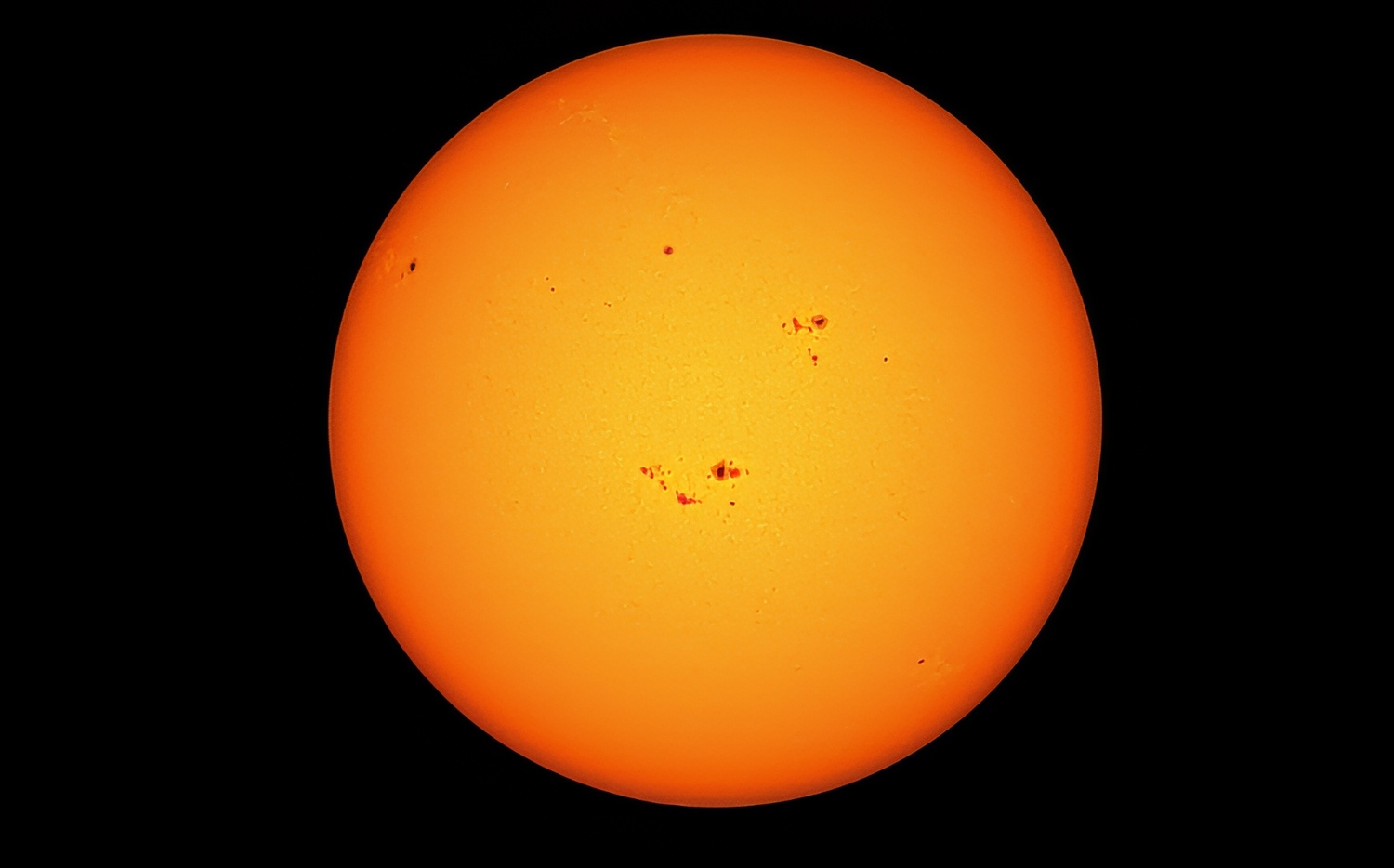
The sun and moon were easy. During the day, with the sun filter attached, you could see quite a few sunspots.
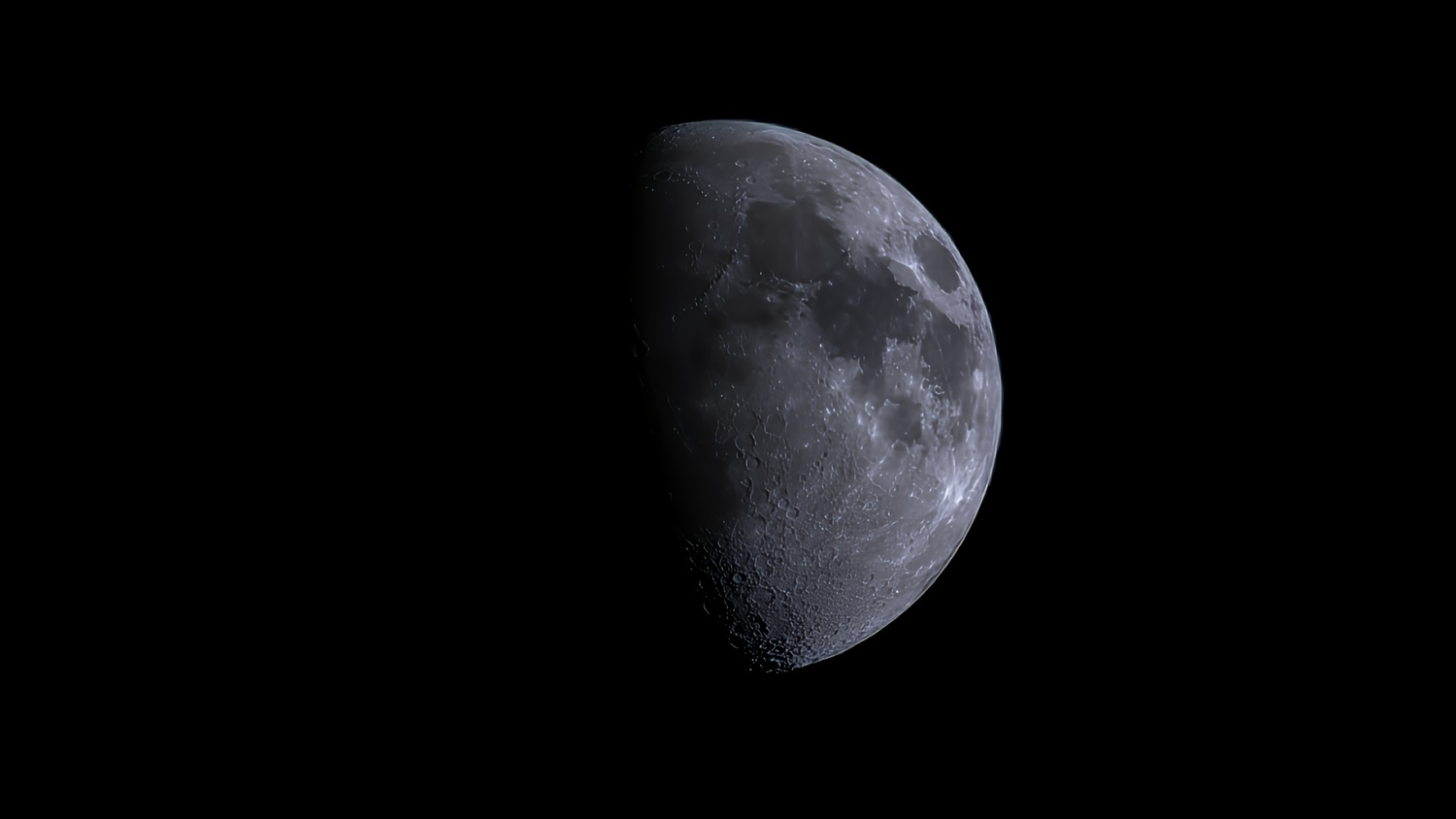
The moon is an easy target in any small telescope, and with a single shot, I got a nicely focused look at our nearest space neighbor.
Further Thoughts
How about planets? Nope. They would just be small dots with no detail. The DWARF mini, like most smart telescopes, is designed for galaxies, nebulae, and the sun and the moon.
I should also note that, like many of the recent smart telescopes, you do not have to remain connected with your phone or tablet while the scope is collecting images. Once you have told the Mini what to do, you can do other things with your phone, or even leave home while the Mini is working for you. Also, there is a mode where you can give it multiple targets, and the Mini will follow your instructions, leaving you with two or more stacked images of your targets.
Who Is the DWARF mini For?
Make no mistake: the mini is not going to replace expensive optics and heavy-duty mounts. It has a small objective lens and is not going to create images that will compete with those setups. On the other hand, the goal in designing this equipment was to let people interested in astrophotography get started at a low price and get credible photos if you give it the time to collect a lot of light. I'd love to take this little guy to a dark-sky site while on vacation and collect some really nice photos. There's a trade-off between the weight of my usual gear and having this little telescope along, which weighs under 2 lb and can go anywhere.
I also know some ex-astrophotographers who got tired of loading their cars with mounts, counterweights, cameras, and telescopes who find this little guy appealing.
Getting a Dwarf mini
It retails for $399. You can buy their tripod, which is sturdy and a good match for the Mini, for $89, but any camera tripod will work. I used their tripod for this review and found it worked fine.
What I Like
- The Dwarf Mini is well built and performs much better than you'd expect at this price and size.
- Picture quality is quite good, but don't expect to blow these up to poster size.
- The software seems slick and I could not find any bugs. I did get a firmware update during testing that added some features.
- There is good documentation and videos built into the app.
- You will keep wondering how this little scope takes such good pictures, and I was constantly amazed and pleased with its output.
What I'd Like to See
- I was surprised there is no carrying case. For something that is light and portable. you'll want to travel with a protective case.
Finally
When you get past the "gee whiz" factor, I don't believe you'll set this aside and get bored with it. The DWARF mini works well, will continue to be improved, and it's one of the coolest gadgets a photographer interested in night-sky imaging can have.
The field of smart telescopes is an active one. ZWO has a new smart telescope as well. It's on the verge of being available, called the ZWO Seestar S30 Pro. We're going to get a loan of one and will let you know what we think.
The DWARF mini is highly recommended.





![20 Years Later, One of the Best Sitcoms of the 21st Century Returns With Hilarious First Look [Exclusive]](https://static0.colliderimages.com/wordpress/wp-content/uploads/2026/02/malcolm-in-the-middle-life-s-still-unfair-feature.jpg?w=1600&h=900&fit=crop)

 English (US) ·