
 4 weeks ago
34
4 weeks ago
34
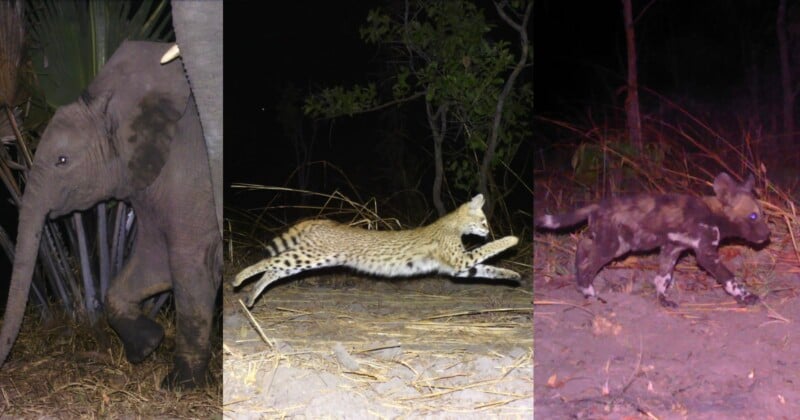 Some of the incredible species captured in Western Tanzania in East Africa by camera traps | Credit: Panthera
A year-long camera trap survey in Tanzania has captured 150,000 images of endangered and elusive animals, including a rare type of African wild cat recorded in the country for the first time.
Over the last year, more than 300 camera traps have been deployed in western Tanzania, East Africa — across an area roughly the size of West Africa’s Cape Verde — recording hundreds of thousands of images of wildlife including lions, leopards, bushbabies, aardwolves, bat-eared foxes, and springhares.
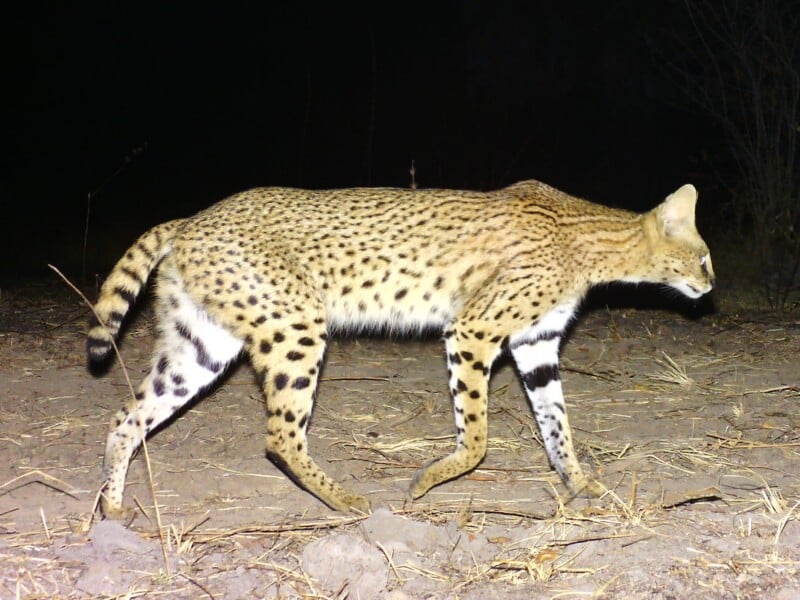 A serval with a rare morph coat pattern never documented in Tanzania photographed for the first time by Panthera’s camera traps | Credit: Paolo Strampellli / Panthera
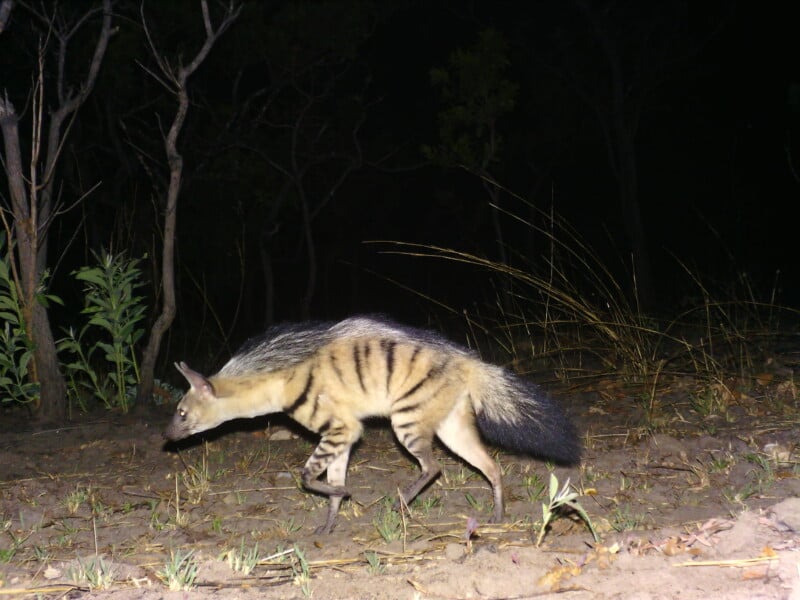 This image serves as one of the first records of aardwolves in the region of western Tanzania | Credit: Panthera
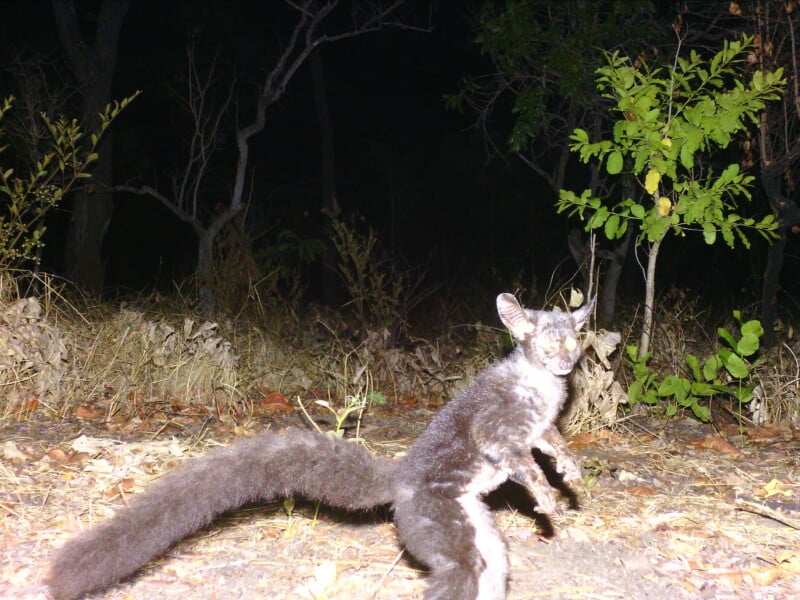 Melanistic greater galago or bush baby caught on camera trap in western Tanzania | Credit: Panthera
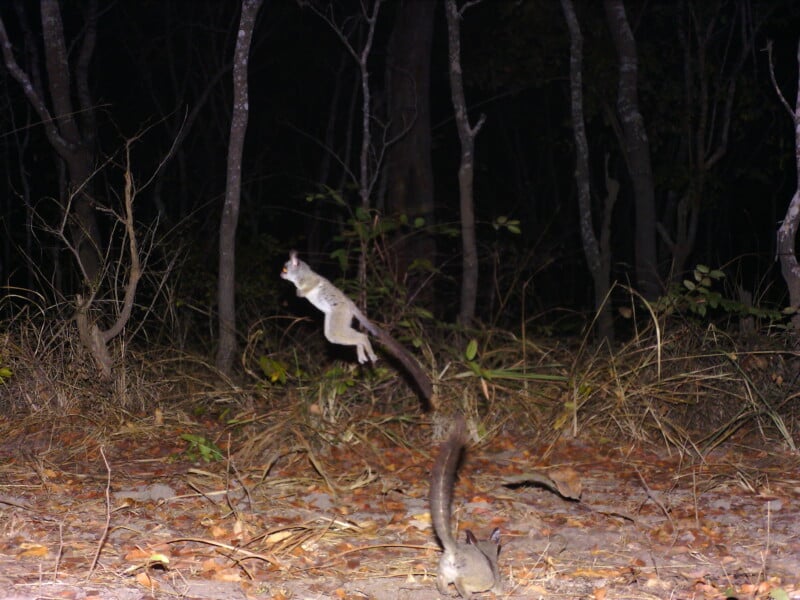 A bush baby leaps in front of Panthera’s camera in western Tanzania | Credit: PantheraIDS
The camera trap study, conducted by Panthera Tanzania, has produced several notable findings, including the first confirmed records in Tanzania of servals with a rare coat pattern. The serval is an African wild cat known for its distinctive proportions and hunting ability. It has a small head, large ears, a long neck, and long legs, which are the longest of any cat relative to its body size. However, the servals captured by the camera traps in Tanzania are the so-called “servaline morph” which has smaller, freckle-like spots instead of the larger black spots seen on typical servals.
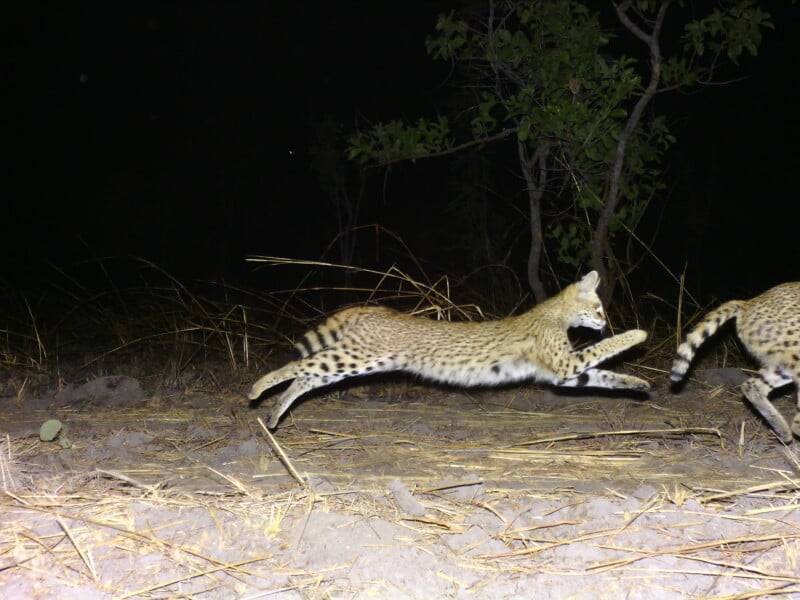 A servaline serval kitten caught on camera trap in western Tanzania. The servaline morph, which is a variation in the small spotted coat pattern of the serval, may provide better camouflauge for the wild cat. | Credit: Panthera
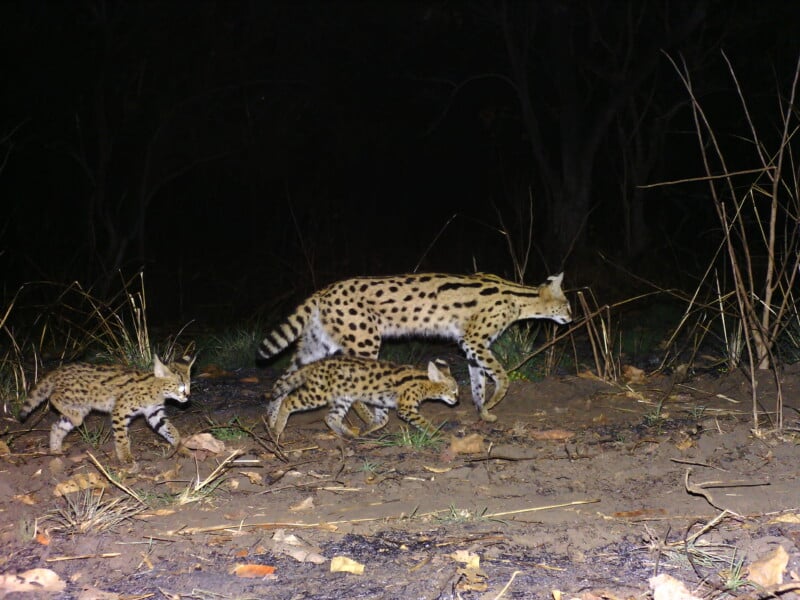 A serval mother and kittens walk past Panthera’s camera trap in western Tanzania. These cats display the typical serval coat pattern. | Credit: Paolo Strampellli / Panthera
“When reviewing the photos from our first camera trap surveys in western Tanzania in 2025, we were very excited to come across two different kinds of servals: normal servals, which have black spots, and “servaline” servals, which have smaller, freckle-like spots,” Dr. Charlotte Searle, Senior Ecologist & Data Specialist of Panthera Tanzania, says. “Both colourations are the same species but the servaline morph is much more rare, with the few confirmed records coming from sites in the Republic of Congo, Rwanda, and Uganda. The photos from our surveys in Luganzo-Tongwe and Ugalla Game Reserves are the first confirmed records of this colour morph in the country.”
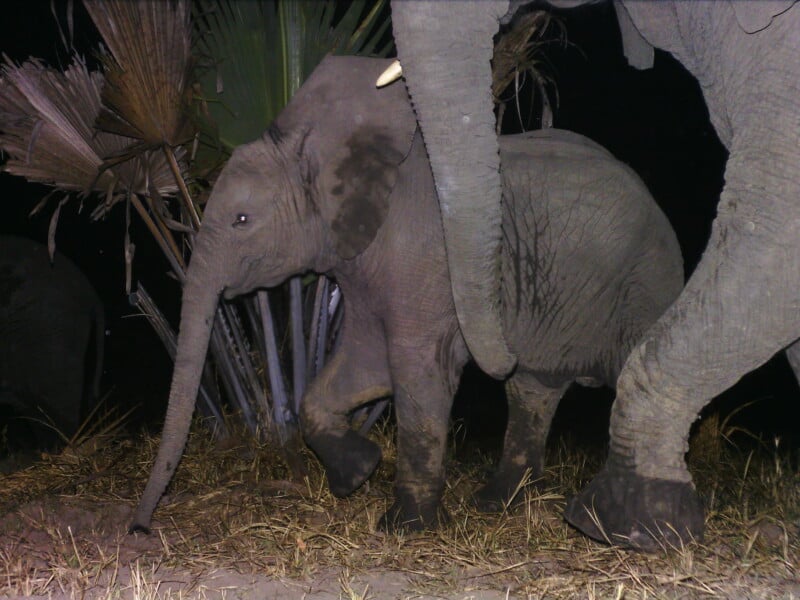 An elephant calf and its mother, western Tanzania | Credit: Paolo Strampellli / Panthera
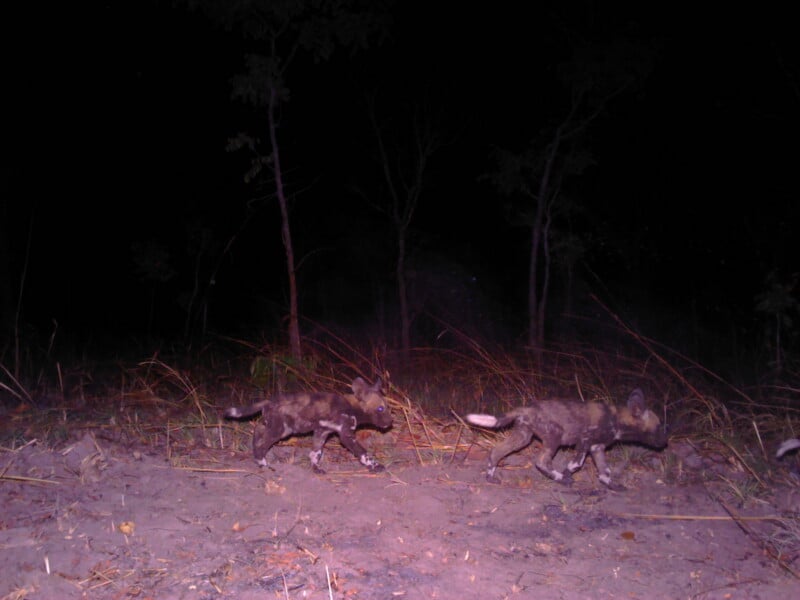 Wild dog pups caught on camera in western Tanzania | Credit: PantheraIDS
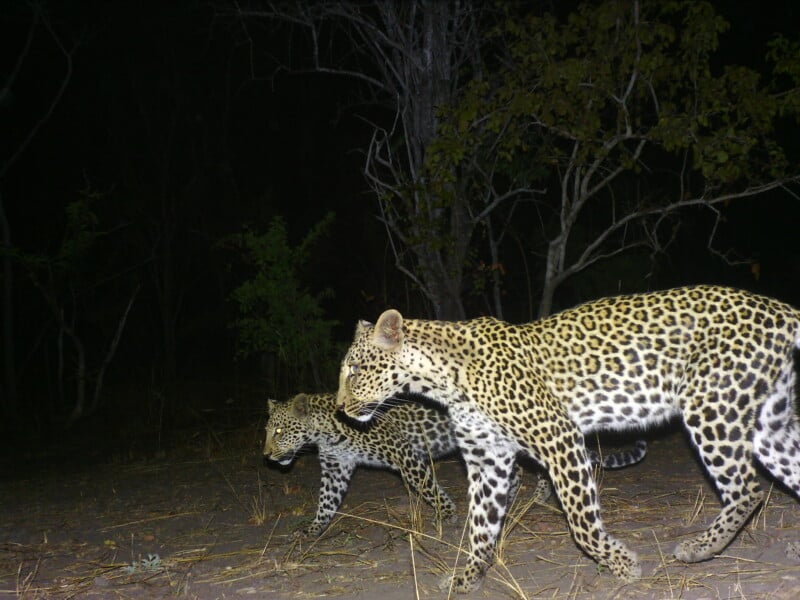 Leopard cubs typically stay with their mothers for 18-24 months before reaching independence. | Credit: Paolo Strampellli / Panthera
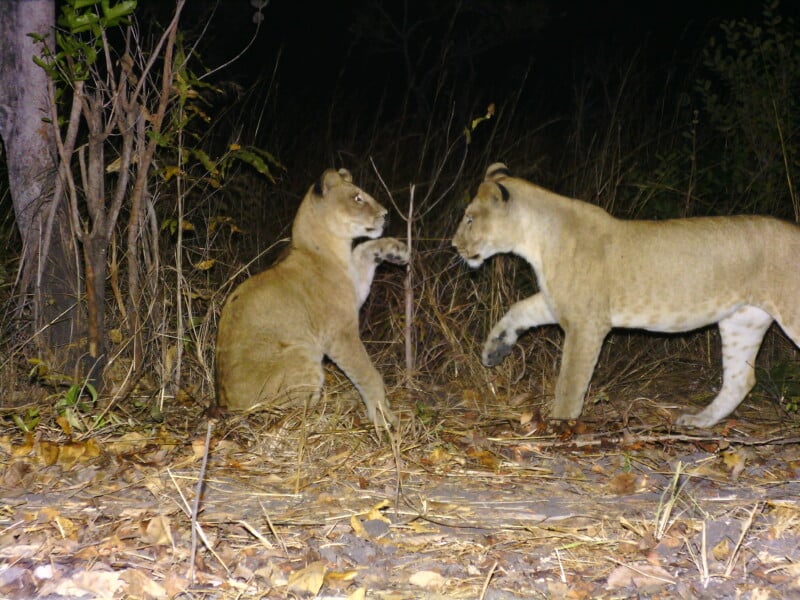 Lion cubs play to the delight of viewers of Panthera’s camera trap in western Tanzania | Credit: Paolo Strampellli / Panthera
Dr. Searle says camera traps allow researchers to document rare servals and other elusive animals that they would be unlikely to encounter in person. The camera traps also recorded rare melanistic genets and bushbabies, along with some of the first records of aardwolves, bat-eared foxes and springhares in western Tanzania.
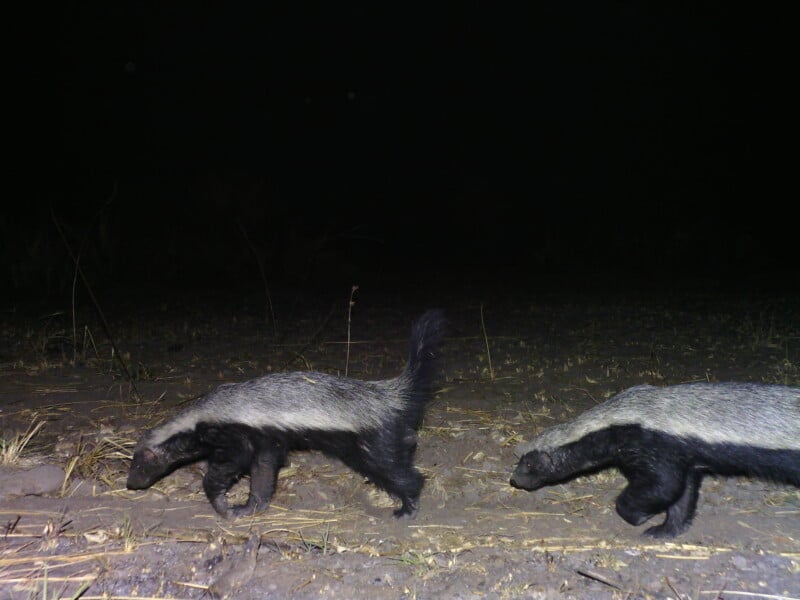 Honey badgers in western Tanzania | Credit: Paolo Strampellli / Panthera
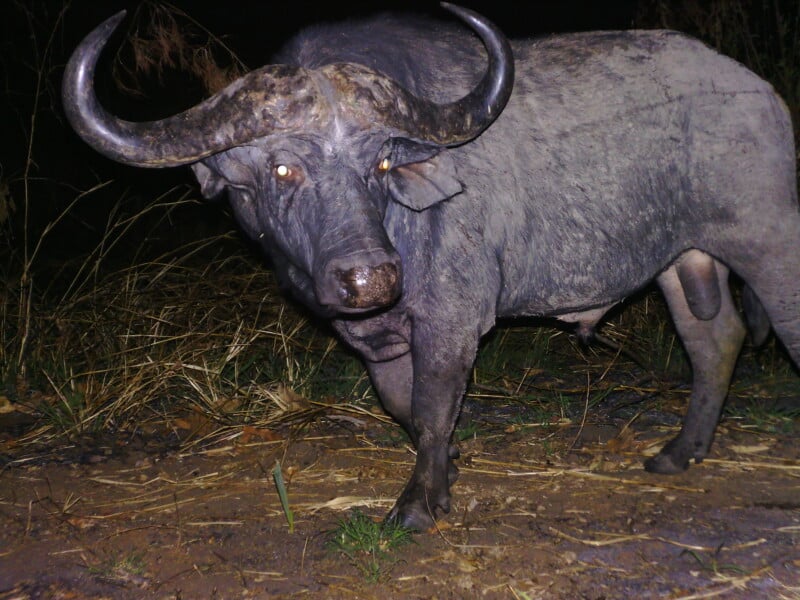 A curious cape buffalo in western Tanzania | Credit: Paolo Strampellli / Panthera
“Seeing a serval is already quite a lucky occurrence, so seeing a servaline serval would really be something special. The sites we work in in western Tanzania are very wild, and the animals there can be skittish as they’re not used to people, so we haven’t had the good luck of seeing one yet. However – luckily for us – camera traps are unobtrusive and can be left in the field for months at a time, so they have a tendency to unveil new and exciting insights that we would be unlikely to see in person,” Dr Searle explains.
She adds: “In addition to the servaline servals, in 2025 our cameras documented rare melanistic genets and bushbabies, and confirmed the presence of a number of species that weren’t known to be in the area. Given the lack of research across many of Africa’s wilderness areas, this shows us how much more there is left to learn about the continent’s wildlife populations.”
The findings also highlight conservation concerns for the region’s larger predators. Lion populations in Ugalla and Luganzo-Tongwe Game Reserves are well below the levels that their habitat could support. The animals face threats including bushmeat snares, vehicle strikes, and encroachment from a rapidly expanding human population.
Affiliate Disclosure PetaPixel articles may include affiliate links; we may earn a commission if you buy through one.





 English (US) ·