
 4 weeks ago
24
4 weeks ago
24
In brief
- Bitcoin is hovering around $66,150, down about 1.7% over the past 24 hours, as volatility spreads across global markets.
- U.S. stock-index futures tumbled, with Dow futures down more than 800 points while S&P 500 and Nasdaq-100 futures each fell about 1.5%.
- Oil prices surged above $100 a barrel after strikes on energy infrastructure and disruptions around the Strait of Hormuz raised fears of supply shocks.
Bitcoin remained under pressure on Sunday, extending last week's losses as global markets brace for another bout of volatility triggered by surging oil prices and ongoing tensions in the Middle East.
The world’s largest crypto is trading at roughly $66,456, down about 1.7% over the past 24 hours, according to CoinGecko data.
The token remains up about 1.4% over the past week, though it is down roughly 7.3% over the past month, reflecting choppy trading amid geopolitical tensions and macro uncertainty.
The move came as broader risk markets faced renewed pressure.
Futures tied to the Dow Jones Industrial Average fell more than 800 points, or about 1.7%, while S&P 500 and Nasdaq-100 futures each dropped around 1.5% ahead of the U.S. trading session.
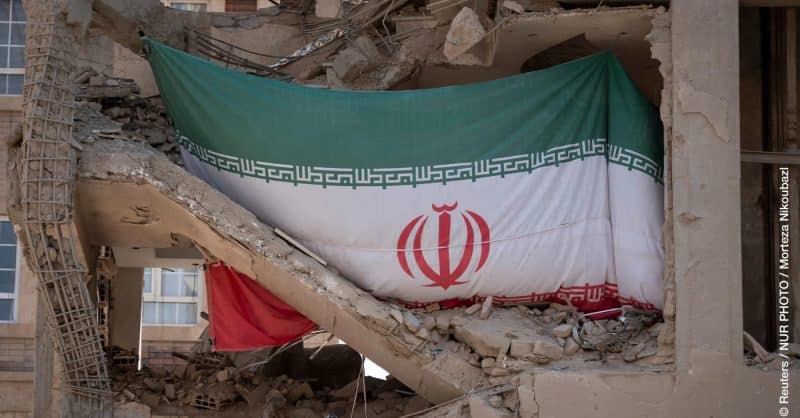
The selloff followed a sharp spike in oil prices tied to the escalating conflict involving Iran.
West Texas Intermediate crude jumped roughly 18% to above $107 a barrel, while Brent crude climbed about 16% to around $108, marking the first time global benchmarks have pushed above the $100 level since 2022.
Growing fears of supply disruptions through the Strait of Hormuz, a narrow shipping corridor that handles roughly one-fifth of global oil shipments, have continued to plague global energy markets.
"Short-term oil prices, which will drop rapidly when the destruction of the Iranian nuclear threat is over, are a very small price to pay for the U.S.A. and the world's safety and Peace," President Donald Trump wrote Sunday in a Truth Social post. "ONLY FOOLS WOULD THINK DIFFERENTLY!"
The spike in crude prices also follows a widening set of attacks on energy infrastructure across the region.
Israeli warplanes struck several fuel storage depots and refinery facilities in Tehran over the weekend, while Iran has launched drone strikes targeting oil tankers and energy sites across the Gulf.
For Bitcoin traders, the key question is whether the shock remains contained to commodities or spreads more broadly across risk assets.
Historically, cryptocurrencies have tended to move in tandem with equities during periods of macro stress.
A sustained rise in oil prices could amplify inflation concerns and potentially delay interest-rate cuts, tightening financial conditions for speculative assets.
"Oil is an input to virtually every product in the world," Pratik Kala, head of research at Apollo Crypto, told Decrypt. "A higher oil price directly translates to higher groceries and virtually every other product in the world."
So far, however, Bitcoin has shown relative stability compared with traditional markets.
The token briefly slipped below $66,000 during weekend trading before recovering part of the move, suggesting traders may already have absorbed the initial geopolitical shock.
The geopolitical backdrop also shifted over the weekend after Mojtaba Khamenei, the son of Iran’s late Supreme Leader Ayatollah Ali Khamenei, was named as the country’s new supreme leader, according to Iranian state television.
The elder Khamenei was killed in an Israeli strike targeting the supreme leader’s offices at the start of the war.
Mojtaba Khamenei, a secretive figure who has never held elected office, will now wield authority over Iran’s military and strategic decision-making, including oversight of the powerful Islamic Revolutionary Guard Corps.
His appointment came on the ninth day of the conflict following deliberations by Iran’s 88-member Assembly of Experts, the clerical body responsible for selecting the country’s supreme leader.
"The new leader of Iran is seeking revenge; his father, wife, kids, and everyone were wiped out in the attacks," Kala said. "Typically, a person in that situation is not going to make decisions with a cool mind," he added. "It remains to be seen if the balance of U.S.-Israel bombing can deter any further aggression."
Editor's note: Adds comment from Pratik Kala
Daily Debrief Newsletter
Start every day with the top news stories right now, plus original features, a podcast, videos and more.





 English (US) ·