
 2 hours ago
4
2 hours ago
4

Published Jul 11, 2026, 8:00 AM EDT
In defense of Black Flag's Abstergo shenanigans
 Image: Ubisoft
I never played Assassin’s Creed 4: Black Flag when it first launched in 2013. I’m kicking myself for that negligence right now. Its new remake, Assassin's Creed Black Flag Resynced, reaffirms that the open-world pirate adventure is one of Ubisoft’s finest games. Everything from its thrilling naval battles to its island treasure hunting holds up remarkably well in a respectful touch-up that mostly sticks to impactful gameplay tweaks.
There is one significant change, though. Resynced does away with the original game’s present-day storyline, a sci-fi framing that revolved around the perpetually nefarious Abstergo Industries. I was none the wiser about that at first considering that this was my first experience with Black Flag, though I couldn’t shake the nagging feeling that the story was missing a layer during my playthrough. Now that I’ve gone back and watched the missing sequences, I’m baffled by Ubisoft’s decision to leave them on the cutting room floor. Black Flag just doesn’t make as much sense without them.
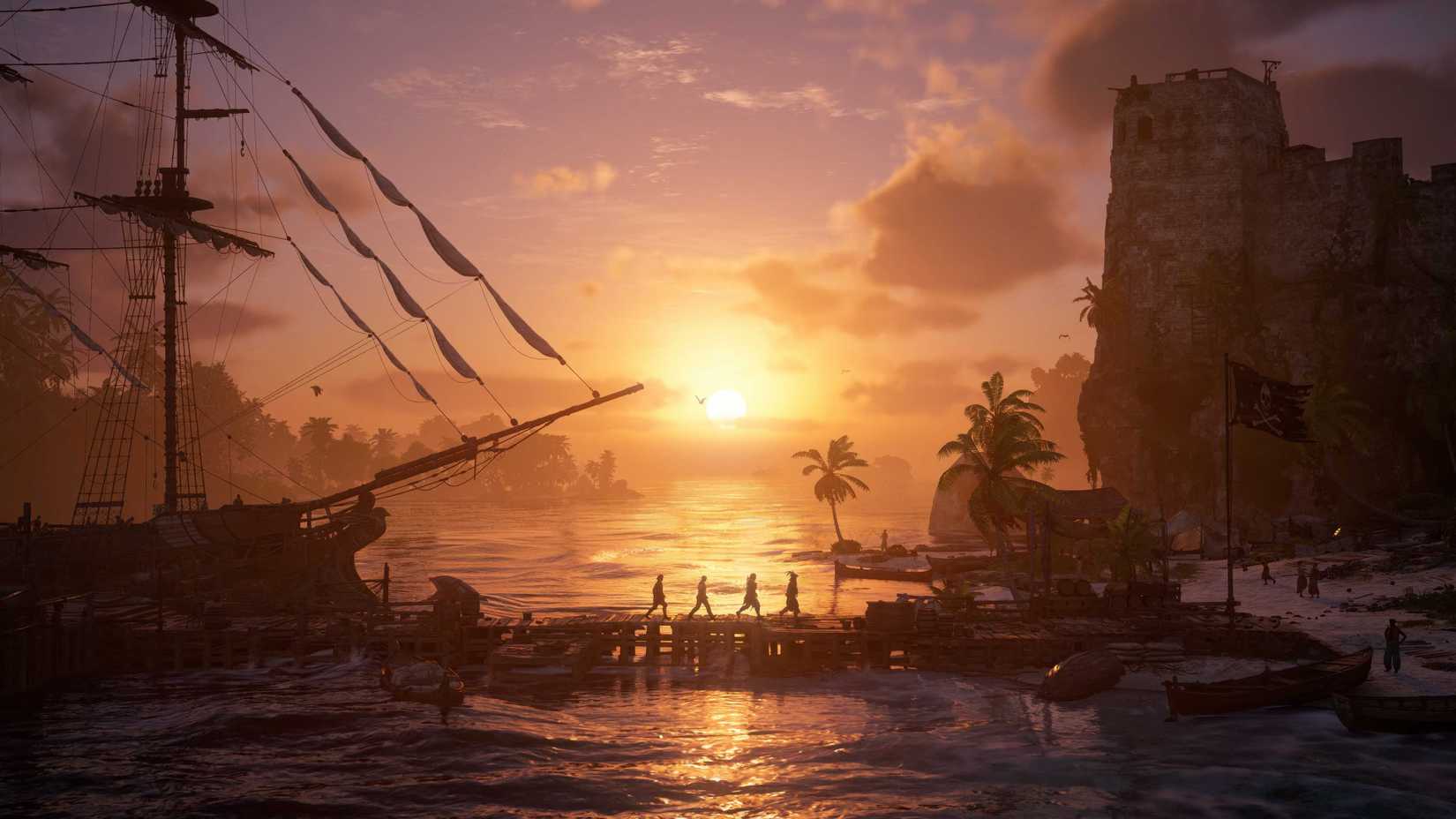 Image: Ubisoft Singapore/Ubisoft
The story of Black Flag as it is presented in Resynced is centered solely around Edward Kenway circa 1715. He’s a pirate who gets entangled with a grand conspiracy in the Carribean, as a secret order of Templars look to track down an observatory that will help them control the world order. A swashbuckling tale ensues that sees Edward sailing around islands, assassinating targets, and building up a home base for his crew. It’s a perfectly fine pirate tale that sets up some fantastic gameplay systems, but it’s missing some spice.
You can find that lost flavor in the original Black Flag. That version features modern-day interludes that cast you as an employee at Abstergo Entertainment, a subsidiary of the larger Abstergo megacorporation. In the series’ first five games, Abstergo was known for using its Animus device to mine ancestral memories from test subjects to advance the Templars’ secret agenda. In Black Flag, the Animus is used to make movies. Researchers go in and harvest their ancestors’ memories so Abstergo can turn them into crappy blockbusters.
Black Flag works as a hilarious bit of satire in that context: Edward’s story is nothing more than fuel for a second-rate Pirates of the Caribbean knockoff cooked up by cornball executives. Everyone at Abstergo is a total nerd with a surface-level understanding of history. (“Blackbeard was mental!” your boss tells you after watching your dramatic footage back.) You can forgive a lot about Black Flag’s sometimes cliché pirate instincts when you read it as a self-aware meta-gag about Ubisoft making the very game you’re playing. The best bit comes in an interlude where your boss asks if you can pull together some good footage that can be cut into a trailer. You get to see that trailer: a laughably melodramatic teaser that you wouldn’t look out of place on stage at Summer Game Fest.
In cutting these sections, Resynced loses some of the humor that covers Black Flag’s flaws in cheeky fashion. The original got a lot of mileage out of Abstergo Entertainment’s CCO explaining that the company will need to alter the raw historical footage you’ve plundered to make a “family friendly” piece of mass entertainment. He even suggests turning Edward into a “ladies man” with James Bond’s voice, even if that’s not exactly accurate. You’re witnessing history through Abstergo’s lens, turning Black Flag into a send-up of big-budget game development. With no hint of irony to tee it up, Resynced simply is the corporate-approved crowd-pleaser that Black Flag was riffing on.
I can probably guess why Ubisoft would want to remove that meta-layer: It has become the megacorporation it was poking fun at 13 years ago. Today, Ubisoft doesn’t look all that different from Abstergo Entertainment. It has turned Assassin’s Creed into a digital empire that churns out franchise sequels engineered to reach massive audiences. (Like Call of Duty, you now launch Assassin’s Creed games from a centralized app. It’s called the Animus Hub.) Hearing Abstergo Entertainment’s CCO talk about pleasing shareholders rings a lot differently in a world where we know that Tencent has a significant financial stake in Assassin’s Creed now, and that Ubisoft reportedly cut a deal with Saudi Arabia for a Riyadh-set Assassin’s Creed Mirage DLC.
Even the implementation of Abstergo lore in Resynced is beyond parody at times. As introduced in Assassin’s Creed Shadows, the Animus is now represented as an in-game reward system where you can collect credits to spend them on in-game cosmetic gear. Turning your fictional universe’s evil MacGuffin into a long-tail engagement system is about as on the nose as it gets.
I’m still having a great time with Resynced, mind you. Ubisoft arguably built the best version of its Assassin’s Creed formula with Black Flag, and that still holds up today. It features a huge world full of islands to explore, but it’s still fairly focused. It isn’t overloaded with content, as later games like Assassin’s Creed Valhalla are. It’s the right size for a blockbuster of this scale. Hey, Abstergo Entertainment has to be successful for a reason! Future Assassin’s Creed games could just stand to embrace what once made the series unique instead of locking it in the brig. It’s just going to require an ounce of self-awareness on Ubisoft’s part.







 English (US) ·