
 Image via Produzioni Atlas Consorziate
Published Feb 23, 2026, 3:39 PM EST
Ryan Heffernan is a Senior Writer at Collider. Storytelling has been one of his interests since an early age, with his appreciation for film and television becoming a particular interest of his during his teenage years.
This passion saw Ryan graduate from the University of Canberra in 2020 with an Honours Degree in Film Production. In the years since, he has found freelance work as a videographer and editor in the Canberra region while also becoming entrenched in the city's film-making community.
In addition to cinema and writing, Ryan's other major interest is sport, with him having a particular love for Australian Rules football, Formula 1, and cricket. He also has casual interests in reading, gaming, and history.
Sign in to your Collider account
Horror stands as one of the most interesting and innovative movie genres in the medium’s history. Even stretching as far back as the silent era, the best scary movies have showcased an artistry and ambition that commands respect for their technical prowess, storytelling intensity, and lasting psychological impact on the audience. While this is true in 21st-century cinema—particularly in the past ten years—many of the films that best exemplify this come from decades long past.
Of course, the term “rewatchable” in horror can be a misleading adjudicator of greatness; as masterful as they are, films like 1932’s Freaks and Rosemary’s Baby sit firmly in the “once was enough” camp for me because of their rather disturbing subject matter. However, these 10 movies do, in my opinion, strike a brilliant balance between cinematic thrills and engrossing entertainment. Ranging from Alfred Hitchcock classics to defining icons of the 1980s, these horror movies are the ones I, a Gen-Z cinephile with a love for the classics, find myself rewatching the most, even though they are a bit before my time.
10 'The Exorcist' (1973)
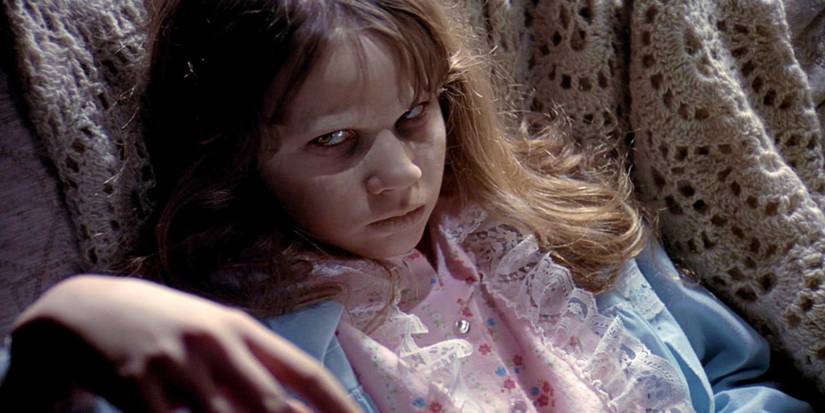 Image via Warner Bros.
I must confess I’ve had something of a unique experience watching The Exorcist. My first viewing was the original theatrical release of the film, a version that does not include the famous spider-walk sequence—a scene I believe is of paramount importance in regard to ramping up the terror of the viewing experience. Additionally, such is the legend surrounding The Exorcist—a movie said to be cursed by the devil himself—that my apprehensive anticipation of sheer frightfulness was never going to be met.
However, what my first viewing may have lacked in pure scares was more than offset by the appreciation I immediately developed for just how brilliantly executed it is. Everything from the effective and emotionally-grounded storytelling to the slow-burn suspense, practical effects, and especially the technical majesty, provided a treat that I wasn’t expecting from a movie famous for being the “scariest film of all time.” This isn’t to say it wasn’t terrifying; its mood of atmospheric dread and its most viscerally confronting moments still have a strong effect on me. Ironically, when I did watch William Friedkin’s director’s cut, I went in with a false sense of security and was more rattled than I was after the first viewing. Further rewatches may not have left me quite so shaken, but they have consolidated my view that The Exorcist stands as one of the most masterful horror movies ever made.
9 'Nosferatu' (1922)
 Image via Film Arts Guild
Like many members of Generation Z, I imagine, my first exposure to Max Schreck’s ghoulish Count Orlok didn’t come in the form of Nosferatu or even clips from the movie, but rather, of all things, from an episode of SpongeBob SquarePants. Naturally, when I was older and saw the brilliantly suspenseful scene of stairwells and shadows leading up to the reveal of Count Orlok in the doorway, my first thought was, “Hey, he’s the guy from SpongeBob.” My second, far more graceful and respectable thought concerned how masterful the scene was, using only grainy visuals and music to achieve palpable and piercing tension.
When I finally watched the film, my astonishment at its visual presentation only grew greater. It was my first foray into German Expressionist cinema at large, and its use of harsh shadows, intense lighting, distorted sets, and uncanny imagery—which remains frightful even after more than 100 years—was a feat that I found eerily enchanting. However, the thing I have come to most appreciate about Nosferatu through a handful of rewatches is the design of the undead character and the predatory cunning of Schreck’s performance. Bereft of the dazzling mystique and seductive undertones that have defined many other vampires, Count Orlok is a repulsive, rat-like beast of haunting lust and craving, a despicable, inhuman monstrosity that still stands among the greatest movie monsters of all time.
8 'The Evil Dead' (1982)
 Image via New Line Cinema
I’m a big believer in the notion that horror is often at its best when it is embracing a sense of twisted, delirious fun, when the terrors and turmoil depicted on screen are presented as rambunctious entertainment. Few movies define this joyous spin on the genre quite like The Evil Dead. The iconic indie gem of 1980s horror captures an air of inspired lunacy through Sam Raimi’s creative and daring direction, including ambitious and effective camerawork, impressive practical effects, and a masterfully realized atmosphere of claustrophobia and isolation.
While Evil Dead II may double down on many of the qualities of the original, especially the zany comedy, I still find The Evil Dead more enjoyable to revisit. It has control where its sequel flaunts excess, an authentic zest for horror where the predecessor commits entirely to genre-blending experimentation. That isn’t to say Evil Dead II is a worse movie; in many ways, it is far better and more intriguing. However, The Evil Dead has a purity and passion that is engulfing, no matter how many times it is rewatched.
7 'Suspiria' (1977)
 Image via Produzioni Atlas Consorziate
Similar to horror movies that inject a sense of fun into their presentation, I also adore scary films that use the fantastical and unnatural allure of the genre to indulge in decadence and style. Standing as one of the most vibrantly colorful films of all time from any genre, Suspiria is a hypnotic medley of paranormal dread and surrealism, making for a divine nightmare. It follows American ballet student Suzy (Jessica Harper), who finds her enrollment at a prestigious German academy marred by horrific deaths and a simmering sense of evil unease.
Captivating from its opening moments, Suspiria’s dazzling array of colors and visual style is perfectly complemented by Goblin’s eerie score that only amplifies the haunting, unnatural tone. Combining elements of slasher cinema, psychological thrillers, and traditional paranormal horror, Suspiria captures the brilliance of Giallo cinema at its very best while also defining the stylish intensity of so many great '70s horror movies. Phantasm, Don’t Look Now, and Deep Red are just some other great flicks from the decade that didn’t quite make the cut for me on this list.
6 'Psycho' (1960)
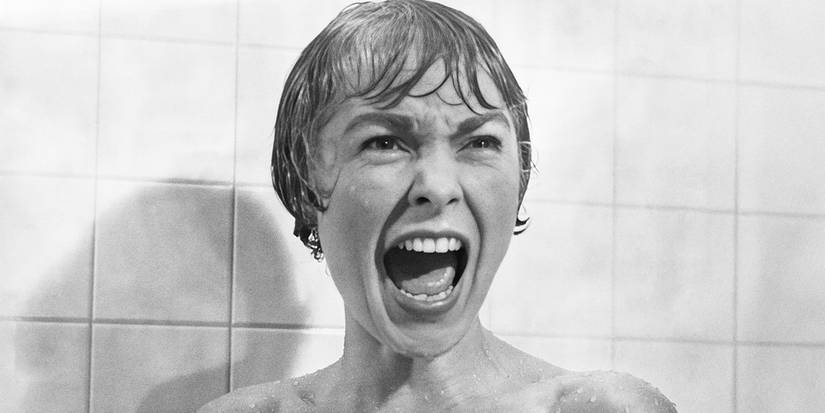 Image via Paramount Pictures
Any self-respecting horror fan—or cinema fan for that matter—simply has to watch Psycho. One viewing may be enough to tick it off a watch list, but subsequent rewatches are necessary to grasp the brilliance of what Alfred Hitchcock achieves. A stunning masterclass in camera movement and shot selection that complements a daring story defined by its iconic mid-point twist, Psycho is, in many ways, the pioneer of every single great horror movie that has come in the decades since.
From a purely cultural and artistic perspective, it reconfigured what was possible in horror cinema. From an analytical viewpoint, it is a masterpiece of suspense bolstered by Bernard Herrmann’s piercing score and Anthony Perkins’s sublime performance. I can add very little to the conversation surrounding the movie that hasn’t already been said, but from my personal outlook, what makes Psycho so great is how much fun it is to watch. It is terrifying and chilling, savagely violent even when it wants to be, but it’s infectious, an enrapturing immersion in true terror that only grows darker and more inspired as it nears its conclusion.
5 'The Silence of the Lambs' (1991)
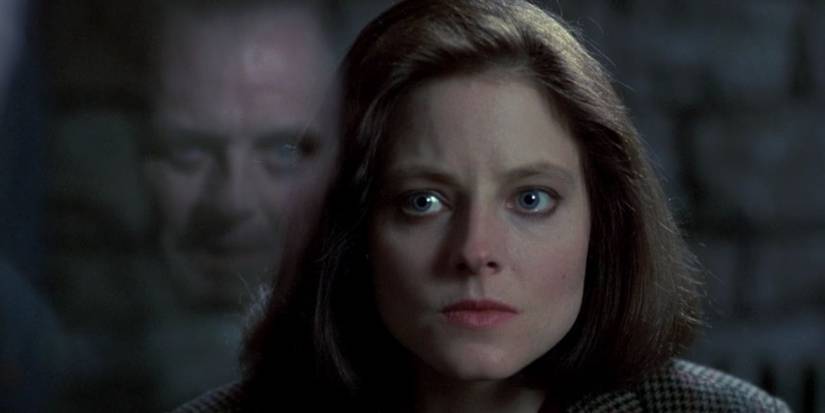 Image via Orion Pictures
For me, The Silence of the Lambs is one of those odd movies you rewatch every few years and forget just how good it is. I suppose that is because its best moments are so impressionable in my view—the first exchange between Clarice Starling (Jodie Foster) and Dr. Hannibal Lecter (Anthony Hopkins), Lecter’s escape from captivity, the nerve-rattling climax with Starling blindly fighting against Buffalo Bill (Ted Levine) in his blackened basement—that the rest of the movie can sometimes be forgotten. The thing is, the rest of the movie is ceaselessly immaculate as well.
The plot follows FBI cadet Clarice Starling as she enters into a transactional deal with detained serial killer and psychological expert Dr. Lecter to gain his insights on an active case. The Silence of the Lambs is a propulsive, magnetic horror-thriller that excels by tracking a variety of characters throughout the story. Its narrative scope is always the thing that surprises me most when I revisit it. What impresses me most is difficult to say: the performances of Hopkins and Foster are both outstanding, and the building of suspense is masterful. Even the sound design has leaped out at me on more recent viewings. All of which combine to make The Silence of the Lambs a masterpiece of horror cinema.
4 'The Thing' (1982)
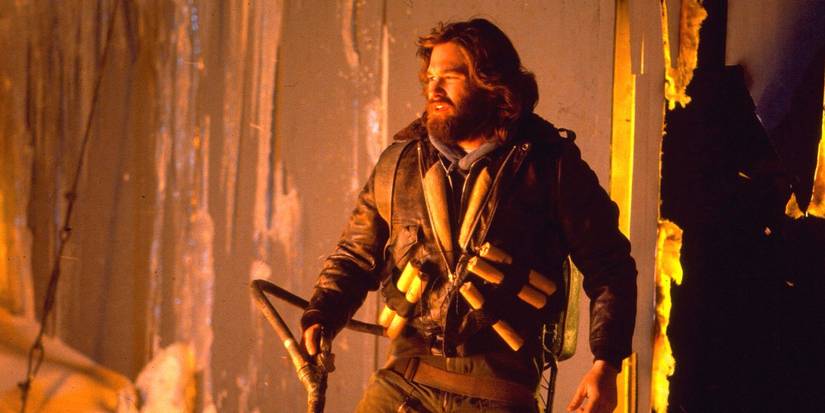 Image via Universal Pictures
It is perhaps criminal that I don’t have more John Carpenter movies on this list. Halloween is a pioneering masterpiece, The Fog is a delightfully manic supernatural horror, and even the gloriously outlandish They Live is accentuated with enough horror tropes to be a hybrid genre film. However, his very best movie in my eyes will always be 1982’s The Thing, an absorbing marriage of horror and sci-fi that features a litany of breathtaking practical effects and an overbearing tone of claustrophobia and paranoia. It follows a team of U.S. scientists in Antarctica who find themselves under attack from an assimilating alien life form.
Like several other movies on this list, The Thing’s defining triumph isn’t so much its visceral terror, but rather its engrossing allure of macabre fun. It is a relentlessly entertaining movie as well as a relentlessly chilling one. Bolstered by Kurt Russell’s effortlessly cool performance as R. J. MacReady, outbursts of personality and comedy, and thematic overtones tied to societal paranoia—linked to the Cold War and the onset of the AIDS pandemic at the time, but proving to be rather timeless at large—The Thing is always a joy to return to.
3 'Alien' (1979)
Going from one masterpiece of sci-fi horror to another, Alien is every bit as awe-inspiring and intense today as I’m sure it would have been upon release in 1979. Funnily enough, I don’t remember my first viewing of Alien as clearly as I do many other movies on this list. In fact, for a substantial span of time, I was adamant that Aliens was a far superior movie. I wouldn’t go so far as to say that the films have swapped places in my estimate—after all, both are genre-defining masterpieces—but Alien is the one I watch more often.
Of all the things there are to love about the movie, the element that always captures me is the immersion of its first act. I don’t even refer to the underlying suspense, but simply the time the movie takes to place viewers in the middle of the setting, simply living with the characters for a while before any of the horror begins. Of course, when the terror ratchets up, the movie becomes as true a spectacle of horror cinema as has ever been seen, a masterclass in tone, pacing, and practical effects that is just as frightful on the 10th viewing as it was on the first.
2 'Jaws' (1975)
 Image via Universal Pictures
There is very little that can be said about Jaws that hasn’t been highlighted already. It’s a masterpiece of horror storytelling, the spearhead of blockbuster cinema as we know it today, and a timeless marvel of technical filmmaking. Standing as Steven Spielberg’s first great film, it is one of the most important and impactful titles in pop culture from the past 50 years (or 51 years now). All this is to say that, when I first watched it when I was much younger, anticipating a medley of scenes where a gigantic shark wreaks havoc on a beach, I may have been underselling the movie.
Interestingly, it was an extended amount of time before I watched Jaws again, but revisiting it with very few memories of my first viewing proved to be a treat. Beyond the tension of the shark submerged just out of sight beneath the water, the film has so much to offer: the rich characterization of the three leads to the mesmerizing narrative pacing, the two split sections between the horror on the beach and the voyage into open waters to hunt down the shark, and, most notably, Spielberg’s exceptional use of his trademark oners. It is not only a great horror movie, but a masterclass in sharp visual storytelling. Its timelessness is a far greater testament to its greatness than any praise I can give.
1 'The Shining' (1980)
 Image via Warner Bros.
Rounding out my most rewatched horror movies with another all-time classic, The Shining stands as the best picture the genre has produced, in my opinion. The weight with which it presses down on the viewer throughout its 143-minute runtime without ever relenting is astonishing, a feat made all the more impressive by the fact that it largely follows just three characters for the bulk of the story. On my initial watches, I simply allowed myself to be immersed in the meticulously designed story world, the all-consuming evil of the Overlook Hotel, and the might of the performances.
It was only on later rewatches that I started to take an interest in how the film conjures its atmospheric gravitas, reading up on the filmmaking techniques, then watching the movie again. That is what I think is the best aspect of The Shining: the fact that it can be watched so many times and there will always be something new to notice, ranging from obvious qualities like the use of lingering long shots to far more subtle details like Jack Nicholson’s many fourth-wall-breaking glances at the camera. Moody, atmospheric, and relentlessly intense, The Shining is, in my mind, the greatest horror movie ever made, a masterpiece of suspense and dread that exudes a subdued ferocity that horror fans can only better appreciate with each rewatch.



 English (US) ·