
 4 hours ago
9
4 hours ago
9
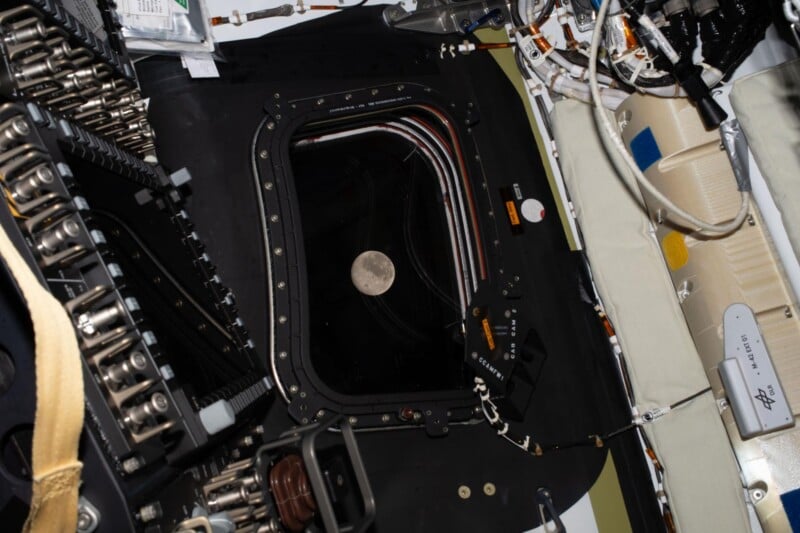 This photo was taken in the early hours of this morning (April 6), just as the Orion spacecraft carrying the Artemis II crew was entering the lunar sphere of influence. This marks the point at which the Moon’s gravity has a stronger pull on the spacecraft than Earth’s. The use of the spacecraft in the foreground with the Moon visible through the port window makes this image stand out. | NASA
Today, the astronauts on board Artemis II will travel further from Earth than any humans in history, as they fly around the far side of the Moon.
After already capturing show-stopping photos of Earth that have gone viral online, the crew has increasingly turned their attention to the Moon as they get closer and closer to Earth’s natural satellite.
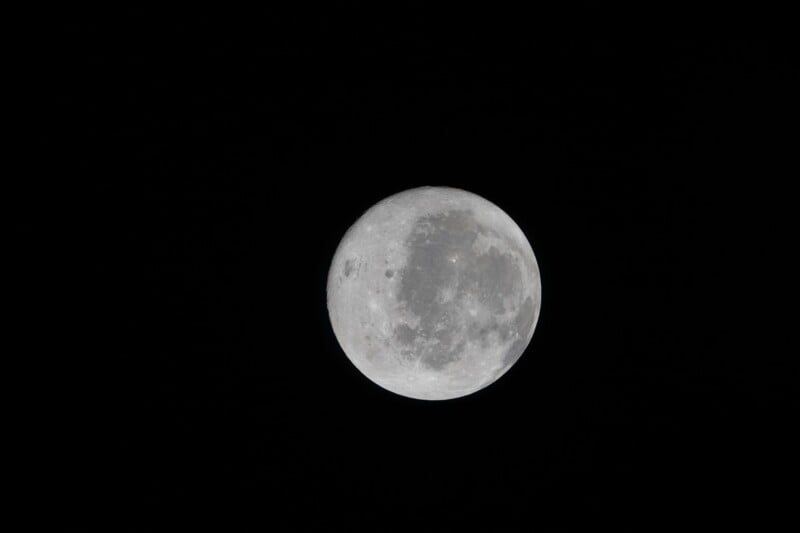 Over the weekend, the Artemis II astronauts snapped this view of the nearside of the Moon, the side that’s always visible to Earth. Although this view differs slightly as some of the far side of the Moon is visible on the left edge. The black patch is the Orientale basin, a nearly 600-mile-wide crater that straddles the Moon’s near and far sides and is partly visible from Earth. The dark areas in the center and right side of the disk are ancient lava flows, which are unique to the near side of the Moon. The white dot at the bottom of the disk, with white rays shooting out from it, is Tycho crater, one of the younger craters on the Moon at 108 million years old. | NASA
Shot on iPhone
Other spectacular photos that have been emanating from Artemis II this weekend show the crew staring out from one of the Orion spacecraft’s four windows with Earth glowing brightly outside.
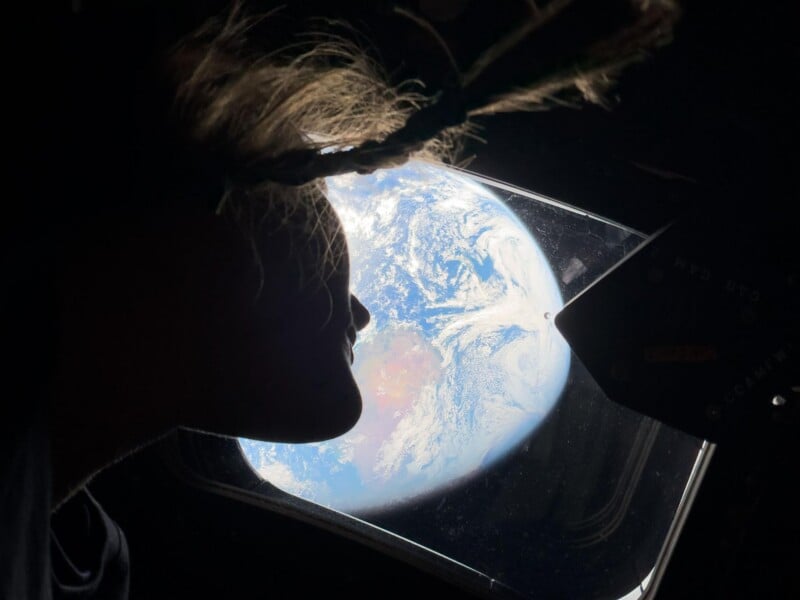 NASA astronaut and Artemis II mission specialist Christina Koch peers out of one of the Orion spacecraft’s main cabin windows, looking back at Earth, as the crew travels towards the Moon. | NASA
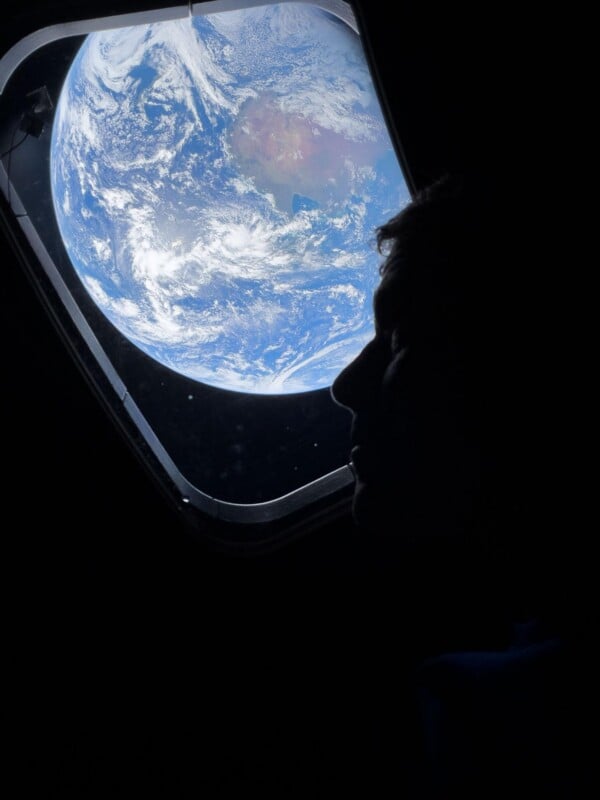 NASA astronaut and Artemis II Commander Reid Wiseman peers out of one of the Orion spacecraft’s main cabin windows, looking back at Earth, as the crew travels towards the Moon. | NASA
NASA confirmed on Instagram that the photos of the astronauts looking out the window were shot on an iPhone 17 Pro Max. Only recently have astronauts been allowed to bring their phones into space with them.
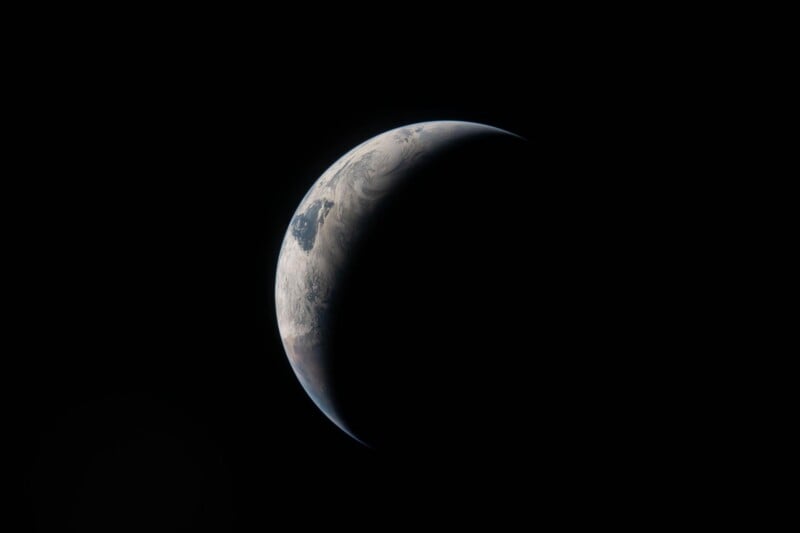 While the Artemis II crew has already captured the world’s attention with their photos of Earth, they have continued to capture the planet from whence they came.
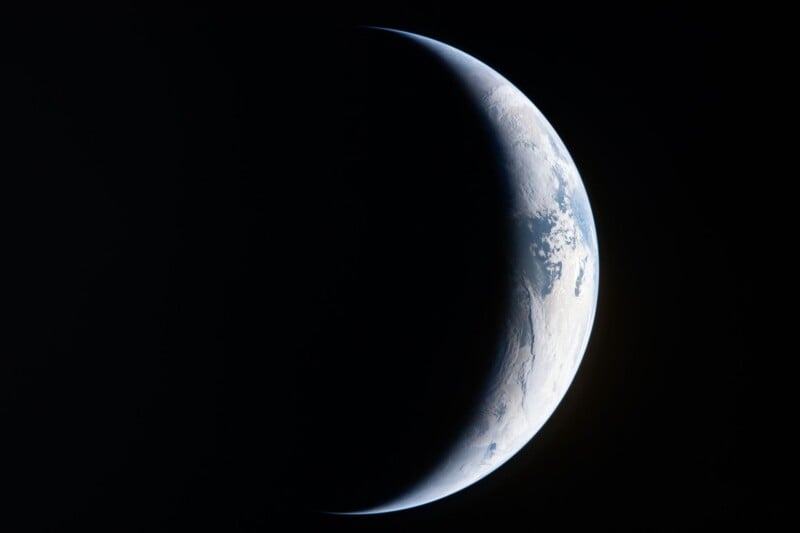 A sliver of Earth is illuminated against the blackness of space in this photo taken by an Artemis II crew member through an Orion spacecraft window. | NASA
 Earth is illuminated against the blackness of space in this photo taken by an Artemis II crew member through an Orion spacecraft window. | NASA
 A sliver of Earth is illuminated against the blackness of space; reminiscent of the famous Carl Sagan quote: “Look again at that dot. That’s here. That’s home. That’s us. On it everyone you love, everyone you know, everyone you ever heard of, every human being who ever was, lived out their lives.”
Live coverage of today’s record-breaking flight around the Moon will be streamed live by NASA.








 English (US) ·