
 2 hours ago
5
2 hours ago
5

NASA’s historic Artemis II mission delivered many absolutely spectacular photos and inspired a new generation of people to love space exploration. It also provided a fresh opportunity to explore the often confusing, disjointed landscape that is NASA’s photo publishing system.
NASA is a great organization full of exceptional people doing incredible work. However, as the Artemis II image onslaught showed, it’s not always as easy as it should be to actually see that important, often beautiful, work.
For example, when the Artemis II crew’s first photos from space were downstreamed to Earth, it was a mad rush to share them. One image ended up on NASA’s excellent Image of the Day page in Full HD resolution. Others wound up on a dedicated webpage, “Artemis II Journey to the Moon,” which is very hard to get to unless you stumble upon a link somewhere else. Then there is, of course, NASA Images, which can be accessed directly from the NASA website homepage through the top nav bar. Eventually, many images also end up on NASA’s Flickr page.
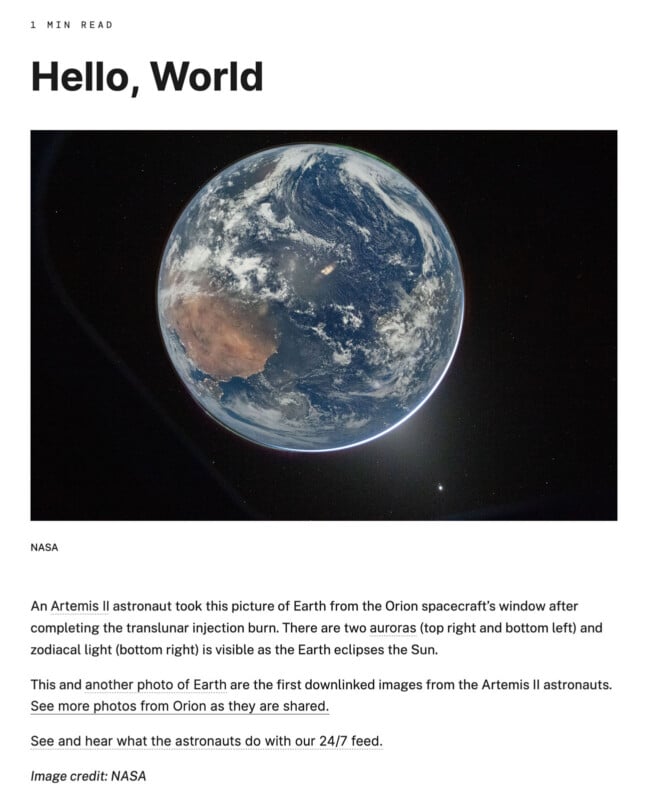 NASA Image of the Day is the most heavily curated way to see awesome space photos.
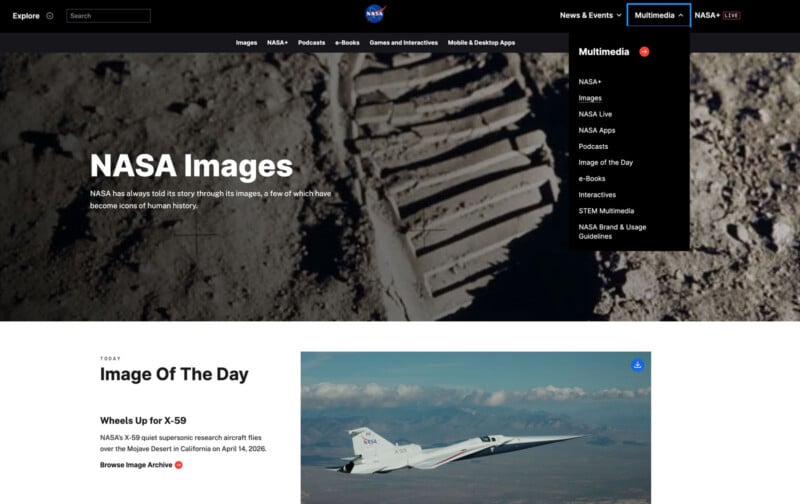 NASA Images is among the most accessible and public-facing areas where people can see the latest photos from NASA, often in a heavily curated fashion.
But wait, there’s more. There’s also images.nasa.gov, which, unlike NASA Images and NASA’s Image of the Day, includes detailed EXIF data. In the case of the Artemis II mission, this EXIF data was extremely interesting, so tracking down images on images.nasa.gov was PetaPixel‘s preferred approach to covering the mission.
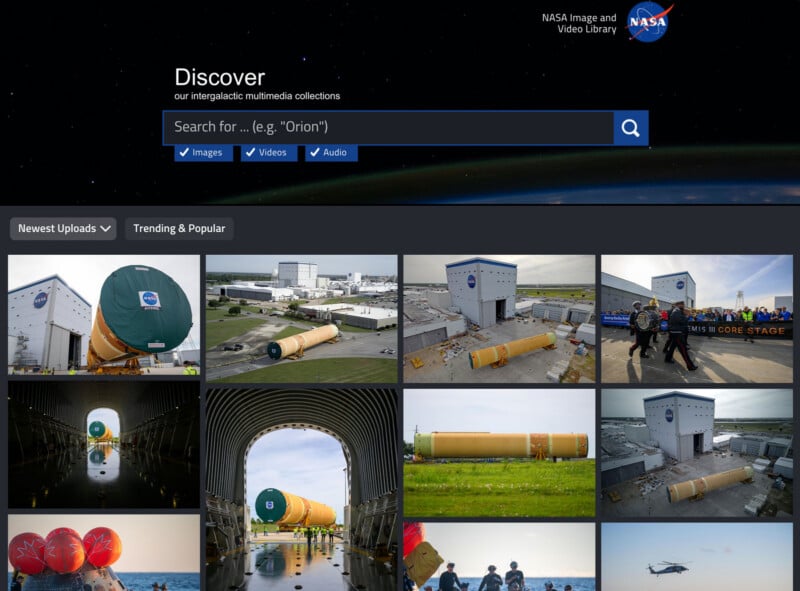 images.nasa.gov is where nearly everything ultimately ends up, complete with full-resolution downloads and EXIF data.
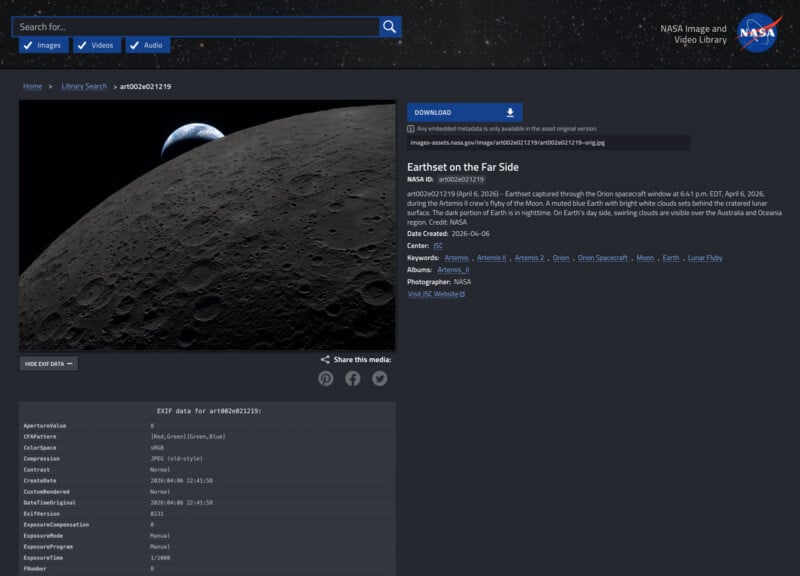 images.nasa.gov has detailed information about every single photos. It’s a treasure trove.
Unfortunately, this generally great NASA photo and video resource defaults to a “Newest Uploads” view, which is wonderful to see the latest and greatest shots. It’s also just a big image dump that lacks pagination. If someone misses a particular photo before it gets relegated to an invisible, unreachable second page, they’d better already know what they’re searching for. And I mean really know, because searching for “Artemis II,” for example, is utterly insufficient. There are a ton of Artemis II photos and videos; 61 pages of them, to be exact. Scouring all of them takes ages. I know, because I’ve had to double-check some of those images days after they were published, and it was a slog.
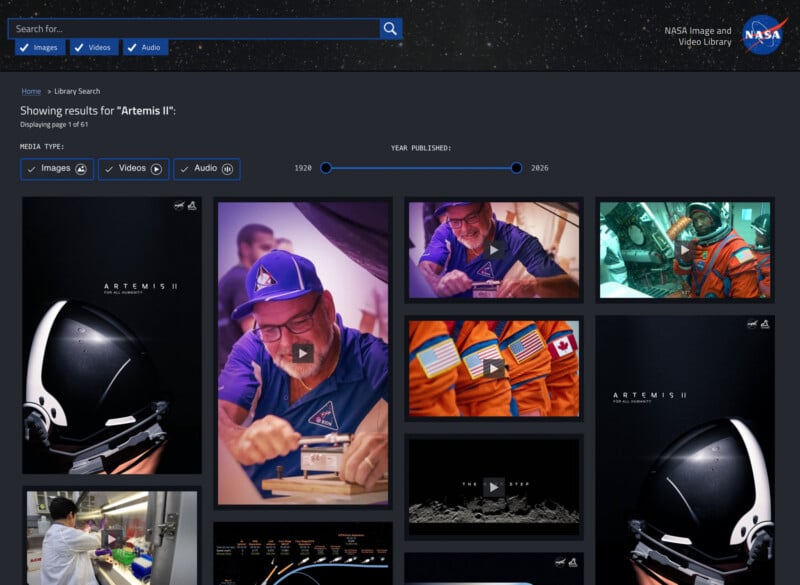 images.nasa.gov lets users search by text or by using tags, but there are very few ways to truly filter and sort search results. It’s possible to filter by year, but not to sort by upload date, for example, when viewing search results.
Then there’s NASA’s social media accounts, which, in some cases, post things first. For example, Artemis II’s incredible “Earthset” photo, a recreation of the iconic “Earthrise” shot captured by Apollo 8 astronaut Bill Anders in 1968, was shared first by the White House online, which NASA reshared on X, formerly known as Twitter, and Instagram. This was also true of an eclipse photo.
It was a constant battle to keep up with the latest Artemis II photos. Doing so required many open tabs and regular refreshes, because there is little rhyme or reason to which versions of which photos end up in which location. It’s like a chaotic game of whack-a-mole, if instead of trying to bonk a rodent, I just really wanted to see it in full resolution with complete metadata.
Sometimes a great shot was posted first on social media, sometimes it later had a dedicated page on NASA’s primary website, and eventually it would end up on images.nasa.gov.
On the plus side, as frustrating as it could be to get the right image with the right information during the Artemis II mission, bouncing around back and forth and refreshing pages meant seeing a lot of great images, often many times. I do hope that by the time humans set foot on the Moon as part of Artemis IV in 2028, NASA’s multimedia experience will be a little less chaotic.
Image credits: NASA. An element of the header photo was licensed via Depositphotos.com.







 English (US) ·