
 2 hours ago
10
2 hours ago
10
Alphabet shares popped on Wednesday. The catalyst was an unusual problem: the company’s custom AI chips are in such demand that its manufacturing partner can’t keep up.
From cloud rental to chip vendor
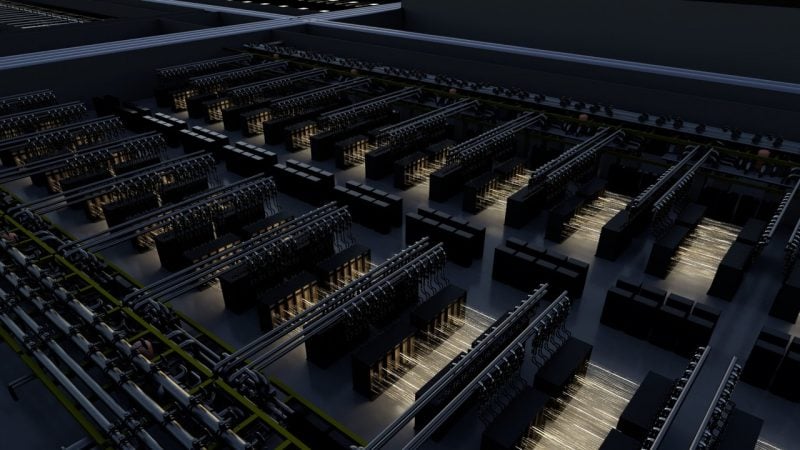
For years, TPUs lived mostly inside Google’s own data centers. Outside customers could rent time on them through Google Cloud, but they couldn’t take one home.
That changed in Q2 2026. Alphabet began selling TPU systems directly to select enterprise customers for use in their own data centers, and it started recognizing revenue from those sales during the quarter.
The catch is timing. Most of the direct TPU revenue is expected to land in 2027, not this year, so the current quarter shows the start of the business rather than its full weight.
Analysts have raised their price targets on Alphabet anyway. Some estimate TPU sales could bring in tens of billions of dollars by the 2027-2028 window.
The numbers behind the enthusiasm
Google Cloud grew revenue 82% year over year in Q2 2026, reaching roughly $24.8B for the quarter.
The backlog is even more eye-catching. Google Cloud’s contracted but not yet delivered revenue exceeds $514B.
Building that capacity is expensive. Alphabet spent $44.9B on capital expenditures in Q2 alone, and it lifted its full-year 2026 capex guidance to between $195B and $205B.
The spending pushed Alphabet’s free cash flow negative for the quarter, at roughly minus $5.9B.
Why TSMC is the bottleneck
Alphabet designs its TPUs, but it doesn’t manufacture them. That job falls largely to Taiwan Semiconductor Manufacturing Co., the contract chipmaker behind much of the world’s advanced silicon.
The specific choke point is packaging, not chipmaking itself. TSMC’s CoWoS technology (short for chip-on-wafer-on-substrate) stacks and wires together processor dies and high-bandwidth memory so they work as a single, very fast unit.
That line is booked. TSMC’s advanced CoWoS capacity is sold out through 2026 and into 2027, which caps how many TPUs Alphabet can deliver no matter how many orders it takes.
Samsung as a second supplier
Alphabet is reportedly working to reduce its dependence on a single supplier. One option under discussion is a partnership with Samsung to produce components for future TPU generations.
Diversifying suppliers is standard practice in manufacturing, but it’s hard to do quickly in cutting-edge chips. Qualifying a new production partner takes time, and any shift would likely apply to future chip designs rather than today’s orders.
What this means for Alphabet and the AI chip race
By selling TPUs directly, Alphabet is stepping into the AI hardware market as a supplier, not just a buyer.
For Alphabet shareholders, the trade-off is clear. The company is spending at a pace that has flipped free cash flow negative, betting that cloud contracts and chip sales will pay off later.
The $514B backlog offers some reassurance that the demand is real. The open question is whether Alphabet can convert that backlog into revenue fast enough, given that its key supplier is sold out into 2027.
Any confirmed Samsung deal would also be notable. It would suggest Alphabet can loosen the TSMC bottleneck and potentially speed up deliveries beyond what current packaging capacity allows.
Disclosure: This article was edited by Diego Almada Lopez. For more information on how we create and review content, see our Editorial Policy.





 English (US) ·